Anil Kumble Biography: Wife, Age, Parents, Children, Net Worth, Stats, Records, Height
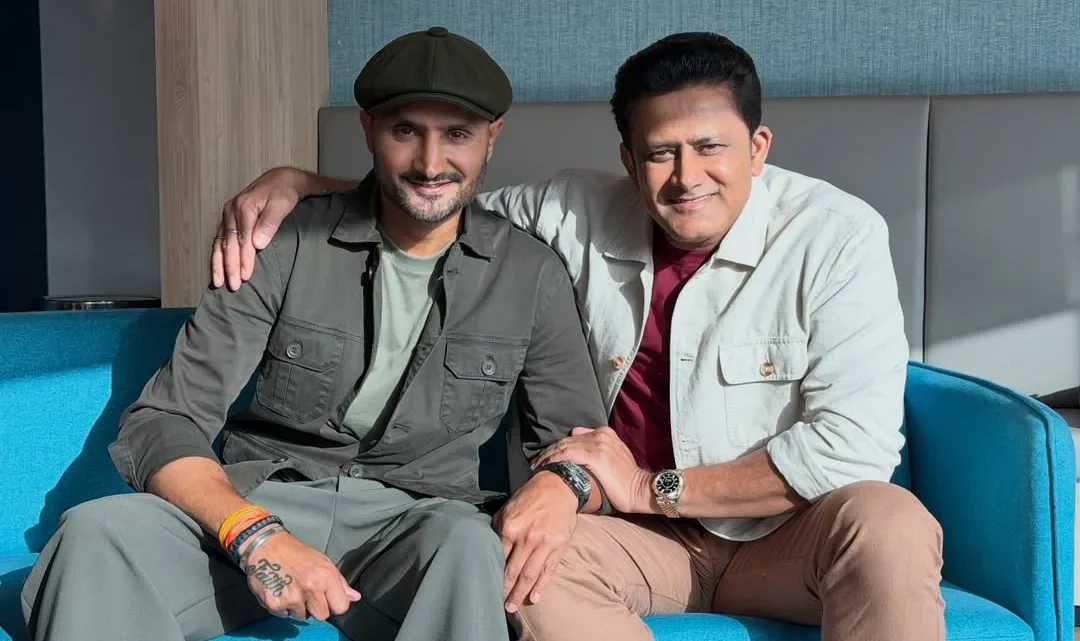
Anil Kumble is a former Indian cricketer widely regarded as one of the greatest spinners the game has produced.
Born on October 17, 1970, in Bangalore, Karnataka, he played Test and One Day International cricket for India across an international career of 18 years.
Trending Now!!:
A right-arm leg spin bowler and right-hand batsman, Kumble was India’s most effective bowler in both Tests and ODIs, playing 132 Tests and 271 ODIs, claiming 619 wickets in the former and 337 in the latter.
Nicknamed “Jumbo” for the bounce and pace he extracted from the pitch, his bowling was defined more by relentless accuracy and clever variation than extravagant turn.
The pinnacle of his career came in 1999 when he claimed all 10 wickets in a single Test innings against Pakistan, a feat only one other bowler in cricket history has achieved. In December 2001, he became India’s first spinner to take 300 Test wickets, and a year later, he became the first to reach the same mark in ODIs.
He retired in October 2008 as the third-highest Test wicket-taker of all time, finishing behind only Muttiah Muralitharan and Shane Warne. Beyond playing, he later served as head coach of the Indian national team and has remained a respected figure in cricket administration and commentary.


| Anil Kumble | |
|---|---|
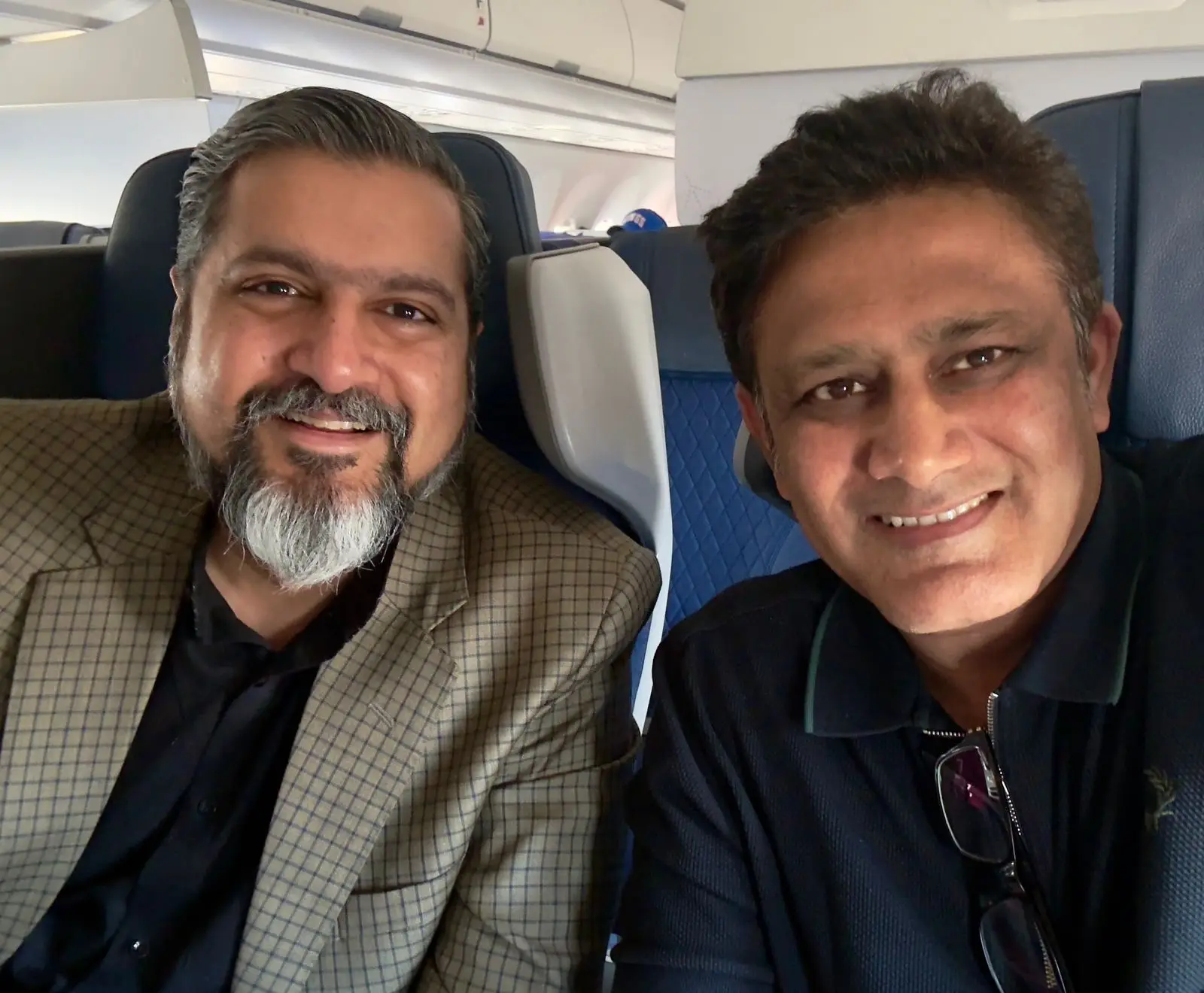
|
|
| Wiki Facts & About Data | |
| Real Name: | Anil Radhakrishna Kumble |
| Stage Name: | Anil Kumble |
| Born: | October 17, 1970 (age 56 years old) |
| Place of Birth: | Bangalore, Karnataka, India |
| Nationality: | Indian |
| Ethnicity: | Tulu Brahmin |
| Education: | Holy Saint English School, National High School, National Pre-University College, Rashtreeya Vidyalaya College of Engineering (RVCE) |
| Height: | 185 cm (6 feet 1 inch) |
| Religion: | Hinduism |
| Parents: | Mr. Krishna Swamy Kumble, Saroja Kumble |
| Siblings: | Dinesh Kumble |
| Spouse: | Chethana Ramatheertha (m. 1999) |
| Relationship: | Chethana Ramatheertha (wife, 1999-present) |
| Children: | Aaruni Kumble, Mayas Kumble, Svasti Kumble |
| Occupation: | Cricketer, Cricket Coach, Cricket Administrator, Commentator |
| Net Worth: | $11 million-$15 million |
Early Life & Education
Anil Radhakrishna Kumble was born on October 17, 1970, in Bangalore, Karnataka, India. His birth city, then part of Mysore State, would go on to become the place where his cricketing legend was forged. He is a Libra by zodiac sign.
His parents, Krishna Swamy and Saroja Kumble, both hail from Kumbla, near Kasaragod in Kerala. His father worked as a general manager in a company, while his mother was a homemaker. The family was middle-class, built on values of education, discipline, and hard work, qualities that would define Anil Kumble’s character on and off the cricket field.
He is of Tulu Brahmin ethnicity and practices Hinduism. He has a brother named Dinesh Kumble. His mother tongue is Kannada, and the family’s ancestral roots in coastal Kerala gave him a cultural grounding that remained a quiet constant throughout his public life.
Anil Kumble’s relationship with cricket began not in any academy but on the streets of Bangalore. He joined a club called “Young Cricketers” at the age of 13, and it was there that his competitive instincts began to take proper shape.
He drew early inspiration from B.S. Chandrasekhar, the celebrated Karnataka leg-spinner whose ability to extract pace and bounce from the pitch laid a template that a young Kumble quietly studied and eventually made his own.
Kumble began his formal education at Holy Saint English School in Bengaluru, where he completed his primary schooling. He later attended National High School in Basavanagudi, Bengaluru, finishing his Class X in 1986. After high school, he completed his Class XII from National Pre-University College, Basavanagudi. Despite the growing pull of cricket, he did not allow the sport to override his academic commitments.
He pursued higher education at Rashtreeya Vidyalaya College of Engineering (RVCE), affiliated with Bangalore University, earning a Bachelor of Engineering degree in Mechanical Engineering in 1991-92. At RVCE, he balanced rigorous academic demands with his growing cricket passion, representing the college in university-level matches and drawing early national attention for his bowling by 1990.
The discipline required to complete an engineering degree while simultaneously breaking into international cricket spoke to a defining trait in Kumble: the ability to pursue two demanding paths at once without letting either one slip.
Career
Anil Kumble made his first-class debut for Karnataka in 1989, quickly establishing himself as a leading spinner in the domestic circuit. His strong showings in the 1989-90 Ranji season caught the eye of national selectors, leading to his inclusion in India’s squad for the 1990 tour of England.
Beyond the Ranji Trophy, he excelled in other domestic competitions, taking 13 wickets for 138 runs in the 1992-93 Irani Trophy for Rest of India against Delhi, a performance that played a pivotal role in their victory. He also featured prominently in the Duleep Trophy for South Zone, contributing to their wins with economical leg-spin bowling.
He made his ODI debut against Sri Lanka in 1990 and his Test debut against England the same year. He took his first 50 wickets in just ten matches, the fastest any Indian bowler had achieved that milestone, and reached his hundredth in just his 21st match.
His reputation as a quality spinner grew significantly when India toured South Africa in 1992, where he took eight wickets in the second Test. Unlike the flamboyant wrist-spinners of his era, Kumble was never primarily a turner of the ball. He relied more on accuracy, bounce, and subtle variations than sharp turn, which initially led to doubts about his effectiveness, but his wicket-taking ability rendered those doubts irrelevant in short order.
The 1996 World Cup was particularly successful for him, as he emerged as the tournament’s highest wicket-taker with 15 scalps in 7 matches. By this point, Kumble had become the axis around which India’s bowling attack revolved, his ability to bowl long, aggressive spells making him indispensable in both formats.
The defining moment of his playing career arrived on February 7, 1999, at the Feroz Shah Kotla stadium in Delhi. Anil Kumble achieved the historic feat of claiming all ten wickets in a Test innings against Pakistan, becoming only the second bowler in history to do so after Jim Laker of England.
His figures of 10/74 in that second innings remain one of cricket’s most celebrated individual performances. In December 2001, on home turf in Bangalore, he became India’s first spinner to take 300 Test wickets, and a year later became the first to do so in ODIs.
His fortitude off the ball was equally legendary. In Antigua in 2002, he bandaged his fractured jaw and returned to the field to bowl a stirring spell, refusing to abandon his team despite being scheduled for surgery. The moment remains one of cricket’s most celebrated displays of grit.
His ability to learn and refine his craft was highlighted in the mid-2000s when, after a decade of middling away performances, he influenced memorable wins in Headingley, Adelaide, Multan, and Kingston, using an improved googly, bigger sidespin, and more variation in flight and on the crease.
On December 10, 2004, Kumble became India’s highest wicket-taker when he dismissed Mohammad Rafique of Bangladesh to surpass Kapil Dev’s haul of 434 wickets. On January 17, 2008, in the third Test against Australia at WACA in Perth, he became the first Indian bowler and third in the world to reach the milestone of 600 Test wickets.
Rarely celebrated for his batting, Kumble reserved one remarkable moment with the willow. On August 10, 2007, he scored his first Test century, an unbeaten 110 against England at The Oval, taking 117 Tests to reach the milestone, a record for the most matches taken to score a first hundred. He is the only Test cricketer to have taken all ten wickets in an innings and score a Test century in his career.
Kumble became captain of the Indian Test team on November 8, 2007, becoming the first leg-spinner to lead the side. His first series as captain was against Pakistan, which India won 1-0. He also captained the side in Australia during the infamous 2007-08 tour, which was marred by umpiring controversy and the Monkeygate saga in Sydney. His handling of the crisis was widely praised for its dignity and composure.
His form slipped during the home series against Australia in October 2008, and a shoulder injury compounded the pressure. He announced his retirement during the Delhi Test, fittingly at the same ground where he had claimed his legendary 10-wicket haul nine years earlier. He finished his career as the third-highest Test wicket-taker in history, behind Muttiah Muralitharan and Shane Warne, having played 132 Tests and 271 ODIs, taking 619 wickets in the former and 337 in the latter.
After retirement, Kumble remained deeply embedded in the sport. In 2010, he was elected president of the Karnataka State Cricket Association and served a three-year term in that capacity. He also served as chairman of the National Cricket Academy and headed the BCCI’s Technical Committee. In October 2012, he became the chairman of the International Cricket Council (ICC) Cricket Committee.
In June 2016, Kumble was appointed head coach of the Indian cricket team. During his tenure, India became the top-ranked Test team, defeated West Indies away from home, and recorded home wins over New Zealand, England, and Australia.
Despite achieving the number one ranking in Tests, he was forced to step down after it emerged that India captain Virat Kohli had told BCCI officials that some players were uncomfortable with Kumble’s style of man management.
He stepped down immediately after the 2017 Champions Trophy in June, where India finished runners-up to Pakistan. Despite the abrupt ending, his one-year tenure as coach stands as one of the most productive in Indian cricket’s recent history.
Social Media
- Wikipedia: Anil Kumble
- Instagram: Anil Kumble (@anil.kumble)
- Facebook: Anil Kumble (@anilkumble1074)
- IMDb: Anil Kumble
- X: Anil Kumble (@anilkumble1074)
Personal Life
Anil Kumble is 56 years old, born on October 17, 1970. He stands at 185 cm (6 feet 1 inch) tall, a height that contributed to the distinctive steep bounce he extracted as a bowler, giving him an angle over the crease that shorter spinners could rarely replicate.
Kumble’s relationship with Chethana Ramatheertha began at a travel agency named Trans-Oceanic Travels, where she worked. At the time, Chethana was already married but living separately from her husband. Rather than rushing, Kumble offered quiet support. Their friendship grew strong, built on understanding and trust.
Chethana was legally separated from her first husband, stockbroker Kumar V. Jahgirdar, in 1998, after a marriage that had lasted 13 years. She was involved in a lengthy custody battle over their daughter, Aaruni Kumble.
Anil Kumble proposed to her that same year, but she initially hesitated, citing her previous marriage as a reason for her reservations. A year later, she accepted his proposal, and the couple exchanged vows on July 1, 1999.
The marriage drew media attention and some social criticism in a country where marrying a divorcee, particularly one with a child from a prior marriage, still carried a degree of public scrutiny. Kumble stood firmly by his decision regardless.
He legally adopted Aaruni, treating her as his own daughter from the beginning. The couple later faced a legal battle over Aaruni’s custody, brought by Chethana’s former husband. The court ultimately granted custody to Chethana and Kumble.
Apart from Aaruni, the couple has two more children together: a son named Mayas Kumble and a daughter named Svasti Kumble.
Chethana holds a postgraduate degree in English Literature and chose to step away from her career after their marriage to focus on raising the family. The couple has maintained a consistently low profile, with Kumble rarely discussing his home life in public settings.
Net Worth
Anil Kumble’s net worth is estimated at roughly $11 million to $15 million (approximately ₹70-95 crore ($8.5 million-$11.6 million)), according to third-party financial tracking sources. These are external estimates rather than officially disclosed figures, and they vary noticeably from one source to another.
His wealth is the product of multiple income streams built across decades. A long international career under BCCI contracts, match fees spanning 132 Tests and 271 ODIs, and IPL engagements with Royal Challengers Bangalore and, later, Mumbai Indians as a mentor formed the financial foundation.
His annual income from BCCI retainers and franchise mentoring fees is reported at around ₹8 crore (approximately $960,000), with coaching clinics and speaking engagements adding further earnings on top of that.
Beyond cricket, Kumble has diversified into business and technology. His fortune has grown steadily over the years, primarily attributed to his illustrious cricket career, lucrative endorsements, and astute business ventures.
He co-founded Tenvic, a sports technology and training company focused on developing young athletes, which extended his influence into the broader sports industry long after his playing days ended.
Kumble has never been drawn to ostentation. Despite his considerable financial standing, he is widely noted for maintaining a grounded, private lifestyle, one rooted far more in family, cricket, and his hobby of wildlife photography than in the trappings of celebrity wealth.
What People Ask
NOTICE!! NOTICE!! NOTICE!!
At TheCityCeleb, we strive to provide accurate and up-to-date biographies and entertainment news, focusing on celebrities. Our editorial team researches information from reputable sources, including interviews, official statements, and verified media.If you spot an error or have additional details, please contact us at editor@thecityceleb.com. We value your feedback and are committed to maintaining trustworthy content.