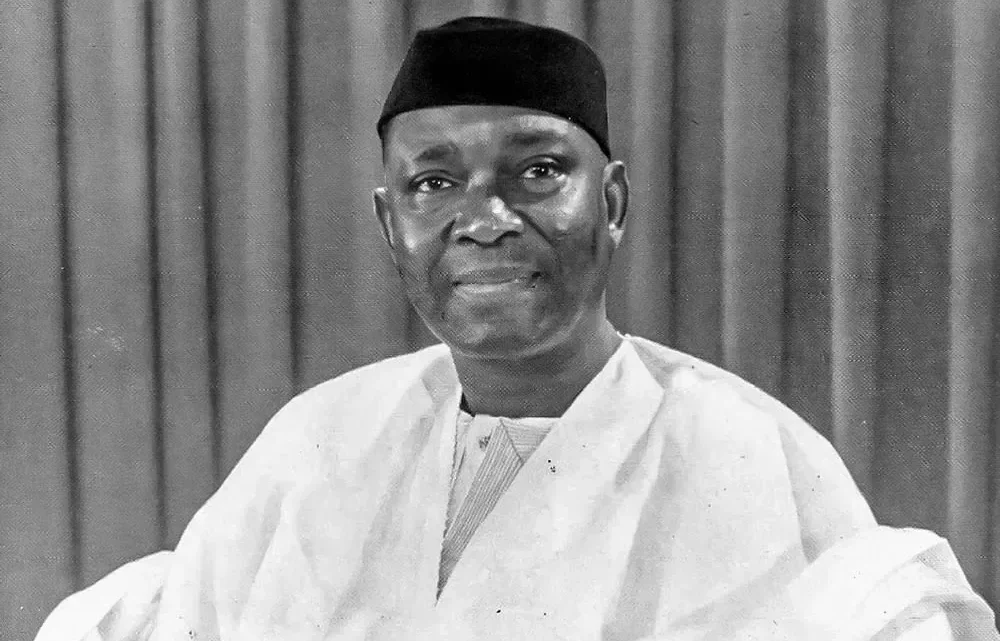
Nnamdi Azikiwe Biography: Children, Age, Wife, Parents, Net Worth, History, Tribe, Death, Education
Nnamdi Azikiwe (November 16, 1904 – May 11, 1996), widely known as “Zik of Africa,” was a Nigerian statesman, nationalist, and journalist who played a defining role in the movement for Nigerian independence.
Born in Zungeru, Northern Nigeria, to Igbo parents from Onitsha, he pursued his education across Nigeria, the United States, and the United Kingdom, earning degrees from institutions including Lincoln University and Howard University.
Trending Now!!:
Azikiwe emerged as one of Africa’s most prominent anti-colonial voices in the mid-20th century, using journalism as a weapon against British rule. He founded and edited several newspapers, most notably the West African Pilot, which became a powerful platform for nationalist thought across the region.
He was a founding figure of the National Council of Nigeria and the Cameroons (NCNC), a political movement that channelled mass agitation for self-governance.
When Nigeria gained independence on October 1, 1960, Azikiwe became the country’s first indigenous Governor-General, and in 1963, he was sworn in as the first President of the Federal Republic of Nigeria, a role he held until the military coup of January 1966. His tenure symbolized the aspirations of a newly sovereign nation and cemented his legacy as the “Father of Nigerian Nationalism.”
Beyond politics, Azikiwe was a prolific writer, philosopher, and educator whose ideas shaped pan-African thought for generations. He retired from active public life in later years but remained a respected elder statesman until his death at the age of 91 in Enugu, Nigeria.



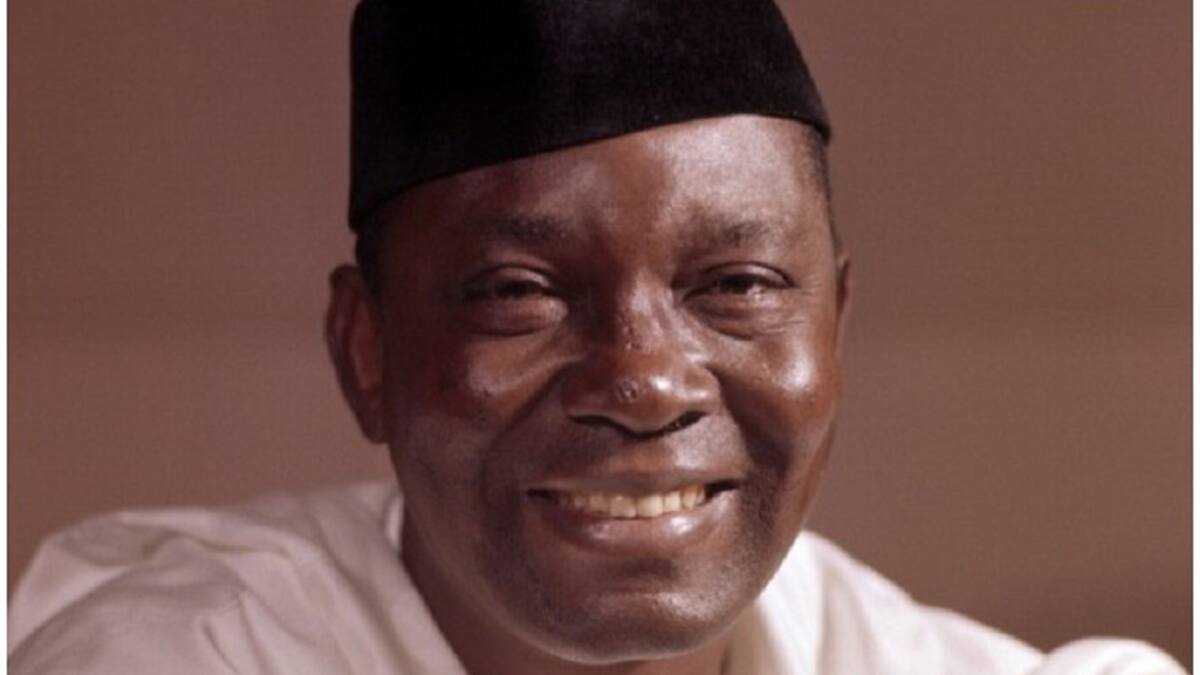
| Nnamdi Azikiwe | |
|---|---|
|
|
| Wiki Facts & About Data | |
| Real Name: | Nnamdi Benjamin Azikiwe |
| Stage Name: | Nnamdi Azikiwe |
| Born: | November 16, 1904 |
| Died: | 11 May 1996 (age 91 years old) |
| Place of Birth: | Zungeru, Niger State, Nigeria |
| Nationality: | Nigerian |
| Ethnicity: | Igbo |
| Education: | CMS Central School Onitsha, Hope Waddell Training Institute, Calabar, Methodist Boys' High School Lagos, Storer College West Virginia, Lincoln University Pennsylvania, Howard University Washington D.C., Columbia University, University of Pennsylvania |
| Height: | 175 cm (1.75 m) / 5 ft 9 in |
| Religion: | Christianity |
| Parents: | Obed-Edom Chukwuemeka Azikiwe, Rachel Chinwe Azikiwe |
| Spouse: | Flora Azikiwe (m. 1936–1983), Uche Azikiwe (m. 1973–1996), Ugoye Comfort Azikiwe (m. ?–1996) |
| Children: | Chukwuma Azikiwe, Jayzik Azikiwe, Molokwu Azikiwe, Uwakwe Azikiwe, Chukwuemeka Azikiwe, Nwamalubia Azikiwe, Chiebonam Azikiwe, Bamidele Azikiwe, Okechukwu Azikiwe |
| Occupation: | Statesman, Journalist, Politician, Author, Educator |
| Net Worth: | $62,500 |
Early Life & Education
Nnamdi Azikiwe was born on November 16, 1904, in Zungeru, a colonial administrative town in what was then the Northern Protectorate of British Nigeria, now present-day Niger State.
His birth came at a time when Nigeria existed not as a unified nation but as a patchwork of British colonial territories, and the world he entered was shaped entirely by foreign governance and the quiet resistance it bred in educated African households.
He was of Igbo ethnicity, tracing his roots to Onitsha in present-day Anambra State, the ancestral homeland of his family. As someone born and raised within the Christian missionary tradition that had taken strong root among the Igbo, he was brought up in the Christian faith. His birth date places him under the Scorpio zodiac sign.
Azikiwe was born to Obed-Edom Chukwuemeka Azikiwe, a clerk in the Nigerian Regiment of the West African Frontier Force, and Rachel Chinwe Azikiwe (née Ogbenyeanu).
His father’s clerical work with the colonial military meant the family moved frequently across different parts of Nigeria during his early years, exposing the young Nnamdi to a wider range of Nigerian communities and cultures than most children of his generation experienced. The names and details of his siblings have not been widely documented in public records, and he is largely discussed as a singular figure within his immediate family’s public legacy.
His early schooling reflected the itinerant nature of his upbringing. He attended CMS Central School in Onitsha and later Hope Waddell Training Institute in Calabar, two of the more prominent mission schools in southern Nigeria at the time. He also studied at Methodist Boys’ High School in Lagos, where his intellectual curiosity and ambition began to distinguish him from his peers.
Determined to pursue higher education beyond what colonial Nigeria could offer, Azikiwe made the bold decision to travel to the United States, a path few Nigerians had taken at the time. He arrived in America in 1925 and enrolled at Storer College in West Virginia before transferring to Lincoln University in Pennsylvania, a historically Black institution, where he earned a Bachelor of Arts degree.
He went on to study at Howard University in Washington, D.C., where he obtained a second bachelor’s degree, and later completed postgraduate work at Columbia University and the University of Pennsylvania, developing a formidable academic foundation in political science, history, and journalism.
His years in the United States were transformative on multiple levels. He encountered the intellectual currents of Pan-Africanism, engaged with the ideas of Marcus Garvey and W.E.B. Du Bois, and experienced firsthand the realities of racial discrimination in America, all of which sharpened his conviction that colonial subjugation in Africa had to be dismantled.
By the time he returned to Africa in the 1930s, Nnamdi Azikiwe carried with him not just academic credentials but a political consciousness that would reshape the continent.
Career
Nnamdi Azikiwe launched his public life not through politics but through the press, recognizing early that the written word was among the most potent tools available to a colonized people seeking liberation.
His career unfolded across journalism, academia, politics, and statecraft, spanning several decades and leaving an imprint not just on Nigeria but on the broader African nationalist movement.
After completing his studies in the United States, Azikiwe returned to Africa in 1934 and took up a position as editor of the African Morning Post in Accra, Gold Coast (present-day Ghana). The newspaper gave him his first major platform, and he used it without restraint.
His editorials challenged British colonial authority directly, and in 1936, he faced sedition charges alongside Benjamin Nnamdi Azikiwe, co-accused I.T.A. Wallace-Johnson, over an article titled “Has the African a God?” Though the conviction was eventually overturned on appeal, the episode announced him to the African public as a man willing to pay a personal price for his convictions.
He returned to Nigeria in 1937 and founded the West African Pilot, a Lagos-based newspaper that quickly became the most widely read and politically influential publication in British West Africa. Under his editorial direction, the Pilot championed self-governance, criticized colonial policy, and gave voice to African aspirations at a time when such positions carried serious risk.
He expanded the operation into a media group, the Zik Group of Newspapers, which included titles such as the Eastern Nigeria Guardian, the Nigerian Spokesman, and the Southern Nigeria Defender, building a network of nationalist press across the country.
Journalism, for Azikiwe, was always a vehicle toward a larger destination. In 1944, alongside Herbert Macaulay, he co-founded the National Council of Nigeria and the Cameroons (NCNC), one of the first major nationalist political organizations in Nigerian history.
Macaulay served as the party’s first president, but when he died in 1946, Azikiwe assumed the presidency and became the face of the movement. He led the NCNC through a period of intense political agitation, including a high-profile delegation to London in 1947 to protest the Richards Constitution, which Nigerians widely criticized as a document designed to entrench, rather than reduce, British control.
His entry into formal elective politics came in 1954 when he won a seat in the Eastern Nigeria House of Assembly.
He was subsequently appointed Premier of the Eastern Region, a position he held until 1959. As premier, Azikiwe oversaw significant expansion in education, establishing the University of Nigeria, Nsukka in 1955, the first university in Nigeria to be founded on indigenous initiative rather than under a British colonial mandate. The institution became one of the most visible symbols of his belief that African intellectual development had to be driven by Africans themselves.
As Nigeria moved steadily toward independence, Azikiwe remained at the center of national political life. Following the 1959 federal elections, he was elected to the Federal House of Representatives and shortly after was appointed President of the Nigerian Senate.
When Nigeria achieved full independence on October 1, 1960, he was appointed Governor-General, representing the Crown in the new nation’s constitutional framework. On October 1, 1963, when Nigeria became a republic and severed its formal ties to the British monarchy, Azikiwe was inaugurated as the first President of the Federal Republic of Nigeria, the most senior office in the land.
His presidency, however, operated within a parliamentary system in which executive power rested with the Prime Minister, Abubakar Tafawa Balewa, rather than with the president. The arrangement placed Azikiwe in a largely ceremonial role, though his presence as head of state carried enormous symbolic weight for a nation still defining its identity.
His tenure was cut short on January 15, 1966, when a military coup led by a group of army officers toppled the civilian government. Azikiwe was abroad at the time, receiving medical treatment, and the coup effectively ended his executive role in the Nigerian government.
The following years tested his political instincts in more difficult terrain. When the Nigerian Civil War broke out in 1967, following the declaration of the Republic of Biafra by Chukwuemeka Odumegwu Ojukwu, Azikiwe initially expressed sympathy for the Biafran cause, given his Igbo heritage and the deep wounds inflicted on the Igbo people in the years preceding the conflict.
However, he later withdrew his support and publicly aligned himself with the federal government, a decision that drew criticism from some within his own ethnic community but reflected his enduring belief in Nigerian unity over ethnic separatism.
He returned to partisan politics in the civilian era that followed the end of military rule. During the Second Republic (1979 to 1983), Azikiwe ran for the presidency under the banner of the Nigerian People’s Party (NPP) in the 1979 elections, losing to Shehu Shagari of the National Party of Nigeria.
He ran again in the 1983 elections under the same party and again fell short, marking his final campaign for elective office. The military coup of December 1983 ended the Second Republic entirely and closed the chapter on competitive electoral politics for nearly a decade.
Beyond active politics, Azikiwe maintained a parallel life as a scholar and writer throughout his career. He authored several books spanning political philosophy, African history, and autobiography, including Renascent Africa, My Odyssey, and Zik: A Selection from the Speeches of Nnamdi Azikiwe, among others. He held academic affiliations and remained an engaged public intellectual well into his later years, continuing to comment on Nigerian affairs and African development from a position of unmatched historical authority.
His career as a whole represented a rare convergence of the pen and the podium, of journalism and governance, of Pan-African idealism and practical nation-building. From the newsrooms of Accra and Lagos to the presidency of an independent Nigeria, Nnamdi Azikiwe moved through the defining moments of 20th-century African history not as a bystander but as one of its principal architects.
Personal Life
Nnamdi Azikiwe was born on November 16, 1904, and passed away on May 11, 1996, at the age of 91. He lived through nearly the entire 20th century, witnessing the arc of African history from deep colonialism to independence, civil war, and the slow, uneven work of democratic development.
His cause of death was complications arising from a prolonged illness. In his final years, his health had deteriorated significantly, and he spent much of that period in limited public activity. He died in Enugu, Enugu State, Nigeria, where he had settled in his retirement.
Azikiwe was married three times over the course of his life. His first marriage was to Flora Azikiwe, which lasted from 1936 to 1983. Flora stood beside him through the founding of the West African Pilot, the nationalist struggle, and his rise to the presidency of an independent Nigeria.
She was widely respected in her own right and remained a central figure in his life across nearly five decades together. His second marriage was to Uche Azikiwe, which ran from 1973 to 1996. The overlapping dates of his first and second marriages, with the second beginning before the first formally ended in 1983, point to a period of parallel unions that was not uncommon among prominent Nigerian men of his generation.
Uche remained with him through his later political campaigns and his final years. His third marriage was to Ugoye Comfort Azikiwe, whose union with him lasted until his death in 1996, though the precise year of their marriage has not been publicly confirmed.
Azikiwe fathered nine children: Chukwuma Azikiwe, Jayzik Azikiwe, Molokwu Azikiwe, Uwakwe Azikiwe, Chukwuemeka Azikiwe, Nwamalubia Azikiwe, Chiebonam Azikiwe, Bamidele Azikiwe, and Okechukwu Azikiwe. The distribution of these children across his three marriages has not been comprehensively documented in public records. He lived long enough to have seen at least one generation of grandchildren, but their names and details remain outside what has been made part of the public record.
Any relationships he may have had before marrying Flora Azikiwe remain unconfirmed in available historical records.
Azikiwe stood at approximately 175 cm (1.75 m), or about 5 feet 9 inches. He carried himself with a commanding physical presence that complemented the force of his public persona, and photographs and documentary footage from his political career consistently reflect a man of upright, dignified bearing.
Net Worth
Nnamdi Azikiwe accumulated his wealth across a career that spanned journalism, business, and decades of public service.
As the founder of the Zik Group of Newspapers, which included multiple influential titles across southern Nigeria, he built a media enterprise that was among the most commercially significant African-owned press operations of the mid-20th century. His business interests extended beyond publishing, and his prominence as a statesman opened doors to financial opportunities that few Nigerians of his era could access.
Estimating his net worth with precision is difficult, as Azikiwe operated across an era when personal wealth disclosures were neither customary nor regulated among public figures.
He was, by all available accounts, a man of considerable means relative to his time and context, owning property and maintaining a lifestyle befitting his stature as a former head of state. His estate in Enugu reflected the accumulated assets of a long and multifaceted public life.
At the time of his death in 1996, Nnamdi Azikiwe’s net worth was estimated at approximately 5 million Nigerian naira (roughly $62,500 USD at the exchange rates of the period).
It is worth noting that this figure reflects the economic realities of Nigeria in the mid-1990s, a period marked by severe currency devaluation and economic contraction under military rule, which significantly diminished the real value of naira-denominated assets held by even the most prominent Nigerians of that generation.
What People Ask
NOTICE!! NOTICE!! NOTICE!!
At TheCityCeleb, we strive to provide accurate and up-to-date biographies and entertainment news, focusing on celebrities. Our editorial team researches information from reputable sources, including interviews, official statements, and verified media.If you spot an error or have additional details, please contact us at editor@thecityceleb.com. We value your feedback and are committed to maintaining trustworthy content.