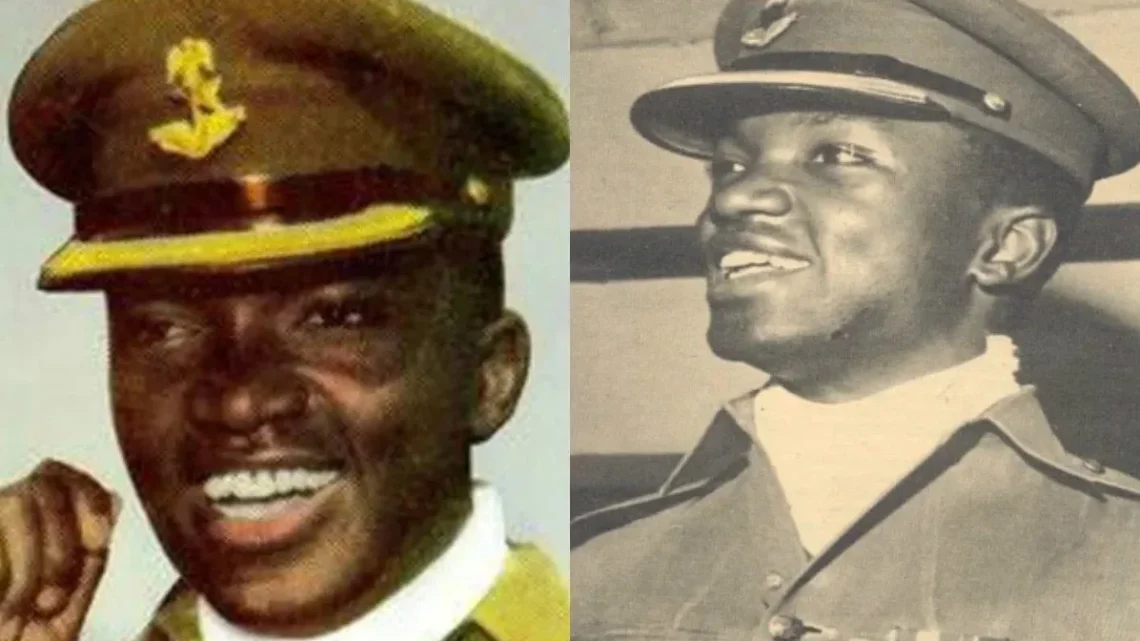
Chukwuma Nzeogwu Bio: Age, Death, Parents, Wife, Children, Coup, State of Origin, Speech
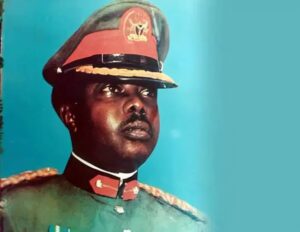
Chukwuma Nzeogwu was a Nigerian Army officer best remembered as the leader of the January 1966 coup, which toppled Nigeria’s First Republic and ushered in military rule.
Born in 1937 in Kaduna to Igbo parents from Okpanam, near Asaba in present-day Delta State, Nzeogwu trained at the Royal Military Academy, Sandhurst, where he was commissioned as an infantry officer in 1959. He rose through the Nigerian Army’s intelligence corps before becoming Chief Instructor at the Nigerian Military Training College in Kaduna.
Trending Now!!:
On 15 January 1966, Nzeogwu led soldiers in an attack on the official residence of the premier of the Northern Region, Ahmadu Bello, in a coup that also claimed the lives of Prime Minister Abubakar Tafawa Balewa and Federal Minister Festus Okotie-Eboh. He was arrested in Lagos days later after the uprising collapsed.
When Biafra declared independence in 1967, Nzeogwu joined its army as a Lieutenant Colonel and was killed in action near Nsukka on 29 July 1967.
| Chukwuma Nzeogwu | |
|---|---|
|
|
| Wiki Facts & About Data | |
| Real Name: | Patrick Chukwuma Nzeogwu |
| Stage Name: | Chukwuma Nzeogwu |
| Born: | 26 February 1937 |
| Died: | 29 July 1967 (age 30 years old) |
| Place of Birth: | Kaduna, Kaduna State, Nigeria |
| State Of Origin: | Delta State |
| Nationality: | Nigerian |
| Ethnicity: | Igbo |
| Education: | Saint Joseph's Catholic Primary School, Saint John's College, Royal Military Academy, Sandhurst |
| Religion: | Roman Catholic |
| Parents: | James Nzeogwu, Elizabeth Nzeogwu |
| Occupation: | Military Officer |
Early Life and Education
Chukwuma Nzeogwu was born on 26 February 1937 in Kaduna, then the capital of the Northern Region of British Nigeria, making him a Pisces.
His state of origin is Delta State, as his family hailed from Okpanam town in the Mid-Western Region, near Asaba in present-day Delta State. He was Igbo by ethnicity, specifically of the Anioma sub-group, and Roman Catholic by religion, reflecting the dominant faith of his family’s home community.
His father, James Nzeogwu, worked as an apprentice technician before securing full-time employment, while his mother, Elizabeth Nzeogwu, was a native of Ugbolu, a village near Okpanam. Information on his siblings has not been publicly confirmed.
Nzeogwu grew up in comfortable circumstances, shielded from much of the hardship his peers faced, and was reportedly fluent in Pidgin English, Igbo, and Hausa, reflecting a childhood split between his family’s Igbo heritage and the northern city where he was raised.
Those who knew him as a boy described him as someone who never forgot his friends, particularly those less privileged than himself, and as deeply protective of his mother. He was not drawn to outdoor games, preferring jogging instead.
For his early education, he attended Saint Joseph’s Catholic Primary School in Kaduna before moving on to the more competitive Saint John’s College, also in Kaduna, where he formed a close friendship with Christian Anufuro.
After completing secondary school, Nzeogwu enlisted as an officer cadet and eventually earned a place at the Royal Military Academy, Sandhurst, in England, where he trained alongside other post-independence Nigerian officers.
Career
After completing his training at the Royal Military Academy, Sandhurst, Nzeogwu returned to Nigeria in May 1960, shortly before independence, and was posted to the 1st Battalion in Enugu, where Major Johnson Aguiyi-Ironsi served as second-in-command under a British officer.
He was later re-posted to the 5th Battalion in Kaduna, the land of his birth, where he became friends with Olusegun Obasanjo. It was his Hausa colleagues in the Nigerian Army who gave him the nickname “Kaduna,” in reference to his deep attachment to the town.
In 1961, Nzeogwu served in the Congo as part of Nigeria’s contribution to the United Nations peacekeeping force during the Congo Crisis. On his return, he was assigned as a training officer at the Army Training Depot in Zaria for about six months before being posted to Lagos to head the military intelligence section at Army Headquarters, becoming the first Nigerian officer to hold the role.
This appointment placed him at the helm of the Field Security Section, the forerunner of the Nigerian Army Intelligence Corps, a post he held from November 1962 to 1964, with responsibilities that included vetting army personnel, document security, and counterintelligence.
In that intelligence capacity, Nzeogwu took part in the treasonable felony trial investigations of Obafemi Awolowo and other Action Group party members and was known for speaking candidly about the conduct of those involved.
His outspokenness reportedly antagonized some of his army colleagues and brought him into conflict with the Minister of State for the Army, Ibrahim Tako Galadima. The friction surrounding his role in military intelligence eventually led to his transfer, and he was posted to the Nigerian Military Training College in Kaduna, where he rose to the rank of Chief Instructor.
It was from this position, as Chief Instructor, that Nzeogwu organized the training exercise that served as cover for the January 1966 coup, the event that would define the rest of his career and, ultimately, his life.
Personal Life
Chukwuma Nzeogwu was 29 years old at the time of his death on 29 July 1967.
He was a lifelong bachelor who never married, and reports indicate he had no children, having been too consumed by his pan-Nigerian and pan-African ambitions to settle into marriage, despite being his parents’ first son.
He once fell for the daughter of a college commandant while studying in India but never pursued the relationship further, and accounts describe him as a bachelor who was neither a womanizer nor a drinker. No height has been publicly confirmed, and his dating history remains undocumented, aside from the brief, unconsummated romance in India.
Nzeogwu’s cause of death is documented as death by gunfire during an ambush near Nsukka on 29 July 1967, while he was leading a night reconnaissance operation against federal troops of the 21st Battalion, commanded by Captain Mohammed Inuwa Wushishi.
By then, serving as a Lieutenant Colonel in the Biafran Army, he was killed in the early stages of the Nigerian Civil War. His body was identified by Lieutenant Abdullahi Shelleng and initially kept at the University of Nigeria’s Nsukka campus before being transferred to the 1st Division headquarters in Makurdi, where Colonel Mohammed Shuwa reported the death to Head of State Major General Yakubu Gowon.
He was ultimately buried with full military honours in an army cemetery in Kaduna, his place of birth.
Net Worth
Chukwuma Nzeogwu’s net worth has not been publicly documented. As a military officer who died in active service in 1967, decades before such figures were tracked for public personalities, no verified record of his wealth, assets, or financial standing exists.
What People Ask
NOTICE!! NOTICE!! NOTICE!!
At TheCityCeleb, we strive to provide accurate and up-to-date biographies and entertainment news, focusing on celebrities. Our editorial team researches information from reputable sources, including interviews, official statements, and verified media.If you spot an error or have additional details, please contact us at editor@thecityceleb.com. We value your feedback and are committed to maintaining trustworthy content.