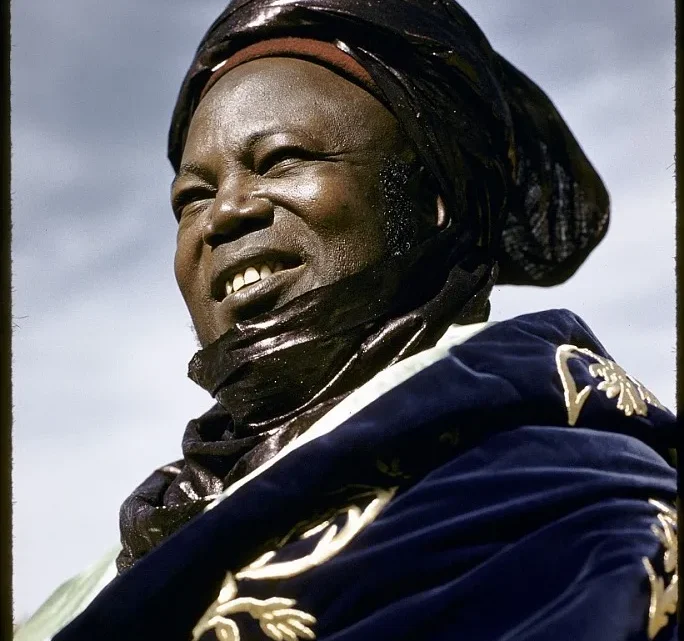
Ahmadu Bello Biography: Age, Net Worth, Wife, Children, Photos, University, Parents
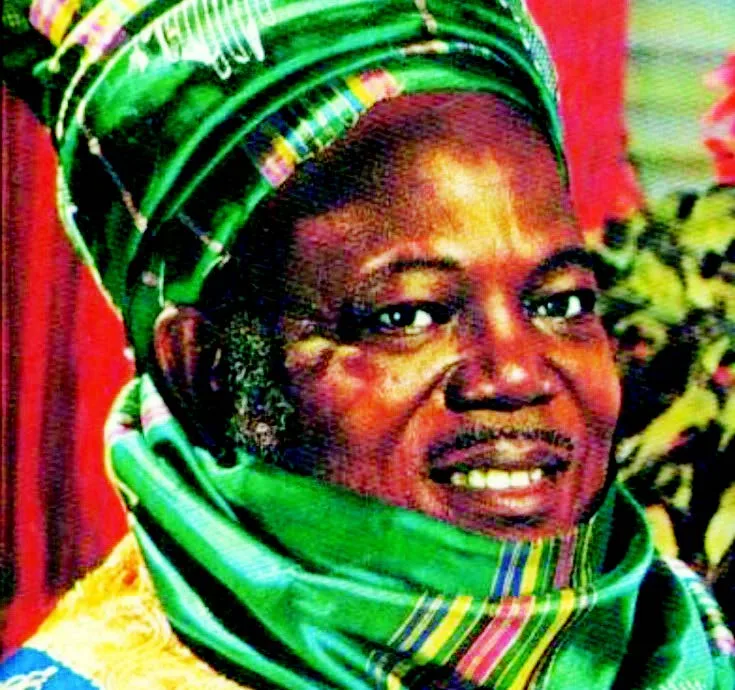
Sir Ahmadu Bello, popularly known as the Sardauna of Sokoto, was one of Nigeria’s most consequential political figures and a founding father of the modern Nigerian state.
Born on 12 June 1910 in Rabah village in the Sokoto Emirate, he came from a lineage of immense historical significance, being a descendant of Uthman dan Fodio, the founder of the Sokoto Caliphate, and a great-grandson of Sultan Muhammad Bello.
Trending Now!!:
His early education was conducted under Muslim scholars, during which he studied the Quran, the hadith, and Shariah law, before proceeding to Sokoto Middle School and later to the Katsina Teacher’s Training College. He graduated as a teacher in 1931 with a Grade III certificate, finishing at the top of his class.
As the leader of the Northern People’s Congress (NPC), the Sardauna became a dominant force in Nigerian politics throughout the early Nigerian Federation and the First Republic. When Nigeria gained independence in 1960, Bello chose to remain Premier of Northern Nigeria rather than assume the position of Prime Minister of the Federation, which he devolved to his deputy, Abubakar Tafawa Balewa.
He sponsored the Bank of the North and the Northern Nigerian Development Company, and founded Ahmadu Bello University in Zaria. He served as Premier of the Northern Region for nearly 12 years, and his greatest legacy was the modernisation and unification of the diverse peoples of Northern Nigeria.
In his personal life, Bello married three wives. His first wife was Hafsatu, and he had three surviving daughters, with his eldest being Inno, followed by Aisha and Lubabatu. Hafsatu, his senior wife, is remembered for her extraordinary loyalty: during the coup attack on his residence, she attempted to shield him from the soldiers’ bullets, taking a shot to the neck before he was also killed.

Sir Ahmadu Bello was murdered on 15 January 1966 when a group of army officers attacked his residence in Kaduna during Nigeria’s first military coup. His portrait adorns Nigeria’s ₦200 note, and Ahmadu Bello University in Zaria stands as a permanent tribute to his legacy.
| Ahmadu Bello | |
|---|---|
|
|
| Wiki Facts & About Data | |
| Real Name: | Ahmadu Ibrahim Bello |
| Stage Name: | Ahmadu Bello |
| Born: | 12 June 1910 |
| Died: | 15 January 1966 (age 55 years old) |
| Place of Birth: | Rabah, Sokoto State, Nigeria |
| Nationality: | Nigerian |
| Ethnicity: | Fulani |
| Education: | Sokoto Middle School, Katsina Teacher's Training College, University of London |
| Religion: | Islam |
| Parents: | Ibrahim Atiku Bello, Mariyamu Bello |
| Spouse: | Goggon Kurya Hafsatu bint Abdulkadir Maccido (m. 1932); Kande (m. 1934, div. 1938); Amiru Fadima (m. 1934, div. 1938); Goggon Kano Amina bint Abubakar (m. 1940); Jabbo bint Aliyu (m. 1949) |
| Children: | Ahmad ibn Magajingari Usman, Muhammad Tambari ibn Ahmadu Bello, Inno bint Ahmadu Bello, Aisha bint Ahmadu Bello, Lubabatu bint Ahmadu Bello |
| Occupation: | Politician, Statesman, Teacher, Administrator |
| Net Worth: | $3 million |
Early Life & Education
Sir Ahmadu Bello was born on 12 June 1910 in Rabah, a village situated roughly 20 miles from Sokoto, in what is today Sokoto State, Nigeria.
His date of birth makes him a Gemini, the zodiac sign for those born between May 21 and June 20. He was of Fulani ethnicity and was raised in the Islamic faith, born into a household steeped in religious scholarship and traditional political authority.
His father, Ibrahim Atiku Bello, held the prestigious title of Sarkin Rabah, meaning District Head of Rabah. Ibrahim Atiku Bello was the son of Sultan Abubakar Atiku, son of Sultan Muhammadu Bello, and son of Sheikh Usman Dan Fodio, the founding father of the Sokoto Caliphate at the beginning of the 19th century.
His mother was Mariyamu Bello. Tragedy visited the family early when his father died while Ahmadu was just six years old. He had a sister; her name has not been publicly confirmed. She is known as Miss Bello.
Following his father’s death, Ahmadu received his foundational Islamic education in Rabah under Malam Garba, the Imam of Rabah Village, who taught him the Quran, Islamic jurisprudence, and the traditions of the Prophet Muhammad. This early grounding in faith and scholarship left a permanent imprint on his worldview and leadership philosophy.
He later enrolled at Sokoto Middle School, the only modern school in the Sokoto province at the time, where he studied from 1917 to 1926. During his school years, he was known as Ahmadu Rabah, distinguishing himself as both School Prefect and Class Captain.
He subsequently attended the Katsina Training College, presently known as Barewa College, in Zaria, Kaduna State, founded in 1921 by British Governor-General Hugh Clifford. He graduated as a teacher in 1931 with a Grade III certificate, finishing at the top of his class at the age of 21.
In 1948, he accepted a scholarship to study local government administration in England, driven by his desire to deepen his understanding of governance. That period of study abroad would directly fuel his entry into formal political life upon his return to Northern Nigeria.
Career
Sir Ahmadu Bello’s career unfolded in three distinct phases: a brief period of teaching and traditional administration, a rapid ascent through Northern Nigeria’s political machinery, and finally a legendary tenure as the first Premier of the Northern Region that would define his place in Nigerian history.
Upon graduating from the Katsina Teacher’s Training College in 1931, he was appointed by the Sultan as the English master teacher at Sokoto Middle School, the very institution where he had once been a student. He held that position until 1934, when Sultan Hassan dan Mu’azu appointed him District Head of Rabah, succeeding his brother. Four years later, he was promoted and sent to Gusau to serve as Divisional Head, bringing him into full membership of the Sultan’s council.
In 1938, at the age of just 28, Bello made a bid to become Sultan of Sokoto but was unsuccessful, losing to Sir Siddiq Abubakar III, who would reign for 50 years until his death in 1988. The outcome, however, only elevated his standing.
The new Sultan immediately conferred on him the title of Sardauna, meaning Crown Prince of Sokoto, a royal chieftaincy title, and promoted him to the Sokoto Native Authority Council. These titles made him the Chief Political Adviser to the Sultan by default, and he was subsequently put in charge of the Sokoto Province to oversee its 47 districts. By 1944, he had returned to the Sultan’s Palace to work as the Chief Secretary of the State Native Administration.
He first became politically active in 1945, when he helped form a Youth Social Circle, which later affiliated with the Northern People’s Congress (NPC), of which he became President-General in 1954. In 1948, he was offered a scholarship to study local government administration in England, which he accepted in order to deepen his understanding of governance.
That period abroad sharpened his political thinking and equipped him with a working knowledge of parliamentary democracy and modern administration. After returning to Nigeria, he was nominated to represent the province of Sokoto in the regional House of Assembly, where he became a notable voice for Northern interests and embraced a style of consultation and consensus with the major representatives of the Northern emirates of Kano, Bornu, and Sokoto.
In the first elections held in Northern Nigeria in 1952, Bello won a seat in the Northern House of Assembly and became a member of the regional executive council as Minister of Works. He was successively Minister of Works, of Local Government, and of Community Development in the Northern Region.
In 1953 and again in 1957, he led the Northern delegation during independence talks in London. In 1954, Bello became the first Premier of Northern Nigeria. It was a position he would hold for nearly 12 consecutive years, making him one of the most enduring and powerful political figures in the country’s pre-independence era.
As Premier, Bello promoted the Northernisation policy, aimed at increasing Northern representation in administration and leadership positions traditionally dominated by Southerners or expatriates. He also encouraged agricultural development, civil service reforms, and economic growth, approaching modernisation cautiously in a way that preserved Northern culture, Islamic values, and traditional leadership structures.
His political accomplishments included the establishment of the Northern Regional Development Corporation (NRDC), later known as the Northern Nigeria Development Corporation. He supported the founding of Ahmadu Bello University in Zaria in 1962, envisioned as a centre of excellence for Northern Nigeria and the wider nation, and he encouraged the integration of Islamic education with secular learning.
In the 1959 independence elections, Bello led the Northern People’s Congress to victory and a plurality of parliamentary seats. The NPC forged an alliance with Nnamdi Azikiwe’s National Council of Nigeria and the Cameroons (NCNC) to form Nigeria’s first indigenous federal government, which led to independence from Britain.
At that pivotal moment, Bello chose to remain Premier of Northern Nigeria rather than assume the position of Prime Minister of the Federation, devolving that role to his NPC deputy, Abubakar Tafawa Balewa. He made this choice because he wanted to remain in the North, and accepting the position of Prime Minister would have required relocating to Lagos in the South. It was a decision that stunned many observers, and it cemented his reputation as a leader driven by genuine service to his people rather than personal ambition.
Bello was knighted in 1959 and also became the first chancellor of Ahmadu Bello University. He was regarded as perhaps the most politically powerful person in Nigeria during the first five years of independence. His authority stretched far beyond the boundaries of the Northern Region, shaping federal policy and national direction from Kaduna.
He remained at the centre of Nigerian political life until 15 January 1966, when soldiers loyal to Major Chukwuma Nzeogwu attacked his residence during Nigeria’s first military coup and assassinated him.
Personal Life
Sir Ahmadu Bello was born on 12 June 1910 and was assassinated on 15 January 1966 at the age of 55. No verified record of his height exists in public sources.
Bello was a practising Muslim and a polygamist, contracting a total of five marriages across his lifetime, two of which ended in divorce. His first wife was Goggon Kurya Hafsatu bint Abdulkadir Maccido, daughter of the Waziri of Sokoto, whom he married in 1932.
His second wife, Kande Bello, married in 1934, was divorced in 1938. His third wife, Amiru Fadima, also married in 1934, was divorced in 1938. His fourth wife, Goggon Kano Amina bint Abubakar, daughter of the District Head of Bici, entered the marriage in 1940. His fifth wife, Jabbo bint Aliyu, daughter of the Sarkin Yaki of Gwandu, was married in 1949.
At the time of his death, three wives survived him: Hajiya Hafsatu Abdulkadir, Hajiya Amina Abubakar, and Hajiya Jabbo Aliyu.
Bello fathered five known children: a son, Ahmad ibn Magajingari Usman; a son, Muhammad Tambari ibn Ahmadu Bello, who died around 1938 at the age of two; and three daughters, Inno bint Ahmadu Bello, born in 1942; Aisha bint Ahmadu Bello, born in 1945; and Lubabatu bint Ahmadu Bello, born in June 1966, the latter arriving after her father’s assassination.
Sir Ahmadu Bello was assassinated on 15 January 1966 during Nigeria’s first military coup, historically referred to as the Coup of the Five Majors. He was in the rear annex of his official residence in Kaduna with his wives when soldiers led by Major Chukwuma Kaduna Nzeogwu broke into the compound, demanding to know his location.
A resident who resembled him initially stepped forward, claiming to be the Premier, but the soldiers saw through the deception. Bello himself then stood up and identified himself, at which point his senior wife, Hafsatu, refused to leave his side, declaring that if they were going to kill him, they would have to kill her too.
He was shot alongside her as they held onto each other. According to eyewitness accounts, one bullet struck his jaw, penetrated his lower abdomen, and lodged in his spinal cord.
His death, at 55 years old, brought an abrupt end to nearly 12 years of rule over the Northern Region and removed one of the most powerful political figures in Nigerian history from the stage.
Net Worth
Sir Ahmadu Bello‘s net worth is not publicly documented in any verified source. Based on unverified estimates from online sources, he is believed to have had a personal net worth of around $3 million at the time of his death, though this figure has never been officially confirmed.
He is widely documented as a leader who did not pursue personal wealth during his years in public service, channelling his energies instead into building public institutions and developing the Northern Region for the benefit of its people.
What People Ask
NOTICE!! NOTICE!! NOTICE!!
At TheCityCeleb, we strive to provide accurate and up-to-date biographies and entertainment news, focusing on celebrities. Our editorial team researches information from reputable sources, including interviews, official statements, and verified media.If you spot an error or have additional details, please contact us at editor@thecityceleb.com. We value your feedback and are committed to maintaining trustworthy content.