Herbert Macaulay Biography: Age, Children, Net Worth, Wife, Death, Parents, Education
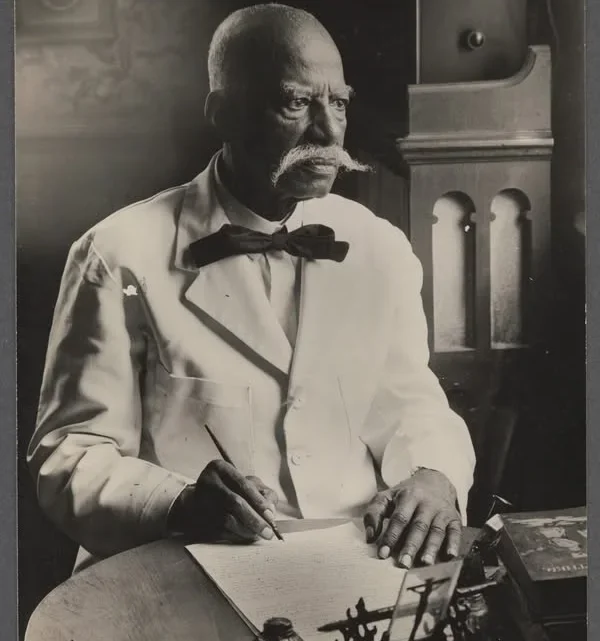
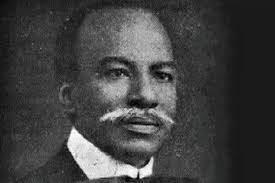
Olayinka Herbert Samuel Heelas Badmus Macaulay was a Nigerian nationalist, politician, civil engineer, architect, journalist, and musician, widely regarded as the father of Nigerian nationalism.
He was born on November 14, 1864, in Lagos, to distinguished parentage: his father, Reverend Thomas Babington Macaulay, was a prominent missionary and the founder of the CMS Grammar School, Nigeria’s first secondary school, while his mother, Abigail Crowther, was the daughter of Bishop Samuel Ajayi Crowther, the first African bishop of the Anglican Church.
Trending Now!!:
He received his early education at St. Paul’s Breadfruit School in Lagos and later at the CMS Grammar School before travelling to England in 1890 to study at Plymouth Grove Training College and the Royal Institute of British Architects. On his return to Nigeria, he worked as a surveyor and civil engineer for the colonial government before his growing disillusionment with British administrative policies set him firmly on the path of activism.
On June 24, 1923, he founded the Nigerian National Democratic Party (NNDP), the first political party in Nigeria. In 1944, he co-founded the National Council of Nigeria and the Cameroons (NCNC) alongside Nnamdi Azikiwe and served as its president.
Herbert Macaulay died on May 7, 1946, in Lagos, at the age of 81, and was buried at Ikoyi Cemetery. His legacy endures across Nigeria, with major roads in Lagos and Abuja bearing his name.
| Herbert Macaulay | |
|---|---|
|
|
| Wiki Facts & About Data | |
| Real Name: | Olayinka Herbert Samuel Heelas Badmus Macaulay |
| Stage Name: | Herbert Macaulay |
| Born: | November 14, 1864 |
| Died: | 7 May 1946 (age 81 years old) |
| Place of Birth: | Lagos, Lagos Colony (present-day Nigeria) |
| State Of Origin: | Lagos State |
| Nationality: | Nigerian |
| Ethnicity: | Yoruba/Krio |
| Education: | St. Paul's Breadfruit School, Lagos; CMS Grammar School, Lagos; Fourah Bay College, Freetown, Sierra Leone; Plymouth Grove Training College, England; Royal Institute of British Architects, London; Trinity College of Music, London |
| Religion: | Christianity |
| Parents: | Reverend Thomas Babington Macaulay; Abigail Crowther Macaulay |
| Siblings: | Thomas Babington Macaulay, Owen Emeric Macaulay, Frank Gurney Venn Macaulay, Hugh Stowell Macaulay |
| Spouse: | Caroline Pratt (m 1898-1899) |
| Children: | Helena Victoria Maria Macaulay Smith, Sarah Abigail Idowu Macaulay Adadevoh, Oliver Ogedengbe Macaulay, Frank Montague Macaulay, Enitan Macaulay, Florence Macaulay, Tokunbo Macaulay, Samuel Macaulay |
| Occupation: | Politician, Civil Engineer, Architect, Surveyor, Journalist, Musician |

Early Life & Education
Herbert Macaulay was born on November 14, 1864, on Broad Street in Lagos, in what was then the Lagos Colony under British administration. His full birth name was Olayinka Herbert Samuel Heelas Badmus Macaulay.
He came into the world under the Scorpio zodiac sign. He was of Yoruba and Krio ethnicity, born into a family with deep roots in the Sierra Leonean liberated African community that had resettled in Lagos, and he was raised in the Christian faith.
His father, Thomas Babington Macaulay, was a notable educator and founder of the CMS Grammar School in Lagos, while his mother, Abigail Crowther, was the daughter of Bishop Samuel Ajayi Crowther, the first African bishop of the Anglican Church. This was a family of extraordinary distinction.
His maternal grandfather, Bishop Samuel Ajayi Crowther, was not only the first African to be ordained as an Anglican bishop but also the first registered student of Fourah Bay College, West Africa’s oldest university. His father, Reverend Thomas Babington Macaulay, founded Nigeria’s first secondary school and was a towering figure in Lagos missionary and educational circles. Both of his parents were children of liberated Africans in the mid-19th century.
Herbert Macaulay was one of seven children born to Reverend Thomas Babington Macaulay and Abigail Crowther Macaulay. His siblings were Thomas Babington Macaulay, Owen Emeric Macaulay, Frank Gurney Venn Macaulay, and Hugh Stowell Macaulay, among others, though the full names of all his brothers and sisters have not been comprehensively documented in public records.
From childhood, Herbert Macaulay absorbed the importance of a solid education, patriotism, and Christian values. He attended his father’s school, the CMS Grammar School in Lagos, and later enrolled at Fourah Bay College in Freetown, Sierra Leone.
He was recognised as a promising young talent and in 1890 was awarded a government scholarship to study civil engineering in England, where he spent three years. During his time in England, he attended Plymouth Grove Training College and the Royal Institute of British Architects.
He also obtained a certificate in violin from the Trinity College of Music in London, reflecting the broad range of his intellectual and artistic interests. He returned to Nigeria in 1893 as the first Nigerian to qualify as a civil engineer, carrying with him an education that would fuel decades of transformative activism.
Career
Herbert Macaulay began his professional life well before his time in England. In 1881, he became a clerk in the Public Works Department in Lagos, where he was recognised as a promising civil servant. That recognition earned him a government scholarship in 1890 to study civil engineering in Plymouth, England.
Upon his return to Lagos, he was appointed surveyor of crown lands for the colony of Lagos, a position he held until 1898, when he resigned the post. His resignation was driven by growing resentment at the racial discrimination entrenched within the colonial civil service. He subsequently established himself as a private surveyor in Lagos, becoming one of the earliest indigenous professionals in that field.
His disillusionment with the colonial administration did not remain quiet for long. His entry into political activism was marked by his opposition to the water rate scheme proposed by the colonial government in Lagos in 1908, which he argued was exploitative and would disproportionately affect the African population.
That campaign built his reputation as a fierce defender of indigenous rights and drew broad support from ordinary Lagosians. In 1908, he also exposed corruption in the railway system, and upon his release from prison that same year, he began contributing a weekly column to the Lagos Daily Times, with articles that were sharply critical of government policy, the liquor trade, the water rate scheme, taxation, racial segregation, attempts to deny indigenous land ownership, and the suppression of a free press.
In 1915, Macaulay led protests that became known as the water rate riots and spearheaded agitation against colonial plans for land reform. He also emerged as a powerful advocate for traditional rulers. In 1921, he was sent to London by the Eleko, the King of Lagos, to represent him in the legal appeal of the famous Apapa land tenure case.
In London, he proclaimed that the British colonial government was eroding the power and authority of the Eleko, who he argued was recognised by all Nigerians as the rightful king of Lagos. The episode embarrassed the British administration and cemented his standing as the foremost advocate of indigenous authority in Lagos.
Macaulay co-founded the influential Lagos Daily News in 1927 with Dr. John Akinlade Caulcrick, personally managing its political tone and turning it into a powerful platform for nationalist advocacy and fierce criticism of the colonial government. His writing was relentless in its scope, and the paper served as both a political weapon and a public forum for the Lagos masses for over a decade.
On the political front, on June 24, 1923, he founded the Nigerian National Democratic Party (NNDP), the first Nigerian political party. The platform of the NNDP sought self-government for Lagos, the introduction of institutions of higher education into Nigeria, compulsory primary school education, the Africanisation of the civil service, and non-discrimination in the development of private economic enterprise.
The party won all of the seats in the elections of 1923, 1928, and 1933, and for nearly forty years, Macaulay campaigned ceaselessly against the British administration in Nigeria through the Lagos Daily News and the NNDP, with the Lagos market women, the Lagos royal family, and many Nigerian citizens among his supporters.
In 1944, Herbert Macaulay collaborated with the Nigerian Youth Movement to establish the National Council of Nigeria and Cameroons (NCNC), marking the first time he extended his political ideologies beyond Lagos. He collaborated with figures such as Nnamdi Azikiwe from the Eastern region.
Macaulay was elected president of the NCNC and was engaged in a national tour for the party when he was taken ill. He returned to Lagos and died on May 7, 1946, at 81, having spent more than five decades as the most consequential voice against British colonial rule in Nigeria.
Personal Life
Herbert Macaulay was born on November 14, 1864, and died on May 7, 1946, at the age of 81. His height has not been documented in any publicly available historical record.
In December 1898, Herbert Macaulay married Caroline Pratt, the daughter of an African Superintendent of Police. Caroline Pratt had complications during her first pregnancy and died with her baby in the process.
Shattered by that experience, Macaulay vowed to mourn them by wearing a black bow tie constantly around his neck, a vow he kept until his death. Their short-lived marriage lasted from December 1898 to August 1899, and the vacuum it left was an indelible mark on Macaulay.
He took a vow never to remarry, and he kept it. His dating history beyond Caroline Pratt was not formally documented, though he was known to have maintained relationships with women outside of marriage throughout his later years.
Herbert Macaulay never remarried but had several mistresses with whom he fathered 16 children. Among his known children are Helena Victoria Maria Macaulay Smith, Sarah Abigail Idowu Macaulay Adadevoh, Oliver Ogedengbe Macaulay, Frank Montague Macaulay, Enitan Macaulay, Florence Macaulay, Tokunbo Macaulay, and Samuel Macaulay.
Babatunde Kwaku Adadevoh, born October 4, 1933, was a grandson of Herbert Macaulay through his daughter, Sarah Abigail Idowu Macaulay Adadevoh. He was a distinguished Nigerian physician and the 4th Vice-Chancellor of the University of Lagos.
Oliver Ogedengbe Macaulay, also known as Oged Macaulay, born December 15, 1918, was another of his sons who went on to become a Nigerian politician, archivist, journalist, and public relations consultant. The full names of all his grandchildren have not been comprehensively documented in public records.
Among his most celebrated descendants is Dr. Ameyo Stella Adadevoh, a great-granddaughter of Herbert Macaulay, who in 2014 was the doctor in charge who oversaw the treatment of Patrick Sawyer, the Liberian national who brought the Ebola virus to Nigeria, and whose intervention is credited with stopping a wider outbreak.
While Herbert Macaulay was on tour in Kano, Northern Nigeria, leading the NCNC delegation, he suffered an acute attack of rheumatism and had to return to Lagos, where he was treated by Dr. Abubakar Olorun-Nimbee, his personal physician and political associate in the NCNC.
He died on May 7, 1946, aged 81. His funeral in Lagos drew a massive crowd of over 100,000 mourners. The Lord Bishop of Lagos, Archbishop Leslie Gordon Vining, officiated at his funeral service on May 11, 1946, at the Cathedral Church of Christ, Marina, after which he was buried at the Ikoyi Cemetery.
What People Ask
NOTICE!! NOTICE!! NOTICE!!
At TheCityCeleb, we strive to provide accurate and up-to-date biographies and entertainment news, focusing on celebrities. Our editorial team researches information from reputable sources, including interviews, official statements, and verified media.If you spot an error or have additional details, please contact us at editor@thecityceleb.com. We value your feedback and are committed to maintaining trustworthy content.