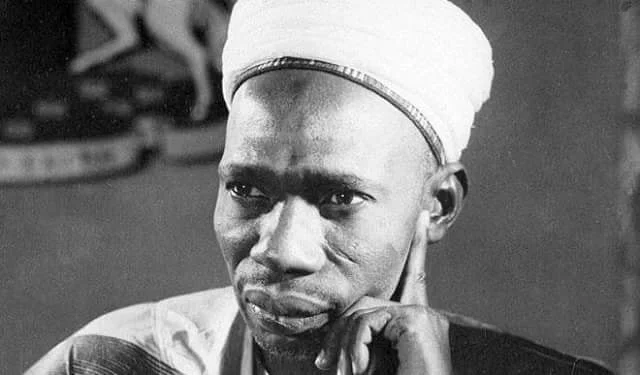
Abubakar Tafawa Balewa Bio: Spouse, Children, Age, Net Worth, Cause of Death, Parents
Sir Abubakar Tafawa Balewa was born in December 1912 in the village of Tafawa Balewa, in the Lere district of Bauchi province, Northern Nigeria.
He was the eldest child of Yakubu Dan Zalla, a Gerawa man who served in the Native Authority under the British colonial administration, and his Fulani wife, Fatima Inna.
Trending Now!!:
He received his early education locally before attending Katsina Higher College (now Barewa College) from 1928 to 1932, where he trained as a teacher. He later rose to become headmaster of Bauchi Middle School before earning a scholarship to study at the University of London’s Institute of Education in 1945, graduating with a diploma in history in 1946.
Balewa entered politics during the colonial era and was elected to the Northern Region’s House of Assembly in 1947, then to the Federal House of Representatives in 1951. He was a founding member and deputy president of the Northern People’s Congress (NPC). Appointed Nigeria’s first Prime Minister in 1957, he retained the position when Nigeria gained independence from Britain on October 1, 1960, making him the only Prime Minister of an independent Nigeria.
On the international stage, Balewa was a respected statesman known as the “Golden Voice of Africa” for his eloquence. He played a key role in negotiating a settlement during the Congo Civil War in 1960, vocally opposed South Africa’s apartheid policies, and was instrumental in the formation of the Organization of African Unity (OAU). Queen Elizabeth II knighted him in January 1960.
He was killed on January 15, 1966, at the age of 53, during Nigeria’s first military coup, which brought the First Republic to a violent end. He is honoured as one of Nigeria’s three official National Heroes, alongside Nnamdi Azikiwe and Obafemi Awolowo. Abubakar Tafawa Balewa University in Bauchi, founded in 1980, bears his name.


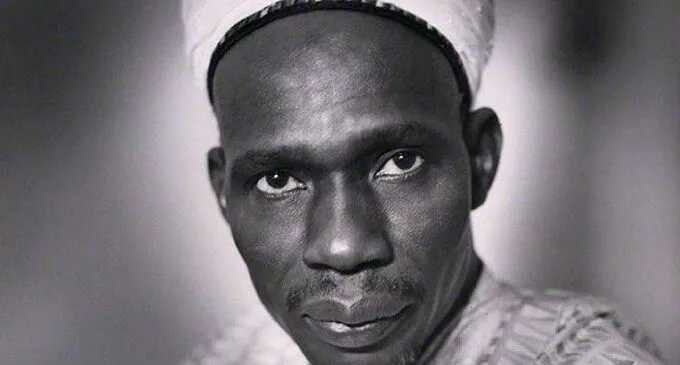
| Abubakar Tafawa Balewa | |
|---|---|
|
|
| Wiki Facts & About Data | |
| Name: | Abubakar Tafawa Balewa |
| Born: | December 1, 1912 |
| Died: | 15 January 1966 (age 53 years old) |
| Place of Birth: | Tafawa Balewa village, Lere district, Bauchi province, Northern Nigeria |
| State Of Origin: | Bauchi State |
| Nationality: | Nigerian |
| Ethnicity: | Gere (Bageri) |
| Education: | Tafawa Balewa Elementary School, Bauchi Provincial School, Barewa College (then Katsina College), University of London Institute of Education |
| Height: | 5 feet 8 inches (1.73 m) |
| Religion: | Islam |
| Parents: | Yakubu Dan Zala, Fatima Inna |
| Spouse: | Hajiya Zainab (m. ?–1966), Hajiya Aisha Jummai Abubakar Tafawa Balewa (m. ?–1966), Hajiya Laraba (m. ?–1966), Hajiya Umma (m. ?–1966) |
| Children: | Mukhtar Tafawa Balewa, Sadiq Tafawa Balewa, Yakubu Abubakar Tafawa Balewa, Umar Tafawa Balewa, Ahmed Tafawa Balewa, Haruna Abubakar Tafawa Balewa, Aminu Tafawa Balewa, Hafsat Tafawa Balewa, Amina Tafawa Balewa, Zainab Tafawa Balewa, Hajiya Yalwa Abubakar Tafawa Balewa, Saude Tafawa Balewa, Hajia Binta Tafawa Balewa, Hajia Uwani Tafawa Balewa, Rabi Tafawa Balewa, Ali Tafawa Balewa, Hajia Talle Aishatu Tafawa Balewa, Abduljalil Tafawa Balewa, and Zainab Tafawa Balewa |
| Occupation: | Teacher, Politician, Statesman |
Early Life & Education
Sir Abubakar Tafawa Balewa was born on December 1, 1912, in the village of Tafawa Balewa, within the Lere district of Bauchi province, in the Northern Nigeria Protectorate. His zodiac sign was Sagittarius.
His father, Yakubu Dan Zala, worked in the house of the district head of Lere within the Bauchi Emirate and was of Gere ethnicity. His mother, Fatima Inna, was of Gere and Fulani descent. Despite the widespread assumption that Balewa was Hausa, his roots were Gere on both sides, with Fulani heritage through his mother’s line.
He was raised in the Islamic faith, which he practised devoutly throughout his life, and later performed the Hajj pilgrimage to Mecca, earning him the title Alhaji. According to family oral history, his paternal grandfather Isa was murdered in front of his family by rivals, and Isa’s widow took her infant son to Bauchi, where the Madaki of Bauchi took her in. Balewa was his father’s only child. No siblings have been documented in the historical record.
The name Tafawa Balewa was drawn from his birthplace and appended to his given name. The village itself takes its name from two corrupted Fulani words, “Tafari,” meaning rock and “Baleri,” meaning black, which may have contributed to the “Black Rock” nickname he acquired in later life.
Balewa began his formal education at a Quranic school in Bauchi. When colonial administrators began pushing for Western education in the Northern region, he was among the children enrolled at Tafawa Balewa Elementary School, after which he proceeded to Bauchi Provincial School.
He later studied at Barewa College, then known as Katsina College, where he was student number 145. Ahmadu Bello was student number 87 and two years his senior, while Abubakar Imam was a year ahead of him. He graduated with a third-class certificate, performing best in English, and went on to become headmaster of Bauchi Middle School after passing the Senior Teacher’s Certificate examination.
Balewa qualified as a Teacher Grade I in Nigeria in 1944, and the following year was admitted to the London University Institute of Education, receiving his diploma in history in 1946. He was among the first Northern Nigerians to receive higher education in Britain, a distinction that set him apart from his peers and planted the seeds of his political ambitions.
Career
Sir Abubakar Tafawa Balewa’s career began not in politics but in the classroom. After returning to Bauchi Middle School as a teacher following his training at Katsina College, he spent over a decade rising through the teaching ranks, eventually becoming headmaster.
His time in the classroom sharpened his mind and gave him credibility among Northern Nigerians that would later fuel his political ascent. During World War II, he developed a keen interest in political activities, and in 1943, he founded the Bauchi Discussion Circle, an organization focused on political reform.
In 1946, Tafawa Balewa was selected by the Bauchi Native Authority as their representative to the Northern House of Assembly, and the House of Assembly in turn selected him as a member of the Nigerian Legislative Council.
On his return from London in 1946, he was elected to the House of Assembly of the Northern Region, and in 1947 was one of its five representatives to the Central Legislative Council in Lagos. His reputation as a clear-headed and eloquent voice for Northern interests grew rapidly, earning him the nickname “Golden Voice of Africa.”
In 1948, he was elected vice president of the Northern Teacher’s Association, the first trade union in Northern Nigeria. He was also a founding member of the Northern People’s Congress (NPC), the political vehicle through which Northern Nigerian leaders sought to protect regional interests within the evolving federal structure.
In 1951, in the North’s first elections, Tafawa Balewa won seats in the Northern House of Assembly and in the House of Representatives in Lagos, where he became a minister in the Central Council. In 1952, he became Nigerian Minister of Works, and in 1954, Minister of Transport and the senior minister and leader of the NPC in the House of Representatives.
As part of his plans to unify the country towards independence, he formed a coalition government between the NPC and the National Council of Nigeria and the Cameroons (NCNC), led by Nnamdi Azikiwe, and also invited the Action Group (AG), constituting the 1957 cabinet as an all-party cabinet. As leader of the NPC in the House of Representatives, he was made the first Prime Minister of Nigeria in 1957.
When Nigeria gained independence from Britain on October 1, 1960, Balewa stood before the nation and the world as its head of government, the sole Prime Minister the country would ever have. After the pro-independence elections of 1959, he again became Prime Minister in a coalition government of the NPC and Nnamdi Azikiwe’s National Council of Nigeria and the Cameroons, and continued to hold that position after Nigeria was officially granted independence in 1960.
In office, Balewa pursued an ambitious domestic and foreign agenda. He worked to develop Nigeria’s transport systems by helping to build ports, river transport systems, and railways. On the continental stage, he was one of Africa’s most respected statesmen. In 1960, he was instrumental in negotiating a settlement between factions in the Congo Civil War.
He led his government in a vocal protest of the Sharpeville Massacre in South Africa and attempted unsuccessfully to persuade other British Commonwealth nations to expel South Africa because of its apartheid policies. Balewa was also one of the African leaders who encouraged the formation of the Organization of African Unity (OAU).
In his addresses of August and October 1, 1960, Balewa declared Africa as the centrepiece of Nigeria’s foreign policy, a doctrine that became a constant variable in the country’s diplomatic engagements for decades to come. His pro-Western orientation drew occasional friction at home, particularly with Azikiwe, but his stature internationally remained formidable.
As Prime Minister, his powers were circumscribed by the federal structure of the government, which reserved more authority for the regions. Balewa proved unable to fully mitigate the growing tensions of 1964 to 1966, manifested by a partial boycott of the 1964 election, army unrest, and outbreaks of violence in the Western Region.
Balewa was overthrown and murdered in a military coup on January 15, 1966, along with several other leaders, including his close companion, Sir Ahmadu Bello. His body was discovered at the roadside along the Lagos-Abeokuta road six days after he was removed from office. His death brought Nigeria’s First Republic to a violent and abrupt end, closing the chapter on the only Prime Ministership the country had ever known.
Personal Life
Sir Abubakar Tafawa Balewa was born on December 1, 1912, and died on January 15, 1966, at the age of 53. He stood at approximately 5 feet 8 inches tall (approximately 1.73 m) and was described as having a slender build.
Balewa was married to four wives: Hajiya Zainab, Hajiya Aisha Jummai Abubakar Tafawa Balewa, Hajiya Laraba, and Hajiya Umma. All four marriages lasted until his death in 1966.
He married Hajiya Jummai when she was 13 years old, and she was from Sokoto. Although all of Balewa’s widows remarried after his death, their subsequent marriages collapsed. Hajiya Aisha Jummai Abubakar Tafawa Balewa was the last surviving widow of the four. She died in Lagos at the age of 85.
Balewa had 19 children. His known children include Mukhtar Tafawa Balewa, Sadiq Tafawa Balewa, Hajia Uwani Tafawa Balewa, Umar Tafawa Balewa, Ahmed Tafawa Balewa, Haruna Abubakar Tafawa Balewa, Aminu Tafawa Balewa (a journalist who has since died), Hafsat Tafawa Balewa, Amina Tafawa Balewa, Zainab Tafawa Balewa, Hajiya Yalwa Abubakar Tafawa Balewa, Saude Tafawa Balewa, Hajia Binta Tafawa Balewa, Rabi Tafawa Balewa (who resisted early marriage in favour of education), Ali Tafawa Balewa (who died at age 9), and Hajia Talle Aishatu Tafawa Balewa (now deceased).
Among his other documented children is Yakubu Abubakar Tafawa Balewa, his eldest son, and Abduljalil Tafawa Balewa, who went on to have a public profile in Nigerian politics. He also had a posthumous daughter, Zainab Tafawa Balewa, who was born to Hajiya Jummai two weeks after his assassination.
On the matter of grandchildren, the publicly documented record is limited. Abduljalil Tafawa Balewa’s daughter Amina Tafawa Balewa married Gboyega Afe Babalola, son of renowned lawyer and elder statesman Afe Babalola, SAN, in a ceremony at the Ansarudeen Mosque in Maitama, Abuja, in a union that bridged two prominent Nigerian families from the north and south of the country. The full names of Balewa’s other grandchildren have not been made available in the public record.
Balewa’s death was violent and politically motivated. On January 15, 1966, soldiers led by Kaduna Nzeogwu carried out a military coup, killing 22 people, including Prime Minister Abubakar Tafawa Balewa and Northern Premier Ahmadu Bello, along with several senior politicians and army officers.
Balewa was abducted from his official residence by Major Emmanuel Ifeajuna and subsequently found dead. His body was discovered five days later at Ifo, along Abeokuta Road, together with that of his Minister of Finance, Festus Okotie-Eboh.
The exact circumstances of his death remain controversial to this day. One account, attributed to Matthew T. Mbu, the youngest minister in Balewa’s cabinet, citing Emmanuel Ifeajuna through Christopher Okigbo, claimed that the Prime Minister had asthma and gasped to death.
A veteran journalist who later became a state governor maintained he saw no gunshot wound on Balewa’s body and that it was still fresh when found five days after his abduction on January 21, 1966. Tafawa Balewa’s body was found by the side of a kola nut tree in a sitting posture, dressed in a white toga with part of it wrapped over his head.
He was subsequently flown to Bauchi and buried there; his tomb was later declared a national monument. News of his assassination spurred violent riots throughout Northern Nigeria and ultimately led to the bloody counter-coup of July 1966.
Net Worth
No verified net worth figure exists for Sir Abubakar Tafawa Balewa. Unlike many political leaders of his era and those who followed, Balewa was widely documented as a man of exceptional personal modesty who did not accumulate wealth during his years in government.
At his death, his major assets included his house in Bauchi and a 50-acre farm where he vacationed when he wanted to relax. That farm, located roughly nine miles outside Bauchi on the road to Tafawa Balewa village, also served as an informal office where many of his official decisions as Prime Minister were made.
The historical record paints a picture of a leader whose legacy was built entirely on service rather than personal enrichment, a rare distinction in Nigerian political history.
His estate left no documented financial portfolio, no known investments, and no accumulated public wealth. The farm and the Bauchi residence were the full extent of what he left behind for his four wives and 19 children. His net worth at the time of his death is not available in any verified public record.
What People Ask
NOTICE!! NOTICE!! NOTICE!!
At TheCityCeleb, we strive to provide accurate and up-to-date biographies and entertainment news, focusing on celebrities. Our editorial team researches information from reputable sources, including interviews, official statements, and verified media.If you spot an error or have additional details, please contact us at editor@thecityceleb.com. We value your feedback and are committed to maintaining trustworthy content.