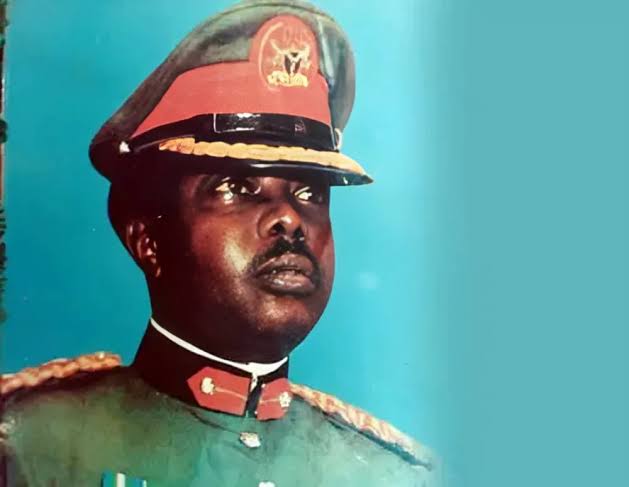
Murtala Muhammed Bio: Age, Death, Parents, Net Worth, Wife, Children, International Airport
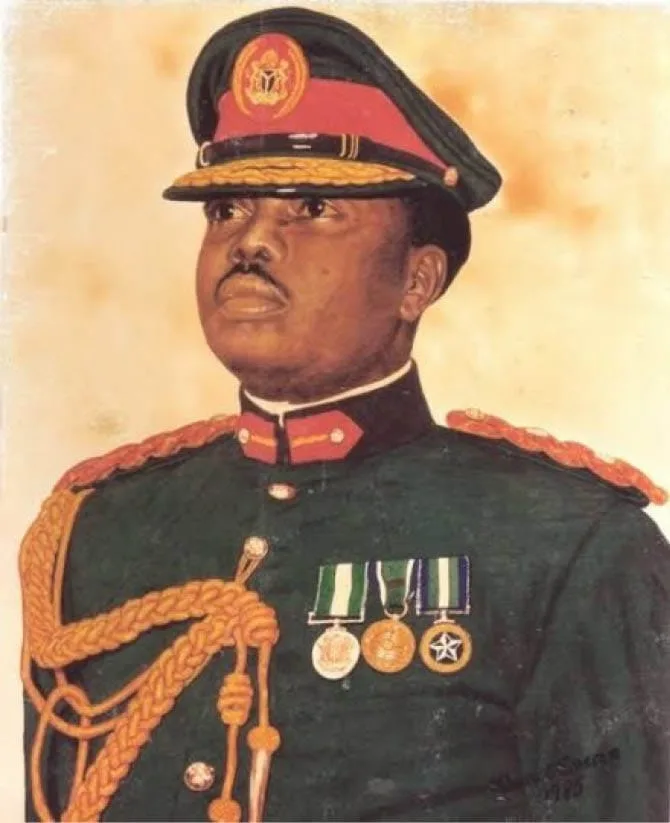
General Murtala Ramat Muhammed was Nigeria’s fourth Head of State, a military officer whose brief but forceful rule left a lasting imprint on the country’s political history.
Murtala Muhammed was born on November 8, 1938, in the Kurawa Quarters of Kano City, Kano State, in what was then the Northern Region of British Nigeria. He was a Hausa-Fulani by ethnicity and a Muslim by faith, reflecting the predominant heritage of his Kano origins.
Trending Now!!:
He had his early education at the Cikin Gida Primary School and Gidan Makama Primary School, both in Kano, between 1944 and 1952, alongside evening classes in Koranic education. In 1952, he was admitted to the prestigious Barewa College in Zaria, where he graduated in 1957 with his Senior Secondary School Certificate. He went on to train at the Royal Military Academy, Sandhurst, in England, alongside further military instruction at the Catterick School of Signals and the Joint Services Staff College.
Muhammed was married to Ajoke Muhammed (née Hafsatu Ajoke Muhammed), whom he wed in 1963. The couple had six children together, including Aisha Muhammed.
He joined the Nigerian Army in the late 1950s and rose quickly through the ranks, serving with the Nigerian contingent of the United Nations peacekeeping force in the Congo before returning to the Signals Corps.
During the Nigerian Civil War, he served as the first General Officer Commanding of the Second Infantry Division and earned the nickname “Monty of the Midwest” for his bold battlefield leadership. By age 33, he had become one of the youngest brigadier generals in the country.

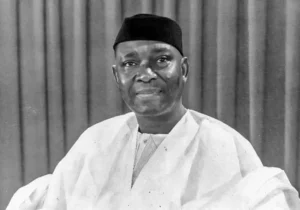
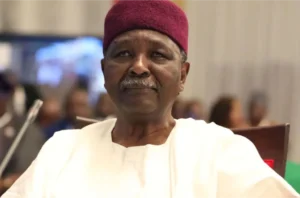
On July 29, 1975, while General Yakubu Gowon was away at an Organization of African Unity summit in Kampala, Muhammed seized power in a bloodless coup, becoming Nigeria’s fourth Head of State. His tenure, though it lasted only about 200 days, was marked by sweeping reforms: he tackled government inefficiency, initiated the relocation of the federal capital to Abuja, created seven new states (Bauchi, Benue, Borno, Imo, Niger, Ogun, and Ondo), and committed to returning the country to civilian rule by 1979. He also became a strong continental voice, backing liberation movements in Angola, Namibia, and South Africa.
Muhammed was assassinated on February 13, 1976, in Lagos, at age 37, during an unsuccessful coup attempt led by Lieutenant Colonel Buka Suka Dimka. He remains the youngest Nigerian Head of State to die in office. His legacy endures through national landmarks such as the Murtala Muhammed International Airport in Lagos and his portrait on the twenty-naira note, and he is widely regarded as one of Nigeria’s first national heroes.
| Murtala Muhammed | |
|---|---|
|
|
| Wiki Facts & About Data | |
| Real Name: | Murtala Ramat Muhammed |
| Stage Name: | Murtala Muhammed |
| Born: | November 8, 1938 |
| Died: | February 13, 1976 (age 37 years old) |
| Place of Birth: | Kurawa Quarters, Kano City, Northern Region, British Nigeria (now Kano State, Nigeria) |
| Nationality: | Nigerian |
| Ethnicity: | Hausa-Fulani |
| Education: | Cikin Gida Primary School, Kano; Gidan Makama Primary School, Kano; Barewa College, Zaria; Royal Military Academy, Sandhurst; Catterick School of Signals |
| Religion: | Islam |
| Parents: | Mr. and Mrs. Muhammed |
| Siblings: | Hajiya Balaraba Ramat Yakubu, Alhaji Ibrahim Ramat |
| Spouse: | Ajoke Muhammed (m. 1963 until his death in 1976) |
| Children: | Abba Risqua Murtala Muhammed, Aisha Muhammed-Oyebode |
| Occupation: | Military Officer, Head of State |
Early Life & Education
Murtala Ramat Muhammed was born on November 8, 1938, in the Kurawa Quarters of Kano City, in what was then the Northern Region of British Nigeria, now part of Kano State, Nigeria.
Under the zodiac calendar, this places him as a Scorpio, a sign often associated with intensity, determination, and strategic thinking, traits that would later define his military career and brief but impactful rule.
Muhammed was Hausa-Fulani by ethnicity, reflecting the predominant heritage of Kano and the wider Northern region of Nigeria, and he practiced Islam, the predominant religion among the Hausa-Fulani people of his birthplace.
Murtala Ramat Muhammed was born to Mr. and Mrs. Muhammed in Kano, into a large polygamous household. He was said to have around 24 siblings, in keeping with the extended-family structures common among prominent Kano families of that era.
Among his notable siblings are Hajiya Balaraba Ramat Yakubu, his younger sister, who would go on to become a celebrated Hausa-language novelist and screenwriter and one of the most respected voices in Kannywood, and Alhaji Ibrahim Ramat, his younger brother, who has spoken publicly over the years about his elder brother’s life and legacy.
His early education began at the Cikin Gida Primary School and later the Gidan Makama Primary School, both in Kano, where he studied between 1944 and 1952. Alongside his formal schooling, he attended evening classes in Koranic education, an experience that would remain evident in his outlook throughout his military career.
In January 1952, he gained admission to the renowned Barewa College in Zaria, then known as Government College, becoming the institution’s 941st enrolled student. He graduated in 1957 with his Senior Secondary School Certificate. Notably, his predecessor as Head of State, General Yakubu Gowon, was his senior at the same school, while General Mohammed Shuwa, a prominent figure of the Nigerian Civil War era, was among his classmates.
Following his secondary education, Muhammed proceeded into military training, enrolling at the Royal Military Academy, Sandhurst, in England, where he further honed the discipline and leadership that would shape his rise through the ranks of the Nigerian Army.
Career
Murtala Ramat Muhammed built one of the most consequential military careers in Nigeria’s early history, rising from a young Sandhurst-trained officer to the nation’s fourth Head of State within little more than a decade and a half of service.
He was commissioned as a Second Lieutenant in the Nigerian Army in 1961, having trained as a regular combatant at the Royal Military Academy, Sandhurst, and taken further specialized courses in Army Signals. Promotion came swiftly: he became a Lieutenant within seven months of his commission.
In 1962, he was drafted to the Congo as part of the Nigerian contingent serving under the United Nations Peacekeeping Force, an assignment that exposed him early to the realities of combat command. On his return to Nigeria, he served as aide-de-camp to Dr. Koyejo Majekodunmi, the administrator appointed to the Western Region during the state of emergency, before taking up the post of Officer-in-Chief, First Brigade Signal Troops, in Kaduna.
He was later sent to the Catterick School of Signals in England for advanced training in telecommunications, and by the end of 1964, twenty-eight months after his commission, he had been promoted to Captain and placed in charge of a signals unit at the Brigade Headquarters in Kaduna.
The political turbulence of 1966 reshaped the course of his career. As a conservative federalist, Muhammed opposed the unification decree introduced by General Johnson Aguiyi-Ironsi following the first military coup of January 1966, and was deeply affected by the assassination of Sir Ahmadu Bello.
When Chukwuma Kaduna Nzeogwu and a group of young majors set the stage for further upheaval, Muhammed emerged as a central figure in the July 1966 counter-coup, leading a mutiny in Abeokuta on the night of July 29 that toppled Aguiyi-Ironsi’s government. He was briefly considered for the position of Supreme Commander before General Yakubu Gowon was installed instead.
When the Nigerian Civil War broke out, Muhammed was appointed General Officer Commanding of the newly formed Second Infantry Division of the Nigerian Army, a force he built up from scratch and charged with driving Biafran forces out of Nigeria’s Midwest region.
His division achieved rapid and decisive success, earning him the nickname “Monty of the Midwest,” a reference to British Field Marshal Bernard Montgomery, for the speed and aggression of his campaign. After clearing the Midwest, his troops crossed the Niger River to link up with the First Division advancing toward Enugu and Nsukka.
It was during this period, in October 1967, that Muhammed’s troops were responsible for the mass killing of unarmed civilians in Asaba, Delta State, an atrocity that came to be known as the Asaba Massacre and remains one of the most painful and contested chapters associated with his military record.
In 1971, at the age of 33, Muhammed was promoted to Brigadier General, making him one of the youngest officers ever to attain that rank in the Nigerian Army. Three years later, he was appointed Federal Commissioner for Communications in Lagos, a role that placed him within the federal government’s inner circle and positioned him for the larger leadership role that would follow.
His military and political ascent culminated on July 29, 1975, when he led a bloodless coup that removed General Yakubu Gowon, who was attending an Organization of African Unity summit in Kampala, Uganda, at the time.
Muhammed was sworn in as Nigeria’s fourth Head of State the following day, bringing his career full circle from signals officer to commander-in-chief, a position he held until his assassination on February 13, 1976.
Personal Life
General Murtala Ramat Muhammed died on February 13, 1976, at age 37, making him the youngest Nigerian Head of State to die in office and the only one to die before turning 40.
Muhammed was married once, to Hajiya Ajoke Muhammed (born Hafsatu Ajoke Muhammed), in 1963. The marriage endured until his assassination in 1976, and Ajoke Muhammed went on to become the fourth First Lady of Nigeria during his time as Head of State. Public records do not confirm any other marriages.
The couple had six children together, including Abba Risqua Murtala Muhammed and Aisha Muhammed-Oyebode. Details of the full names of their other children have not been publicly confirmed.
Muhammed died on the morning of February 13, 1976, in Lagos, the result of an assassination. He was ambushed in traffic near the federal secretariat in Ikoyi while travelling in his Mercedes Benz to Dodan Barracks, his official seat of power.
Soldiers loyal to Lieutenant Colonel Buka Suka Dimka, head of the Nigerian Army Physical Training Corps, emerged from an adjacent petrol station and opened fire, killing Muhammed along with his aide-de-camp, Lieutenant Akintunde Akinsehinwa.
The attack was part of a wider coup attempt by Dimka, who later took to the airwaves at Radio Nigeria in Ikoyi to announce the takeover, citing corruption, indecision, and maladministration as his justification. Troops loyal to the federal government recaptured the radio station shortly afterward, and Dimka fled before being arrested in eastern Nigeria.
He and 38 others, both military officers and civilians, were later convicted by court martial and executed by firing squad. Muhammed’s death, after just 200 days in office, marked one of the most consequential assassinations in Nigeria’s political history.
Net Worth
General Murtala Ramat Muhammed’s exact net worth and personal fortune at the time of his death have not been publicly documented or verified.
As a career military officer and Head of State who governed Nigeria for roughly 200 days during a period when the country’s federal accounts and leadership assets were far less scrutinized or publicly disclosed than today, no credible records exist detailing his personal wealth, properties, or financial holdings.
What is widely acknowledged, however, is that Muhammed was remembered for his modest and disciplined lifestyle, both as a soldier and as a leader.
His family and associates have often pointed to his simplicity as a defining trait, including the fact that he moved through Lagos traffic without a heavy security convoy on the day he was assassinated, a detail many have cited as reflective of his unpretentious nature. His family home in Kano has also been described in interviews as relatively modest, with relatives noting it fell into disrepair in the decades following his death due to a lack of government support.
Given the absence of any confirmed figures, no net worth estimate can be responsibly attributed to him.
What People Ask
NOTICE!! NOTICE!! NOTICE!!
At TheCityCeleb, we strive to provide accurate and up-to-date biographies and entertainment news, focusing on celebrities. Our editorial team researches information from reputable sources, including interviews, official statements, and verified media.If you spot an error or have additional details, please contact us at editor@thecityceleb.com. We value your feedback and are committed to maintaining trustworthy content.