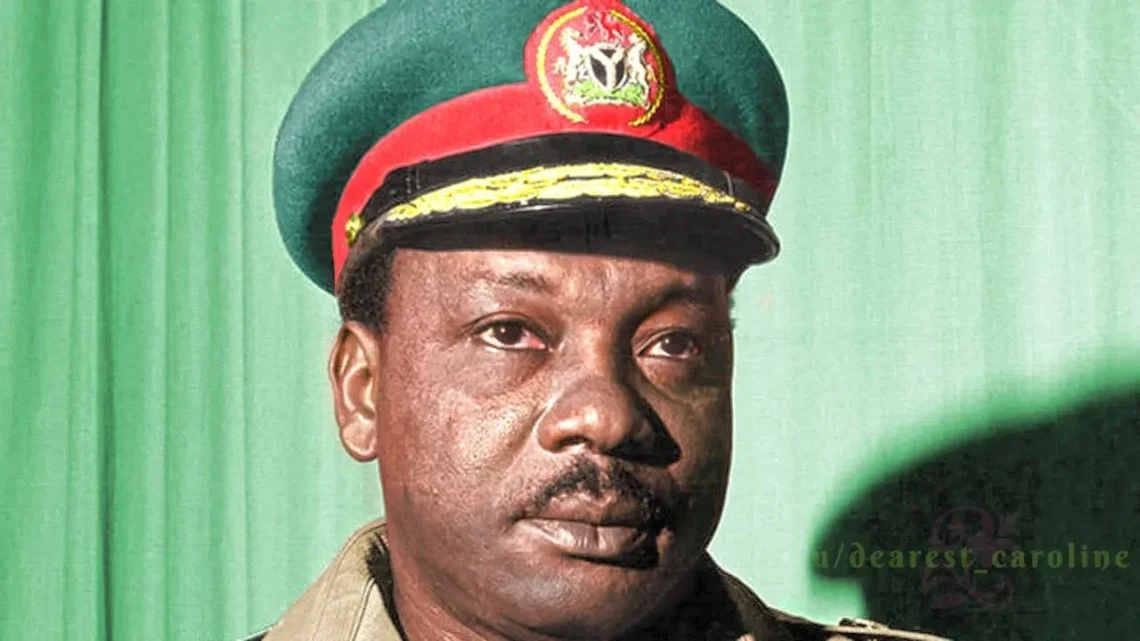
Johnson Aguiyi-Ironsi Bio: Age, Wife, Children, Parents, Cause of Death, Tribe, State of Origin
Major-General Johnson Thomas Umunnakwe Aguiyi-Ironsi (3 March 1924 to 29 July 1966) was a Nigerian military officer who became the country’s first military head of state, serving from 16 January to 29 July 1966.
He was born in Umuahia-Ibeku in present-day Abia State, the son of Mazi Ezeugo Aguiyi. He grew up in a Catholic farming household and was raised alongside his older sister, Anyamma, and her husband, the Sierra Leonean diplomat Theophilus Johnson, whose surname he adopted as his own first name. He received his early education in Umuahia, Calabar, and Kano.
Trending Now!!:
He joined the Nigerian Army at age 18. He went on to serve as aide-de-camp to Governor John Macpherson of British Nigeria during World War II, and in the 1960s led troops into the Congo as part of a UN peacekeeping mission during the Congo Crisis, earning the nickname “Ironside” after dispersing a mob and securing hostages’ release from Katangese rebels. He went on to command the United Nations forces in Congo by 1963 and was made head of the Nigerian Army in 1965.
Following the 15 January 1966 military coup, in which he was the only senior officer of the High Command to survive, Aguiyi-Ironsi took power and became Nigeria’s first military dictator and head of state. He served roughly six months in office before being killed in a counter-coup, after which Yakubu Gowon succeeded him as military head of state.
He was married to Victoria Aguiyi-Ironsi (née Nwanyiocha), and the couple had eight children, including former Defence Minister Thomas Aguiyi-Ironsi Jr.
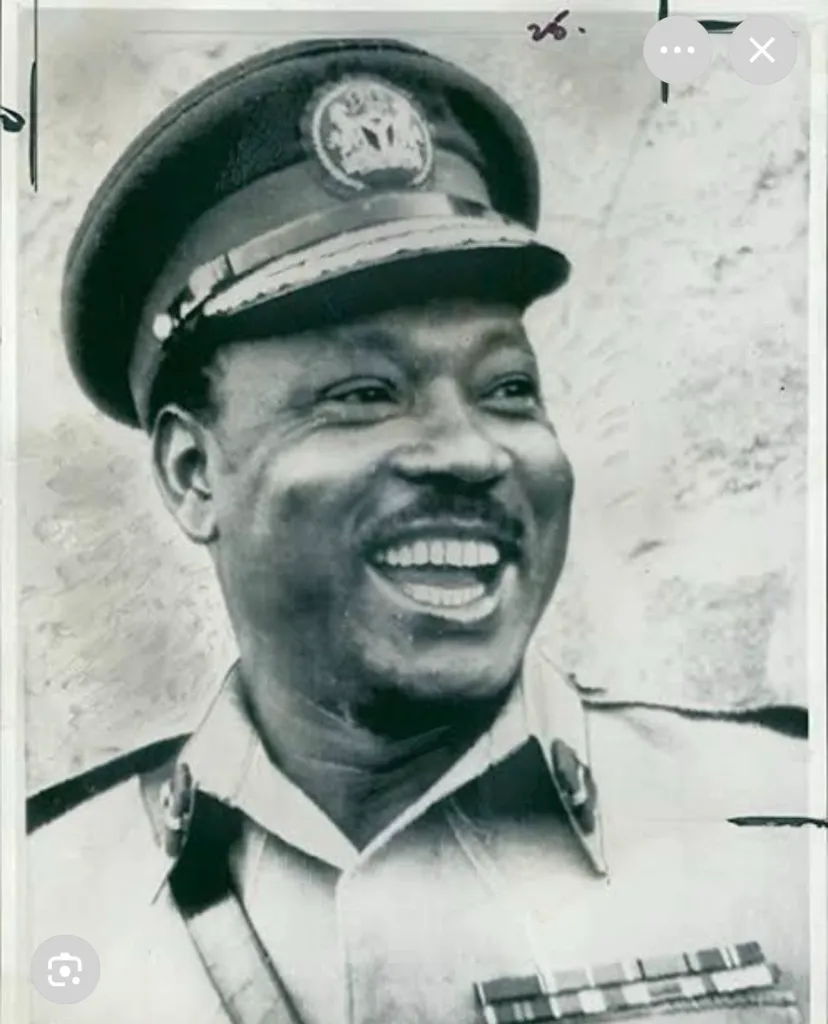
| Johnson Aguiyi-Ironsi | |
|---|---|
|
|
| Wiki Facts & About Data | |
| Real Name: | Johnson Thomas Umunnakwe Aguiyi-Ironsi |
| Stage Name: | Johnson Aguiyi-Ironsi |
| Born: | March 3, 1924 |
| Died: | July 29, 1966 (age 42 years old) |
| Place of Birth: | Ibeku, Umuahia, Abia State, Nigeria |
| State Of Origin: | Abia State |
| Nationality: | Nigerian |
| Ethnicity: | Igbo |
| Education: | Primary school in Umuahia, secondary school in Kano, officer training at Staff College, Camberley, England, and the Imperial Defence College, Seaford House, Belgrave Square |
| Height: | 1.83m / 6 ft |
| Religion: | Catholic |
| Parents: | Mazi Ezeugo Aguiyi , Mrs. Aguiyi |
| Siblings: | Anyamma Johnson |
| Spouse: | Victoria Aguiyi-Ironsi |
| Children: | Thomas Aguiyi-Ironsi |
| Occupation: | Military Officer, Head Of State |
| Net Worth: | $Not publicly available |



Early Life & Education
Johnson Thomas Umunnakwe Aguiyi-Ironsi was born on March 3, 1924, in Umuahia-Ibeku, in what was then the Eastern Region of British Nigeria and is now Abia State, Nigeria. Going by his date of birth, his zodiac sign is Pisces.
Aguiyi-Ironsi was Igbo by ethnicity and was raised in a Catholic household. His father was Mazi Ezeugo Aguiyi, a farmer from Umuahia. He lost his father at an early age, after which he was taken in and raised by his elder sister, Anyamma Johnson, and her husband, Theophilus Johnson, a Sierra Leonean diplomat stationed in Umuahia.
He was about eight years old when this happened. The arrangement left a deep mark on him. He took “Johnson” as his first name and “Ironsi” as his surname from his brother-in-law, reflecting how central this relative had become to his upbringing. Many who knew of the bond mistook Theophilus Johnson for his biological father. Anyamma is the only sibling recorded in his biography.
Aguiyi-Ironsi’s schooling followed the path that family circumstances set for him. He received his primary education in Umuahia, his birthplace, where colonial schooling at the time focused on basic literacy and numeracy under British administration.
He also attended school briefly in Calabar before completing his secondary education in Kano, in Nigeria’s far north. That stretch of schooling in the north likely contributed to his fluency in Hausa, in addition to his native Igbo, English, and Yoruba.
He finished his secondary schooling around age 18 and joined the Nigeria Regiment in 1942, a decision his sister Anyamma opposed. That enlistment marked the end of his formal civilian education and the beginning of a military career that would carry him, more than two decades later, to the top of Nigeria’s army and its first military government.
Career
Aguiyi-Ironsi enlisted in the Nigerian Regiment in 1942 at age 18, starting out as a private in the seventh battalion. He was promoted to company sergeant major in 1946, and that same year, he was sent to England for an officer training course at Staff College, Camberley.
He completed the course in 1949 and received a short-service commission as a second lieutenant in the Royal West African Frontier Force, with a retroactive promotion to lieutenant from the same date. A regular commission followed in May 1953, alongside a promotion to captain.
His rise through the ranks coincided with growing responsibility on the world stage. In 1956, he served as equerry to Queen Elizabeth II during her visit to Nigeria, an honour that earned him appointment as a Member of the Royal Victorian Order. He was promoted to major in 1958, and by 1960, he held the rank of lieutenant colonel and commanded the fifth battalion in Kano.
The Congo Crisis defined the next phase of his career. Later in 1960, he led the Nigerian contingent of the United Nations Operation in the Congo. That same year, he personally negotiated the release of captured Australian medical personnel and Nigerian troops held by rebel forces, an act that earned him an award.
From 1961 to 1962, he served as military attaché to the Nigerian High Commission in London, during which time he was promoted to brigadier and attended courses at the Imperial Defence College at Seaford House, Belgrave Square.
He was appointed a Member of the Order of the British Empire in the 1962 New Year Honours list. On 23 December 1964, he was appointed UN Force Commander in the Congo, becoming the first African officer to command the entire UN peacekeeping force there.
His return to Nigeria brought a complicated reward. Aguiyi-Ironsi’s appointment as General Officer Commanding was, in some respects, a demotion. As a major general commanding UN forces in the Congo, he was reverted to the lower rank of brigadier on returning home.
The outgoing British GOC, Major-General Christopher Welby-Everard, doubted his readiness for the post, arguing he had spent too long abroad and lost touch with the army, and recommended Brigadier Babafemi Ogundipe instead. Prime Minister Tafawa Balewa rejected that advice and backed Aguiyi-Ironsi despite opposition from the Sardauna of Sokoto, Sir Ahmadu Bello. Ironsi became General Officer Commanding of the Nigerian Army on 9 February 1965, the first indigenous Nigerian to hold the post, and was promoted to major general as a result.
The political order he served did not survive the year. Worsening political crisis and breakdowns in law and order across several provinces, which Balewa’s government could not contain, culminated in a bloody coup on 15 January 1966 led by Major Chukwuma Kaduna Nzeogwu.
The plotters killed the most senior figures of the Northern and Western political establishment along with the top echelon of army command, but Aguiyi-Ironsi, though himself a target, survived and was the only senior officer of the High Command left alive by morning. Some accounts suggest he had been tipped off by one of the plotters. Roughly 35 hours after the shooting stopped, he moved to take control of the country.
His tenure as head of state was short and turbulent. He took power on 16 January 1966 at a moment of deep political uncertainty, and rising regional tension and dissatisfaction with his government steadily eroded confidence in his command. Centralizing measures, including the controversial Decree No. 34 of May 1966, which replaced Nigeria’s federal structure with a unitary government, deepened resentment among northern officers who already viewed his administration with suspicion.
On 29 July 1966, disaffected officers staged a counter-coup, and Aguiyi-Ironsi was killed in Ibadan along with the Military Governor of the Western Region, Adekunle Fajuyi. The counter-coup brought his 194-day rule to an end and opened the way for Yakubu Gowon to emerge as head of state.
Personal Life
Johnson Aguiyi-Ironsi was born on March 3, 1924, and died on July 29, 1966, at age 42. He had been head of state for 41 years, 10 months, and 13 days when he took power on January 16, 1966, and his tenure of 194 days remains the shortest of any Nigerian military head of state.
Aguiyi-Ironsi married once. His wife was Victoria Nwanyiocha Aguiyi-Ironsi, whom he married in 1953 while she was still a student at Holy Rosary Convent School in Okigwe.
She went on to become Nigeria’s second First Lady during his time in office, serving from January 16 to July 29, 1966. There is no publicly documented history of any marriage or relationship before Victoria, and no record of dating history beyond the marriage itself.
The couple had eight children together. According to their son Thomas Aguiyi-Ironsi, the family included six daughters and two sons. Of the eight, only Thomas Aguiyi-Ironsi is publicly named; he later served as Nigeria’s Minister of Defence under President Olusegun Obasanjo. The names of the other seven children are not publicly documented.
Aguiyi-Ironsi’s exact height is not on public record, though multiple accounts describe him as standing well over six feet tall (over 1.83 meters), an imposing physical presence that matched his bearing as a senior army officer.
His death came at the hands of mutinous soldiers during the July 1966 counter-coup. Soldiers overpowered him and the Military Governor of the Western Region, Adekunle Fajuyi, stripped off their epaulettes, beat them, and dragged them to a shallow pit in Lalupon, near Ibadan, where they were shot.
The cause of death was execution by gunshot, carried out by the rebel officers who launched the counter-coup against his government.
Net Worth
Johnson Aguiyi-Ironsi’s net worth is not publicly available. No verified figure exists for his personal wealth, and no credible source has published an estimate.
His son, Thomas Aguiyi-Ironsi, noted that his father was not interested in accumulating personal wealth and despised nepotism, a detail consistent with the absence of any documented fortune associated with his name. As a career military officer and head of state for only 194 days before his assassination in 1966, he had a public record centred on military and political service rather than personal finances.
What People Ask
NOTICE!! NOTICE!! NOTICE!!
At TheCityCeleb, we strive to provide accurate and up-to-date biographies and entertainment news, focusing on celebrities. Our editorial team researches information from reputable sources, including interviews, official statements, and verified media.If you spot an error or have additional details, please contact us at editor@thecityceleb.com. We value your feedback and are committed to maintaining trustworthy content.