Morocco Lose the AFCON Title in Court as CAS Rules the Senegal Walk-Off Was Not a Forfeit
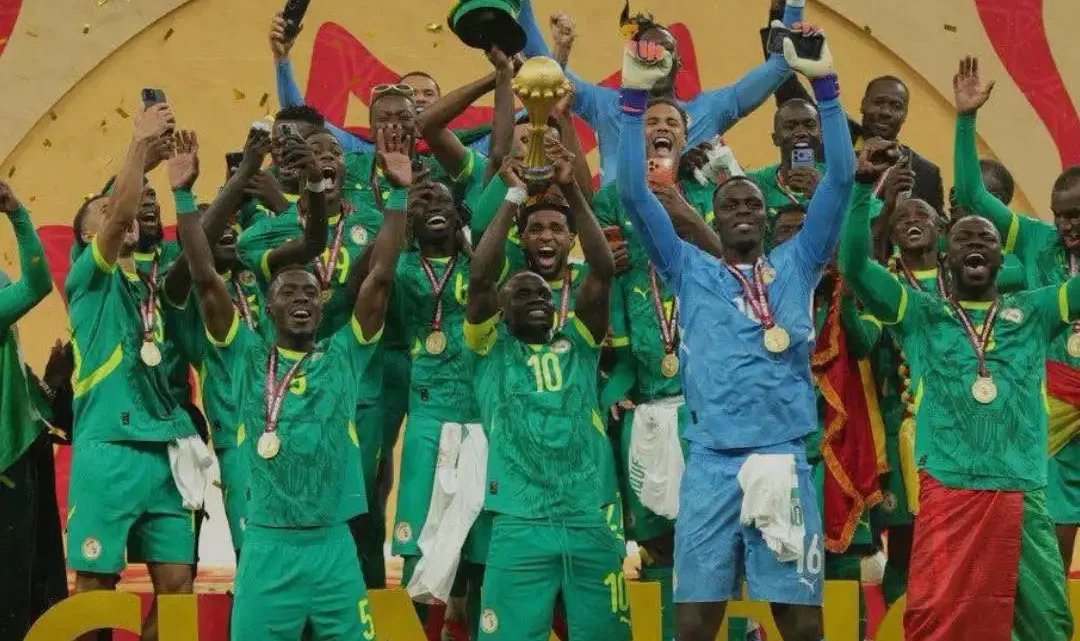
Senegal are the champions of Africa again. The Court of Arbitration for Sport ruled on Tuesday that the Lions of Teranga won the 2025 Africa Cup of Nations final on the pitch in Rabat.
It set aside a decision by the Confederation of African Football to strip them of the trophy and give it to host nation Morocco, 310 days after one of the most chaotic finals in the history of the sport.
Trending Now!!:
In a unanimous decision announced from Lausanne, the court upheld the appeal brought by the Senegalese Football Federation against the Confederation of African Football and the Royal Moroccan Football Federation.
It annulled the March ruling of the CAF Appeal Board and reinstated the earlier decision of the CAF Disciplinary Board, confirming the result of the final as 1-0 to Senegal. The Appeal Board’s ruling had rewritten the match as a 3-0 forfeit win for Morocco, which would have given the Atlas Lions their first continental title since 1976.
The panel concluded that the forfeiture rules in the tournament regulations were never triggered. Those provisions, the court held, apply when a team’s conduct leads the referee to end a match for good. Referee Jean-Jacques Ndala of the Democratic Republic of Congo allowed play to resume, both teams went back onto the field, and the match was finished.




Matthieu Reeb, the court’s secretary general, said the referee committed no error in law. The panel considered the choice to restart or stop the match to lie within the referee’s sole authority. The Moroccan federation had argued that the referee’s decision fell outside the field-of-play doctrine in football’s Laws of the Game, and that Senegal’s departure should have ended the match early.
The court was not persuaded. The panel was chaired by Gérald Simon and included Luigi Fumagalli and Ulrich Haas. A full written ruling setting out the reasoning will follow.
The dispute traces to the evening of January 18 at the Prince Moulay Abdellah Stadium. The match was goalless as it moved into stoppage time. Senegal thought they had scored when Ismaila Sarr headed toward goal, but Jean-Jacques Ndala disallowed the effort for a foul by Abdoulaye Seck on Achraf Hakimi, and replays showed only light contact.
Minutes later, after a lengthy video review, the referee awarded Morocco a penalty for a challenge by El Hadji Malick Diouf on Brahim Diaz. Senegal coach Pape Thiaw told his players to leave the field. Both benches clashed; some Senegalese supporters tried to reach the pitch and fighting broke out in the stands. It was Sadio Mane, the team’s most celebrated player, who persuaded his teammates to return after a delay of more than ten minutes.
Brahim Diaz then attempted a soft chipped penalty down the middle, and Edouard Mendy gathered it without difficulty. Early in extra time, Pape Gueye struck a shot from outside the area into the net, the first goal Senegal had ever scored in an Africa Cup of Nations final. Senegal held on to claim their second continental title, after the first in 2021.
Pape Bouna Thiaw later admitted on television that he regretted ordering the walk-off and apologized. However, he afterward defended his conduct on Instagram as an effort to shield his players from injustice. Morocco coach Walid Regragui called the scenes shameful for African football.
The fallout ran for months. On January 29, the confederation’s disciplinary process imposed fines totaling more than $1 million and handed bans to Pape Bouna Thiaw and to players from both sides, restricted to African competitions. The coach received a five-match suspension and a $100,000 fine.
The Moroccan federation was fined $200,000 over ball boys who tried to take a towel from Edouard Mendy’s goalmouth, an amount the Appeal Board later reduced to $50,000, and a further $100,000 fine over interference around the video review area was upheld.
Moroccan authorities arrested Senegalese supporters after the match, and on February 20 a Moroccan court sentenced 18 of them to prison terms of between three months and one year. Senegal’s prime minister, Ousmane Sonko, condemned the sentences days later. Walid Regragui left his post in early March, and Mohamed Ouahbi was named to succeed him.
Morocco’s federation had asked the confederation to cancel the result and award it the title, and the Disciplinary Board dismissed the request. On March 17, the Appeal Board upheld a protest from the Moroccan federation, found that Senegal had breached Article 82 of the tournament regulations and applied Article 84 to declare the team forfeit.
The Senegalese federation called the decision unfair, unprecedented and unacceptable, and its president, Abdoulaye Fall, described it as an administrative robbery. Its secretary general, Abdoulaye Seydou Sow, vowed the federation would not back down.
Sadio Mane, who had said after the semifinal that he would not play at another Africa Cup of Nations, insisted on social media that the world knows who the true champions are and complained of too much corruption in the game. The Moroccan federation welcomed the March ruling as a defense of rules essential to the running of international competition.
Senegal’s federation filed its appeal with the court in March, and the panel heard the case in Lausanne on October 8. The day before the ruling, the confederation’s president, Patrice Motsepe, said the body would respect whatever the court decided.
Hours before the verdict, Morocco’s lawyers wrote to the court to flag an incident, and the federation reserved the right to take further legal action. Rulings of the court can be challenged before the Swiss Federal Tribunal, though only on narrow procedural grounds, and no such challenge has been confirmed.
The decision rewrites the roll of honor of African football. Senegal go back into the record books as the 2025 champions and will arrive as the reigning title holders at the next tournament, to be hosted jointly by Kenya, Uganda and Tanzania.
For Morocco, who staged the tournament and were one penalty away from winning it, the verdict closes a path to a long-awaited second title. For the confederation, whose own appeal body was overruled on the most prominent match in the continent’s calendar, the ruling is a rebuke that will keep questions about its governance and disciplinary procedures in the headlines.