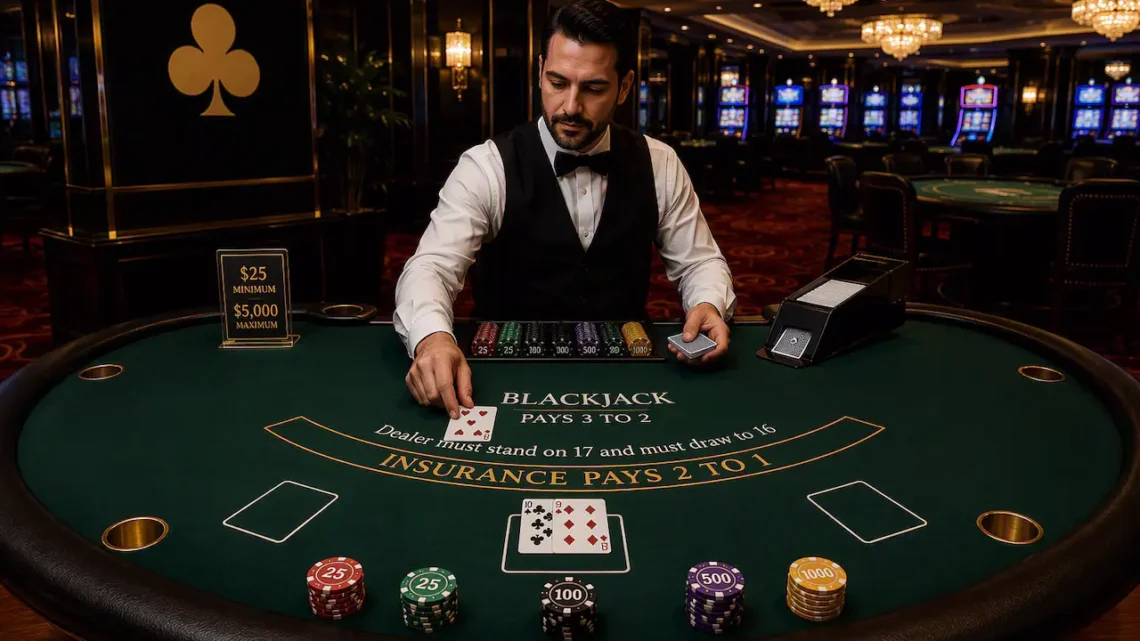
Real Dealers, HD Streams: What to Expect From a Live Casino Table
Sitting down at a live casino table for the first time can feel disorienting if you are expecting the pacing of a digital slot or an RNG table game.
The dealer sets the tempo, other players’ bets are visible, and the whole experience runs closer to a physical casino than most other online gambling formats.
Trending Now!!:
What Actually Happens Before You Place a Bet
A live table session starts with a betting window, a fixed period, typically 10 to 20 seconds, during which players place chips before the dealer deals or spins. That window closes automatically, and bets placed after it shuts are rejected by the software regardless of how the video feed appears to a player watching with any streaming delay.
Understanding that the betting window is enforced by the underlying software, not by the dealer watching the table, matters for managing expectations around any perceived lag between what a player sees on screen and when their bet actually registers.
A visible countdown timer, standard on nearly all live tables, gives players an explicit signal of how much time remains, removing the guesswork that might otherwise come from watching the dealer’s physical movements alone.
The Dealer’s Role Is Larger Than It Looks
Live dealers are trained specifically for camera-facing service, which differs meaningfully from physical casino dealer training. They narrate the action for viewers who cannot see the table in person, confirm bets and payouts verbally, and manage pacing across what is often a stream watched by hundreds of players simultaneously rather than the handful seated at a physical table. Tables at BC.Game live casino run with this dedicated dealer structure across blackjack, roulette, and baccarat variants, each staffed independently rather than sharing dealers across game types.




A skilled live dealer also manages the chat feature many platforms attach to the stream, responding to player questions in real time without disrupting the flow of the game itself, a genuine skill that separates well-run studios from ones that feel chaotic or poorly paced.
Dealers rotate on shift schedules like any broadcast personnel, and most studios maintain a roster large enough that a specific dealer’s presence on a table is not something a player can reliably plan around, unlike some physical casinos where regular players build familiarity with specific staff.
Streaming Quality Affects the Experience More Than People Expect
HD and increasingly 4K resolution streams have become standard among major studios, but the practical experience still depends heavily on the viewer’s own connection quality. A player on a slow or unstable connection will experience buffering or dropped frames regardless of how high the studio’s own broadcast quality is, which can create the false impression that the game itself is lagging.
Multi-camera setups, letting a player switch between a wide table view and a close-up on the cards or wheel, have become common enough that their absence on a given table is now a signal of a lower-quality studio setup rather than an industry-standard limitation. Public licensing registers, such as the one maintained by the UK Gambling Commission, let players independently confirm that a platform’s live studio operates under an active, verifiable license rather than relying purely on the platform’s own claims.
Mobile playback introduces its own constraints separate from desktop streaming. Smaller screens compress the amount of detail a player can comfortably see, which is why well-designed mobile live casino interfaces prioritize a single clear camera angle over the multi-camera options that make more sense on a larger desktop display.
Table Limits and Session Pacing
Live tables typically run with fixed minimum and maximum bet limits that do not change during a session, unlike some RNG-based games that adjust bet sizing dynamically. Limits also vary noticeably by table; a studio commonly runs several versions of the same game at different limit tiers, letting players self-select into a pace and stakes level that matches their bankroll.
Session pacing is set by the dealer and the game type rather than by the player, which is a meaningful adjustment for anyone used to the self-paced nature of RNG slots or table games where the next hand starts only when the player is ready.
Some platforms offer speed variants of popular live games, using shortened betting windows and faster dealer pacing for players who want the live format’s authenticity without the slower rhythm of a standard table. These variants are typically labeled explicitly, so checking the table name before joining avoids an unexpected pacing mismatch.
What First-Time Players Should Check Before Sitting Down
Checking a table’s minimum bet, confirming the betting window length, and watching a few rounds before committing money are simple habits that prevent the most common first-session frustrations.
None of these checks take more than a minute, and they answer most of the practical questions that catch new live casino players off guard. Reading the specific table’s rule sheet, rather than assuming it matches a different table played previously, closes out the short list of pre-session checks worth doing.