
Dealt the Best Hand in Africa: How Nigeria Lost Its Way, and the Warning Every African Must Hear
In 1961, a Nigerian farmer cracking palm fruit was feeding the world. The country produced more than 45 percent of global palm oil, roughly seven times the output of Malaysia.
Today Malaysia and Indonesia, working with a crop that originated in West Africa, supply more than 80 percent of the world’s palm oil, while Nigeria’s share has shrunk to around 2 percent.
Trending Now!!:
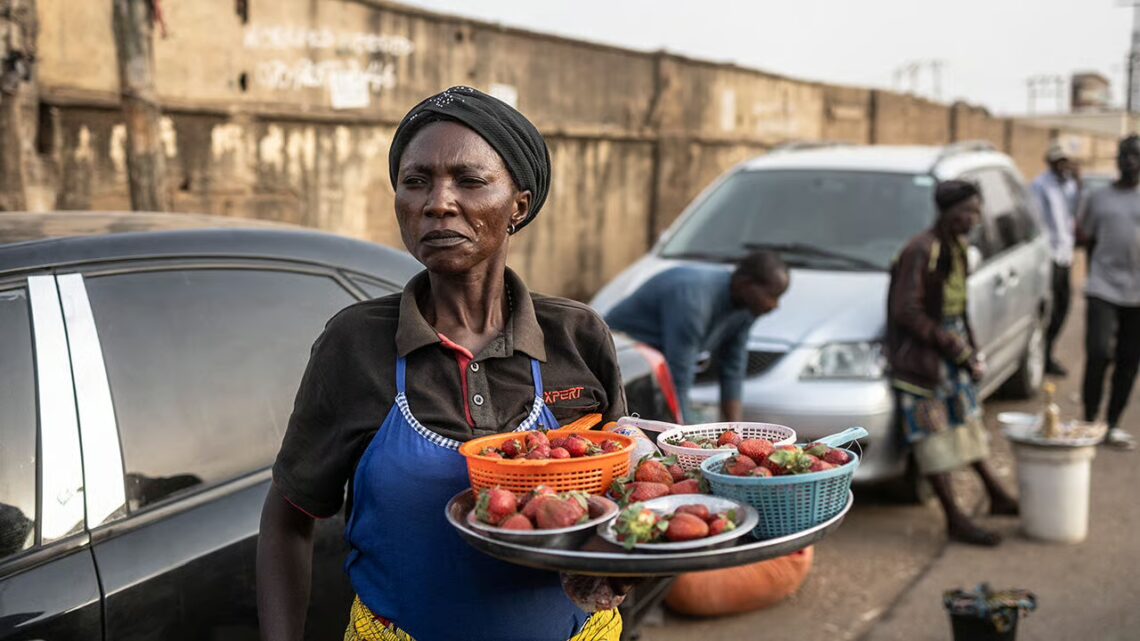
The nation that once stacked groundnut sacks into pyramids in Kano now spends billions of dollars a year buying wheat, rice, sugar and fish from other countries’ farms. Nigeria did not run out of land, rain or people. It ran out of the will to use them.
Nigeria is poor because, for more than half a century, its rulers chose to sell what lay under the ground instead of building what stood on top of it. Oil money replaced farming, factories and taxes as the engine of the state, and a narrow circle captured much of the proceeds.
The plain foundations of a productive nation (secure land titles, dependable electricity, working schools and hospitals) were never laid. The result is about 140 million Nigerians, roughly 63 percent of the population, living below the poverty line, according to the World Bank. The same pattern threatens much of the continent.
Nigeria covers about 924,000 square kilometers, most of it plains and gentle hills lying between the rainforest and the Sahel. Rain falls across the country, temperatures stay warm all year, and the agriculture ministry counts more than 70 million hectares of arable land.



A population well above 230 million, much of it young, supplies labor and a domestic market that few developing countries can match.
History shows what that combination can deliver. In the early 1960s, agriculture made up about 63 percent of Nigeria’s economic output, according to a Central Bank of Nigeria research paper. The country exported palm produce, cocoa, cotton, rubber and groundnuts in large volumes.
In Kano, groundnut sacks piled into pyramids that became a symbol of northern prosperity. Farmers, not oil rigs, paid for the young republic.
Oil was found at Oloibiri, in the Niger Delta, in 1956. By the early 1970s, agriculture’s share of national output had fallen to roughly 33 percent, the same research paper shows, and crude was fast becoming the state’s main source of income.
The shift followed the incentives. Oil money reached government accounts without a single farmer, factory worker or taxpayer having to produce anything for it. Farmers noticed that a city job tied to the oil economy paid better than a year of hard labor in the field, and many left.
Governments noticed that export crops no longer decided whether the treasury was full. Fields went idle, processing industries never matured, and a country that exported food began to import it.
Researchers point to other causes as well: commodity marketing boards that skimmed what farmers earned, aflatoxin contamination that damaged groundnut exports, a civil war, and a revenue-sharing system that pays states from the oil pool whether or not they grow anything. All of them hurt farming. The common thread is that oil removed the pressure to fix any of them.
Elsewhere, the pressure stayed on. Malaysia and Indonesia built plantations, subsidies and processing industries around the oil palm. By 1980, Malaysia was producing about 2.6 million tonnes of palm oil a year, nearly four times Nigeria’s stagnant 700,000 tonnes, and Indonesia now produces more than 46 million tonnes annually.
Nigeria now buys abroad what it once sold. The agriculture ministry says the country spends about $10 billion a year importing wheat, rice, sugar, fish and tomato paste, and has called the bill unsustainable: “When oil prices shake, Nigeria trembles.” The real figure is itself murky.
Foreign exchange sold through official channels for food imports was only about $2.4 billion in the latest central bank data; ministers have cited figures as high as $22 billion, and the ministry’s own records contradicted both. A country that cannot agree on how much food it imports will struggle to manage the dependence.
Oil produced enormous revenue, and the evidence that ordinary households saw little of it is everywhere. In about six years, the number of Nigerians below the poverty line rose from 81 million to roughly 140 million, the World Bank estimates, while average household consumption fell. Budget analysts report that roughly nine in ten jobs sit in the informal economy, with no pension, no contract and no safety net.
The leaks start upstream. The Nigeria Extractive Industries Transparency Initiative documented 619.7 million barrels of crude lost to theft and other losses between 2009 and 2020, valued at $46.16 billion.
Theft alone exceeded 200,000 barrels a day before 2019. By 2022, output had slid below one million barrels a day, handing the title of Africa’s top oil producer to Angola.
The Dangote Refinery in Lagos was built by Aliko Dangote at a cost of about $20 billion and designed to process 650,000 barrels a day as the world’s largest single-train refinery. Soon after launch, it was buying American crude because Nigerian supply could not be guaranteed. A refinery in an oil-producing country importing foreign crude tells the whole story in one transaction.
Oloibiri gave the nation its first commercial crude and became shorthand for a community that gave much and kept little. The pattern holds across the Niger Delta.
A landmark UNEP assessment of Ogoniland in 2011 found pollution so widespread that restoration could take up to 30 years and an initial $1 billion, potentially the largest cleanup ever attempted. More than 6,800 spills have been recorded in the delta over five decades of operations.
Responsibility is disputed. Shell argues that most spills come from theft, sabotage and illegal refining, while rights groups and the UN found that its own cleanups fell short. In 2015, the company paid £55 million (about $85 million) to the Bodo community after two major spills in 2008 that, the community’s lawyers said, had harmed 69,000 people. Years later, the Ogoniland cleanup was still dragging.
The consequences feed back into the economy. Resentment hardened into militancy, and during a wave of pipeline attacks, national output fell from 1.9 million barrels a day in 2015 to 1.4 million the following year. Neglect produced sabotage, sabotage cut revenue, and lower revenue deepened the neglect.
Oil can pay for imports. It cannot substitute for the plain things that hold a country up, and land comes first. The Land Use Act of 1978 vested control of land in state governors, and the system built on it has left more than 90 percent of the country’s land unregistered, according to housing minister Ahmed Dangiwa.
Researchers estimate that this locks away about $300 billion in dead capital, meaning assets that cannot be legally traded or pledged for loans. A farmer who works fifty hectares may hold no document a bank will accept, and a company that wants to build a large farm or factory must first survive a title dispute. Modern agriculture cannot start in that environment.
Electricity is the next missing foundation. Nigeria has installed generation capacity above 12,000 megawatts, yet the grid typically delivers only 4,000 to 5,000 for more than 230 million people. Annual electricity use stands below 160 kilowatt-hours per person, against more than 3,500 in South Africa.
The national grid has collapsed more than 100 times since the sector was privatized, and twice within five days during one January. Factories and shops run on diesel generators, and every naira spent on diesel is a naira that a competitor in another country does not have to spend.
People are the third. UNICEF counts more than 10 million primary-school-age children out of school in Nigeria, the largest number of any country, plus about 8 million more at junior secondary level.
Roughly one child in three is outside the classroom, with the heaviest concentration in the north, where Kano alone has nearly 900,000. Officials like to call the youth bulge a demographic dividend. A dividend only exists when young people are educated and employed, and without both, the same bulge becomes a liability.
The educated are leaving too. Health Minister Muhammad Ali Pate said in 2024 that about 15,000 to 16,000 doctors had left the country in five years. The Nurses and Midwives Council of Nigeria reported that 42,000 nurses and midwives left between 2021 and 2024.
Federal health ministry data show doctor departures hitting a ten-year high of 3,974 in 2024, up from 688 in 2015. The Nigerian Medical Association has said only about 24,000 licensed physicians are actively practicing for a population above 200 million. The professionals trained at Nigeria’s expense are now staffing hospitals abroad.
Debt tightens the squeeze. The federal government planned to spend about N15.9 trillion (roughly $11 billion) on debt service in its latest budget, more than the N15.4 trillion (about $10.5 billion) set aside for running government operations. Officials and independent analysts dispute the exact share of revenue consumed.
Still, the Debt Management Office itself projects the ratio climbing to nearly 72 percent by 2030, well past its own 50 percent comfort limit. Every naira that goes to creditors is a naira not spent on the power, schools and hospitals described above.
Nigeria is the biggest case, not the only one. The International Energy Agency estimates that about 600 million Africans, nearly two in five, live without electricity, and that sub-Saharan Africa holds 80 percent of the world’s population without power.
Electricity use per person across Africa has stagnated for three decades while India and Southeast Asia surged, and less than $2.5 billion a year is being committed to new connections in sub-Saharan Africa. No country has industrialized in the dark.
Other countries show that the outcome is a choice. Norway banked its oil income in a sovereign fund that belongs to its citizens. Botswana, among the poorest countries at independence, used diamond revenue to build public services and a savings fund, even as it now faces strain from falling diamond prices. Malaysia and Indonesia turned a West African crop into large industries of their own. Their edge was less geology than discipline.
Real changes are underway in Nigeria. Subsidy removal, a liberalized currency market and tax reforms have brought macroeconomic stability. However, the World Bank concludes that households have not yet felt relief, and it projects poverty easing only slowly, to about 59 percent by 2028.
NNPC says crude output now averages about 1.7 million barrels a day, with theft sharply down from pre-2019 levels. The Dangote Refinery is operating on African soil.
Ordinary people are not waiting for the grid either. The IEA notes record sales of solar home systems in major markets including Nigeria, Kenya and Ethiopia, a sign that citizens will build what governments will not. Reform without rebuilding the foundations, though, produces stability for the few, not growth for the many.
Nigeria’s story is a warning with a deadline. Population projections have the country adding well over 100 million people by mid-century. A country that cannot light, feed and school 230 million today will not manage 350 million on the same habits.
Citizens must become auditors. Oil accounts are published and then ignored, and publication means little until the communities that live on the land demand to know where every barrel went, then vote, organize and sue accordingly.
Governments must depend on the people they serve. A state fed by oil rents owes its citizens little, while a state fed by their taxes owes them roads, power and answers. Broadening the tax base is painful and politically costly, and it is also the oldest route to accountability.
Land must belong to those who farm it. Reforming the Land Use Act, or replacing it with systems that title and register customary land, would turn dead capital into collateral. Kaduna State’s digital land registry is often cited as a model worth copying.
Power must be fixed before anything else, including through the local solar and mini-grid solutions that citizens are already buying. Africa must also process what it grows. Cocoa, groundnuts and palm shipped raw export the jobs along with the crop and keeping that work at home is how a farming economy becomes an industrial one.
A classroom and a clinic are infrastructure just as surely as a road, and a country that loses its teachers and doctors is spending its future to pay for the present.
Nobody handed Nigeria a bad hand. The land was fertile, the rain was reliable, the people were many, and the oil was real.
What the country lacked was the discipline to turn those gifts into institutions that outlast a single boom. This choice is still available, to Nigeria and to every African country watching, and every year spent postponing it makes it more expensive. The hand has not changed. The question is who will finally play it.