How Chronic Inflammation Ages You Faster and the Foods That Drive It
Inflammaging, the chronic low-grade inflammation now linked to skin, heart, brain, and muscle aging, is driven in large part by diet. Here is what the science shows about the foods accelerating it and what actually slows it down.
Chronic low-grade inflammation, known in scientific circles as inflammaging, accelerates biological ageing by keeping the immune system in a constant state of low-level alert.
Diets high in ultra-processed foods, added sugar, and industrially heated fats feed this process directly, damaging collagen, blood vessels, and brain tissue years before it shows up on paper as disease.
Trending Now!!:
The Biology Behind Inflammaging
The term inflammaging was coined in 2000 and has since become one of the most studied concepts in gerontology, with Claudio Franceschi recognized as the researcher who did the most to define and popularize it.
Franceschi has been a leading figure in the field, which has shifted over the past two decades from studying specific inflammatory diseases toward a broader understanding of ageing and immune modulation. The distinction matters because inflammaging is not the same as an infection or an injury response.
It refers to chronic, low-grade, systemic inflammation that increases with age in the absence of overt infection, and it remains distinct from immunosenescence, the age-related decline of the immune system itself.
What separates this from a normal, healthy inflammatory response is duration and pattern. Rather than the sharp spike and resolution seen in acute inflammation, inflammaging involves a gradual increase in inflammatory factors, immune system imbalance, and prolonged inflammatory signalling, often accompanied by immune senescence.




The body essentially forgets how to turn the alarm off. Over years, that unresolved signalling reshapes tissue at a structural level, which is why researchers increasingly treat it as one of the hallmarks of ageing itself rather than a side effect of it.
The mechanisms driving this are becoming clearer. Inflammaging arises from persistent activation of innate immune pathways, senescence-associated secretory phenotype signalling, metabolic dysregulation, and age-related alterations in the gut microbiome.
That last piece, the gut microbiome, is where diet exerts its most direct influence, since the foods eaten daily shape which bacterial populations thrive and how much inflammatory signal they send back through the gut lining.
A widely discussed study reinforced how much of this is environmental rather than purely biological. Research published in Nature Ageing found that people living in non-industrialized societies experience less age-related chronic inflammation than their counterparts in industrialized societies, despite inflammaging long being treated as a universal predictor of chronic age-related disease such as heart problems and diabetes.
That finding reframed inflammaging less as an inevitable feature of getting older and more as a byproduct of industrialized living, with diet sitting near the top of the list of suspects.
What Inflammaging Actually Does to the Body
The organ-by-organ damage from chronic inflammation is well documented and explains why inflammaging correlates with so many unrelated-seeming conditions at once.
Cardiovascular System
Inflammaging drives cardiovascular disease such as atherosclerosis by persistently elevating pro-inflammatory factors like CRP and IL-6, which cause endothelial damage and lipid deposition.
In practical terms, the blood vessel lining becomes a site of ongoing low-grade injury, and the body’s repair response, rather than healing it cleanly, lays down the plaque that eventually narrows arteries.
Brain and Cognitive Function
In neurodegenerative conditions such as Alzheimer’s and Parkinson’s disease, inflammaging worsens neuronal damage by continuously activating microglial cells and releasing cytokines such as TNF-alpha.
Microglia are the brain’s resident immune cells, and when they stay switched on for years instead of responding to a discrete threat and standing down, they contribute to the slow neuronal loss associated with cognitive decline.
Skin and Visible Ageing
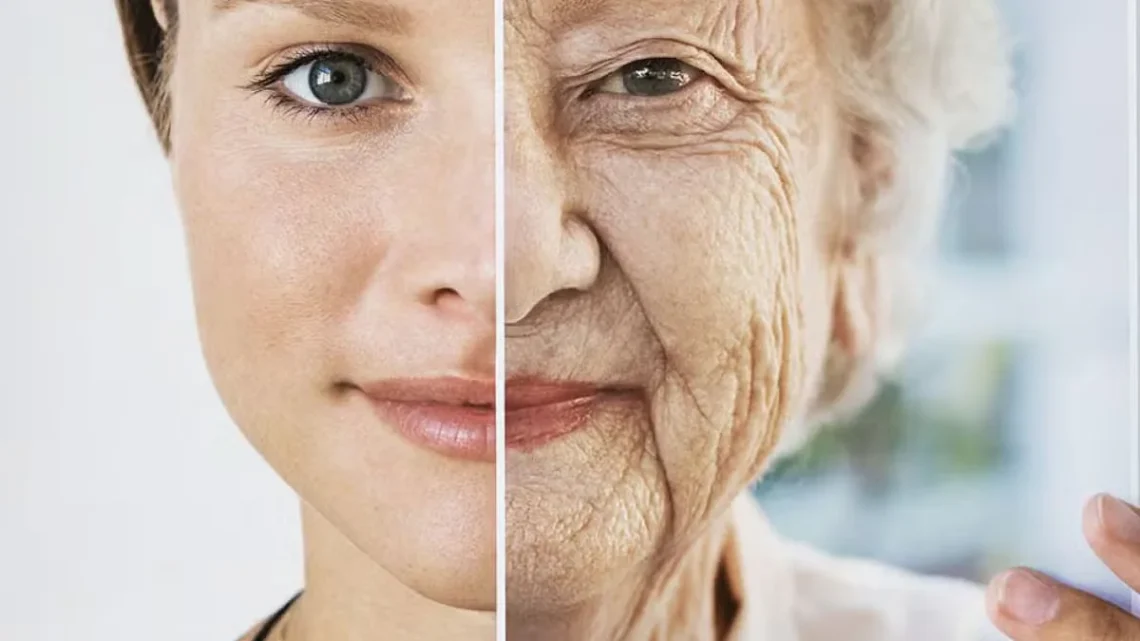
Skin is where inflammaging becomes cosmetically obvious, and the mechanism runs through a class of compounds called advanced glycation end products, or AGEs. AGEs interact with the receptor for AGEs, which activates inflammatory signalling pathways and releases pro-inflammatory cytokines including IL-1 beta and IL-6, followed by the production of matrix metalloproteinase and the degradation of collagen and other components of the dermal extracellular matrix.
In short, AGEs do not just sit passively in tissue; they trigger an inflammatory cascade that actively breaks down the collagen and elastin responsible for firm, elastic skin. As the body’s natural defense mechanisms weaken with age, it becomes harder to combat the ongoing formation of AGEs, and their accumulation in skin contributes to the loss of elasticity and firmness and the appearance of wrinkles.
Muscle and Metabolic Health
Inflammaging also reaches skeletal muscle. Dietary AGEs, along with their precursor methylglyoxal, have been shown to induce muscle atrophy through reactive oxygen species production, mitochondrial dysfunction, and activation of the ubiquitin-proteasome system, mechanisms shared with age-related muscle wasting.
This is one reason sarcopenia, the age-related loss of muscle mass, tracks so closely with markers of chronic inflammation rather than with age alone.
The Foods That Drive the Fire
Not every food ages the body at the same rate. The clearest, most consistently replicated culprits share a common thread: industrial processing and high-heat cooking that generates AGEs, paired with rapid blood sugar spikes.
Ultra-Processed and Deep-Fried Foods
Fried and roasted snacks such as potato chips, roasted nuts, and deep-fried fast foods carry high AGE levels because of oil oxidation, while ultra-processed dairy products like processed cheese and powdered milk show elevated AGEs compared with fresh dairy.
When consumed in excess, these compounds activate the receptor for AGEs, leading to oxidative stress and tissue damage. A useful industry insight rarely mentioned in consumer-facing coverage: AGE formation is not primarily about which food is used but how it is heated.
AGEs naturally form through the Maillard reaction, the same chemical process responsible for browning during cooking, and while that reaction enhances flavour and texture, excessive exposure to it in industrial processing multiplies AGE content well beyond what home cooking typically produces.
Processed Meats
Sausages, bacon, and ready-to-eat meats undergo curing and heating processes that increase AGE levels significantly compared with fresh, unprocessed cuts.
The curing salts and repeated high-heat exposure common to commercial processing compound the effect, which is part of why processed meat consistently ranks among the foods most strongly associated with inflammatory markers in population studies.
Sugary Beverages and High-Fructose Ingredients
Sugary beverages and products containing artificial sweeteners are a major AGE source, as high-fructose syrups enhance glycation reactions in packaged drinks. This matters beyond calorie count.
Fructose glycates proteins more readily than glucose does, meaning a can of soda contributes to collagen-damaging chemistry in the body well before its sugar content shows up as weight gain.
The Skin-Specific Evidence
The link between ultra-processed food intake and visible skin ageing is no longer theoretical. A 2025 study using the skin autofluorescence method, which measures AGE accumulation in skin collagen directly, examined the association between ultra-processed food consumption frequency and skin AGE levels.
Separately, dermatology researchers have described how the pattern plays out mechanistically: ultra-processed foods function like quick-burning fuel that sends blood sugar and insulin on a roller coaster, adding to inflammatory and glycation stress on the skin, and the same dietary pattern that drives inflammation and blood sugar swings can influence acne, dullness, and skin ageing from the inside out.
Importantly, that same research is careful to note a distinction industry commentary often blurs: almost all food is processed to some degree, and washing, chopping, freezing, or canning vegetables is technically processing but is not what drives these effects.
Common Misconceptions
A recurring mistake in consumer health coverage is treating “processed” as a single category, when the AGE and inflammation research specifically implicates industrial high-heat processing and added sugar, not preservation methods like freezing or canning that leave nutrient and inflammatory profiles largely intact. Frozen vegetables are not a driver of inflammaging; deep-fried, cured, and sugar-laden convenience foods are.
Another misconception is assuming inflammaging is simply an unavoidable consequence of getting older, a fixed biological clock nobody can influence. The finding that people in non-industrialized societies show less age-related chronic inflammation than those in industrialized nations undercuts that assumption directly, since it shows inflammaging tracking with environment and lifestyle rather than chronology alone.
A third misconception, common in wellness marketing, is that any home-cooked, browned, or grilled food should be avoided entirely because it contains AGEs.
The evidence does not support eliminating every baked or grilled food; it supports recognizing that a diet dominated by ultra-processed, high-sugar products accelerates skin and systemic ageing over time, which is a pattern-level concern rather than a reason to fear a seared steak or toasted bread.
What the Evidence Supports for Slowing Inflammaging
The dietary countermeasures with the most consistent backing are unglamorous but specific.
Favouring fresh, whole foods over their ultra-processed counterparts reduces AGE intake at the source. A diet built around fresh fruits, vegetables, whole grains, lean proteins, and healthy fats is naturally low in AGEs compared with processed alternatives.
Cooking method matters as much as ingredient choice. Moist, lower-temperature methods such as steaming, poaching, and slow braising generate far fewer AGEs than frying, roasting at high heat, or grilling directly over an open flame, since AGE formation accelerates sharply above roughly 300 degrees Fahrenheit in the presence of sugars and proteins together.
Gut health has emerged as a parallel lever rather than a side note. Because inflammaging is linked to age-related alterations in the gut microbiome, dietary and lifestyle modulation of the microbiome is now considered a legitimate intervention point for immunosenescence and inflammaging together, not just a digestive health concern.
The Bigger Picture
Chronic inflammation research has expanded rapidly enough that it now commands dedicated federal attention. In September 2025, the National Institute on Ageing partnered with the trans-NIH Chronic Inflammation Working Group to host a workshop specifically on inflammaging mechanisms, markers, and intervention strategies, underscoring that this is no longer a niche research interest but a recognized target for extending healthy lifespan.
For anyone evaluating their own risk, the practical takeaway is less about any single miracle food and more about pattern: minimizing industrially processed, high-heat, high-sugar foods while building meals around fresh, minimally processed ingredients addresses the same inflammatory pathways implicated in skin ageing, cardiovascular disease, cognitive decline, and muscle loss simultaneously. Few dietary changes offer that kind of return across so many organ systems at once.
What People Ask