How Sunscreen Use Over a Lifetime Affects Skin Aging in Measurable Ways
What four decades of clinical evidence, molecular biology, and the faces of the people who never listened are telling us about the most underestimated skincare decision of your life.
Spend enough time in a dermatology practice, and you start noticing a pattern that no textbook fully prepares you for.
Trending Now!!:
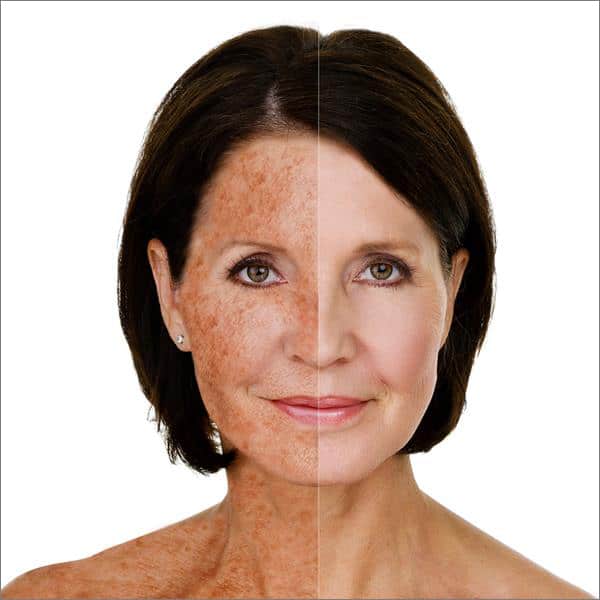
Two people walk in, same age, same ethnic background, same city. One has crow’s feet that begin at the outer corners of their eyes and stay there. The other’s face tells a different story entirely, a patchwork of deep creasing, uneven pigment, and skin that has lost the structural integrity of its younger years.
When you ask about their sun habits, the divergence becomes immediately obvious. One has been wearing broad-spectrum sunscreen daily since their mid-twenties. The other never quite believed it mattered.
This is not an anecdote. It is the lived reality of what cumulative ultraviolet radiation does to human skin, rendered visible over a lifetime. And the science behind it is far more compelling, and far more specific, than the generic “wear sunscreen” advice that gets issued like background noise every summer.
The Mechanism Nobody Explains Clearly Enough
What UV Radiation Actually Does to Your Skin Cells
Most people understand, vaguely, that the sun damages skin. What they do not understand is the precise molecular sequence through which that damage becomes visible, and why it compounds so relentlessly over time.




When ultraviolet radiation hits the skin, it triggers a molecular chain reaction that produces large quantities of enzymes called matrix metalloproteinases, or MMPs. These enzymes break apart and degrade collagen, the structural protein that gives skin its firmness and thickness.
While skin has some natural ability to repair damaged collagen, those repairs are never perfect. Tiny amounts of invisible scar tissue accumulate over time and eventually become visible as wrinkles, the process known as photoaging. Researchers at the University of Michigan found that MMP levels in dermal skin were directly associated with the length and frequency of ultraviolet light exposure.
That word cumulative is doing enormous work. Every unprotected hour in the sun is not a discrete event your skin forgets. It is a deposit into an account that only pays out in damage. Collagen fiber accounts for approximately 75 percent of the dry weight of the dermis, and both Type I and Type III collagen, produced by skin fibroblasts, are prominently responsible for the visible progression of photoaging when degraded.
UVA Versus UVB: The Distinction That Changes Everything
The SPF number on a bottle only tells you about UVB protection, and that gap in understanding has caused decades of inadequate sun behavior among otherwise intelligent, health-conscious people.
Among the ultraviolet radiation that reaches the ground, UVA accounts for 95 percent while UVB accounts for the remaining 5 percent. UVC is almost completely absorbed by the ozone layer. Premature skin aging caused by both UVA and UVB is called photoaging, and it results in dryness, epidermal thickening, elasticity loss, and the appearance of wrinkles, among other changes.
UVA is associated with photoaging through the production of reactive oxygen species, the expression of metalloproteinases, and apoptosis of dermal fibroblasts, causing major degenerative changes in dermal tissue that manifest clinically as wrinkling and loss of elasticity.
This is why the industry shift toward broad-spectrum formulations, which block both UVA and UVB rays, changed the entire conversation. A sunscreen that only addressed UVB was leaving the more penetrating, more chronically damaging wavelength almost entirely unaddressed.
The Study That Changed the Conversation
What the Nambour Trial Actually Proved
The landmark evidence on this subject comes from Australia, and it remains, decades later, one of the most rigorous pieces of clinical research on photoprotection in humans.
Researchers measured photoaging in 903 participants younger than 55 to determine whether regular sunscreen use would slow skin ageing compared with discretionary application. Participants were randomly assigned to one of four groups: daily use of broad-spectrum sunscreen with beta-carotene supplementation, daily use of sunscreen with placebo, discretionary use of sunscreen with beta-carotene supplementation, and discretionary use of sunscreen with placebo.
After four years, participants in the daily sunscreen group showed 24 percent less skin ageing than those in the discretionary group. The skin-saving effect was observed in all daily-use participants, regardless of age. No difference in skin ageing was shown with daily beta-carotene supplementation compared with placebo.
The daily sunscreen group showed no detectable increase in skin ageing after 4.5 years.
Read that again. Not a reduction in ageing signs. No detectable increase. The people applying sunscreen every day were, by measurable clinical standards, not ageing. Or at least, they were ageing at a rate so slow that the assessment tools available could not register it.
That is not marketing language. That is blinded, randomized, controlled trial language.
Why Most People Still Get This Wrong
The Nambour data is from the early 1990s. By the time it was fully analyzed and published in the Annals of Internal Medicine in 2013, the internet had made skincare information widely accessible. And yet sunscreen compliance among adults, globally, remains inconsistent at best.
Part of this is behavioural. Part of it is that most people conflate sun protection with sunburn prevention, not aging prevention. They apply SPF before a beach trip and consider their obligation met. What the research demands is something far more habitual: daily, year-round application regardless of season, cloud cover, or indoor plans.
The Numbers Behind SPF Selection
SPF 30 Versus SPF 50: What the Difference Actually Means
Dermatologists generally recommend using a broad-spectrum sunscreen with at least SPF 30 every day, even when it is cloudy. Broad-spectrum sunscreen protects against both UVB rays and UVA rays, which contribute to premature ageing, dark spots, and skin cancer.
The math between SPF 30 and SPF 50 is frequently misunderstood, and the misunderstanding leads people to make choices based on either false confidence or unnecessary expense.
SPF 30 blocks approximately 97 percent of UVB rays, while SPF 50 blocks about 98 percent. The difference is minimal, but consistent application matters tremendously.
The Skin Cancer Foundation notes that SPF 30 allows 50 percent more UV radiation to reach your skin than SPF 50, which can make a meaningful difference when exposure time is extended.
A common misconception is that higher SPF means you do not need to reapply sunscreen as often. In reality, SPF 50 does not last longer than SPF 30. Both need to be reapplied every two hours when outdoors and immediately after swimming or sweating.
The real-world implication is this: the person who applies SPF 30 correctly, fully, and consistently will always outperform the person who applies SPF 100 once in the morning and assumes they are covered.
The Reapplication Problem Nobody Talks About Enough
In practice, the most common failure in sun protection is not the number on the bottle. It is the volume applied and the frequency of reapplication.
Studies consistently show that most people apply somewhere between one-quarter and one-half of the recommended amount of sunscreen, which means their effective SPF is dramatically lower than what the label suggests.
Two grams of product for the face alone. Most people are using a fraction of that.
Lifetime Patterns and What They Produce
What Consistent Protection Looks Like After Decades
Photoaging is induced by cumulative sun exposure and is frequently seen in elderly people exposed to large quantities of ultraviolet rays. It is well-recognised that regular sunscreen use can help prevent photoaging in fair-skinned people.
The measurable difference between consistent protectors and non-protectors is visible in several specific categories. Skin texture is usually the first area of divergence, followed by the density and depth of fine lines around the eyes and mouth.
Age spots, formally called solar lentigines, are among the most reliable markers of accumulated UV exposure. Skin laxity, the degree to which skin has lost its elastic snap, is another. By the time someone reaches their fifties and sixties, these variables have been accumulating for thirty or forty years, and the gap between the protected and the unprotected becomes substantial.
Photoaging can manifest as sagging and wrinkling, whereas photocarcinogenesis damages cells and DNA. These are not parallel processes. They are overlapping ones, driven by the same mechanism.
What Happens When You Start Late
One of the most common questions people ask once they become convinced of sunscreen’s importance is whether it is too late, whether beginning in their forties or fifties produces any meaningful benefit.
While sunscreen primarily prevents new damage, research suggests it may help reverse some visible ageing signs. When people stop accumulating UV damage, the skin’s natural repair mechanisms can work more effectively. Studies have shown visible improvements in skin texture, clarity, and even fine line reduction after one year of consistent daily sunscreen use.
The answer is not that starting late is equivalent to starting early. It is that the skin retains repair capacity well into middle age, and removing the primary source of accelerated collagen degradation allows whatever repair machinery remains to function more efficiently.
You are not undoing thirty years of damage. You are stopping the rate of ongoing accumulation, which is the most productive thing available to you at that point.
The Skin of Color Conversation That Is Long Overdue
Why the Melanin Protection Myth Has Cost People Decades of Skin Health
There is a common misconception that people with dark skin do not need sun protection because they have a natural shield in the form of melanin, the pigment responsible for skin color.
While it is true that melanin offers some protection, it is not an impenetrable defense. Despite the protective benefits of melanin, those with dark skin are not immune to the detrimental effects of the sun. They can still experience pigmentary disorders, signs of photoaging, and even conditions like basal cell carcinoma due to prolonged sun exposure.
Melanin can only provide a natural sun protection factor of up to approximately 13, which does allow dark-skinned people some intrinsic protection. Yet this added degree of protection provides a minimal protective benefit against photodamage and photoaging.
While darker skin is more protected against UVB, it is simultaneously more at risk of harm from UVA exposure, which manifests as photoaging and hyperpigmentation. Increased melanin content can be disadvantageous in UVA exposure because melanin acts as a photosensitizer in response to UVA, resulting in the formation of reactive oxygen species such as singlet oxygen.
This is the part of the conversation that dermatology has historically underfunded and underemphasized. The consequences are visible in communities where sunscreen adoption has been lowest, not in the form of sunburn, but in the stubborn post-inflammatory hyperpigmentation, the uneven tone, and the melasma that years of unprotected UVA exposure produce.
Practical Sunscreen Guidance for Darker Skin Tones
The traditional barrier to sunscreen adoption among people with darker skin has been formulation, specifically the white cast left by older mineral formulations containing zinc oxide and titanium dioxide. This was a legitimate complaint, and it suppressed consistent use across entire populations for a long time.
Recent innovations offer chemical sunscreens with organic filters that are transparent and blend seamlessly with darker skin tones. The newer generation of hybrid and purely chemical broad-spectrum formulations has effectively resolved this problem, at least at the product level. The remaining challenge is awareness and habit formation.
For darker skin types, the PA rating system, common on Asian market products and increasingly present on global formulations, provides a better signal of UVA protection than SPF alone. A PA++++ rating offers a protection factor of 16 or higher, blocking over 95 percent of UVA rays, which is particularly important for Fitzpatrick types III through V, where melanocytes react aggressively to UVA radiation, leading to persistent pigment darkening and melasma.
What Ingredients Actually Matter
Broad-Spectrum Filters and What They Protect Against
Not all sunscreens are created equal, and the ingredient list matters more than most people realize once you understand what each component addresses.
Zinc oxide and titanium dioxide are the two active mineral filters currently recognized by the U.S. Food and Drug Administration as generally safe and effective. Zinc oxide specifically is prized for its coverage across both UVB and the full UVA spectrum, making it the more complete mineral option.
Chemical filters like avobenzone, octinoxate, and the newer generation filters including Tinosorb S and Tinosorb M, which have been available in European and Asian markets for years and are gradually entering the North American market through regulatory updates, provide alternative or complementary protection profiles.
The critical word remains broad-spectrum. Without it, a product may score high on SPF while leaving UVA protection minimal.
The Role of Antioxidants in a Complete Sun Protection Strategy
UV radiation causes oxidation of cellular biomolecules and depletion of endogenous antioxidants. Skin has a network of all major endogenous enzymatic and nonenzymatic protective antioxidants, but UV radiation can overwhelm these defenses. The combination of different antioxidants simultaneously provides a synergistic protective effect.
This is why topical antioxidants, particularly vitamin C serums applied before sunscreen, have become a standard recommendation in evidence-based skincare.
They address the free radical component of UV damage that physical and chemical filters alone do not fully neutralize. The combination of a broad-spectrum SPF 30 or higher with a 10 to 20 percent vitamin C serum underneath provides meaningfully more complete protection than either product alone.
Practical Application: What Actually Works in Real Life
Building the Habit That Produces the Result
The Nambour trial participants did not use pharmaceutical-grade sunscreen in a controlled lab setting. They used consumer products and were instructed to apply them every morning to their face, neck, arms, and hands, and to reapply after heavy sweating, swimming, or extended outdoor time. Their 24 percent measurable advantage over the discretionary group came from consistency, not from access to superior technology.
That framing matters because it means the gap between good outcomes and poor ones is largely behavioural. The person who buys an expensive SPF 50 formulation and uses it sporadically will consistently underperform the person who buys a drugstore SPF 30 broad-spectrum and applies it every morning before leaving the house.
Key practical points that clinical experience consistently confirms:
Apply sunscreen as the last step in your morning skincare routine, after moisturizer and before any makeup or powder products. This sequencing ensures the filter layer sits closest to the surface where it functions.
Two finger lengths of product is the standard face measurement most dermatologists recommend for adequate coverage. One finger length for the neck and upper chest. Under-application is the single most common mistake, and it compounds over years.
Reapplication matters more on high-exposure days than switching to a higher SPF on low-exposure days. On an average workday with mostly indoor time, morning application of SPF 30 or higher is sufficient for most people. On a day with significant outdoor time, reapplication every two hours is not optional.
Cloud cover is not an excuse. UV rays penetrate clouds and windows, so protection matters even on overcast days or when you are mostly indoors.
Sunscreen and Retinoids: The Most Powerful Combination in Anti-Aging Skincare
Retinoids, derivatives of vitamin A including tretinoin and the gentler over-the-counter retinol variants, are the only topical ingredient class with clinical evidence for reversing established photoaging, stimulating collagen production, and accelerating cell turnover.
The pairing of daily sunscreen with a consistent retinoid regimen is what dermatologists and aestheticians with serious clinical backgrounds consistently point to when asked about anti-ageing.
Not because sunscreen reverses existing damage, but because it prevents the accumulation of new damage while retinoids work on what has already occurred. One protects. The other repairs. Together they address the problem from both directions.
The Population-Level Picture
What Happens When Sunscreen Use Is Measured Across Demographics
A large study covering more than 18,000 participants from 25 countries confirmed that lighter skin tone was associated with more frequent use of photoprotective measures.
Lack of public education, economic factors, popular myths, and limited representation of skin of color in medical resources, among other factors, explain this pattern.
The downstream consequences of this disparity show up in ways beyond cosmetic. Skin cancer diagnoses in darker-skinned populations tend to arrive at later stages, partly because awareness is lower and partly because clinical training historically underrepresented these presentations.
The economic and compliance barriers are real. Sunscreen used correctly, applied in adequate amounts and reapplied during outdoor activities, represents a meaningful daily expense.
Economic evaluations have shown that the annual cost of applying sunscreen based on recommended application amounts and 2025 sunscreen prices represents a tangible household expenditure, particularly for those following full body protection protocols. This is a legitimate barrier for many families, and it demands both better public health funding and broader access to affordable broad-spectrum formulations.
The Long Game
What Lifetime Use Looks Like in the Dermatologist’s Chair
The most convincing evidence for consistent sunscreen use is not a percentage in a journal. It is the face of someone who has been diligent about it for thirty years sitting across from you.
Not poreless, not unwrinkled, not immune to intrinsic chronological ageing. But measurably, visibly different from the face of someone who lived the same number of years in the same climate without protection.
Intrinsic ageing, the kind driven by genetics and the passage of time, is outside your control. Fine wrinkles and thinning of the epidermis characterize intrinsic age-related ageing, caused primarily by decreased collagen synthesis. That process is going to happen regardless.
But photoaging, the accelerated, UV-driven version, is largely preventable. And the difference between the two outcomes is not a minor cosmetic distinction. It is ten to twenty years of visible skin health compressed into daily decisions that take forty seconds each morning.
The data says 24 percent less measurable aging in four years. Extend that trajectory across a lifetime of consistent use beginning in the twenties, and the compounding effect is not difficult to imagine.
This is the evidence-based conclusion: daily use of broad-spectrum sunscreen with a minimum SPF of 30, applied in generous amounts every morning, significantly slows the photoaging process. That is not speculation. That is the finding of the first controlled, randomized human clinical trial designed specifically to test it.
The best anti-ageing ingredient ever discovered does not require a prescription. It does not require a clinic visit. It is available at every pharmacy in the world, in dozens of formulations suited to every skin type and tone. What it requires, and what determines whether it works, is the decision to use it.
Every day. Not just in summer. Not just at the beach. Every day.
What People Ask