The Flowers Were Dead and the Bride Was Crying in a Parking Lot
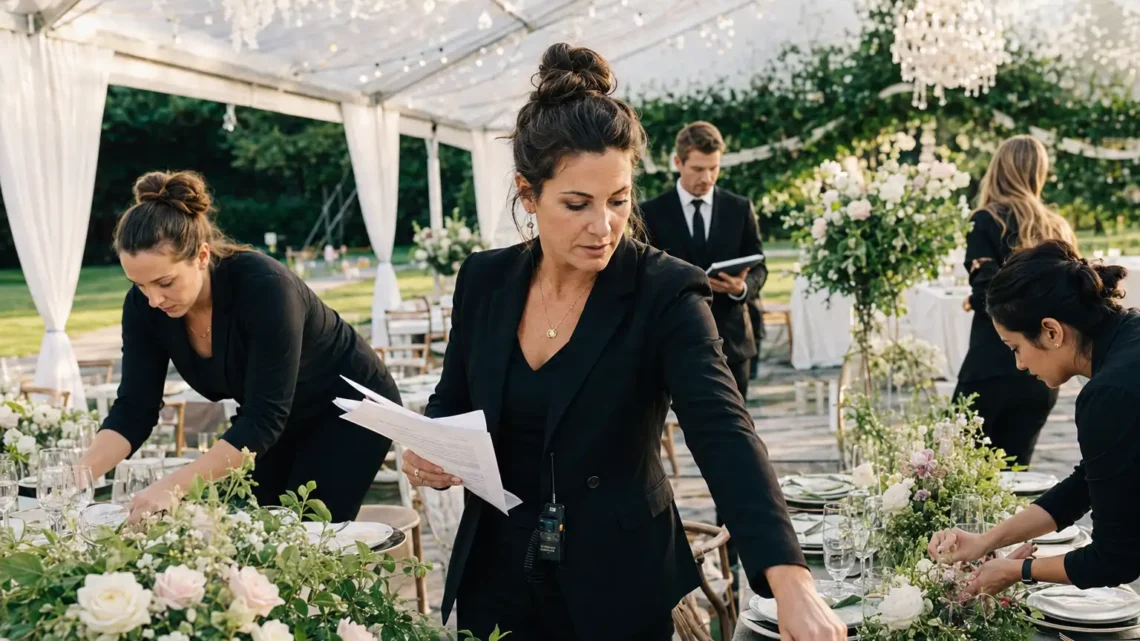
I have planned 214 weddings. I have stood in the back of ballrooms with a walkie-talkie clipped to my blazer and watched couples say I do under chandeliers that I personally approved, measured, and argued with venue managers about for three weeks straight.
I have built seating charts at midnight, negotiated with caterers who swore the salmon was fine when it clearly was not, and once, on a Sunday in October, chased a runaway horse-drawn carriage down a cobblestone street in Charleston because the driver took a wrong turn and nobody thought to mention the parade.
Trending Now!!:
I do not tell people this job is glamorous. It is not.
But I will tell you about Margot.
I met Margot on a Tuesday in February, the kind of cold that makes New England feel personal. She walked into my studio on Newbury Street with a Pinterest board that had 847 saved pins and a budget that was, let me be kind here, ambitious relative to her expectations. She sat across from my desk, unwrapped a scarf that seemed to go on forever, and said, “I want it to feel like a French chateau had a garden party and forgot to stop.”
I looked at her. I looked at her budget sheet.



“Tell me more,” I said, because in ten years of luxury wedding planning, I have learned that what a client says and what a client means are two completely different conversations, and your entire career depends on figuring out which one you are actually having.
Margot was a landscape architect. Her fiancé, Daniel, was a soft-spoken high school music teacher who cried during their first meeting with me because I asked him what song he wanted to walk in to and he said he had never been asked his opinion about anything related to the wedding before. That told me everything about the dynamic I was working with, and I adjusted accordingly.
We spent four months building what I would describe as the most beautifully designed outdoor wedding event I have ever coordinated. The venue was a historic estate in Lenox, Massachusetts, with rolling lawns that sloped toward a pond.
The floral design was all wildflower installations, loose and abundant, the kind of arrangement that looks effortless and costs a fortune because the best floral designers charge for that illusion. The wedding catering was farm-to-table before that phrase became tired. W
e had a jazz quartet, a custom cocktail hour menu, hand-lettered escort cards, and a ceremony arch that my florist and I drove to the venue and assembled ourselves the morning before the event because I do not trust anyone with the arch.
Two weeks before the wedding date, the florist called me.
“The peonies are gone,” she said.
“Define gone,” I said.
“The entire order. The supplier had a frost. There are no peonies in Massachusetts right now. There are no peonies on the Eastern Seaboard that are not already committed to someone else.”
I sat down on my kitchen floor. This is something they do not tell you in event planning courses. Sometimes the floor is the correct place to be.
Peonies were everything in Margot’s wedding design. They were the centerpiece bloom, the bridal bouquet, the ceremony arch statement flower. Losing them was not a substitution problem. It was a redesign problem, twelve days out, with a client who had final-approved every single element and was, at that moment, on a flight to Boston for her rehearsal dinner.
I had four hours before she landed.
I called every wholesale floral contact I had built over a decade of wedding planning. I called a florist in Vermont I had met once at an industry conference and had never worked with.
I called a greenhouse in Connecticut that I found through a supplier I trusted. I rebuilt the entire floral concept around garden roses, ranunculus, and sweet peas, which are softer and arguably more beautiful than peonies, and I put together a revised mood board before Margot’s plane touched down at Logan.
I met her at the rehearsal dinner venue. I pulled her aside before anyone could toast anything.
“I need five minutes,” I said.
She looked at me the way clients look at you when they know something has shifted. “What happened?”
I told her. All of it. I showed her the revised design on my tablet. I watched her face move through about six emotions in eleven seconds.
Then she said, “Honestly, I think I like this better.”
I did not cry. I am a professional. But it was close.
The wedding day came with perfect weather, the stubborn good luck of late September in the Berkshires. I was on-site by six in the morning. My second coordinator, Priya, handled vendor arrivals while I walked the estate and checked every detail against the event timeline I had built over sixteen weeks.
The tent was correct. The lighting rig was correct. The catering team was early, which was a miracle I silently thanked someone for.
At eleven, the florist arrived with the new arrangements, and when she set the bridal bouquet down on the dressing table, every bridesmaid in that room went quiet. Garden roses in blush and ivory, trailing with sweet pea tendrils, wrapped in ivory ribbon with the stems just slightly showing. It was one of the most beautiful things I have produced in this career.
Margot picked it up and held it like it was a small animal.
“This is what I actually wanted,” she said. “I just didn’t know it.”
That is the sentence that has kept me in this industry through every logistical nightmare, every vendor who went dark two weeks before an event, every outdoor ceremony threatened by a weather system I tracked on three different apps simultaneously. That sentence is the whole job.
The ceremony ran four minutes long because Daniel added a line to his vows that he had not told anyone about, something quiet about how he used to sit in his car outside their apartment for an extra few minutes just to feel the feeling of knowing she was inside.
Half the guests were gone by the second line of it. I was standing at the back with my earpiece in and my clipboard at my side, and I was absolutely fine, completely professional, just slightly unable to see the estate pond clearly for about thirty seconds.
The reception was everything an outdoor wedding event should be. The wedding photography team worked the golden hour light with the kind of efficiency that only comes from experience. The farm-to-table dinner went out on time.
The jazz quartet read the room perfectly and slid into the first dance song before the bandleader even looked at the wedding day timeline sheet I had given him. Margot and Daniel danced to something slow and old that I did not recognize, and Daniel sang along under his breath the whole time because he is a music teacher and he cannot help it.
I left the venue at eleven-fifteen, after the last vendor had packed out and the estate coordinator had signed off on the space. Priya walked to the car with me. We did not say much. We rarely do at the end of an event. There is a specific exhaustion that comes from executing a perfect wedding day, and it sits differently from regular tired.
What I will tell any person who wants to build a career in event planning and wedding coordination is this: the visible part of this job, the aesthetic, the event design, the curated Instagram reel, is about fifteen percent of what you actually do.
The other eighty-five percent is problem-solving under pressure with a calm face and a fully charged phone. It is vendor relationship management and contract literacy and knowing that your caterer’s backup plan needs a backup plan.
It is understanding that a wedding budget is a living document that will be renegotiated at least twice and that your job is to protect the couple from decisions they will regret while still making them feel like everything was their idea.
It is also, occasionally, sitting on your kitchen floor after a phone call about flowers and deciding that you are going to fix it because that is simply what you do.
Margot sent me a card three weeks after the wedding. Inside, she had written four words in her architect’s precise handwriting.
“You are the reason.”
I have it on my desk. I look at it on the hard days. There are more hard days than the portfolio shows, and the portfolio is very good.