How to Start Composting in an Apartment Without Smell or Pests
You do not need a backyard, a garden, or even a balcony to compost responsibly. Here is how apartment dwellers are turning kitchen scraps into rich organic matter, without the stench, the bugs, or the drama.
Most people who have ever considered apartment composting talked themselves out of it before they even started.
The mental picture alone did the job: a sealed container fermenting on the kitchen counter, fruit flies orbiting it like a tiny solar system, and a roommate or partner giving you that look every time they walk past. That hesitation is understandable. It is also, for the most part, unnecessary.
Trending Now!!:
Composting inside a small urban apartment is not only possible in 2025, it is cleaner and more practical than it has ever been.
The tools have improved, the methods are better understood, and the payoff is real: less trash, less guilt, and a steady supply of nutrient-rich organic matter for your indoor plants or balcony garden. The problem is not composting itself. The problem is that most people start wrong, and a bad start in this game tends to stick.
This guide is built on what actually works, not what sounds elegant in theory.
Why Apartment Composting Matters More Than You Think
Food waste makes up roughly 24 percent of what gets landfilled in the United States, but because it decays so quickly, it generates 58 percent of the fugitive methane released from those landfills. That is a staggering imbalance for something as ordinary as a banana peel or a handful of wilted spinach.




Every time organic matter goes into a sealed plastic bag and heads to a landfill, it breaks down without oxygen, producing methane at a rate that dwarfs its weight in carbon dioxide as a climate driver.
Composting at home, even in 400 square feet, disrupts that chain entirely. It is one of the few individual actions that carries genuine, measurable environmental weight, not because of symbolism, but because of chemistry. When organic material breaks down aerobically, the way it does in a well-managed compost system, the carbon largely becomes stable soil organic matter instead of greenhouse gas.
Beyond climate, the practical case is equally compelling. You get free, nutrient-rich fertilizer for your houseplants or balcony flowers. Anyone who has watched a potted plant go from barely surviving to visibly thriving after a dose of finished worm castings or bokashi compost knows that store-bought potting mix is simply not the same thing.
The Three Methods That Actually Work in Apartments
Not every composting method translates well to indoor, small-space living. Hot composting requires a pile big enough to generate internal heat.
Cold composting in a traditional bin demands outdoor access and patience measured in seasons. What works inside an apartment falls into three categories, each with a distinct profile of effort, cost, and output.
Vermicomposting: The Worm Bin Method
Vermicomposting is the practice of using worms, specifically red wigglers (Eisenia fetida), to break down food scraps into extraordinarily rich material called worm castings.
It is the method that draws the most skepticism from people who have not tried it, and the most loyalty from people who have.
According to a study published in the journal Waste Management, vermicomposting can reduce food waste mass by up to 80 percent.
The worms work continuously, eating roughly half their body weight in food scraps each day, and the castings they produce are dense with micronutrients, beneficial microbes, and plant-available nitrogen. A small handful mixed into potting soil does more than a full bag of most commercial fertilizers.
Setting Up a Worm Bin
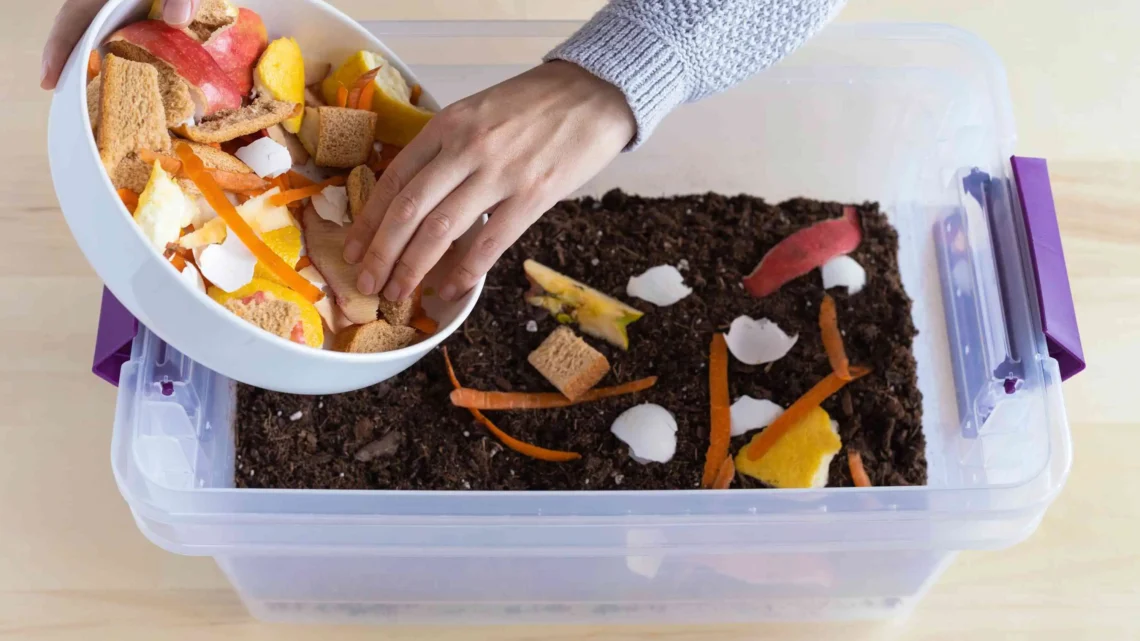
You will need a container, bedding material such as shredded newspaper, and red wigglers. The bin does not need to be expensive or elaborate.
A standard plastic storage container with ventilation holes drilled along the upper sides works well. Some people prefer commercial stackable tray systems, where worms migrate upward toward fresh food and finished castings collect in the bottom tray for easy harvesting.
Place the bin somewhere with stable temperatures, ideally between 55 and 77 degrees Fahrenheit. A kitchen cabinet, under the sink, or a corner of a pantry all work. Worms are far less sensitive to location than most people assume; what they cannot tolerate is extreme heat, freezing cold, or prolonged dryness.
Feed them vegetable and fruit scraps, coffee grounds, tea bags, eggshells, and shredded cardboard or paper as bedding. Bury fresh scraps under the bedding layer each time rather than leaving them exposed on top, and the system will stay virtually odourless. Mixing equal parts green waste, such as fruit peels and vegetables, with brown waste, such as paper and dried leaves, prevents anaerobic conditions, which cause odours.
The one genuine mistake beginners make is overfeeding. A worm bin is not a trash can. If scraps are piling up faster than the worms can process them, the pile gets wet, hot, and rank. Start with small amounts, observe the pace at which the worms work, and scale up from there.
What Vermicomposting Costs You
The worms themselves are the main upfront cost, usually running between $30 and $50 for a starter population of about 1,000 worms (roughly half a pound). A basic bin can be sourced cheaply or built from containers you already own. Ongoing costs are essentially zero, since the worms reproduce on their own and the bedding comes from cardboard boxes or newspaper.
Bokashi: The Fermentation System
Bokashi is a Japanese-origin method that has been gaining serious traction in urban composting circles over the past decade, and for good reason.
Unlike traditional compost bins that need outdoor space and produce recognizable rot, bokashi is a fermentation-based system that’s compact, nearly odourless, and surprisingly fast.
The core principle is anaerobic fermentation rather than aerobic decomposition. You layer food scraps into an airtight bucket, sprinkling bokashi bran (grain inoculated with beneficial microorganisms) over each layer, then press the contents down and seal the lid tightly.
The microbes ferment the material rather than rotting it, which is why the smell, when the lid is opened, is closer to pickles or sour beer than to garbage.
Research from the University of Illinois suggests that bokashi can be completed in just four to six weeks, significantly faster than traditional composting.
What Makes Bokashi Different
The most important distinction is that bokashi accepts food scraps that no other indoor method handles well: small amounts of cooked food, meat scraps, dairy, oily leftovers. For people who cook real meals rather than living on raw vegetables and coffee, this is a meaningful advantage.
A bokashi system uses a sealed bucket and a special mix of bran inoculated with beneficial microbes. You add food scraps in layers, sprinkling bokashi bran over each layer, then press it down and seal the lid tightly.
The bucket produces a liquid called “bokashi tea” that you drain every few days. That liquid, diluted roughly 1:100 with water, works as a potent liquid fertilizer for plants. Poured undiluted down a drain, it also helps neutralize odours and clean pipes.
The solid material that comes out of the bucket after two to four weeks is not finished compost. It is a pre-composted, fermented mass that still needs to be buried in soil or mixed into a traditional compost system to complete its breakdown.
For apartment dwellers without garden access, this is the system’s main friction point. Options include burying the pre-compost in a planter box filled with soil, partnering with a community garden, or using a compost drop-off service.
A proper bokashi composting bin has an airtight lid, a false bottom, and a spigot for draining liquid. Most hold around four to five gallons, enough for a household of two to four people.
Electric Composters: The Hands-Off Option
Electric countertop composters represent the newest category in the indoor food waste space, and they have generated more confusion than any other option.
Devices like the Lomi, Vitamix FoodCycler, and Airthereal Revive are frequently marketed as composters, though the distinction between true biological composting and what these machines actually do is worth understanding before spending several hundred dollars.
Electric composters come equipped with carbon filters and advanced odour control technology to eliminate unpleasant smells. Most models are energy-efficient, consuming about the same amount of power as a small kitchen appliance, using on average 0.5 to 1.5 kWh per cycle.
The Lomi, priced between $499 and $599, runs a cycle time of three to five hours in fast mode or 16 to 20 hours in its Lomi Approved mode, with a capacity of roughly one gallon per cycle. Its output is a dry, crumbly, dark material that reduces volume significantly and can be mixed into potting soil at low ratios.
However, as multiple independent reviewers have noted, what comes out of a Lomi or similar heat-and-grind machine is not biologically active compost in the traditional sense. It is dehydrated organic matter, which is still useful, but it does not carry the living microbial community that makes finished worm castings or properly fermented bokashi pre-compost so valuable to soil.
For apartment dwellers whose primary goal is reducing the volume and odour of food waste going into the trash, an electric composter does that job efficiently and without any management. For those who want to genuinely feed their plants or contribute to soil health, the worm bin or bokashi system will deliver better results for less money over time.
How to Prevent Smell: The Real Mechanics
Smell is the concern that stops more people than anything else. The reassuring truth is that odour in any composting system is always a symptom of something specific, never an inevitability.
The Greens and Browns Balance
One reason for odour could be an excessive amount of “green” materials, such as food scraps and fresh grass clippings, without an adequate balance of “brown” materials like leaves and cardboard.
This imbalance can lead to a lack of proper aeration and cause anaerobic decomposition, which produces foul-smelling compounds like hydrogen sulfide. Additionally, if the compost pile is too wet or waterlogged, it can inhibit oxygen flow and promote the growth of odour-causing bacteria.
The fix is almost always adding more browns: torn cardboard, shredded newspaper, dried leaves, paper bags, or paper egg cartons. Whenever you add a significant amount of food scraps, follow it with a layer of dry carbon material. Think of it less as a formula and more as a habit.
Storing Scraps Before They Go In
A smart way to collect food scraps without creating a smell or attracting pests is to store them in the freezer. You can use either a freezer compost container or keep it simple with a plain old grocery bag.
Frozen scraps go directly into the worm bin or bokashi bucket when you are ready, and the brief thaw that follows actually helps break down cell walls slightly, making decomposition faster. This technique alone eliminates the counter-caddy smell problem that most people associate with composting.
Moisture Control
If a worm bin starts to smell, it is almost always too wet. The bin contents should feel like a wrung-out sponge: moist but not dripping. If it becomes too wet and starts to smell or attract pests, it is a sign you need to add more dry materials like shredded paper, cardboard, or leaves.
Drilling proper ventilation holes and placing the bin away from direct heat sources also helps maintain the right moisture balance without any extra effort.
How to Keep Pests Away
Fruit flies and gnats are the pests most commonly associated with indoor composting, and both are preventable through the same core discipline: never leave exposed food scraps on top of the pile.
Bury Every Addition
Whether you are using a worm bin or a countertop compost tray, every new addition of food scraps should be pushed several inches into the bedding or existing compost material and covered. Exposed scraps are what attract insects. Buried scraps, working their way through moist bedding, do not give flies the surface access they need to lay eggs.
What Not to Put In
Adding non-compostable items like meat, dairy, or oily foods can create a breeding ground for pests, causing both odours and unwanted critters. For worm bins specifically, this rule is absolute. For bokashi systems, small amounts of these items are acceptable precisely because the anaerobic fermentation process and airtight seal prevent the conditions that attract insects.
Avoid meat, dairy, and oils, as they attract pests and cause unpleasant smells. Citrus peels and onion scraps are fine in small amounts, though heavy concentrations can stress worms; balance them with other scraps.
Tight-Fitting Lids and Container Choice
Look for bins with tight-fitting lids to prevent odours and pests. Avoid bins with holes unless they are part of a specialized composting system like vermicomposting, as exposed openings can attract bugs.
For worm bins, the ventilation holes should be small enough that no worm can escape and covered with fine mesh to prevent any insects from entering.
What to Compost and What to Leave Out
What Belongs in the Bin
Fruit and vegetable scraps are the backbone of any indoor compost system. Coffee grounds and paper filters, loose-leaf tea and tea bags (minus any plastic staples), eggshells, bread in small amounts, and plain cooked rice or pasta also break down well. On the brown side: shredded newspaper, torn cardboard (remove any tape or glossy coating), paper egg cartons, and dry leaves if you have access to them.
What to Keep Out
For worm bins and standard countertop bins, stay away from meat, fish, bones, dairy products, oils, and heavily seasoned or cooked foods.
These items either break down too slowly, produce powerful odours in the process, or attract pests that a sealed indoor system cannot handle. Diseased plant material and anything treated with pesticides should also be avoided; you are trying to grow a healthy microbial ecosystem, not poison it.
How to Use Your Finished Compost in an Apartment
For Indoor Plants and Houseplants
Finished worm castings can be mixed directly into potting soil at a ratio of roughly one part castings to four or five parts potting mix. Even small amounts make a visible difference in plant health over several weeks.
In general, try for one to two inches of compost in the top three to five inches of soil. Make sure the compost is fully broken down before using it, since scraps of food can attract bugs and other critters.
For Balcony Container Gardens
Balcony planters respond particularly well to compost amendment because container soil degrades fast. Finished compost restores the microbial activity and water retention that the depleted potting mix loses within a single growing season. Mix it into new soil or top-dress existing containers before the growing season begins.
Donating to Community Gardens
Apartment dwellers can connect with community gardens to contribute compost or join communal composting efforts.
Most city community gardens welcome finished compost contributions, and many maintain their own drop-off points. Some municipalities have curbside organic waste pickup programs that accept scraps directly from residents; these have expanded significantly across major U.S. and European cities over the past few years and are worth looking up in your area.
Troubleshooting: When Things Go Wrong
The Bin Smells Like Ammonia
This typically means there is too much nitrogen-rich green material and not enough carbon-rich brown material.
Add a generous layer of shredded paper or torn cardboard, mix gently, and the smell should dissipate within a day or two. Healthy, well-balanced compost piles smell a little sweet and earthy, and not at all like rotting garbage.
The Worms Are Trying to Escape
Worms that are crawling up the sides of the bin or clustering near the lid are usually responding to one of three conditions: the bin is too wet, too acidic (from an overload of citrus or coffee grounds), or too warm. Check moisture first, reduce citrus inputs for a week, and relocate the bin away from any heat sources or direct sunlight.
Mold Is Appearing
Excess moisture can create a perfect environment for mold growth. High moisture levels can also attract pests. A compost that is too rich in greens without enough browns can lead to odors and mold.
White fuzzy mold in a worm bin is usually harmless fungal growth and a sign the system is active. Black or green mold accompanied by a foul smell indicates an imbalance that needs correction: more browns, less moisture, better aeration.
The Compost Is Taking Forever
Slow breakdown usually comes down to one of three things: the pile is too dry, the scraps are too large, or the system is too cold.
Chop food scraps into smaller pieces before adding them. Keep the system in a warm (not hot) location. Adjust moisture until the bedding feels like a damp sponge. Regularly turning or stirring the compost helps maintain proper airflow.
Choosing the Right Method for Your Situation
The best indoor composting system is the one you will actually maintain. A bokashi bucket that sits untouched for three weeks becomes a problem. A worm bin that gets fed on a reasonable schedule runs itself.
If you live alone and cook minimally, a small countertop bokashi system or a compact worm bin handles everything you produce. If you share a kitchen with two or three people and cook regularly, a full-sized worm bin with a two-tray system or a bokashi double-bucket setup (one filling while the other ferments) keeps pace without overflow.
If you are genuinely averse to any hands-on interaction with decomposition, an electric composter removes all of that, at a higher purchase price, with the trade-off of a less biologically rich output. Know what you are optimizing for before you spend the money.
Getting Started: The Practical First Steps
The most important thing anyone can do is simply begin with something manageable rather than waiting for perfect conditions or the ideal setup.
Start with a countertop caddy in the freezer and spend two weeks observing how much food waste you actually generate. That number will tell you which system to invest in.
Order or build a small worm bin, pick up a pound of red wigglers from a local vermicomposting supplier or online seller, and run it for a month before evaluating.
The learning curve is shallow, and most mistakes are correctable. As one experienced composter put it: “I add more greens when the pile looks too dry, and more browns when the contents get too wet or start to smell. You can fix almost any compost pile even if it’s gone astray.”
That philosophy scales perfectly to apartment life. The goal is not a flawless system. The goal is an honest, consistent effort that keeps organic matter out of landfills and puts it back into the soil cycle where it belongs. Even in a studio apartment, that is entirely within reach.
What People Ask