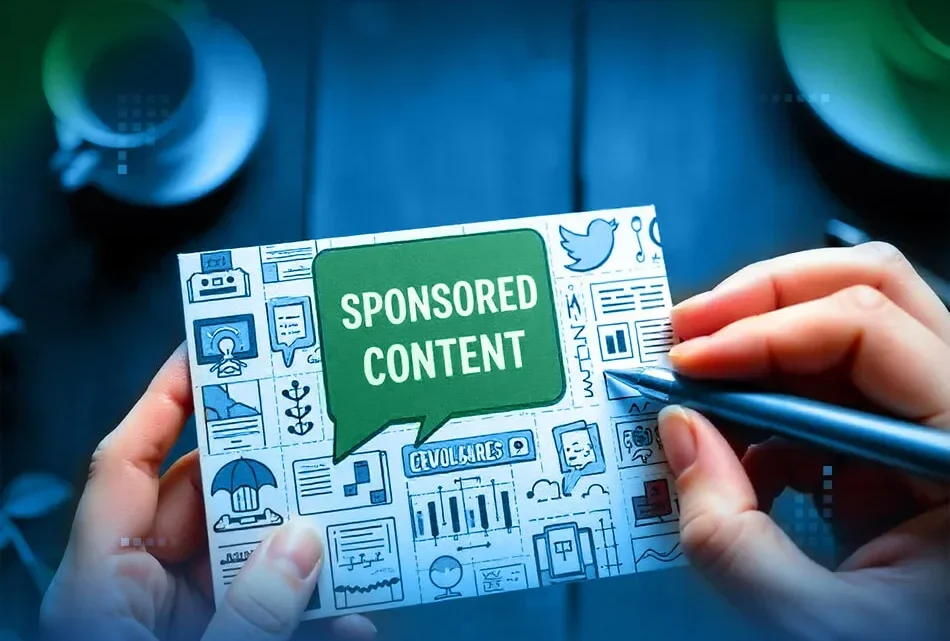
The Economics of Sponsored Content and How to Price It Without Undercharging
Inside the brand deal economy that brands understand and creators don't, and the pricing framework that finally closes the gap.
The first brand deal I ever negotiated paid me $150 for a full-length blog post, two Instagram stories, and an email mention to a 12,000-person list.
The brand spent three months repurposing that content in paid ads. I had no idea. Neither did most of the people I knew doing the same work.
Trending Now!!:
That was a decade ago, and the math has changed enormously. The industry has changed. The language has changed.
But the core problem, the one that keeps creators and publishers chronically underpaid, has not changed at all. People who create content are still pricing their work based on what they think a brand is willing to pay, rather than what the brand is actually getting.
This article is about fixing that.
What Sponsored Content Actually Is, and Why Most People Misunderstand Its Value
Sponsored content is not an advertisement. That distinction matters more than most creators realize, and it is the root cause of almost every pricing mistake in this industry.



A traditional display ad sits beside your content. Sponsored content is your content, written, filmed, recorded, or published in your voice, through your platform, delivered to an audience that trusts you specifically because you built that trust over years.
The brand is not buying space on your page. It is buying access to your credibility, your editorial tone, your audience relationship, and in most modern deals, the full commercial rights to whatever content you produce.
When you price a sponsored post like a banner ad, you are making a catastrophic category error.
The creator economy reached a quarter-trillion dollars globally in 2025, with U.S. influencer marketing budgets climbing to $37 billion, cementing creators as core economic actors rather than experimental add-ons.
That is not play money. That is budget that serious marketing departments are allocating specifically because they understand the value of authentic creator-led content in ways that many creators themselves do not.
The Anatomy of Undercharging: Where Creators Go Wrong
The Vanity Metric Trap
Most creators price based on follower count because it is the number they can see and the number brands lead with. This is a mistake, and experienced buyers know it.
A fitness creator with 40,000 followers in Lagos, Dubai, or Atlanta is not worth the same as a personal finance creator with 40,000 followers in those same cities. The niche is different. The audience intent is different.
The conversion value is radically different. Finance, B2B, and health creators sit at the higher end of the rate range because their audiences are harder to reach and higher-intent. A 50,000-follower fitness creator and a 50,000-follower SaaS creator are not charging the same rate.
If you are pricing based purely on your follower count, you are ignoring the single most important commercial variable in the equation: what your audience does, and what it costs a brand to reach them anywhere else.
The One-Line Deliverable Problem
Creators undercharge because they think in deliverables. One Instagram post. One YouTube integration. One sponsored article. What they miss is the full commercial bundle that brand deal actually contains.
A brand deal in 2025 rarely ends at the blog post. It usually includes social amplification, email newsletter mentions, story posts, potential whitelisting rights, and usage rights for the images or video you create.
Photo rights and whitelisting are now standard line items in professional creator contracts. Whitelisting alone, allowing a brand to boost paid ads through your handle, can add around $1,000 per month to a deal.
The creator who quotes a flat fee for “one sponsored post” is the same person who discovers six months later that the brand is still running paid ads using their face, their voice, and their name on audiences of half a million people. That is not a hypothetical. It happens constantly.
The Goodwill Discount
There is a specific kind of undercharging that happens in the early-to-mid stages of a creator’s career that I call the goodwill discount. It sounds like this: “I really love this brand, so I’ll do it for less.” Or, “They said they might give me more work later.” Or, the worst one, “I’m just happy to be working with a company like this.”
The goodwill discount is not generosity. It is a training exercise where you teach a brand exactly what price to expect from you, permanently. Brands talk to each other. Marketing teams move between companies. The rate you accept from one brand becomes your reference rate in conversations you never hear.
Charge what the work is worth. Build goodwill through quality, communication, and professionalism, not through financial self-sabotage.
The Real Economics of a Brand Deal
How Brands Calculate Their Budget
Before you can price your sponsored content correctly, you need to understand how brands actually think about what they are spending.
Most serious marketing budgets are built around CPM (cost per thousand impressions), cost per engagement, or customer acquisition cost targets. A brand that sells a product with a $40 average order value and a 3% conversion rate on influencer content is generating $1.20 in revenue for every 100 people who see that content. At 100,000 impressions, that is $1,200 in revenue. Their marketing team knows this math. The question is whether you do.
Brands calculate ROI on influencer campaigns by choosing a pricing model that matches their main goal, such as brand awareness, conversions, or engagement. When you understand which goal a brand is trying to achieve, you can price accordingly.
Awareness campaigns carry different economics than conversion campaigns. Brand ambassador programs are structurally different from one-off sponsored posts. The creator who treats all of these the same is leaving systematic money on the table.
The Value Stack Framework
Here is a framework I have used across more than a decade of brand partnerships and media consulting. Every sponsored content deal contains multiple distinct layers of value. Your price should reflect the stack, not just the surface deliverable.
Content Production Value: This is the time, skill, and resources required to create the content itself. Script development, filming, editing, writing, graphic design, photography, talent coordination, all of this has a cost. If you do not price it in, you are working for free.
Audience Access Value: This is what the brand pays for reaching your specific audience. The more targeted, the more qualified, and the harder your audience is to reach through conventional advertising, the higher this number.
Endorsement and Trust Value: This is the premium on the fact that you, specifically, are recommending the product. Your editorial credibility, your years of audience building, the trust you have cultivated, all of that has commercial value that is entirely separate from content production or raw impression count.
Usage Rights and Licensing Value: This is where most creators leave the most money behind. When a brand wants to use your content in paid social media campaigns, in their website, in email marketing, or in out-of-home advertising, that is a licensing arrangement, not an extension of the original deal. More complex content can increase pricing by 10 to 100%, depending on production demands and required deliverables. Usage rights, depending on duration, geography, and media type, can add 25% to 200% to the base rate.
Exclusivity Premium: If a brand asks you not to work with competitors during or after the campaign, that exclusivity comes at a cost. You are forfeiting revenue you would otherwise have earned. Charge for it.
Pricing by Platform, Format, and Tier
Instagram and TikTok
These two platforms dominate the sponsored content conversation right now, but they are not interchangeable.
TikTok’s algorithm can amplify content regardless of follower count, which means even nano-creators carry real campaign value. Instagram has a more established pricing infrastructure, but rewards established audiences more linearly.
Creators with engagement rates above 5% can charge 40 to 60% premium rates compared to industry averages. This is the single most important benchmark for any creator negotiating sponsored post rates on either platform. Your engagement rate is not a vanity metric. It is the primary indicator of how active, responsive, and commercially useful your audience actually is.
For practical reference, micro-influencers operating in the 10,000 to 100,000 follower range are currently charging $500 to $5,000 per post, with rates varying more by niche and engagement rate than by platform. Macro-influencers with audiences between 500,000 and one million followers are commanding $10,000 to $25,000 per post, and that number climbs steeply from there.
YouTube
YouTube sponsorships operate differently because the content format is longer, the production investment is higher, and the content has a much longer shelf life. A YouTube integration from 2021 can still be generating views and conversions in 2026. That longevity should factor into your pricing.
YouTube usually comes with a higher price tag than other platforms. Videos are longer, production takes more effort, and creators invest real time into scripting, filming, and editing. YouTube creators charging per view typically work with rates of $50 to $100 per thousand views as a baseline, then stack on usage fees, production costs, and exclusivity terms from there.
Blogs and Digital Publishing
Blogging as a sponsored content channel is consistently undervalued, and publishers consistently underprice it. The mistake is treating a sponsored blog post like a social media post, a quick deliverable with a short shelf life.
A well-optimized sponsored article on a domain with real search authority is a semi-permanent commercial asset. It generates organic search traffic, it builds backlinks, and it converts readers who are in active research mode rather than passive scrolling mode.
For bloggers working with local or niche publishers, sponsored content typically ranges from $250 to $750 per article at the lower end, with full-service, high-quality placements running $1,500 to $2,750 or more for established outlets. That range, however, is for blogs that do not understand their own SEO value.
A publisher with genuine domain authority, consistent organic traffic in a valuable niche, and a loyal email subscriber base can and should charge multiples of the upper end of that range.
Newsletters and Email
Email sponsorships remain one of the highest-converting formats in the entire digital marketing ecosystem, yet creators with serious lists routinely undercharge because email feels private, invisible, or difficult to quantify. Do not let the intimacy of the format fool you into under-pricing it.
The calculation here is straightforward. Take your subscriber count, multiply by your average open rate, multiply by your average click-through rate, and you have a reasonable approximation of how many engaged, real-time readers the brand is reaching.
Compare that to what the brand pays for comparable reach through paid email acquisition or programmatic display, and your newsletter rate should become obvious.
How to Build Your Rate Card and Actually Use It
The Media Kit Is Not Optional
According to Influencer Marketing Hub’s 2025 report, 72% of influencers now use formal rate cards. The 28% who do not are the same group consistently accepting whatever a brand offers first. A media kit is not a PDF you send to seem professional. It is the document that controls the entire pricing conversation before it starts.
A serious media kit includes your audience demographics broken down by age, gender, geography, and, where available, income and purchase behaviour. It includes your engagement metrics, your reach by platform, your past brand partnerships, and your rates clearly structured by deliverable type.
Brands that want to work with you professionally need to see this information. Brands that are trying to lowball you will often back down when confronted with a well-structured media kit, because it signals that you know your value.
According to a 2025 Creator Economics Report, creators with polished media kits see a 47% higher acceptance rate on brand partnership pitches. That number should end any debate about whether building a media kit is worth your time.
Structuring Your Packages
The most effective pricing structures in sponsored content are package-based, not item-based. Instead of quoting individual line items that brands can cherry-pick and compress, you build packages that bundle deliverables in ways that reflect both the brand’s campaign needs and your production capacity.
A basic package might be one Instagram Reel and two Story frames at one price point. A mid-tier package adds a blog post and an email mention. A premium package brings in a YouTube integration, extended usage rights, and a 30-day exclusivity window. Each package is priced to reflect the compounding value of the bundle, not the sum of discounted individual parts.
This structure also makes negotiation more productive. When a brand wants to trim the budget, they negotiate down to a smaller package rather than stripping individual line items from a custom quote. You protect your unit economics. They stay organized.
The Quarterly Review Discipline
One of the most expensive habits in this business is setting rates and forgetting them. Your rates should be reviewed and adjusted quarterly, minimum.
Top-tier creators with proven results are raising rates 15 to 20% annually. If your engagement has grown, your domain authority has improved, your audience has become more valuable to brands in your niche, or the market rate for your content type has moved, your pricing should reflect it.
Brands rarely tell you when you are undercharging. They simply keep booking.
Negotiating Without Flinching
The Silence Principle
Most price negotiations are lost before the conversation begins, by creators who pre-emptively discount their own rate or apologize for their quote. The practical guidance here is uncomfortable but essential. Quote the number. Then stop talking.
Experienced negotiators in brand partnerships know that whoever speaks first after a price is named usually loses ground. If a brand comes back with a counter, treat it as information, not pressure. A counter-offer means they are interested. The question is now about terms, not about whether a deal is possible.
What to Do When a Brand Says It Can’t Afford You
This is the moment where most creators either cave or walk away. Neither is always the right answer.
First, establish whether the budget constraint is real or tactical. A brand with a serious campaign objective and a concrete brief usually has more flexibility than the opening offer suggests. Ask what their overall campaign budget looks like and what deliverables are most critical to their objectives. Often, you can restructure a package to fit a real budget constraint without reducing your rate per unit.
Second, if the constraint is genuine, be honest about what that budget buys. A $500 deal is a nano-level deliverable, clearly scoped and executed. Do not deliver macro-level work at nano pricing to seem cooperative. Scope the work to the budget, document it in writing, and execute exactly what was agreed.
Third, know when to walk. Creators are too often expected to begin producing content, and even publishing it, without a fully executed contract, which exposes them to unnecessary risk. No contract, no work. No agreement on usage rights, no delivery. These are not negotiating positions. They are basic professional standards.
The Exclusivity Conversation
Exclusivity clauses are one of the most frequent sources of undercharging in sponsored content contracts. A brand asks you not to work with competitors for 30, 60, or 90 days. You agree because it feels like a reasonable request. What you do not calculate is the opportunity cost of that restriction.
If you work with two to three brands per month in a given category, a 60-day exclusivity window costs you four to six bookings. Price that into the deal. Exclusivity is not a courtesy. It is a commercial arrangement with a concrete dollar value attached to it.
The Disclosure Question: Transparency as a Business Strategy
Why Getting FTC Compliance Right Pays Off
Sponsored content disclosure is not just a legal requirement. In 2026, it is a competitive advantage, and creators who have not figured this out are playing a short game.
Research shows that 71% of consumers say disclosure increases trust, while 70% have felt misled when sponsorships are hidden. Only 5% of consumers who have bought a product based on creator recommendations trust the content.
That trust deficit is largely the result of creators treating disclosure as an afterthought. When you disclose clearly, consistently, and without apparent embarrassment, you are communicating to your audience that your editorial judgment is for sale, but your integrity is not. That is a distinction that compounds over time.
Brands that understand this will pay a premium to work with creators who have a reputation for authentic disclosure, because undisclosed sponsored content has become a liability, not a feature.
The Long-Term Partnership Model: Where the Real Money Is
One-off brand deals are the least efficient form of sponsored content revenue. The time spent sourcing, pitching, negotiating, contracting, briefing, producing, and reporting a single campaign is roughly the same whether the deal is worth $500 or $5,000. The economics of your content business scale dramatically when you move from transactional deals to long-term brand partnerships.
By 2025, 70% of marketing leaders had shifted to continuous creator partnerships over one-off campaigns, and brands began treating creator content as a strategic input to their paid media ecosystems rather than isolated experiments. This is where you want to position yourself. Not as a vendor brands hire once and move on from, but as a strategic content partner embedded in their marketing operation.
Long-term partnerships justify rate adjustments, deeper creative collaboration, better usage right structures, and much more predictable revenue.
They are also harder to replace than one-off contractors. Once a brand has built a campaign architecture around your voice, your audience, and your content format, the cost of switching to a different creator is real. That switching cost is leverage. Use it.
What the Creator Economy Gets Wrong About Value
Platform Dependence Is a Pricing Ceiling
Creators will earn most, approximately 59%, of their revenue from sponsored content, followed by platform payouts at 24.4% and affiliate marketing at 8.2%. That concentration in sponsored content is both an opportunity and a vulnerability.
Creators who price their sponsored content well and build direct brand relationships are insulated from platform algorithm changes, monetization policy shifts, and the general volatility of ad markets. Creators who rely on platform payouts as their primary income stream have no pricing power at all.
Your media properties, your website, your email list, your owned audience relationships, are what make you worth negotiating with. Invest in them accordingly.
The AI Disruption and Why Human Voice Commands a Premium
The share of creators who view generative AI as a negative disruptor in the creator economy has nearly doubled, from 18% to 32% since late 2023. Consumer enthusiasm for AI-generated creator content dropped from 60% to 26% over the same period.
This is useful pricing information. The market is actively signalling that it values human-generated, authentically voiced content at a premium over AI-generated alternatives.
Your lived experience, your genuine opinions, your cultural specificity, the fact that you are a real person with a real audience who trusts you, all of that is worth more now, not less. Price it accordingly.
A Practical Pricing Checklist Before Your Next Brand Deal
Before you send any proposal or accept any offer, run through these questions.
What is the full scope of deliverables, including content creation, social amplification, email mentions, and any appearances?
What usage rights is the brand requesting, and for how long, in which territories, and across which media types?
Is there an exclusivity clause, and if so, what is the value of the competing deals you would need to decline?
What is your current engagement rate, and does your quote reflect the premium that rate justifies?
What is the brand’s likely ROI on this deal, and does your rate capture a fair share of that value?
Has a contract been signed before any work begins?
If you cannot answer these questions clearly before signing, you are not ready to price the deal. Do the work first.
The Number You Should Actually Charge
There is no universal rate for sponsored content, and anyone who gives you a clean number without knowing your niche, your platform, your engagement rate, your audience demographics, your usage rights terms, and your opportunity cost is giving you a fiction.
What there is, however, is a direction. And the direction is up. The IAB measured creator economy ad spend at $37 billion in 2025, growing four times faster than the total media industry.
That money is flowing because brands have found that creator-led sponsored content works. It converts. It builds brand trust in ways that conventional advertising cannot replicate. You are part of an industry that demonstrably moves commerce at scale.
Stop pricing like you need to apologize for being part of it.
The creator who understands the full economics of a brand deal, who knows the value of their audience, who can articulate their engagement metrics clearly, who has a media kit that documents their track record, and who negotiates with calm confidence rather than anxious gratitude, that creator does not get lowballed. They get better clients, better deals, and the kind of long-term partnerships that turn a side project into a serious business.
Build the rate card. Know your numbers. Hold the price.
The creator economy rewards those who understand their value. Everyone else subsidizes those who do.
What People Ask