The Link Between Oral Health and Cardiovascular Disease That Research Confirms
Decades of suspicion are giving way to hard evidence: oral bacteria found inside ruptured arterial plaque, shared genetic susceptibility, and a 568,000-person cohort showing the risk starts in childhood, all pointing to one verdict from the American Heart Association.
The mouth is not a closed system. For decades, dentistry and cardiology operated as separate disciplines with separate patients, separate charts, and separate vocabularies. That separation is dissolving.
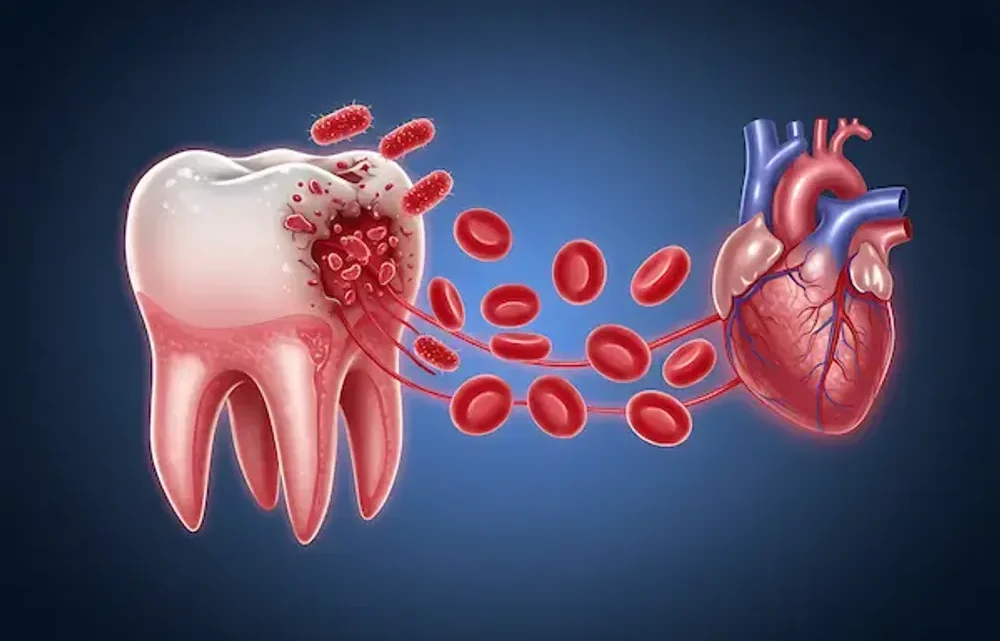
The link between oral health and cardiovascular disease that research confirms centres on periodontal disease: a chronic bacterial infection of the gums that triggers systemic inflammation, allows oral bacteria into the bloodstream, and is independently associated with heart attack, stroke, atrial fibrillation, and heart failure, even after accounting for smoking, diabetes, and other shared risk factors.
Trending Now!!:
That sentence sounds modest. It is not. An independent association, confirmed by a major scientific body, after adjusting for the usual suspects, is the kind of finding that reshapes clinical guidance.
In December 2025, the American Heart Association published an updated scientific statement in its flagship journal, Circulation, formally addressing periodontal disease and atherosclerotic cardiovascular disease for the first time since 2012.
The new statement does not simply restate old caution. It synthesizes thirteen years of genetic, microbial, and interventional research that has moved the conversation from speculation toward a defensible biological mechanism.
This matters for a simple reason: cardiovascular disease remains the leading cause of death worldwide, and gum disease is far more common than most patients realize. U.S. surveillance data indicate that 42% of adults aged 30 years or older have periodontitis, including 7.8% with severe disease.




A condition affecting nearly half the adult population, quietly feeding a chronic inflammatory state, is not a footnote in cardiovascular risk assessment. It is a variable that has been underweighted for too long.
Why This Question Keeps Surfacing
Patients searching for information on oral health and heart disease are usually trying to answer one of three things: whether gum disease actually causes heart problems, whether treating their teeth will lower their cardiovascular risk, and what specific oral symptoms warrant a conversation with a physician rather than just a dentist.
Most existing coverage on this topic stalls at the first question and answers it vaguely. The more useful answer requires sitting with the distinction between association and causation, because that distinction is exactly where the science currently stands, and exactly where most consumer health content gets sloppy.
What the Latest Research Actually Shows
The 2025 AHA statement, chaired by pediatric cardiologist Andrew H. Tran, draws a careful line.
The statement synthesizes new evidence concerning an association between periodontal disease and atherosclerotic cardiovascular disease, including findings from Mendelian randomization studies, interventions targeting periodontal disease, and studies exploring systemic markers such as inflammatory cytokines and vascular measures.
It also explores how the relationship works mechanistically, examining both direct pathways, such as bacteremia, and indirect pathways, such as chronic systemic inflammation.
The mechanistic picture has sharpened considerably since 2012. Direct mechanisms of an association may include bacteremia and vascular infection, while indirect mechanisms may involve chronic systemic inflammation, antibody cross-reactivity, thrombotic factors, and the oral microbiome. Perhaps the most striking addition is genetic.
Genetic studies have indicated shared susceptibility genes in the pathogenesis of ASCVD and periodontal disease. That finding alone complicates the old “it’s just shared risk factors” dismissal, because shared genetic susceptibility is a different category of evidence than shared lifestyle exposure.
Quoting AHA Chair Tran directly on the plausibility of the mechanism: “Gum disease and poor oral hygiene can allow bacteria to enter the bloodstream, causing inflammation that may damage blood vessels and increase the risk of heart disease.” That single sentence captures what years of laboratory and epidemiological work have been building toward.
The Finnish Discovery That Changed the Conversation
Until recently, the bacteremia hypothesis was largely circumstantial. Researchers suspected oral bacteria reached the bloodstream and contributed to arterial damage, but direct physical evidence inside human plaque was scarce.
That changed with a study published in the Journal of the American Heart Association in August 2025, led by researchers including Pekka Karhunen at Finland’s Tampere University.
The study identified genetic material from viridans streptococci, bacteria central to dental plaque formation, embedded directly inside ruptured atherosclerotic plaques.
As Karhunen put it: “Bacterial involvement in coronary artery disease has long been suspected, but direct and convincing evidence has been lacking. Our study demonstrated the presence of genetic material, DNA, from several oral bacteria inside atherosclerotic plaques.”
This is the kind of finding that moves a hypothesis from plausible to demonstrated. It does not prove that oral bacteria caused the plaque rupture in every case, but it closes a major evidentiary gap: the bacteria are not just statistically associated with heart disease; they are physically present at the site of the cardiac event.
The Childhood Risk Finding Few Patients Expect
A second development reframes the timeline entirely. A large nationwide cohort study published in the International Journal of Cardiology in early 2026, following more than 568,000 individuals across two decades, found that poor oral health in childhood was associated with a significantly higher risk of atherosclerotic cardiovascular disease in adulthood, including ischemic heart disease, myocardial infarction, and stroke. The risk was not static.
Individuals whose oral health remained poor or worsened throughout childhood demonstrated the greatest long-term cardiovascular risk.
This is the detail most consumer articles on this topic miss entirely, because most coverage frames oral-cardiovascular risk as an adult, lifestyle-stage concern: something to think about once a patient is already managing blood pressure or cholesterol.
The childhood cohort data suggests the inflammatory foundation may be laid decades earlier, through pediatric gingivitis and untreated early periodontal disease, long before cardiovascular risk factors typically enter the conversation. For paediatricians and family dentists, that reframes preventive oral care as a long-horizon cardiovascular intervention, not just a cosmetic or comfort issue.
The Mechanism, Explained Without the Jargon Overload
Strip away the technical vocabulary, and the mechanism breaks into four interlocking pathways, each independently supported by current literature.
Bacteremia and vascular infection. Inflamed, bleeding gums create an open door. Bacteria from dental plaque, including viridans streptococci and several Porphyromonas and Fusobacterium species, enter the bloodstream during chewing, brushing, and dental procedures.
In a healthy mouth, this happens in small, manageable quantities. In a mouth with active periodontitis, it happens constantly and at higher bacterial loads.
Chronic systemic inflammation. Periodontal disease keeps the immune system in a low-grade, persistent state of activation. Inflammatory cytokines, the same signalling molecules implicated in atherosclerotic plaque formation, circulate at elevated levels in people with untreated gum disease.
This is the pathway with the deepest evidentiary support, and it connects oral disease to cardiovascular risk through the same inflammatory machinery implicated in obesity, diabetes, and autoimmune conditions.
Oral microbiome imbalance. Growing evidence indicates an association between the oral microbiome and cardiovascular disease, though the variability of populations, follow-up durations, and disease severity between studies has led to divergent conclusions.
The oral cavity is not a minor microbial outpost. It is the second-largest human microbial habitat, colonized by more than 700 microbial species. A disrupted balance among those species, favouring pathogenic over commensal bacteria, appears to influence systemic vascular health beyond what periodontal inflammation alone explains.
Shared genetic susceptibility. As referenced above, certain genetic variants appear to predispose individuals to both periodontal disease and atherosclerotic disease independently. This pathway is the newest addition to the model and the hardest to address through behaviour alone, since it suggests some patients carry biological vulnerability to both conditions regardless of hygiene habits.
What Most Coverage Gets Wrong
A persistent misconception drives sloppy reporting on this topic: the idea that brushing and flossing will prevent heart disease, full stop. That overstates the evidence and sets up patients for false reassurance or unwarranted alarm. The AHA statement is explicit on this point.
“High-risk individuals with CVD risk factors may particularly benefit from regular dental screenings and targeted periodontal care to mitigate systemic inflammation,” the AHA writing group wrote.
Still, the statement simultaneously notes that periodontal disease contributes to chronic inflammation associated with cardiovascular disease. However, there is no direct evidence of causality or that periodontal therapy will help prevent CVD.
That nuance gets lost constantly in headline writing. Association is not causation, and even a strong, biologically plausible, mechanistically supported association is not the same as a proven preventive intervention. Readers deserve that distinction, because overstating it erodes trust the moment a more cautious source contradicts a breathless claim.
A second common error treats this as settled science when treatment trials disagree. One trial examining scaling and root planing combined with antibiotics for primary cardiovascular prevention in patients with periodontitis and metabolic syndrome found only very low-certainty evidence, with a single death in the study, making it impossible to determine whether the intervention reduced all-cause or cardiovascular death.
That same body of evidence could not exclude the possibility that the antibiotic-and-scaling combination actually increased cardiovascular events compared with simpler supragingival scaling at twelve months. This is the kind of inconvenient finding that rarely makes it into consumer health articles, because it complicates a tidy “fix your gums, save your heart” narrative.
Treating gum disease is good medicine on its own terms. Treating it as a guaranteed cardiovascular intervention, particularly with aggressive antibiotic protocols, is not yet supported.
A third misconception is the assumption that this connection is purely an adult, late-life concern. The childhood cohort data discussed above directly contradicts that framing.
Where the Evidence Is Genuinely Strong
It would be a mistake to let the appropriate caution around causality obscure how much has actually been confirmed.
A meta-analysis reviewed in the AHA statement indicates that periodontal treatment can improve ASCVD-related biomarkers and endothelial function, with the strongest effects observed in individuals with established ASCVD and diabetes.
That is a meaningful, clinically actionable finding, distinct from a causal claim about preventing heart attacks outright. Improving endothelial function and lowering inflammatory biomarkers are legitimate intermediate outcomes that cardiologists already track for other interventions.
There is also strong epidemiological consistency around basic hygiene behaviour. One study cited in the AHA review found that estimated ten-year ASCVD risk dropped from 13.7% among participants who brushed zero to one times daily to 9.1% for twice-daily brushers and 7.3% for those brushing three or more times daily.
After adjusting for confounders including age, sex, comorbidities, and lifestyle, only inflammatory markers remained significantly associated with frequent toothbrushing, suggesting that reduced systemic inflammatory burden may explain the cardiovascular benefit linked to improved oral hygiene.
That is a specific, falsifiable mechanism, not a vague wellness claim, and it is the kind of granular finding that separates rigorous reporting on this subject from generic listicle advice.
The disparity dimension also deserves more attention than it typically receives. The AHA statement highlights disparities in the prevalence of periodontal disease, particularly among underresourced populations, a detail with direct relevance for public health planning.
Cardiovascular risk reduction strategies that ignore dental access gaps in underserved communities are working with an incomplete picture.
Symptoms That Warrant a Cardiology Conversation, Not Just a Dental One
Most readers researching this topic want a practical signal: which oral symptoms are worth mentioning to a physician, not just a dentist. Based on the mechanisms described above, the following patterns carry the most clinical weight:
Bleeding gums that persist beyond a single brushing session, rather than occasional minor bleeding from an aggressive brushing technique, suggest active periodontal inflammation rather than transient irritation.
Gum recession combined with tooth mobility indicates more advanced periodontitis, the stage most strongly linked to the inflammatory and bacteremic pathways discussed in the AHA statement.
Chronic bad breath that does not resolve with improved hygiene can signal anaerobic bacterial activity below the gumline, the same bacterial populations implicated in vascular inflammation.
A formal diagnosis of moderate to severe periodontitis, particularly in a patient already managing hypertension, diabetes, or elevated cholesterol, is the scenario the AHA statement most directly addresses. That combination, not isolated gum sensitivity, is where the evidence for increased cardiovascular vigilance is strongest.
A Practical Framework for Patients and Practitioners
The research supports a layered response rather than a single directive. The following checklist reflects what the current evidence actually justifies, distinguishing confirmed benefit from plausible but unproven benefit.
Maintain twice-daily brushing and daily interdental cleaning as a baseline, supported by the inflammatory marker data above, regardless of cardiovascular status.
Treat a periodontitis diagnosis as relevant information for a primary care physician or cardiologist, particularly for patients with existing ASCVD risk factors, since the AHA statement specifically recommends this conversation for high-risk individuals.
Avoid treating periodontal therapy as a substitute for established cardiovascular prevention, including statin therapy, blood pressure control, and smoking cessation, since no current evidence supports periodontal treatment as a primary prevention strategy on its own.
Recognize that aggressive antibiotic-based periodontal interventions are not automatically safer or more cardioprotective than standard scaling, given the mixed and in some cases concerning trial data referenced above.
For parents, treat pediatric oral health as a long-term investment rather than a short-term cosmetic concern, given the childhood cohort findings linking early gum health to adult cardiovascular outcomes decades later.
The Honest Summary
The relationship between oral health and cardiovascular disease has moved from a contested fringe theory to a recognized, independently associated risk factor, formally acknowledged by the American Heart Association in its most comprehensive statement on the subject in over a decade.
The biological mechanisms, bacteremia, systemic inflammation, microbiome disruption, and shared genetic susceptibility, are increasingly well characterized, and the physical detection of oral bacteria inside ruptured arterial plaques removes much of the remaining doubt about plausibility.
What remains unresolved is whether actively treating gum disease changes cardiovascular outcomes, as opposed to simply correlating with better ones. The AHA concludes that while substantial evidence supports an association between periodontal disease and ASCVD, further research is needed to clarify causality and clinical implications.
That is not a hedge. It is an accurate description of where rigorous science currently stands, and it is the standard every claim on this topic should be measured against.
What People Ask