The MAVO Effect: Afrobeats’ Cultural Reset That Stripped Away Its Substance
Mavo's meteoric rise is one of Nigerian music's most compelling stories of 2025. But beneath the invented slang, the viral hooks, and the hostel-room recordings sits a harder question: what happens to a genre when personality replaces purpose?
At some point in 2025, three of the top spots on Apple Music Nigeria were simultaneously occupied by the same artist. Not Wizkid. Not Davido. Not Burna Boy.
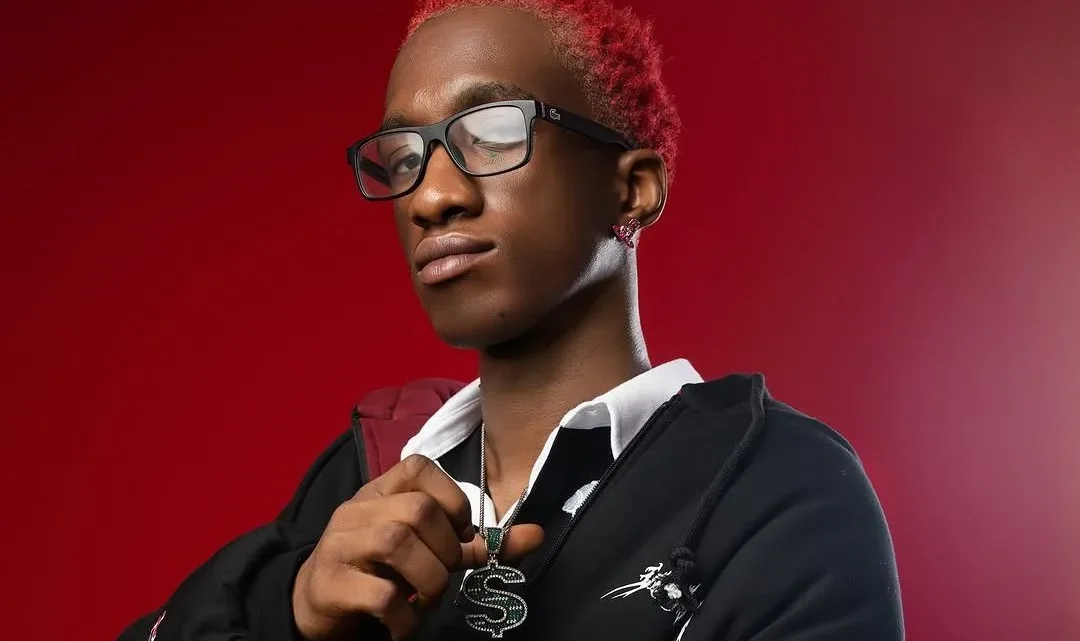
The name on those three spots was Mavo, a 22-year-old optometry student from Ekpoma, Edo State, who had been recording music on a hostel microphone and messaging strangers on SoundCloud to listen to his tracks. His single Escaladizzy, a word he invented, had racked up a million streams in under two weeks.
Trending Now!!:
Davido personally slid into his DMs to request a feature. DJ Tunez reached out on behalf of Wizkid. Billboard named him its African Rookie of the Month. The Nigerian music industry, which prides itself on discovering talent in roundabout ways, had no choice but to acknowledge this kid.
And here is where the conversation gets complicated.
Mavo’s rise is undeniably exciting. His hustle is real, his authenticity is not manufactured, and his linguistic creativity, coining a private vocabulary of 80 invented words he calls Bizzylingua and publishing it as Bizzpedia, A Native Bur Bur Dictionary with Native Magazine, is genuinely novel. But his emergence did not happen in a vacuum. It happened inside an Afrobeats ecosystem that had already been quietly drifting away from everything that once made it matter. And that drift is the real story.
Mavo is not the problem. He is the symptom. Or more precisely, he is the mirror.
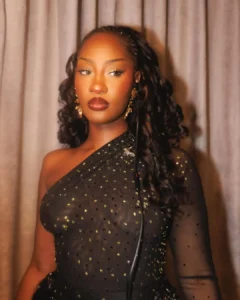
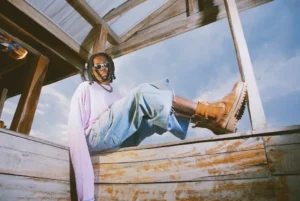
To understand what has been lost, you have to go back. Not all the way to Fela Kuti, though his shadow sits over every conversation about Nigerian music and artistic depth.
You can start closer, with the early 2010s. Afrobeats, as an overarching term for contemporary West African pop music, pulls from hip-hop, house music, jùjú, R&B, dancehall, highlife, and more. But what the early architects of this sound understood was that the genre fusion was a vehicle, not the destination.
Listen to Fela Kuti’s records, and you hear fury. Politics was essential to Afrobeat because Kuti used social criticism to pave the way for change; his message confrontational and controversial, connected to the political climate of most African countries in the 1970s, many of which were dealing with political injustice and military corruption. That was the foundation. Not every generation of Nigerian musicians needed to be as militant as Fela, but there was, for a long time, an unspoken agreement that the music should carry weight. That it should say something.
Wizkid’s early albums spoke the language of Lagos streets with emotional precision. Burna Boy consistently threaded colonialism, personal survival, and systemic rot through records that could still make you dance. Omah Lay’s Boy Alone went to genuinely uncomfortable places, addressing depression, masculinity, and the emotional cost of sudden fame. These artists built their reputations on the fact that behind every groove, there was a thought.
Then, somewhere between the algorithm and the advance check, the thought started leaving the room.
The streaming numbers for Nigerian music are staggering. In 2024, Nigerian artists earned over N58 billion in royalties from Spotify alone, more than doubling the figures from 2023 and marking a fivefold increase compared to 2022. Nigerian artists were discovered by first-time listeners over one billion times in 2024. Those numbers feel like validation. They are, in many ways. But what they also do is define what success looks like, and that definition has consequences.
Afrobeats’ global expansion was engineered by data and discovery algorithms. Spotify’s editorial playlists like African Heat and Afrobeats Hits became gateways to global exposure, while algorithmic playlists quietly reshaped how millions encounter African music.
What the algorithms reward is not lyricism. It is not political consciousness. It is not emotional depth. What the algorithms reward is a hook that lands in the first seven seconds and a rhythm that keeps someone from skipping to the next track. Nigerian producers and artists, rational people with bills to pay, started chasing exactly that.
This is not a moral failing. It is a structural one. When the infrastructure of discovery is built to prioritize dopamine over depth, you get music optimized for dopamine. The creative choices that artists make in Lagos in 2026 are shaped by what Spotify’s algorithm will do with the song in São Paulo and Seoul.
The rise of social media platforms like TikTok, Instagram, and YouTube dramatically expanded the global reach of music, propelling Afrobeats into the international mainstream, but with that newfound visibility came a set of challenges that artists in Fela’s time never faced.
When a lyric’s first audience is a 15-second TikTok clip, the lyric gets written for the clip.
One of the most consequential and least discussed contributors to Afrobeats losing its soul was the money. Specifically, the foreign money that poured into the Nigerian music industry between 2018 and 2023.
Between 2018 and 2023, Afrobeats experienced a huge influx of venture capital and a corporate gold rush. Major international labels threw massive advances and inflated marketing budgets at many artists based on fleeting TikTok virality, driven by a fear of missing out. When most of those massive advances failed to recoup, because global superstardom cannot be forced on every artist, the easy money dried up.
But while the money was flowing, something else was happening. International labels were not just funding music, they were shaping it. An A&R executive in London or Los Angeles who does not speak Yoruba, Igbo, or Pidgin, and whose only frame of reference for “African music” is what already charted in Western markets, has very specific ideas about what an Afrobeats record should sound like.
Infectious rhythm, minimal friction, universally accessible emotion, preferably love or celebration. Never mind that Fela built an entire artistic language out of specifically African friction. The international money wanted smooth edges.
Artists who wanted those deals learned to deliver smooth edges. The result was a genre that, for a stretch, started sounding like it was written for export, not for expression.
Burna Boy, speaking with Apple Music’s Zane Lowe, stated that “90% of them have almost no real-life experiences that they can understand, which is why you hear most of Nigerian music, or African, I don’t even know what to say, Afrobeats as people call it, is mostly about nothing, literally nothing. There’s no substance to it. Nobody’s talking about anything.”
That statement caused the predictable storm. Critics accused him of hypocrisy. Fans pointed to his own more commercially oriented singles. But underneath the controversy was something true that nobody wanted to sit with: the man who helped take Afrobeats to stadiums in London was publicly worried that the music had become hollow.
Wizkid expressed his annoyance at being labeled as an Afrobeats artist in a series of Instagram story posts. The genre’s forerunners, including Wizkid, Burna Boy, Davido, and Fireboy DML, were curiously distancing themselves from the label altogether.
When the architects of a genre start rejecting its name in public, that is not just branding. That is a distress signal. They had built the house, watched others fill it with furniture they did not choose, and decided they no longer wanted to live there.
Before Mavo arrived, Shallipopi had already written the playbook. Personality-first, street-coded, lingo-driven, TikTok-native, fiercely local in flavor and surprisingly global in reach. Shallipopi understood something that older Afrobeats artists took years to grasp: Gen Z Nigerian music listeners did not need you to say anything profound. They needed you to say something they could repeat.
His success revealed an opening in the market, and that opening is where Mavo walked through. Mavo’s come-up says a lot about where Nigerian music is heading. He is building micro-cultures, slang ecosystems, and viral identities that keep moving faster than labels are keeping up with. That observation is accurate and, depending on how you read it, either exciting or alarming.
The slang ecosystems are brilliant as a cultural mechanism. The fact that Mavo coined 80 unique terms, published them as a physical dictionary, and watched Nigerians adopt words like Escaladizzy and Shakabulizzy into daily speech is genuinely remarkable. His invented slang represents new ways of expressing ideas that existing languages could not quite capture, and this linguistic creativity has inspired other young artists to experiment with language rather than just using standard English, Pidgin, or indigenous languages.
But here is the thing about slang without substance: it wears off. Fleek was everywhere in 2014. Nobody says it anymore. The question for Mavo, and for every artist the MAVO Effect will inspire, is what happens when the slang cycle resets and there is nothing underneath it.
The MAVO Effect is not, to be clear, Mavo himself. He is talented, disciplined enough to record over 1,500 songs on his laptop while attending university full-time, and clearly committed to building something that outlasts a single viral moment.
Between lectures and clinical practice, he claims to have recorded over one thousand five hundred songs on his laptop across the past three years. He is not merely an Afrobeats singer; he is a linguistic architect, a student of science, and a testament to the power of disciplined independence.
The MAVO Effect is the broader cultural logic his rise represents: that in contemporary Afrobeats, personality, slang, and viral identity can fully substitute for lyrical depth, thematic weight, and artistic vision. That the path to the top no longer requires you to say something, only to be something compelling enough to screenshot.
This is the cultural reset. The genre once valued what you said. Now it increasingly values how you move, how you sound, and how your vocabulary trends on X. The music is becoming the content, and the content is becoming the music, and nobody is sure where the art went.
The commercialization of music, driven by algorithms, trends, and the need for virality, often pushes artists toward more superficial content. But commercialization alone does not explain everything.
Creative fatigue is real. Industry players have ascribed the absence of a truly global Afrobeats hit in nearly three years to the presence of creative fatigue amongst established stars. When your top artists are burnt out or deliberately retreating from the genre’s identity, the space they vacate does not stay empty. It fills with whoever is loudest.
The concentration of the industry around a narrow sound is another culprit. For too long, the industry has been overly reliant on a narrow “Afrobeats to the World” model, a powerful movement, but one that risks becoming too centralized, both creatively and economically. When an entire ecosystem bets on a single aesthetic lane, the lane gets crowded. And when it gets crowded, differentiation comes not from going deeper but from going louder, weirder, more viral.
The absence of critical infrastructure hurt, too. Nigerian music criticism, as a profession, has never been well-funded or particularly influential. There is no Nigerian equivalent of Pitchfork. There is no widely read publication whose reviews can genuinely slow the momentum of a hollow record or amplify a brilliant but uncommercial one. The market does the adjudicating, and the market does not care about substance. The market cares about streams.
And then there is the diaspora pull. As Afrobeats became a global genre, the largest audiences began to live outside Nigeria. Afrobeats today caters to a more diverse, often Western, audience, and mainstream music, especially in global markets, tends to avoid political themes.
Afrobeats artists risk alienating segments of their international audience by addressing issues that may not resonate universally. A song about the Lekki massacre plays differently in Lagos than it does in Toronto. Knowing that, many artists self-censor not because they have nothing to say but because the market rewards silence on anything uncomfortable.
What the ongoing “decline” conversation represents is a misdiagnosis of a genre in transition. Cultural value and corporate investment are not the same thing. The easy money is gone, and the structural leaks are clearer, but hyper-commercialization is not going to stop. Afrobeats is not dying. It is metabolizing into something leaner, faster, more surface-level by design.
Between 2017 and 2022, Afrobeats experienced a 550% growth in streams on Spotify, and it has been referred to as one of Africa’s biggest cultural exports. The numbers keep climbing. The global footprint keeps expanding. But numbers are not the same as meaning, and a genre can be everywhere and still be saying very little.
The artists who will matter in ten years are the ones who understand this. Not the ones who make the loudest viral moment, but the ones who make the loudest viral moment and also have something underneath it. Burna Boy has done this. Omah Lay has done this. Even Rema, whose global crossover success with Calm Down could have permanently turned him into a melodic export product, has shown with subsequent work that he is still asking real questions about the world he came from.
Mavo could do this too. His journey from begging classmates to listen to his SoundCloud tracks to collaborating with Wizkid in less than two years is extraordinary. What makes his rise particularly compelling is its authenticity, no industry plant rumors, no wealthy parents funding his career, no manufactured controversies. That authenticity is a foundation. The question is what he chooses to build on it.
The MAVO Effect is not a eulogy. It is a diagnostic reading of where Afrobeats is right now, in 2026, when the streams are up, and the substance is thinner than it used to be. When three chart positions can be held by an artist whose biggest artistic statement is a dictionary of invented words. When the loudest voices in the genre belong to men who are deliberately walking away from its name.
Nigerian music has survived military dictatorship, SARS oppression, an economy that consistently makes the act of creating art feel absurd. It has survived the death of its most iconic voice, the commercialization of its most successful decade, and the judgment of international gatekeepers who have never understood what made it great in the first place. It will survive this too.
But surviving is not the same as thriving. And right now, Afrobeats is surviving beautifully while slowly forgetting what it had to say. The beat is everywhere. The message is getting harder to find. And that is the real cultural reset nobody asked for.