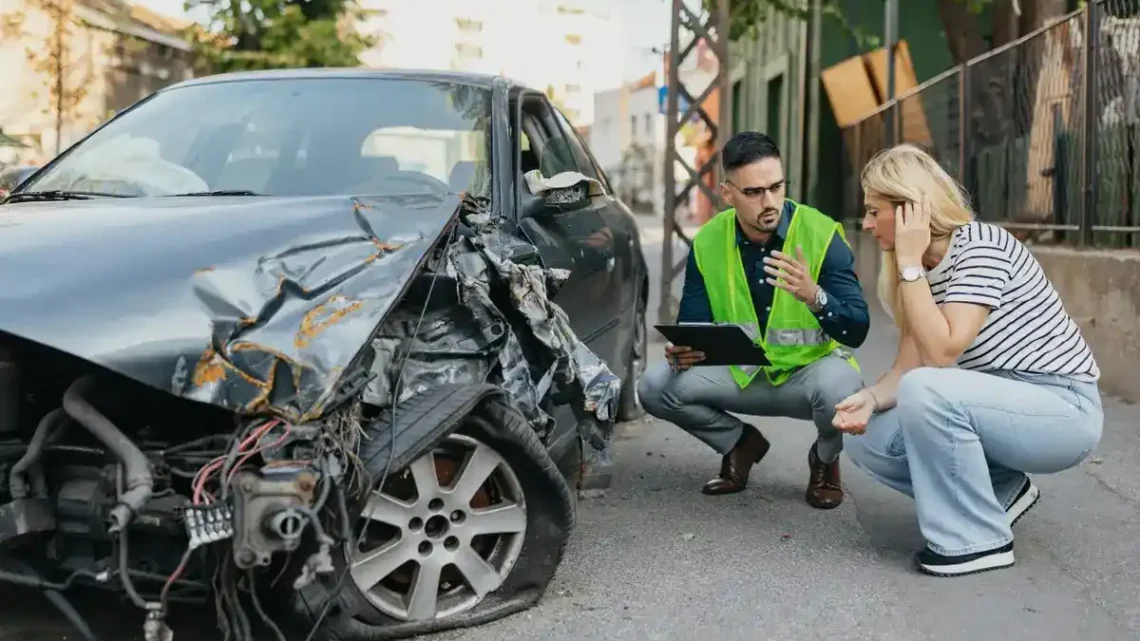
What to Do After a Car Accident: A Step-by-Step Checklist
Most people do at least one thing wrong at the scene. Here is how to protect your health, your rights, and your claim, from the first second of impact to the last signature on a settlement.
Nobody plans for a car accident. One minute you are scanning the radio for a decent song, and the next, there is a crunch of metal, the jolt of impact, and a strange silence where everything used to be ordinary.
In the years spent working alongside accident victims, insurance investigators, and personal injury attorneys, the same story comes up again and again: people who survived collisions just fine but unknowingly destroyed their legal and financial standing in the minutes that followed.
Trending Now!!:
That is what this guide is for. Not the textbook version of events, but a real, honest, step-by-step breakdown of what to do after a car accident, shaped by the actual mistakes real people make under real pressure. Whether you are dealing with a minor fender bender or a serious collision, what you do in those first moments matters enormously, for your health, your car accident claim, and your peace of mind.
“The accident itself lasts seconds. Your decisions in the minutes and days that follow can shape the outcome for years.”
Step 1: Take a Breath. Then Check for Injuries.
The body floods with adrenaline after a crash. That is not a metaphor. It is a physiological fact, and it is why so many people walk away from serious collisions convinced they are fine, only to discover a torn ligament or a concussion the next morning. The first thing you need to do is slow down mentally before you do anything else.
Check yourself for pain, dizziness, or any difficulty moving your limbs. Then check your passengers. Do not rely on the fact that everyone is sitting upright. Delayed injuries after a car accident, especially whiplash, traumatic brain injuries, and soft-tissue damage, frequently show no symptoms for 24 to 72 hours. The adrenaline masking that pain is not your friend.
If anyone is complaining of neck or back pain, do not move them. Improper movement of a person with a potential spinal injury can turn a recoverable situation into a catastrophic one. Call 911 immediately and let emergency services take over.
The Mistake People Make Here
They step out of the car feeling invincible, shake hands with the other driver, declare that everyone is fine, and wave off the paramedics. Two days later, they cannot turn their heads, and their doctor asks when the accident happened. The insurance adjuster is already building a case that the injury occurred elsewhere.
Step 2: Move to Safety and Turn On Your Hazard Lights
If the vehicles are blocking traffic and can be safely moved, pull them to the shoulder or a nearby parking lot. Secondary crashes at accident scenes are a genuine and underreported danger. AAA research has documented how hazard lights dramatically improve vehicle visibility, and in heavy traffic, that distinction can be the difference between a two-car incident and a pile-up.
If your car cannot move, stay inside with your seatbelt on and hazard lights flashing until help arrives, unless there is a fire risk, fuel leaking, or any other immediate danger that requires evacuation. If you must leave the vehicle, get as far from traffic as possible and stay there.
Set up flares or emergency triangles if you have them in your emergency kit. Most drivers do not, which is worth correcting before the next road trip. A basic car emergency kit costs less than thirty dollars and takes up less space than a gym bag.
Step 3: Call 911 and File a Police Report
This step is non-negotiable. Call the police, whether the accident seems minor or not. Your insurance company may require a police report to process your claim. More importantly, an official accident report creates a contemporaneous record of what happened, including who was present, where vehicles were positioned, and what each driver stated at the scene.
When officers arrive, give your account clearly and factually. Do not speculate, do not over-explain, and do not editorialize. Describe only what you directly observed. If you are not sure about something, say so. Officers are trained to take incident statements and document essential details.
In most states, you are legally required to report any car accident that results in injury, death, or property damage over a certain threshold, which typically ranges from $500 to $2,000 depending on where you live. Even in states with lower thresholds, reporting protects you. If the other driver later claims injuries they did not mention at the scene, a police report with their signed statement becomes one of your strongest defenses.
What If Police Don’t Come to the Scene?
In minor accidents where no injuries are reported, some police departments will not dispatch an officer. In that case, go to your local precinct and file the report yourself. You can also file a DMV accident report independently in most states. Either way, get something on record.
Step 4: Exchange Information, Carefully
This part sounds simple, but it gets botched all the time. After a car accident, you need to exchange insurance information with the other driver, but you should do so thoughtfully. Here is exactly what to collect:
- Full legal name of the driver and any passengers
- Driver’s license number
- Vehicle insurance company and policy number
- License plate number and vehicle VIN if accessible
- Make, model, year, and color of the other vehicle
- Contact information, including a phone number and email
What you do not need to give out: your home address, your Social Security number, or any information beyond what is legally required. If the other driver asks for your address, politely decline. Your insurance company is the appropriate channel for contact after that point.
Also note whether the other driver appears impaired, whether the car matches their registration, and whether their insurance card is current. These details matter later if something does not add up.
What About Uninsured Drivers?
If the at-fault driver does not have valid auto insurance, do not let them talk you out of calling the police. Document everything you can, including photos of their license, plates, and vehicle damage. Your own uninsured motorist coverage is designed exactly for this scenario, but it only pays out if you have properly documented the incident.
Step 5: Document the Scene Thoroughly
Your smartphone is one of the most powerful legal tools you have at a car accident scene. Use it. Take photos from multiple angles before anyone moves the vehicles. Capture the following:
- Damage to all vehicles involved, including the undercarriage if accessible
- The final resting positions of all vehicles
- Skid marks, debris fields, broken glass, and road conditions
- Traffic signs, signals, and any obstructions that may have contributed
- Weather conditions and visibility
- Any visible injuries
- The license plates of all vehicles present
Take more photos than you think you need. Storage is free. Regret is not. Personal injury attorneys consistently report that cases hinge on visual documentation, and that clients who photographed the scene thoroughly had measurably better outcomes than those who did not.
After photos, write notes on your phone while your memory is fresh. Describe what you saw before the crash, the sequence of impact, and any statements made by the other driver. Courts and insurance adjusters will ask these questions months from now, when the details have faded.
“Take more photos than you think you need. An insurance adjuster looking at seventeen angles of a bumper is far better positioned to support your claim than one working from memory and a police sketch.”
Step 6: Gather Witness Information
Bystanders are the most underutilized asset at any accident scene. If other drivers stopped, if pedestrians witnessed the collision, and if a nearby business might have security camera footage, pursue all of it before you leave.
Approach witnesses calmly and ask if they would be willing to provide their name and phone number. You are not asking them to testify in court today. You are asking them to be reachable if needed. Most people will agree to that. Get their contact information, and if they are willing, ask them to briefly describe what they saw while you record it on your phone.
Also, check the surrounding businesses. Gas stations, ATMs, parking lots, and storefronts often have surveillance cameras that capture footage of the road. Time is critical here: many systems overwrite footage within 24 to 72 hours. If there is relevant footage nearby, note it in your documentation and contact the business as soon as possible after leaving the scene.
Step 7: Do Not Admit Fault. Not Even Casually.
This is where emotion trips people up more than anything else. A collision is rattling. You feel the urge to apologize, to smooth things over, to say something human. Resist it.
Do not say you are sorry, do not say you did not see them, do not say you were distracted or tired. Anything that sounds like an admission of fault, even delivered sympathetically, can be used against you by an insurance company or opposing counsel.
Fault in a car accident is a legal determination, not a social one. It is established through police reports, physical evidence, traffic laws, and, in some cases, the testimony of reconstruction experts. It is not established at the roadside by two rattled drivers trying to be polite.
Be courteous. Be calm. Exchange information. But keep your account factual and neutral. Stick to what happened, not whose fault it was. The at-fault driver’s insurance company will be listening eventually, and even offhand comments have a way of surfacing.
No-Fault States Add Another Layer
If you live in a no-fault insurance state, such as Florida, Michigan, New York, or New Jersey, your own insurance covers your medical expenses regardless of who caused the accident. But even in no-fault states, fault still determines liability for property damage and serious injury claims. So the same rule applies: say nothing about responsibility at the scene.
Step 8: Notify Your Insurance Company Promptly
Contact your auto insurance company as soon as possible after leaving the accident scene, ideally the same day. Most policies require prompt notification as a condition of coverage. Waiting can be used by the insurer to complicate or delay your claim.
When you call, provide the basic facts: when and where the accident occurred, who was involved, and what documentation you have. You are not required to give a recorded statement immediately, and you are not required to accept a settlement offer on the first call. Ask your insurance agent what your policy covers, including medical payments coverage, property damage coverage, and any rental car provisions.
Be accurate but measured in what you share initially. Insurance adjusters are professionals at extracting information that can limit your payout. You do not need to be adversarial, but you do not need to volunteer more than the facts require.
Should You Talk to the Other Driver’s Insurance Company?
Not without preparation. The other driver’s insurer will likely contact you to take a recorded statement. You are under no obligation to provide one immediately. If you have retained a car accident attorney, direct all such communication through them. If you have not, speak with your own insurer first and understand your rights before agreeing to any recorded statement with an opposing insurance company.
Step 9: Seek Medical Attention, Even If You Feel Fine
This step gets skipped constantly, and it is the one that derails more car accident claims than any other single mistake. If paramedics arrive at the scene, let them evaluate you. If they do not, go to an urgent care clinic or emergency room within 24 hours, even if you feel no pain.
Delayed injuries after a car accident are not a myth. Whiplash symptoms often emerge 24 to 48 hours after impact. Concussions can cause subtle cognitive changes that are easy to dismiss as stress. Soft tissue injuries to the back and spine are routinely invisible on the day of the accident and show up on MRIs weeks later. Seeking medical attention creates a documented record that connects your injury to the accident, which is foundational to any personal injury claim.
Keep every receipt, every discharge summary, every prescription, and every follow-up appointment record. A daily pain journal, even just two or three sentences a night, can be surprisingly valuable in demonstrating the ongoing impact of your injuries. Insurance adjusters scrutinize the gap between an accident and the first medical visit. The shorter that gap, the stronger your case.
“Insurance adjusters are trained to look for gaps. Every day between your accident and your first doctor visit is a day they can argue your injury came from something else.”
Step 10: Keep a Complete Record of Everything
From the day of the accident forward, create a dedicated folder, physical or digital, for everything related to the crash. Include:
- The police report number and a copy of the report when it becomes available
- All medical bills, treatment records, and prescription receipts
- Vehicle repair estimates and invoices
- Rental car costs while your vehicle is being repaired
- Any correspondence with insurance companies, in writing
- Records of missed work and documentation of lost wages
- Your daily pain and limitation notes
- All photos and witness contact information from the scene
This documentation is the foundation of a car accident settlement negotiation or, if necessary, a personal injury lawsuit. The more complete your records, the harder it is for an insurer to undervalue your claim. Many people receive significantly less compensation than they are entitled to simply because they cannot substantiate the full scope of their losses.
Step 11: Understand Your Claim Options and the Timeline
Once the dust settles, you have a few paths forward depending on the severity of the accident, who was at fault, and what your state’s laws allow.
For minor accidents with no injuries and minimal property damage, a straightforward insurance claim through your own insurer or the at-fault driver’s company is often sufficient. The insurance adjuster will assess the damage, make an offer, and the process can be resolved in a few weeks.
For accidents involving injuries, disputed fault, significant property damage, or complex medical treatment, the landscape is more complicated. Pain and suffering, future medical expenses, lost earning capacity, and emotional distress are all categories of compensation that insurers will not volunteer unless pushed. This is where understanding your rights becomes essential.
The Statute of Limitations Is Real
Every state has a deadline for filing a car accident lawsuit, typically 1 to 3 years from the date of the accident. Missing that deadline means forfeiting your right to seek compensation through the courts, regardless of how strong your case is. If you are considering legal action, consult a car accident attorney well before that window closes.
Step 12: Know When to Hire a Car Accident Attorney
You do not always need a lawyer after a car accident. For minor fender benders with no injuries and a cooperative insurance process, it may not be worth the cost. But in any of the following situations, consulting a personal injury attorney is worth doing, and most offer free case evaluations:
- You suffered any injury, including ones you believe are minor
- The other driver was uninsured or underinsured
- Liability is disputed and both parties are blaming each other
- The insurance company has offered a settlement that feels low
- You missed work or anticipate ongoing medical treatment
- A commercial vehicle, rideshare car, or government vehicle was involved
- There was a fatality or catastrophic injury
A car accident lawyer who specializes in personal injury claims understands how insurance companies value cases and where they undercount damages. They also understand how to document and present a claim in ways that maximize its value. The contingency fee structure common to personal injury law, where attorneys collect a percentage only if they win, means that accessing legal representation does not require upfront payment.
That said, choose carefully. Look for an attorney with specific experience in motor vehicle accidents, not just general personal injury work. Ask about their track record with similar cases. And be wary of anyone who promises a specific settlement figure before reviewing your documentation.
The Most Common Mistakes People Make After a Car Accident
After working through hundreds of car accident cases, certain patterns emerge. Here are the mistakes that hurt people most.
Leaving the scene prematurely. Even in a minor collision, leaving before exchanging information and speaking with the police can result in criminal charges in most states. Hit-and-run laws apply even when no one is injured.
Posting about the accident on social media. Insurance companies monitor social media. A photo of you at a party two days after claiming serious back pain is exactly the kind of thing adjusters look for. Say nothing publicly about the accident until your claim is resolved.
Accepting the first settlement offer. Initial settlement offers from insurance companies are almost always lower than what you are entitled to. They are starting positions, not final ones. Get everything in writing and do not sign a release until you are confident the offer accounts for all your damages, including future medical care.
Failing to follow medical advice. If your doctor recommends physical therapy and you skip half your appointments, the insurer will argue your injuries were not serious. Follow your treatment plan and document that you are doing so.
Assuming delayed symptoms are not worth reporting. If you wake up three days after the accident with a headache, neck pain, or numbness in your hands, see a doctor and explicitly mention the accident. A documented connection between your symptoms and the collision is far more valuable than your own belief that you are probably fine.
Prepare Before an Accident Happens
The best time to prepare for a car accident is before you ever have one. A few simple steps taken now can make an enormous difference later:
- Keep a printed accident information card in your glove compartment so you know exactly what to collect at the scene
- Store your insurance agent’s number in your phone
- Review your policy annually, paying particular attention to uninsured motorist coverage, medical payments coverage, and your deductibles
- Assemble a basic car emergency kit with flares, a reflective triangle, a first aid kit, and a phone charger
- Familiarize yourself with your state’s accident reporting requirements so you know your legal obligations
None of this takes more than an afternoon, and none of it requires legal expertise. It is simple preparation that almost no one does until after they wish they had.
Final Thoughts
A car accident is one of the most disorienting things a person can experience. Your body is rattled, your schedule is upended, and suddenly, you are navigating insurance adjusters, repair shops, medical appointments, and potentially lawyers, all while trying to continue your normal life. The steps above are not designed to make that process easy. They are designed to make it manageable.
The people who come through car accidents with their health protected, their claims properly filed, and their rights intact are not necessarily the ones with the best luck. They are the ones who knew what to do and did it methodically, even when they were shaken, even when the other driver was angry, even when the insurance company pushed back.
Take this checklist seriously. Share it with people you care about. And if you find yourself standing on the side of a road with a crumpled bumper and a rising heart rate, remember: breathe first, then work through the list. Everything else comes from there.
What People Ask
DISCLAIMER: This article is intended for general informational purposes only and does not constitute legal advice. Laws vary by state and jurisdiction. If you have been involved in a car accident, consult a licensed personal injury attorney in your area for guidance specific to your situation.