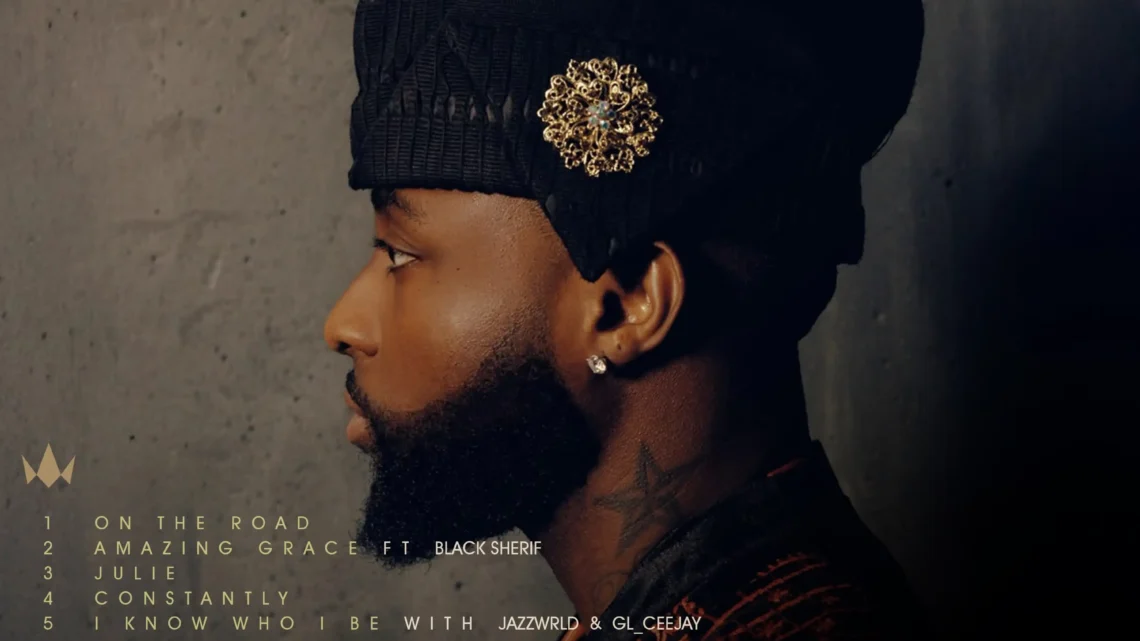
Davido’s Oriadé: Close to the Crown, Far From the Glory
Fifteen years into a career that turned a Georgia State dropout into one of Afrobeats’ most bankable exports, Davido wants the world to know he has arrived somewhere final.
Oriadé, his sixth studio album, takes its title from two Yoruba words, “ori” for head and “adé” for crown, and the rollout leaned hard into that symbolism: regal teasers, praise chants, promises of a return to roots after years of chasing global crossover. The album that actually arrived on July 31, 2026 tells a different story.
Trending Now!!:
At thirteen tracks, the shortest project of his catalogue by four songs, Oriadé is less a coronation than a victory lap, more concerned with cataloguing what Davido has already won than with earning any new ground.
That gap between the framing and the material is the central tension of the record. The regalia and the ancestral rhetoric suggested a project digging into heritage. What actually plays is a familiar tour through money, women, and self-congratulation, delivered competently but without much urgency, by an artist who knows exactly what his audience wants and has largely stopped stretching to give them anything else. It is not a bad album.
It is a safe one, padded with a handful of genuine highlights and dragged down by tracks that coast on name recognition alone.
Track 1: On The Road Rating: 6/10
The opener signals intent without generating much heat. Built on brisk West African percussion and shakers, it has Davido asserting the scale of his lifestyle and the isolation that comes with it, admitting that even with his team around him, the work never stops.




The groove is pleasant enough to survive a few replays, but for an album selling itself on grandeur, this is a low-stakes entry point. Nothing here suggests the “kingdom expanding.”
Track 2: Amazing Grace (feat. Black Sherif) Rating: 5.5/10
Black Sherif brings gravel to a song that otherwise runs on good mood and little else. Davido frames finding the right woman as fated rather than fought for, and the chorus, anchored by the line that love is sweeter when money is involved, undercuts whatever tenderness the title reaches for.
The two voices sit next to each other rather than inside each other, and the result is pleasant background noise.
Track 3: Julie Rating: 6.5/10
The album’s clearest flash of personality, and still not enough to call it a highlight. Davido opens by asking whether the woman in question has a vacancy, and whether anyone is in charge of her parole, a joke that lands on delivery more than writing.
He is wide awake at 4:30 in the morning getting no response, and there is real comedy in that image, a global star reduced to checking his phone. The joke carries the track further than the production does.
Track 4: Constantly Rating: 5/10
Produced by Pheelz, this is the album’s laziest stretch. Davido claims he has never witnessed a bigger miracle than himself, name-checks the twenty women who have fallen for him, and credits his wealth for a voice that now hits higher notes.
None of it is new for him, and without a hook strong enough to justify the repetition, the track just sits there. This is reputation coasting on autopilot, not songwriting.
Track 5: I Know Who I Be (feat. JAZZWRLD & GL_Ceejay) Rating: 6.5/10
The lead single fuses Amapiano low-end with Nigerian vocal phrasing, and it needs several listens to land at all.
Davido dismisses fans and critics who think they understand his story, tossing in a joke about his 30BG crew standing for “thirty bottles of drinks” rather than “thirty billion boys,” a rare flash of self-awareness the album needed more of. Even so, as the song chosen to introduce this whole project, it is a strange, underpowered first impression.
Track 6: Gimme Dat Ting (feat. NO11) Rating: 7/10
The most personality-forward track on the album and one of its few genuine keepers. Davido recalls his mother’s one condition before he signed a record deal, that he stay away from the Illuminati, and turns it into a punchline about labels waiting on him rather than the reverse.
Set against NO11’s Amapiano-Afrobeats bounce, the track has specificity most of the record lacks, even if it never fully escapes gravity into something essential.
Track 7: B4 B4 (feat. Mayorkun & Fola) Rating: 7.5/10
The clearest sign that this album’s features were chosen with intention rather than convenience. This is Davido’s first meaningful studio reunion with Mayorkun since his 2021 exit from DMW, and the chemistry sounds uninterrupted by the years apart.
Fola adds a third texture without crowding the track, and the Yoruba proverb about a tiger and a gunshot worked into the chorus gives the hook a cultural anchor most of the album’s choruses skip. It is crude in places, but it is one of the few tracks here that actually earns its energy.
Track 8: Already Falling Rating: 7.5/10
The album’s most affecting moment, though it stops short of greatness. Davido has described it as a spiritual sequel to 2018’s “Assurance,” and the comparison is generous to this song rather than the other way around: a stripped-back Afro-R&B ballad dedicated to his wife, built around one genuinely weighty question, whether she would take his love if he offered it again.
It does not overreach, and that restraint is refreshing next to the braggadocio elsewhere, but it also does not do quite enough to match the record it is invoking.
Track 9: Tell Everybody (feat. Leon Thomas) Rating: 8/10
The strongest track on the album and the closest thing here to a genuine highlight. Leon Thomas brings real contemporary R&B craft, and the production is disciplined enough to let both voices breathe rather than compete for space.
Davido’s plea to be held and not left alone finally sounds vulnerable rather than performed, and Thomas’s closing verses about privacy and being done pretending give the song an emotional close the rest of the album rarely bothers attempting.
Track 10: Yaya (feat. Aya Nakamura) Rating: 7/10
The most interesting concept on the album, structured as an actual disagreement rather than a duet of easy agreement.
Davido asks how many gestures it will take to prove himself, and Aya Nakamura answers in French that he has not yet earned it, that she has had to fight for her position while he has coasted on his. It is the one moment on the record where a feature is allowed to push back against Davido rather than admire him, which makes it more memorable than the melody alone would justify.
Track 11: Zanzibar Rating: 5.5/10
A tonal pivot that starts cold and unresolved before Davido decides to let the relationship go and refocus on money.
The mood shift is a fair change of pace after the album’s midsection, but the lyrics stay thin, more mood board than narrative, and the track fades out rather than earning its ending.
Track 12: Guide Rating: 6.5/10
One of the more reflective moments on the record, even if it never fully commits to the reflection. Davido frames his relationship with success as a negotiation with Oluwa rather than with the industry, admitting his blessings and his hustle are tangled together in ways he cannot always separate.
The line about counting blessings while still riding the momentum of chance is the closest the album gets to genuine self-examination, though it circles back to money by the second verse.
Track 13: My Light (feat. Llona) Rating: 6/10
A closer more interested in wrapping things up than sending them off with any weight. Davido frames his growth in financial rather than emotional terms, uninterested in pressure that does not pay off, and Llona’s closing praise verse adds warmth without adding much substance.
It is a functional way to end an album, not a memorable one, which sums up much of Oriadé’s back half.
The Verdict
Oriadé wants to be remembered as a homecoming, a Yoruba-royalty statement fifteen years in the making. What it delivers instead is a tighter, more disciplined version of the album Davido has made several times before, competent, occasionally funny, occasionally tender, but mostly content to describe a throne rather than earn one.
The features carry genuine weight, particularly Mayorkun, Leon Thomas, and Aya Nakamura, and the shorter tracklist cuts down on the filler that padded his 17-track efforts. But the thematic promise of the rollout, the ancestral imagery, the praise chants, the talk of destiny, never really shows up in the music.
The best songs here work because Davido stops performing royalty and just writes like a man talking to his wife or arguing with a woman unimpressed by him. Too much of the rest is a well-produced victory lap that mistakes comfort for a crown, and never gets within reach of the glory its own title promises.
Track Ratings Summary
- On The Road: 6/10
- Amazing Grace (feat. Black Sherif): 5.5/10
- Julie: 6.5/10
- Constantly: 5/10
- I Know Who I Be (feat. JAZZWRLD & GL_Ceejay): 6.5/10
- Gimme Dat Ting (feat. NO11): 7/10
- B4 B4 (feat. Mayorkun & Fola): 7.5/10
- Already Falling: 7.5/10
- Tell Everybody (feat. Leon Thomas): 8/10
- Yaya (feat. Aya Nakamura): 7/10
- Zanzibar: 5.5/10
- Guide: 6.5/10
- My Light (feat. Llona): 6/10
OVERALL ALBUM RATING: 6.5/10
TheCityCeleb Rating System: 9-10 = Masterpiece, 8-8.9 = Excellent, 7-7.9 = Very Good, 6-6.9 = Decent, 5-5.9 = Mediocre, Below 5 = Weak