He Gave Up the Boss to Save His Son’s Childhood, Then Came Home to a Green Door
Marcelo Dizon slid Rolando Bautista’s phone back across the table. Text him, he said. Tell him the cash is ready for pickup.
It was almost four in the morning in Manila. The air conditioner in the interview room smelled like a wet towel, and Rolando’s Nescafé sachet coffee had gone cold in its paper cup an hour ago. He had not slept since Tuesday.
Trending Now!!:
Eleven hours earlier, two men in plain shirts had said his full name at a GCash kiosk in Quiapo. He was holding six phones that did not belong to him.
How he got there was boring. He lost his call centre job in Ortigas when his account shut down, and the rent in Tondo stayed at 4,500 pesos a month whether he had work or not. Rice went up. The online lending apps started texting his mother-in-law.
Then a neighbour’s uncle offered him a job. Eduardo Salonga, whom everyone called Ka Dado, ran a Facebook group named Ginhawa Circle. People put in 5,000 pesos and got 7,500 back in twenty-one days. The first payouts were real, paid out of the next people’s deposits.
Rolando understood the arithmetic by the second month. He kept going anyway, because his wife Liza had stopped asking where the money came from, and he liked the quiet.




His part was the dull part. He opened accounts using IDs borrowed from jeepney drivers and laundry women, 300 pesos each, and moved the deposits around before anything got frozen. Ka Dado never touched a phone himself. He sat in a house in Parañaque with a Montero in the driveway and let other people carry his risk.
The police found Rolando through one account. One. He had typed his own number into the registration form at one in the morning because the page would not move forward without it.
Marcelo laid it out like a menu. Twelve years, maybe more. Or you help me, and the prosecutor recommends three. Rolando asked him to say the second number again.
He did the sum in his head. Jomar, his son, was six and still slept with his feet up on the wall. In twelve years the boy would be eighteen. In three, he would be nine.
His phone had a voice note from Liza, sent at 11:02 the night before. Roly, sagutin mo ako. Nasaan ka na? He did not play it a second time. He typed with one thumb instead.
Boss, the Cebu group finished. 2.8 million cash with me. Kuya won’t use the bank.
Ka Dado usually sent a runner for money. This time he answered in four minutes. Where. I’ll come myself. Maybe 2.8 million was too much to trust to a boy, or maybe Rolando was the one worker who had never come up short.
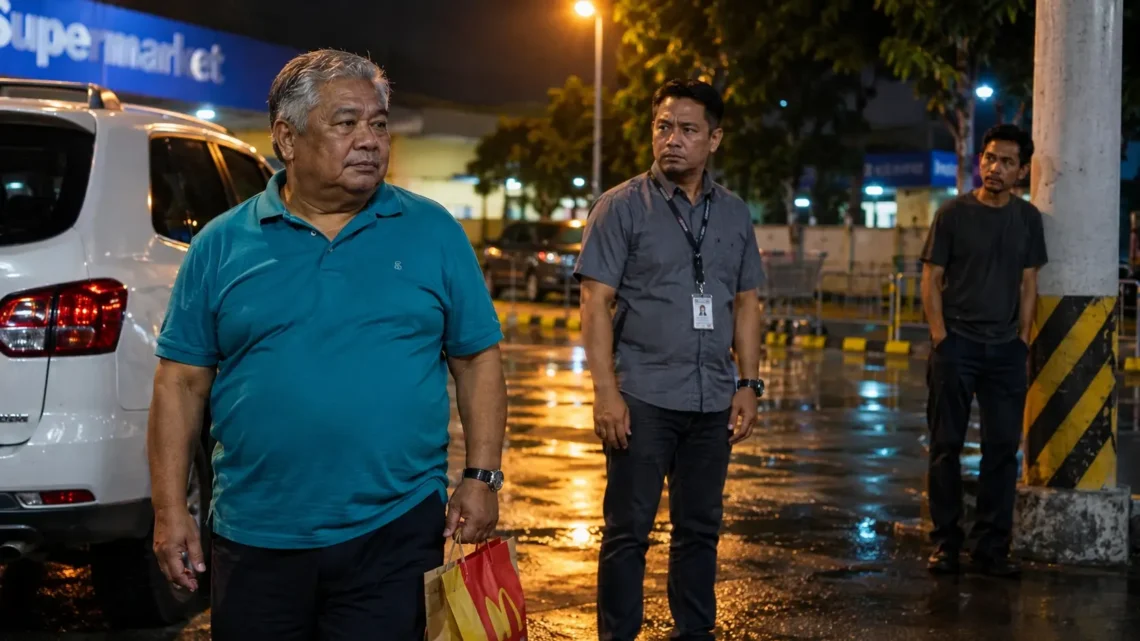
The next night, the parking lot behind a Savemore in Tondo smelled like fried fish and wet cardboard. A white Toyota Innova rolled in at 11:15. Ka Dado stepped out in a Lacoste polo, holding a plastic bag from Jollibee.
It was a box of Chickenjoy. He had always asked about the boy.
The officers came from three sides. Ka Dado did not look at them. He looked across the lot at Rolando, standing by a concrete pillar with his hands in his pockets, and he kept holding the bag until someone took it from him.
Ka Dado’s phone gave up forty-one names. By the end of the year, nineteen people were in custody and more than four thousand victims had filed complaints. The prosecutor kept his word, and Rolando took three years.
He served them at Manila City Jail in Sta. Cruz. Liza came every Sunday with Skyflakes, canned Ligo sardines and a phone full of photos of Jomar’s missing teeth. She asked him only once whether it had been worth it. He said he was coming home sooner than he would have. She did not answer that.
Outside, a Facebook group called Ginhawa Victims United grew to four thousand members. Some of them called Rolando a hero. Some of them said he was the same as the boss with a smaller bag. The recovered assets paid back 31 centavos on every peso.
He came home after two years and seven months, with good conduct credits, on a Thursday in the rain. Jomar was nine now, taller, and shy with his own father. Liza had painted the front door green.
Aling Nena from next door caught him at the gate on the second day. Two men on a motorcycle came asking about you, she said. Twice. He thanked her and bought her a pack of Marlboro he could not really afford.
Liza wanted to move to her mother’s place in Antipolo. Rolando said no. He had already run once, from the law, and he had paid for it in full. He was tired of running.
He started leaving the gate unlocked. He told Liza it was so anyone who wanted to find him could see he was not hiding. She looked at him for a long time and said nothing.
The days after that were small. He applied for a warehouse job with Mercury Drug. He ate pandesal with Star margarine standing at the counter and walked Jomar to school, and the boy let him hold the Spider-Man backpack.
On the nineteenth day, Liza packed Jomar’s bag. She said he would sleep at his lola’s in Antipolo for the weekend. Jomar complained that he would miss his Mobile Legends ranking game, and Rolando told him the game would still be there on Monday.
On Sunday night, Liza’s brother Benjie came by with a tray of pancit from the stall on the corner. Two neighbours stopped in to say welcome back. Somebody found the old speaker, and for an hour the house sounded like a house again.
Aling Nena found the gate open at six the next morning. Five people were inside the house, and a pot of pancit was still sitting on the table. The police said it was under investigation.
The victims’ group heard within the hour. Someone wrote one word, Justice, and it collected nine hundred reactions. Under it, a woman who had lost 40,000 pesos typed a longer reply. I wanted my money back. I did not want this.
Jomar learned it from his grandmother in a kitchen in Antipolo, over a half-eaten plate of rice. Later, when the police went through her phone, they found a voice note Liza had sent her on Saturday night. Keep him there until Roly settles this. Don’t let him come back.
She had known. She had packed the bag, she had left the gate as he asked, and she had stayed.
A man can pay the state for what he did, but the people he named never agreed to take the receipt.