I Found a Second Phone in My Boyfriend’s Kitchen Drawer. I Wish I Had Never Turned It On
Come outside.
That was the message on my screen at 1:16 in the morning, followed by a second one from Marta.
Trending Now!!:
Please. I know you are awake.
I was not supposed to be awake. Piotr was asleep beside me, one arm across his face, breathing heavily because he had spent the evening complaining about a headache and then drinking two beers anyway. The room was dark except for the blue light from my phone, and somewhere beyond our bedroom window, a tram rattled along Aleje Jerozolimskie in Warsaw.
I stared at Marta’s name for almost a full minute.
Then I got out of bed.


Three months earlier, I would have said Marta was one of my safest people. She was the friend who knew which bakery near Nowy Świat stayed open late, which pharmacy had the least miserable staff, and exactly how I liked my coffee when I was having a terrible week.
She was also my boyfriend’s younger sister.
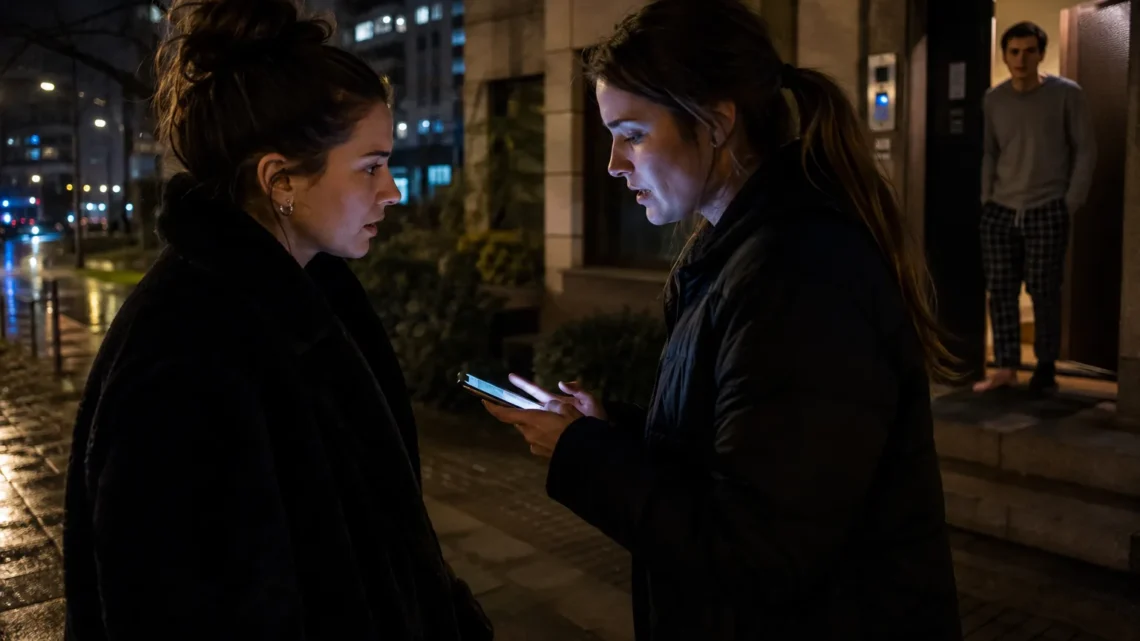
That was why, when I stepped into the cold hallway outside our apartment and saw Marta standing beside the lift in an oversized black coat, I knew immediately that something had gone badly wrong.
She looked at me and said nothing.
Then she held up a phone.
Not mine.
Not hers.
Piotr’s.
I looked at it, then at her.
Where did you get that?
Marta swallowed.
Your kitchen drawer.
I almost laughed.
Not because anything was funny. Because my brain sometimes does that when reality becomes too stupid to accept.
Why were you looking in our kitchen drawer?
I was looking for the spare keys.
She held the phone tighter.
It started ringing.
I glanced toward our apartment door.
He is asleep.
I know.
That was the first thing that scared me.
She did not sound surprised.
She sounded certain.
We went downstairs because neither of us wanted to have that conversation inside my home while Piotr was sleeping ten metres away.
Warsaw at that hour had a strange quietness. Not silence, exactly. There were still cars on the wet street, still the occasional tram, still somebody laughing outside a closed kebab shop near the corner. The pavement reflected the streetlights, and the air smelled faintly of rain and cigarette smoke.
We sat on a bench near the entrance.
Marta unlocked the phone.
I did not ask how she knew the passcode.
She did not explain.
The first thing I saw was a WhatsApp notification.
Then another.
Then another.
All from a woman saved only as Ania.
Are you coming tomorrow?
You said she would be gone.
Please stop making me feel stupid.
I stopped breathing for a second.
Marta turned the screen toward herself.
There are months of these.
I looked at her.
Months?
She nodded.
I found messages going back to February.
It was September.
I had to sit back.
February was when Piotr had started working late twice a week.
February was when he began putting his phone face down on the table.
February was when he suddenly became very protective of his passwords.
February was when he told me I was imagining things because I had been stressed.
I remembered all of it at once.
That was the cruel part.
Cheating rarely arrives as one huge moment. Sometimes it arrives as old moments changing shape after you learn the truth.
Marta opened the messages.
I did not want to look.
I looked anyway.
There were no dramatic love letters. No hotel reservations. No photographs of people kissing.
There were ordinary messages.
That made them worse.
Did you eat?
I miss you.
I left your shirt here again.
She asked me about you.
You need to decide what you want.
Then I saw one from Piotr.
Just give me time.
I stared at those four words.
Time for what? I asked.
Marta did not answer.
She did not need to.
I went home at 2:03.
Piotr was still asleep.
I stood in the bedroom doorway watching him for almost a minute.
His face looked completely normal.
That offended me more than anything.
I had spent years thinking betrayal would look different. I imagined shouting. Tears. Somebody packing a suitcase. Maybe a glass breaking.
Instead, the person who had lied to me for months was asleep under our grey duvet, one foot sticking out because he always complained that he got too warm at night.
I went into the kitchen.
The second phone was gone.
I checked the drawer.
Empty.
I checked the counter.
Nothing.
Then I heard footsteps behind me.
Piotr stood in the doorway.
What are you doing?
His voice was still thick with sleep.
I turned around.
Where is your other phone?
He froze.
Not for long.
Maybe one second.
Maybe less.
That was enough.
He rubbed his face.
What other phone?
I laughed again.
This time he knew why.
Do not do that.
Do not do what?
Lie to me while I am standing right here.
His eyes moved toward the drawer.
Then back to me.
Who told you?
I felt something inside me go completely still.
Not shock.
Not anger.
Something colder.
So there is a phone.
He sat down at the kitchen table.
For the first time in three years, I saw Piotr look like a stranger.
He did not deny the affair.
He did not even start with an apology.
He said Ania had been important to him.
That sentence nearly made me leave.
Instead, I pulled out a chair.
How important?
He stared at the table.
I do not know.
That is not an answer.
I know.
How long?
He told me.
Seven months.
I did the math automatically.
Seven months meant Christmas.
Seven months meant my birthday.
Seven months meant the weekend we visited his mother in Łódź.
Seven months meant the night he held my hand under the restaurant table and told me I was the person he wanted to build a life with.
I remembered believing him.
That was the part I could not forgive myself for.
Not because I had trusted him.
Because I suddenly wondered how many times I had defended him to myself when my instincts were trying to protect me.
Piotr reached across the table.
I pulled my hand away.
Do not.
He nodded.
For a while, neither of us spoke.
Then he said something I still do not know what to do with.
I was going to tell you.
I looked at him.
When?
He said nothing.
When were you going to tell me?
He looked down.
After I figured out what I wanted.
I stood up.
You already figured it out.
He looked confused.
What do you mean?
You wanted both.
That was the first time he cried.
I did not.
I went back to bed alone.
At six that morning, I opened my banking app and stared at the joint savings account we had been building for an apartment. We had spent almost two years putting money into it. It was supposed to be our deposit.
I transferred my half into a separate account.
My hands shook while I did it.
It was not revenge.
It was budgeting.
There is a strange kind of personal finance advice nobody gives you when your relationship falls apart. People tell you to protect your heart, protect your peace, take time to heal.
Nobody says check the direct debits.
Nobody says change the streaming passwords.
Nobody says find out whose name is on the electricity contract.
Nobody says that emotional devastation still comes with bills.
By eight, Piotr had packed a bag.
He stood by the front door wearing the blue jacket I had bought him in Kraków.
Where are you going? I asked.
My mother’s.
I nodded.
He put his hand on the door handle.
Then he stopped.
I do love you.
I looked at him.
I believe you.
He seemed surprised.
You do?
Yes.
His eyes filled again.
Then why are you letting me leave?
I looked around our apartment.
The plants by the window.
The cheap bookshelf we built badly and never fixed.
The mug with the chipped handle.
The framed photograph from our first trip together.
Because loving someone and trusting them are not the same thing.
He left.
For three days, I did not hear from him.
On the fourth day, Marta came over.
She brought pastries from a bakery near Plac Zbawiciela and sat on my kitchen floor because the chairs suddenly felt too formal.
She told me Piotr had called her.
He asked if you were seeing someone else.
I stared at her.
Then I laughed so hard I nearly cried.
Seriously?
She nodded.
I told him no.
I stopped laughing.
Why did you tell him that?
She shrugged.
Because I did not know what else to say.
That answer stayed with me.
There was something almost ridiculous about the whole thing. Piotr had cheated for seven months, and somehow he was worried that I might move on after four days.
Life was full of these tiny unfair jokes.
A week later, Piotr came back for the rest of his things.
He stood in the hallway holding a cardboard box.
I had packed his books.
He had packed his headphones.
We avoided looking at each other.
Before he left, he asked if I had read all the messages.
I said no.
He looked relieved.
Then I told him I had read enough.
He nodded.
At the door, he turned.
If I ended things with her, would you ever give me another chance?
I did not answer immediately.
Outside, a tram passed along Aleje Jerozolimskie, bright and almost empty, carrying people toward jobs and schools and ordinary mornings.
I thought about all the relationship advice I had read online over the years. Leave immediately. Fight for love. Forgive once. Never forgive cheating. People make mistakes. People reveal who they are.
Everyone had an answer.
None of them had lived in my apartment.
None of them had shared my rent.
None of them had known how Piotr took his coffee, or how he hummed when he cooked, or how he used to reach for my hand while crossing busy streets.
I looked at him.
I do not know.
His face fell.
Maybe he expected a yes.
Maybe he expected a no.
I think the uncertainty hurt him more.
He left without another word.
I locked the door.
Then I stood there listening to his footsteps disappear down the stairs.
My phone buzzed.
A message from Marta.
Are you okay?
I typed three different answers.
Deleted all of them.
Then I wrote:
Ask me tomorrow.
I put the phone down and opened the window.
Warsaw was already awake.
The bakery downstairs was putting bread on the shelves. Someone was arguing with a delivery driver. A tram bell rang somewhere beyond the buildings.
The city had no idea that my life had changed.
Maybe that was the strangest comfort of all.
Sometimes the person who breaks your heart still has a key to your apartment, and you have to decide whether changing the lock is enough.