My Boss Asked Me to Take the Blame for an 85,000 Rupee Mistake I Never Made
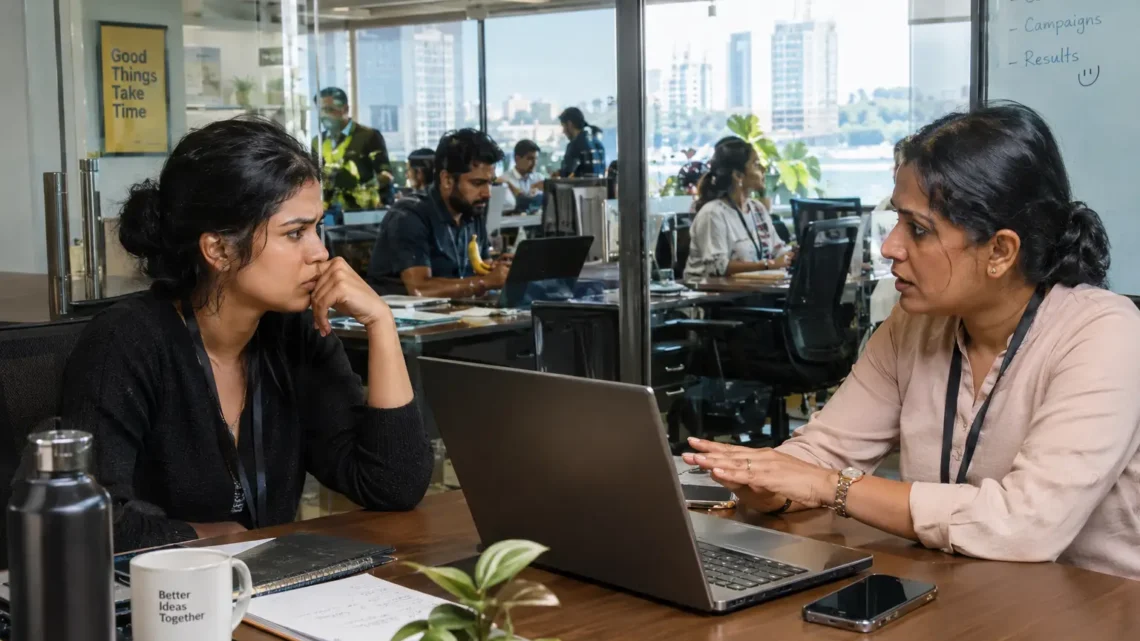
The spreadsheet had already been changed when Nadeesha called me into the meeting room and shut the glass door.
Please tell them you made the mistake, she said.
Trending Now!!:
I looked at her for a few seconds because I honestly thought she was joking.
She was not.
Outside the room, the office in Colombo was doing what offices everywhere do when something uncomfortable is happening. People were pretending to work. Keyboards clicked. Someone laughed too loudly near the pantry. A printer made the same grinding sound it had been making for three months.
On my laptop, the file was still open.




There were six names on the bonus sheet.
Mine was one of them.
The amount beside my name was wrong.
It was not a small mistake.
It was 85,000 Sri Lankan rupees.
I had been waiting for that money for almost two months.
What exactly am I supposed to say? I asked.
Nadeesha pulled out the chair opposite mine and sat down.
That you entered the wrong number.
I did not.
She looked at the glass wall.
Then she lowered her voice.
I know.
That was the moment I understood that this was not really about a spreadsheet.
I had worked at the company for almost three years. It was a mid-sized digital marketing company in Colombo, the kind of place that had motivational posters on the walls but argued over the price of bottled water.
The office was near Bambalapitiya, close enough to Galle Road that buses seemed to shake the windows whenever traffic got bad. At lunch, half the staff walked to small restaurants nearby, while the other half ordered rice and curry through PickMe and ate at their desks.
There were twenty-six of us.
We had two meeting rooms, one proper manager, three people who behaved like managers, and an office group chat that became completely silent whenever someone from finance asked about expenses.
My job was account coordination.
It sounded more impressive than it was.
Most days involved spreadsheets, client emails, WhatsApp messages, Google Meet calls, chasing people for things they had promised to send, and answering messages that began with Quick one and somehow lasted three hours.
I had also started doing freelance work at night.
That was not unusual.
Everyone seemed to have a side hustle.
One colleague sold homemade cakes. Another designed logos after work. Ruwan repaired phones on weekends. Shalini was trying to build an online clothing store and spent every lunch break checking orders.
I had started writing product descriptions for small businesses.
The extra money was supposed to help me build an emergency fund.
Instead, it mostly disappeared into rent, groceries, transport, electricity and the strange collection of little payments that seem harmless until they become your entire salary.
I had recently started reading about budgeting for beginners because I was tired of reaching the last week of every month and becoming a different person.
The bonus was supposed to change that.
It was not a huge bonus by corporate standards.
For me, it mattered.
I had already planned what I would do with it.
Clear one small debt.
Pay part of my electricity bill.
Put some aside.
Buy my mother a new phone because hers had a cracked screen that made every WhatsApp voice note sound like it had been recorded inside a washing machine.
Nothing dramatic.
Just ordinary things.
That morning, the finance manager had emailed the final bonus sheet to the department heads.
I had received a notification while waiting for my coffee.
My name was there.
85,000 rupees.
I had taken a screenshot.
Then I went back to work.
Twenty minutes later, Nadeesha called me into the meeting room.
Now she was asking me to lie.
Why would I say I made the mistake?
She rubbed her forehead.
Because the director is going to ask who changed the sheet.
Then tell him who changed it.
She did not answer.
I leaned back.
You changed it?
She looked at me.
I corrected it.
From 85,000 to 10,000?
You know how the performance system works.
I laughed once.
Not because anything was funny.
No. I know how numbers work.
She sighed.
Then she said something that made the whole thing worse.
Your bonus was never approved at that amount.
I opened the screenshot on my phone.
Then why was it there?
She stared at the screen.
The office air conditioner rattled above us.
For a moment neither of us spoke.
Finally, Nadeesha said that the original figures had been entered based on preliminary performance scores. Senior management had decided to reduce the bonus pool because the company had missed its quarterly revenue target.
They changed it after the approval?
They changed the calculation.
Without telling anyone?
They were going to tell everyone Friday.
It was Wednesday.
I looked through the glass wall.
Ruwan was eating a banana while looking at his phone. Shalini was arguing with someone over a delivery. Two interns were whispering near the printer.
Nobody knew.
Not yet.
What happens if I refuse to say it was my mistake?
Nadeesha looked tired.
Then it becomes a disciplinary issue.
For me?
She nodded.
Probably.
That word stayed with me.
Probably.
It was the favorite word of every workplace I had ever known.
Probably approved.
Probably tomorrow.
Probably included in the next salary cycle.
Probably nothing to worry about.
I left the room and went straight to the pantry.
Shalini was there, making tea.
She looked at my face.
What happened?
Nothing.
That face is not nothing.
I almost told her.
Instead, I opened my phone and typed a message.
Do you know anything about the bonuses?
She saw it and frowned.
Why?
I showed her the screenshot.
Her expression changed immediately.
Wait.
She opened her email.
Then she opened another file.
Then another.
Five minutes later, she looked at me.
Mine was 60,000.
Was?
Now it says 15.
We stared at each other.
Within ten minutes, three more people knew.
Within twenty minutes, almost everyone knew.
The office WhatsApp group stayed quiet.
That was the strange part.
People were discussing the issue privately but nobody wanted to be the first person to type something in the official group.
At 2:17 p.m., Ruwan finally sent one message.
Has there been a change to the performance bonus figures?
Nobody responded.
Then the typing bubbles appeared.
Disappeared.
Appeared again.
Nothing.
At 2:25, the finance manager sent a message asking everyone to wait for an official communication.
That was enough.
The office exploded.
Not loudly.
Nobody shouted.
People simply stopped pretending.
Employees walked between desks. Phones came out. Screenshots were shared. Someone forwarded an email from the previous month showing a different bonus structure.
I watched Nadeesha sit at her desk with both hands covering her face.
For the first time, I felt sorry for her.
That complicated everything.
She had not invented the decision.
She had been told to communicate it.
She had also asked me to take the blame.
Both things were true.
At 4 p.m., the director called an emergency meeting.
Twenty-six people crowded into the main meeting room.
There were not enough chairs.
Some stood near the door.
The director explained that the company was facing financial pressure and that the bonus calculations had been revised.
Nobody interrupted him until Shalini asked why the employees had not been told before the figures changed.
The director said there had been an internal review.
Ruwan asked whether the original figures were legally binding.
The director said that was not the right question.
Someone at the back laughed.
It was a nervous laugh.
The kind people make when they are too uncomfortable to stay silent.
Then the director looked at me.
There was also an error in the original spreadsheet.
My stomach dropped.
I knew what was coming.
One employee entered an incorrect figure.
I looked at Nadeesha.
She looked at the floor.
That was when I had a choice.
I could stay quiet.
I could protect my manager.
I could protect myself.
Or I could tell the room what had happened.
My hands were sweating.
I stood up.
That was me.
Everyone looked at me.
I paused.
Then I added:
Except I did not enter the wrong figure.
The room became completely silent.
I explained what Nadeesha had asked me to do.
I showed them the screenshot.
Then I showed them the file history.
The director asked who else had access.
The IT manager pulled up the activity log.
The original figures had been entered correctly.
The later changes had been made from a management account.
Nobody spoke for several seconds.
Then Nadeesha stood up.
I expected her to deny it.
She did not.
I was told to change them, she said.
That was all.
No dramatic speech.
No crying.
No shouting.
Just eight words that changed the room.
The meeting ended without anyone knowing whether the bonuses would be restored.
The next morning, the company sent an email saying the matter was under review.
By Friday, the reduced bonuses had been withdrawn.
The original amounts were not fully restored.
Instead, management announced that the company would pay a revised amount in two installments.
People were angry.
Some accepted it.
Some resigned.
One person stayed late that evening and printed every email connected to the bonus dispute.
I never found out what he planned to do with them.
As for Nadeesha, she remained my manager.
That surprised me.
She apologized to me privately the following Monday.
I should never have asked you to take the blame.
I believed she meant it.
I also stopped trusting her.
Those two things can exist together.
That was the part nobody tells you about work.
You can forgive someone and still check the email twice before sending it to them.
You can understand why someone did something and still decide you never want to be alone in a room with them again.
A few months later, I left the company.
Not because of the bonus.
At least, that is what I told people.
The truth was that the incident made me notice how much of my life had been built around waiting.
Waiting for salary.
Waiting for approval.
Waiting for promotion.
Waiting for someone to notice that I was doing more work.
Waiting for the company to become the company it had promised to become.
I started taking my freelance writing more seriously.
It was not instant financial freedom.
There were months when I made very little.
There were nights when I wondered why I had traded a predictable salary for invoices and uncertainty.
Still, I had learned something about money that no personal finance article had managed to make real for me.
A budget is not only about numbers.
Sometimes it is about knowing exactly how much power someone else has over your life.
I still have the screenshot from that Wednesday.
It sits in an old folder on my phone between pictures of food and a blurry photograph of Colombo traffic taken through a bus window.
Every now and then, I see it.
The original figure.
85,000.
For a few seconds, I remember the meeting room, the glass door, the air conditioner, Nadeesha looking at the floor.
Then I close the folder.
The money eventually arrived, although not in the way I expected.
The apology arrived too.
Trust never did.
Sometimes leaving a job is not about finding a better one, it is about finally admitting you cannot keep waiting for the old one to change.