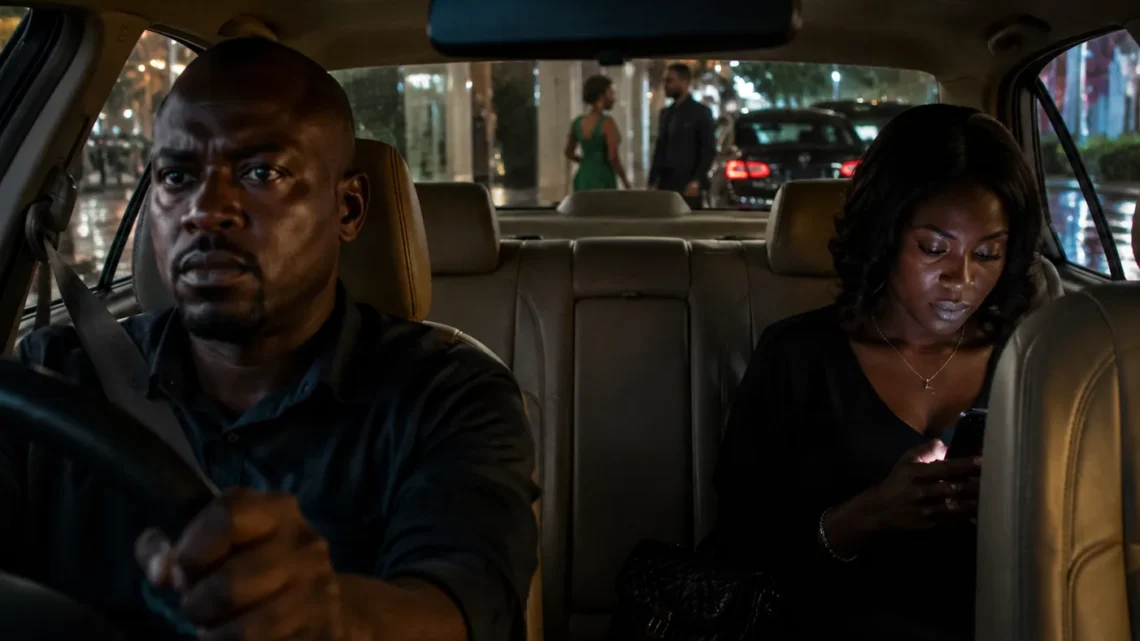
She Always Buys His Favorite Food on the Way Back From Betraying Him
I have been driving for Uber in Lagos for three years, and if there is one thing this job has taught me, it is that everybody’s marriage is a country with its own border control, and my job is just to hold the gate.
Ronke first got into my car on a Thursday evening in April, outside a boutique on Awolowo Road, Ikeja. She smelled like new perfume and old guilt, though I did not know that yet.
Trending Now!!:
Her friend, Aisha, had booked the ride under her own account and texted me separately: This is my sister, she’ll be using this number from now on, please don’t discuss her trips with anyone; she has a difficult husband. I read that message twice before I pulled off. In this business, you learn to price your silence into the fare.
That first night I drove her to a hotel off Ozumba Mbadiwe, the kind with valet boys who don’t ask questions and a lobby that smells of air freshener fighting something stronger underneath.
She didn’t say much, just stared at her phone the whole thirty minutes through Lagos traffic, thumbs moving fast, a small smile she kept trying to swallow.
When we got there, a man was already waiting by the entrance in a black Toyota Camry, tall, light-skinned, the kind of confidence that comes from knowing he is not the one who will answer for whatever happens that night. She didn’t introduce him. She didn’t need to.



That was Kelvin. I know his name now because she says it in her sleep, sometimes, in the back seat, on the drive home, when the wine has made her honest with nobody but herself.
Every other Thursday since then, the pattern repeats itself like a badly written script nobody bothers to rewrite. She calls or texts, always polite, always careful.
Good evening, are you available by 6? I pick her up from wherever she’s told her husband she’ll be, usually Aisha’s flat in Yaba, sometimes her office in Victoria Island.
We drive across the Third Mainland Bridge, the lagoon throwing back the evening light like it doesn’t care what’s happening in the back seat, and she goes quiet, checking her lipstick in a small mirror, spraying something new over the office smell.
The hotel is always the same one. Kelvin is always already there, parked, waiting, like a man collecting a debt somebody else agreed to pay. I drop her, and for two, sometimes three hours, I sit in traffic apps or eat suya from a mallam down the road, and I don’t ask questions, because Aisha made it clear from the beginning what my role was.
You’re not a taxi man to her, you’re family friend, Aisha told me once, laughing, but her eyes weren’t laughing. Whatever you see, it stays in the car. She’ll take care of you.
And she does. Extra alerts on top of the fare, sometimes a thank you voice note with her real voice, tired and grateful, like I’m the only person in Lagos not asking her to explain herself.
The husband, Tunde, I have never met, but I know him the way you know a character from a story someone keeps retelling badly. Ronke talks about him on the ride back, usually after the second glass of something has loosened her tongue.
Tunde is suspicious of everybody these days, she’ll say, staring out the window at Lagos going past in streaks of headlight and hawkers. He keeps asking why Kelvin still calls me. I keep telling him, we don’t even live in the same city again, nothing dey happen, he should relax.
She says it so easily, the lie folding into her mouth like it was born there. Meanwhile Kelvin lives forty minutes from her house in Lekki, in an estate off Chevron Drive, and comes into “town” more often than half the Lagos residents I carry every week.
On the way home, always, without fail, she stops somewhere to buy something for Tunde. Suya from the popular joint near Allen roundabout, because it’s his favourite. Once, a bag of Gala and cold Chivita, because he’d complained the fridge was empty when he called her “at Aisha’s place” that afternoon.
She buys these things with the same hands that were, an hour before, somewhere she’d never admit to. She hands the nylon bag to the back seat like it’s a peace offering to a god she stopped believing in a long time ago.
My husband’s love language is food, she told me once, half laughing, half something else I couldn’t name. If I come home with his suya, half the wahala don already settle before I even open my mouth.
Before she gets home, we swing by Aisha’s flat again, this time so she can change back into the clothes she left the house in that morning, wash off whatever perfume doesn’t belong to her real life, and become, once more, the woman who was “stuck at work” or “helping Aisha with something.”
Aisha opens the door already holding the story straight, ready for any call that might come through. If Tunde asks, we were together the whole evening watching a movie, she reminds Ronke at the door, like a director giving final notes before the curtain goes up.
I used to think about telling someone. Not Tunde exactly; I don’t know him, I owe him nothing, but there were nights I sat outside that hotel, suya going cold in my lap, wondering what kind of man I was becoming, ferrying a woman’s double life across a bridge every other Thursday for a few thousand naira extra and a thank you voice note.
But then I remember my own rent, my daughter’s school fees at that private nursery in Surulere, the Uber incentive I’m still trying to hit before month end, and I remember that in this Lagos, everybody is driving somebody else’s secret somewhere, one way or another.
Last Thursday, Ronke got into the car quieter than usual. No lipstick check in the mirror. No perfume fight. She just stared out at the lagoon the whole bridge crossing, and when we reached the hotel, Kelvin’s Camry wasn’t there yet.
He’s stuck in traffic from Lekki, she said, more to herself than to me, checking her phone again. He said thirty minutes.
I didn’t answer. I just kept driving, because that has always been the job, keep the engine running, keep your mouth shut, and let Lagos decide, in its own slow, merciless way, whose secret finally runs out of road.