Surviving When AI Took My Coworkers’ Jobs, Not Mine
Ma’am, your shift has been optimized, the email said, and I read it three times before I understood optimized meant gone.
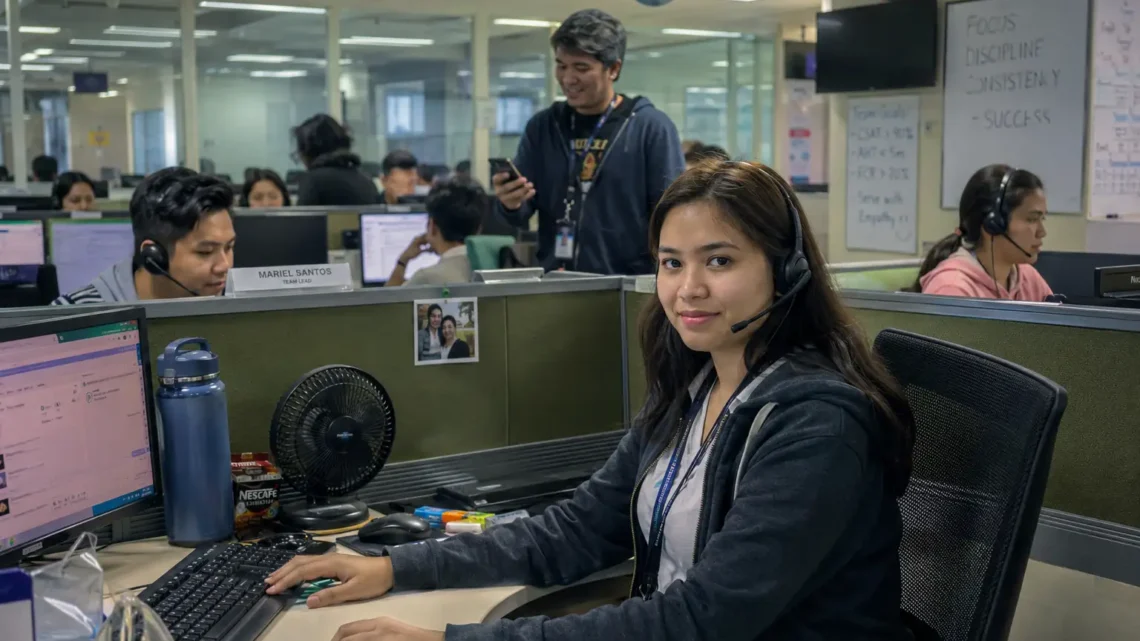
I was on my quarter break, halfway through a cup of instant three-in-one coffee in the pantry at our Eastwood office, when the message landed. My name is Mariel Santos.
Trending Now!!:
I have been a customer service agent for six years, four of them at the same account, an American telecom company that never once thanked me by name but knew my employee ID better than my mother knew my birthday.
The email came from HR, but everyone in the pantry already knew before HR did. Our team lead, Jonathan, had been quiet all week, the kind of quiet that meant something was coming.
They’re rolling out the new voice model on our account starting Monday, he said, not looking up from his phone. Full deployment. Ninety percent of tier one calls.
Ninety percent. I did the math in my head the way you do when a number is about to change your life. Out of forty agents on our floor, maybe four of us would still have a login by the end of the month.




I want to tell you I was shocked, but honestly, we had all heard the recordings weeks before. Our own trainer, Aiza, had played us a sample during a calibration session, some voice AI answering a billing complaint, and it sounded so calm, so patient, so human, that half the room laughed nervously and the other half went silent.
That’s better than half of us on a bad day, someone joked. Nobody laughed the second time.
What nobody tells you about losing a job to AI is that it does not feel like getting fired. It feels like getting replaced by a slightly better version of yourself, one who never gets a migraine at 2 a.m., never snaps at a customer who calls her stupid, never needs a bathroom break during a fifteen-call queue.
I stayed on the floor until my shift ended at 6 a.m., took the first jeep past Eastwood Avenue, and watched Manila wake up through a foggy window. Vendors were setting up carts of taho along C5. A woman was selling pandesal out of a bicycle basket. Life kept moving like nothing had happened, because to the city, nothing had.
I got home to our apartment in Cainta and my younger brother, Miguel, was still awake playing some mobile game, headset on, muttering into his mic.
You’re early, he said, pulling one earphone off.
They’re replacing us with AI, I said, and it came out flatter than I meant it to.
He paused the game. That got his attention faster than anything I had said in months.
Like, they’re firing you?
Like they’re optimizing my shift, I said, and even I heard how bitter that sounded.
For the next two weeks, I did what a lot of agents on our floor did quietly, without posting about it on Facebook, without making it a whole thing. I started looking. Job search advice from a friend who moved to a fintech company after her own account got automated led me to LinkedIn, to online courses at night, to a free webinar about career growth tips for call center veterans transitioning into tech support and quality assurance roles.
I also started freelancing on the side, virtual assistant work for a small business in Melbourne that sold candles, answering emails at odd hours between naps. It was not much. Maybe eight thousand pesos a month if I was lucky, but it felt like proof that I still had something to offer that a script could not replicate. My mother called it side hustle income. I called it survival.
The last week before the AI system fully took over our queue, something strange happened. Management asked a handful of us, the ones with the highest customer satisfaction scores, to record hours of ourselves speaking. Different tones. Apologetic. Reassuring. Firm but polite.
It’s for training data, the project manager explained, like that made it less surreal. You’ll get a small bonus.
I sat in a soundproof booth for three days, recording my own voice teaching a machine how to sound like me, how to comfort an angry customer the way I did, how to say I completely understand your frustration in the exact tone that once got me employee of the month.
On the last day, Jonathan pulled a few of us aside. They’re keeping four agents per shift for escalations, he said. Cases the AI can’t handle. Human authorization needed. He looked at his list. My name was on it.
I do not know if it was my numbers, or my voice, or luck, but I got to keep my job while people I had eaten isaw with at the corner stall, people who trained me my first month, packed up their headsets and left.
Aiza did not make the cut. Neither did a soft-spoken agent named Carlo who used to sing old Eraserheads songs under his breath during slow hours. On his last day, he stood by the elevator and said, Sana all makakuha ng bagong trabaho agad, hoping we all find new jobs quickly, and then he was gone, folded into a city of eleven million people looking for the same thing.
Now I sit in a booth that used to hold four agents and holds one. I listen for the moments the AI cannot fix, the customers who need to hear a real, tired, human voice crack just slightly with empathy before they calm down. My days are quieter. My work-life balance is, ironically, better than it has ever been, because there are fewer of us and the AI absorbs the volume that used to give me burnout at work so badly I cried in a bathroom stall more than once.
Sometimes, late at night, a customer calls in furious, already halfway through a rant before I say anything.
Finally, a real person, they say, relief flooding their voice, like I am rescuing them from something.
I do not tell them I am one of four humans left on a floor that used to hold forty. I do not tell them that somewhere in this system is a version of my own voice, trained on my own patience, still answering calls I will never hear.
I just say, Yes po, I’m here now, let’s sort this out together, and for a moment, that is enough.
I still do not know if I am lucky or just borrowed time.