The Bag He Was Not Supposed to Open
The phone buzzed at 11:47pm and Kwame Mensah almost ignored it.
Three days without a single order from Bolt Food, and now, when he was already halfway home on Spintex Road with his phone battery at nine percent, a job finally came through. Pickup at a chop bar near Kaneshie Market. Drop off at a gated compound off Cantonments Road. Fee: 340 cedis. For one trip.
Trending Now!!:
He read it twice.
That cannot be right, he thought, and turned the bike around anyway.
Kwame was twenty-six and had been riding for eleven months, ever since the printing shop where he worked as an apprentice closed down without explanation, without severance, without even a proper goodbye. His mother called it retrenchment. His friends called it dashed. He called it Tuesday, because that was the day he stopped being an apprentice and started being a man who owed people money.
The app had been good in the beginning. He could make close to eighty cedis a day if the orders kept coming, which, added to the small commission from selling recharge cards on the side, was almost enough. Almost. Cost of living in Accra had climbed so fast that even his mother, who had survived two coups and three currency changes, said she had never seen bread this expensive in her life.

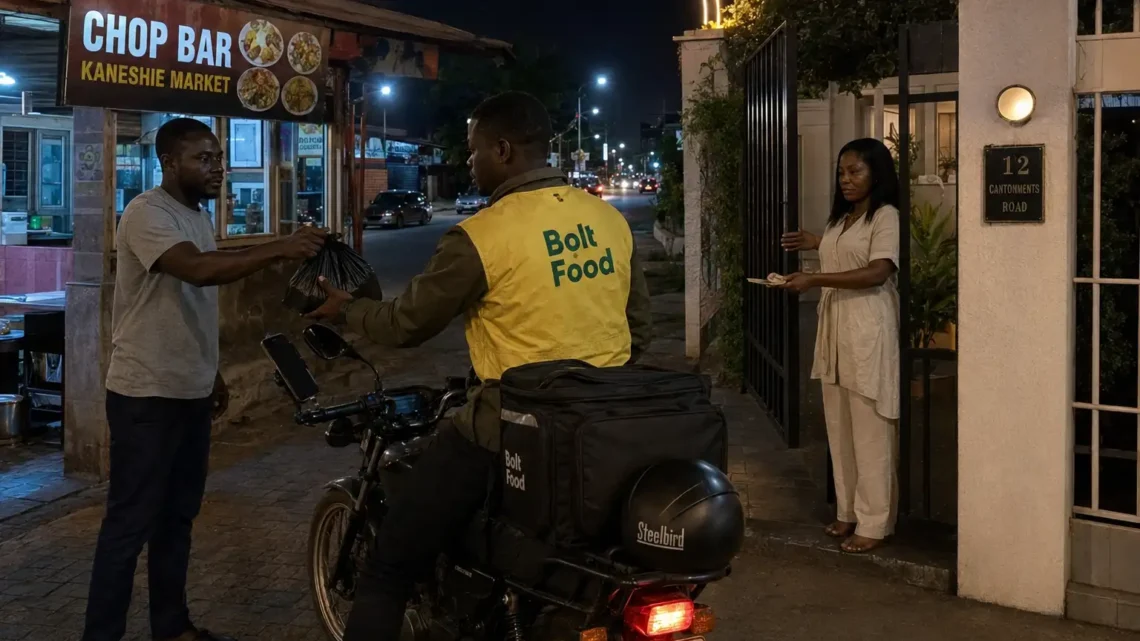
He reached the chop bar in nineteen minutes. A man was waiting outside, not the usual delivery bag from the kitchen, but a black nylon sack, taped shut, heavier than food had any right to be.
This one, be careful with am, the man said, handing it over without meeting his eyes. Client don pay extra for speed. No stop for road.
What’s inside? Kwame asked, because the app description just said Package: Groceries.
The man smiled in a way that was not really a smile. You be delivery man or customs officer?
Kwame laughed because that was easier than arguing, and strapped the bag to the back of his bike. He told himself it was rice. Maybe imported rice, the kind that cost more than his weekly fuel, wrapped up to survive the ride.
His girlfriend, Adjoa, had called him twice that day already. His mother needed to see a doctor at the Ridge Hospital, something about her blood pressure that the nurses kept describing in numbers he did not understand, and the appointment alone would cost more than he currently had sitting in his mobile money wallet. Financial freedom was a phrase he had seen on a YouTube video once, some man in a suit talking about passive income and building wealth in your twenties. Kwame had watched eleven minutes of it before his data ran out.
He was three streets from the compound when his phone rang again. It was Adjoa.
Where are you? she asked. Your mum is asking for you.
I’m working, he said. One more job and I’m coming.
Kwame, she’s not okay o. The nurse said if the pressure doesn’t come down tonight—
I said I’m coming, he snapped, and regretted it immediately, the way you regret a text the second after you send it.
He hung up and looked at the bag strapped behind him. Three hundred and forty cedis. That was almost the hospital deposit. That was almost enough to stop the shaking in his mother’s hands that she thought nobody noticed.
At the gate on Cantonments Road, a security light came on before he even knocked. A woman opened the small pedestrian door, took the bag without a word, and pressed a folded wad of notes into his palm still warm from wherever it had been kept. She did not check the bag. She did not thank him. She simply said, good, you didn’t stop , and closed the door.
He counted the money under the streetlight. Three hundred and forty cedis exactly, plus what looked like an extra fifty folded separately, deliberately, like a tip that was really something else.
Kwame sat on his bike for a long time.
He thought about the man’s face at the chop bar, the way he had not answered the question. He thought about all the stories his cousin told about boys on the East Legon roads who did one small job for quick money and ended up doing it every week until the small job became the only job, until they were no longer boys who delivered food but boys who delivered whatever they were told not to ask about. He thought about signs of a toxic situation always being obvious in hindsight and never obvious in the moment you are standing inside it.
He also thought about his mother’s hands.
His phone buzzed. Another order request, twelve cedis, a proper one this time, jollof and a bottle of Malta Guinness going to Osu.
He accepted it, because a man still has to eat, and rode off with the extra fifty cedis sitting somewhere in his chest like a stone he had swallowed on purpose.
By the time he got home it was past 1am. Adjoa was asleep on the small couch, still in her work clothes, phone resting on her stomach with the hospital’s number still open on the screen. His mother’s door was shut, a thin line of light underneath it.
He stood in the doorway of the room for a moment before knocking softly.
Mama, he said. I got the money.
She did not ask him how. Mothers rarely do, not when the how might be an answer they cannot afford to know.
Good boy, she said, and reached for his hand the way she used to when he was small enough to be lifted off his feet, back before printing shops closed and apps decided what a man’s night was worth.
He held her hand and said nothing about the black nylon bag, or the man who would not meet his eyes, or the woman who said good, you didn’t stop like it was a compliment reserved for people who knew better than to ask questions.
Three days later, a second job request came in from an unfamiliar number, same wording, same fee, same no stop for road.
Kwame stared at his phone for a long time before he picked it up.
He never told Adjoa what he decided.