The Last Bus to Oshodi: A Lagos Street Story
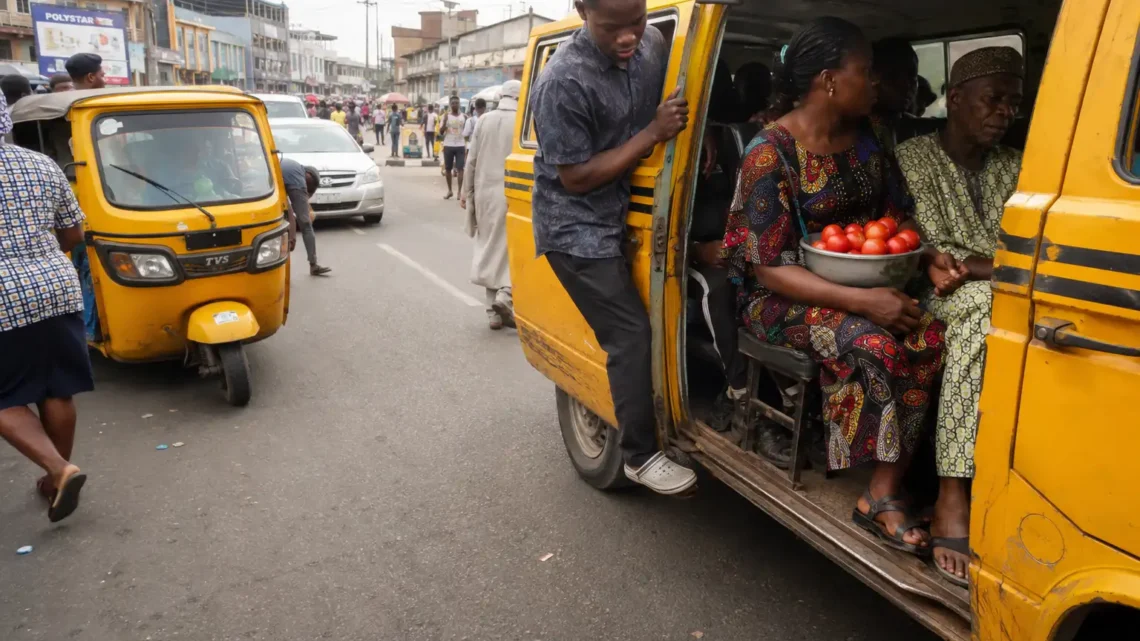
The danfo was already moving when Chukwuemeka grabbed the door frame and swung himself in. The conductor barely looked up, just thrust an open palm backwards without a word.
Emeka slapped a hundred naira into it and squeezed into the only remaining space, a sliver of bench between a woman with a basin of tomatoes on her lap and an old man who had fallen asleep against the window before they even left Ojuelegba.
Trending Now!!:
He was late. Again.
The traffic on Western Avenue was the kind that made a man question every decision that had brought him to Lagos, starting from the day he packed a Ghana-must-go bag in Enugu and told his mother he was going to make something of himself.
That was four years ago. He was still making the journey from Surulere to Oshodi every morning to open a phone accessories stall that belonged to his uncle, a man who called himself a businessman but had not visited the shop in eleven months.
Outside, a yellow Keke cut dangerously across the lane. The driver of the danfo leaned on his horn with the full weight of his chest.



The conductor hung half his body out the door and delivered a string of Yoruba that made two women in the back row cover their mouths. Emeka stared at his phone screen. Three missed calls from his uncle. One from a number he did not recognise.
He would call back when he got there.
The woman with the tomatoes shifted, and one rolled off her basin and landed against Emeka’s shoe. She looked at him. He picked it up and handed it to her. She nodded once and looked away. That was the most human interaction he would have before noon.
By the time they crossed the bridge, the heat had become something with a personality. It pressed against the windows, slipped through the gaps in the door, settled on every shoulder in the bus. The sleeping old man stirred, muttered something, and returned to wherever he had been. A baby three rows ahead had been crying since Ojuelegba and had only recently given up, exhausted by its own protest.
Emeka thought about Adaeze.
He thought about her most mornings, usually somewhere between the second and third traffic holdups. She had called him two weeks ago, not to say anything important, just to hear his voice, she said.
He had been in the middle of counting change for a customer and had told her he would call back. He did not call back. She had not called again, and he had spent fourteen days constructing and deleting messages that always started with “I was going to” and ended with nothing.
The danfo lurched to a stop at Mushin. Four people got off. Six tried to get on. The conductor shouted that capacity was full in a way that meant capacity was a flexible concept depending on how many people were pressing at the door. Two made it in.
The others stood on the kerb looking at the bus the way Lagosians look at every bus that is not theirs, with a specific resignation that does not become despair because despair is a luxury.
Emeka’s stop was five minutes away when the conductor announced they were taking an alternative route.
“Why?” someone asked.
“Accident for front,” the conductor said, as though this explained everything, which in Lagos, it did.
The alternative route added twenty-two minutes. Emeka knew because he had taken it before, on a day that also started with missed calls and a text he had not replied to. Lagos had a way of repeating itself. The streets, the delays, the small humiliations of a life being lived slightly behind schedule.
He finally arrived at the stall at eight forty-seven. His neighbour, a woman named Mama Biodun who sold phone chargers and had a voice that carried across three stalls, told him someone had been waiting since eight-fifteen.
“Fine boy,” she added. “E carry laptop bag.”
Emeka unlocked the metal shutter and rolled it up. The man with the laptop bag was standing at the edge of the stall, checking his watch with the energy of someone who had other options. He was maybe thirty, in a pressed shirt, the kind of man who had found a way to look clean in Lagos heat, which was either a gift or a warning.
“You’re the one handling the stall?” the man asked.
“Yes,” Emeka said.
“I was told you fix screens.”
“I do.”
The man pulled a phone from his bag. A cracked Samsung, the screen splintered from one corner to the other like a small lightning strike had passed through it.
“This has my whole life on it. Every contact, every document, my accounting software. I dropped it yesterday and I have a meeting today at noon.”
Emeka took the phone and turned it over. Screen was gone but the phone still powered on. He had fixed worse.
“Come back by eleven,” he said.
The man looked at him. “You sure?”
“I said come back by eleven.”
After he left, Emeka sat on his small stool behind the counter, set the cracked phone beside three others waiting for attention, and pulled out a pair of tweezers. Mama Biodun was already in full voice next door, arguing with a teenager about a charger warranty. A bus horn sounded somewhere behind him. Generators hummed from the shop above.
He picked up the phone and got to work.
This was Lagos. You did not wait for the morning to be kind. You found the one thing in front of you that you could fix, and you fixed it, and the city moved on around you like water around a stone, indifferent and endless and, on certain days, almost beautiful.
He would call Adaeze at noon.
He told himself that this time, he meant it.