
Judith Sephuma Biography: Net Worth, Age, Parents, Husband, Children, Songs, Albums
Biography
Judith Sephuma (born 29 June 1974) is a South African jazz, Afro-pop, and gospel singer widely celebrated as the “Queen of Afro-Jazz.”
Born in Seshego, she was raised in Polokwane, Limpopo, and relocated to Cape Town in 1994 to train as a jazz vocalist, graduating from the University of Cape Town in 1997 with a Performer’s Diploma in Jazz. She later earned an Honours Degree in Jazz Performance, majoring in Jazz Singing, from the same institution.
Trending Now!!:
Her breakthrough came in 1999 when she was awarded Best Jazz Vocalist at the Old Mutual Jazz Into The Future competition, securing a contract with BMG Africa’s Giant Steps imprint. Her debut album, A Cry, A Smile, A Dance (2001), achieved triple-platinum status and widespread critical acclaim for its Afro-jazz fusion.
Over the course of her career, she released a string of albums, including New Beginnings (2005), Change is Here (2008), I Am A Living Testimony (2011), and her debut gospel album The Experience LIVE in Concert (2013). She has shared stages with international artists including Bebe Winans, Chaka Khan, Al Jarreau, Randy Crawford, and Kenny G, and has performed to sold-out crowds across Europe, the United States, and the United Kingdom.
Her most recent album, Power of Dreams, released in 2019, marked a return after a two-year period of self-rediscovery and blends Afro-jazz with introspective themes. With over two decades in the industry and multiple platinum-selling records to her name, Judith Sephuma remains one of the most enduring and commanding voices in South African music.
| South African singer | |
| Judith Sephuma | |
|---|---|
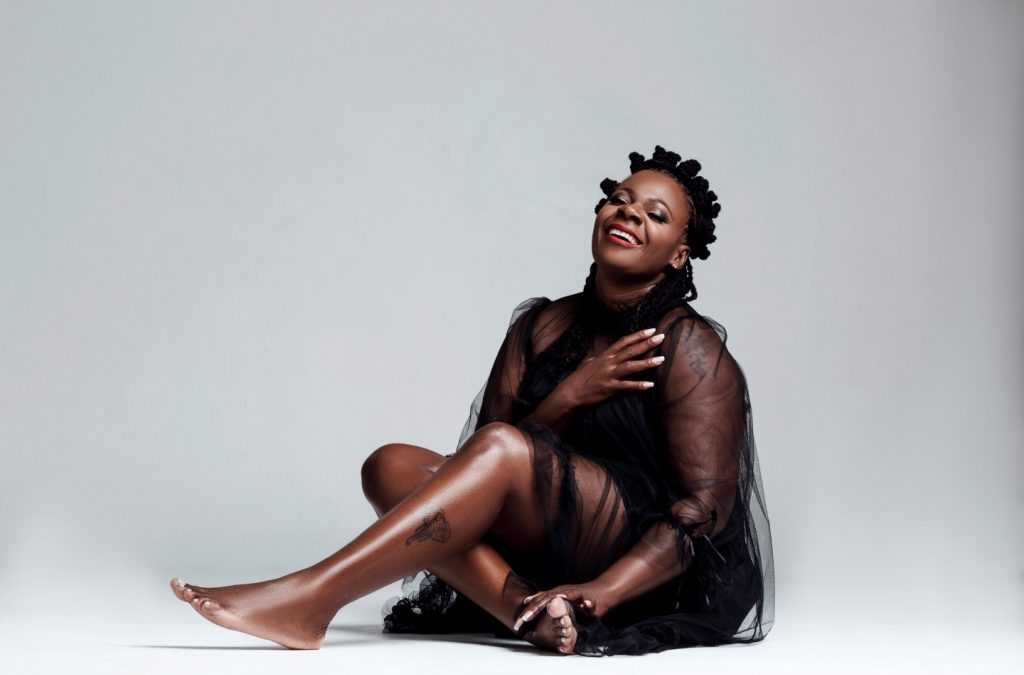 | |
| Wiki Facts & About Data | |
| Stage Name: | Judith Sephuma |
| Born: | 29 June 1974 (age 51 years old) |
| Place of Birth: | Seshego, Polokwane, Limpopo, South Africa |
| Nationality: | South African |
| Education: | Khagiso High School, FUBA Academy, University of Cape Town |
| Height: | 1.68 m |
| Parents: | Mr. and Mrs. Sephuma |
| Siblings: | N/A |
| Spouse: | Selaelo Selota (m. ?-2006), Simphiwe Mhlambi (div.) |
| Boyfriend • Partner: | Not Dating |
| Children: | Tebelelo Selota, Mbalenhle Mhlambi |
| Occupation: | Singer • Songwriter |
| Net Worth: | $1 million-$5 million (USD) |
Early Life & Education
Judith Sephuma was born on 29 June 1974 in Seshego, a township in Polokwane, Limpopo, South Africa. She was raised in Polokwane, a city formerly known as Pietersburg, situated in the heart of the Limpopo Province. Growing up in Polokwane, Judith knew from an early age that she wanted to be a singer.
Judith Sephuma is of Northern Sotho (Sepedi) descent, the predominant ethnic group of the Limpopo Province. She is a devout Christian, a faith that has profoundly influenced her gospel music and shaped the spiritual themes woven throughout her discography.
Judith Sephuma was raised by Mr. and Mrs. Sephuma. She developed a passion for music at a young age, singing in church choirs and local gatherings, and her early exposure to music shaped her soulful style. Details regarding her parents’ occupations and background have not been made public, and information about any siblings she may have has similarly not been disclosed.
After matriculating at Khagiso High School, Judith attended Johannesburg’s legendary FUBA Academy music school in 1993, where she received her Grade 5 Music Diploma. Among her fellow students at the time was an ambitious young guitarist from Polokwane named Selaelo Selota, a man who would later play a major role in her life and career.
Other early achievements included reaching the finals of the Shell Road to Fame contest in 1994 and the finals of SABC’s Jam Alley Search For Talent that same year.
In 1994, she moved to Cape Town to study at the University of Cape Town’s South African College of Music, graduating in 1997 with a Performer’s Diploma in Jazz. She later pursued an Honours Degree in Jazz Performance, majoring in Jazz Singing. It was during these formative years in Cape Town that her reputation as a vocalist began to take serious shape, laying the foundation for one of South Africa’s most celebrated music careers.
Career
Judith Sephuma’s professional journey in music began long before her name appeared on any album cover. At the age of 13, she shared a stage with the late Brenda Fassie in Polokwane, an experience that, by her own account, made her realise she belonged in the industry. That early encounter lit a fire that would drive her through years of formal training and grassroots performance before she stepped fully into the spotlight.
During her years at the University of Cape Town, Judith’s reputation as a vocalist blossomed, and she had the opportunity to work in bands like Selaelo Selota’s Taola, Meropa, UCT’s Big Band, The C-Base Collective, and the Cape Symphonic Orchestra. She also performed alongside Jimmy Dludlu, Loading Zone, and Ian Smith’s Virtual Jazz Reality, as well as musicians such as Jack van Poll and Gerry Spencer.
In 1996, Judith was invited by Spencer to travel on the Symphony cruise ship for two months, performing in locations including Mauritius, Zanzibar, Mombasa, and Reunion. Later that same year, she performed with Meropa in Nantes, France, at the Fin de Siecle Festival, her first overseas engagement. By 1998 and 1999, with the assistance of pianist van Poll, she gained considerable experience performing across Europe and was among those invited by the South African government to perform in Holland.
A pivotal moment arrived when Judith was awarded first prize for Best Jazz Vocalist at the Old Mutual Jazz Into The Future competition in June 1999, and she was subsequently signed to BMG Africa’s imprint, Giant Steps. At the North Sea Jazz Festival in Cape Town in 2000, she formed her own backing band and performed under her own name.
Her debut album, A Cry, A Smile, A Dance (2001), achieved triple-platinum status and widespread critical acclaim for its Afro-jazz fusion. The album earned Sephuma two South African Music Awards, two Kora Awards, and two Metro FM awards. Her collaboration with Kenny G on the triple-platinum seller further cemented her standing as one of South Africa’s premier vocalists. It was with this debut that the title “Queen of Afro-Jazz” began to take root.
Sephuma returned in 2005 with New Beginnings, produced by Lawrence Matshiza, an album on which she put her composing skills to the test and became more involved in production. The record earned her the highest music award in South Africa that year, as well as Best Female Artist and Best Jazz Vocal Album honours.
Her third album, Change is Here (2008), was the project through which she says audiences began to recognise her signature style. It was followed by I Am A Living Testimony (2011), a project released to mark a decade in the music industry and described as a reflection of her musical journey. In 2012, she released A Legacy Live in Concert as both a CD and DVD, capturing her celebrated live performances.
In 2013, she released her debut gospel album, The Experience LIVE in Concert, with some songs produced by Wilson Joel, available as both a CD and DVD. The project introduced her to an entirely new audience of gospel and faith music lovers, and its platinum-selling success demonstrated the breadth of her appeal beyond the jazz world.
In 2015, she released One Word, which she described as Afro-Funk Jazz. The album was received as a crossover offering, revealing a new dimension of her artistry to longtime fans and new listeners alike, and continued to receive strong airplay internationally.
Her eighth studio album, My Worship, followed in 2017. Then, after a deliberate two-year sabbatical, Sephuma returned in 2019 with Power of Dreams, an album she described as a product of self-rediscovery, having worked with Grammy-nominated guitarist Mark Strowbridge and guitarist Tomi Martin, among others. She performed several tracks from the album at a private listening session and covered Gladys Knight’s classic “Neither One of Us (Wants to Be the First to Say Goodbye)”.
Judith Sephuma has shared stages with international artists including Bebe Winans, Oletta Adams, Jonathan Butler, Al Jarreau, Randy Crawford, and Chaka Khan. Her collaboration with Michael Bolton on the classic “Over the Rainbow” further burnished her international credentials. Career highlights include singing for Nelson Mandela and performing at Thabo Mbeki’s presidential inauguration. As an ambassador for the One Campaign, she has also used her platform to advocate against poverty across Africa.
Beyond recording and touring, Judith has also made her mark on television. She served as a choirmaster on Mzansi Magic’s Clash of the Choirs, a role that brought her talents to a broader mainstream audience and showcased her ability to lead and shape other voices.
Music legend Sipho Mabuse described Sephuma as a gifted singer with a great personality, noting that ten years in the music industry is a long time given all its challenges, and that she had done extremely well where many others could not survive even a year. More than two decades into her career, Judith Sephuma remains one of the most enduring, versatile, and decorated voices that South African music has ever produced.
Social Media
- Wikipedia: Judith Sephuma
- Instagram: Judith Sephuma (@judithsephuma)
- Facebook: Judith Sephuma
- X (Twitter): Judith Sephuma (@judith_sephuma)
- YouTube: Judith Sephuma
Personal Life
Judith Sephuma was born on 29 June 1974 and is 51 years old.
Judith Sephuma stands at 1.68 m (5 feet 6 inches) tall.
Judith Sephuma’s first significant romantic relationship was with Selaelo Selota, the celebrated South African jazz guitarist whom she first met as a fellow student at the FUBA Academy in Johannesburg in 1993.
Their connection deepened through their shared years at the University of Cape Town, where Selota was also studying music. The two became one of South Africa’s most recognised music couples, their personal and professional lives intertwined during the height of both their early careers.
Sephuma is the mother of Selota’s three children, two daughters and a son. Though the full names of all three children have not been publicly disclosed, one of their daughters, Tebelelo Selota, has been referenced in connection with pursuing studies in film production and directing.
Judith and Selaelo divorced in 2006. Despite the end of their romantic relationship, both parties maintained a civil and cooperative dynamic for the sake of their children. Selota himself described their post-split relationship as a friend and family bond, noting that the two meet regularly to discuss and discipline their children together.
Following the breakdown of her relationship with Selota, Judith Sephuma went on to marry Simphiwe Mhlambi, a prominent South African photographer. The couple welcomed children together, and for a period, represented a new chapter in Judith’s personal life. However, the marriage was marked by profound heartbreak when their daughter, Mbalenhle Mhlambi, who was born prematurely at 32 weeks, passed away in January 2014 after living for only about a month, having been ill since birth. Simphiwe Mhlambi announced the loss on his Facebook page, writing that his little angel’s life was short-lived but that her beauty and magic would linger forever.
Judith Sephuma later confirmed her divorce from Simphiwe Mhlambi to Destiny magazine, stating that she was the one who decided to end the marriage, though she did not elaborate on what led to the split. Speaking subsequently in a True Love interview, she opened up more candidly, saying the couple tried to keep the media out of their separation to protect themselves and their children, and that there was no bad blood between her and Siphiwe. She added that just because two people are divorced does not mean they hate each other.
Judith Sephuma is the mother of four surviving children. Three were born from her relationship with Selaelo Selota, and one from her marriage to Simphiwe Mhlambi. The full names of her children have largely been kept out of the public domain, in keeping with her desire to shield them from media attention. The tragic loss of her infant daughter, Mbalenhle Mhlambi, in 2014 remains one of the most painful chapters of her personal life.
Following her second divorce, Judith Sephuma spent a period focused on personal reinvention, a journey that informed the themes of her 2019 album Power of Dreams. She has stated that she is still open to the idea of getting married again and that she would approach her romantic relationships differently going forward.
Reports emerged in 2024 that Sephuma had found love again, with social media activity linking her to a younger fitness trainer named Sibusiso, who was seen with her in a mini-clip shared on their respective Instagram pages, the two appearing in matching gym gear in cosy poses. The identity and full details of her new partner have not been officially confirmed by Judith herself, and the relationship remains largely private as of the time of writing.
Net Worth
Judith Sephuma’s net worth is estimated at between $1 million and $5 million. While her exact financial figures have never been officially confirmed or publicly disclosed by Sephuma herself, the estimate is broadly consistent across entertainment and celebrity biography sources and is considered a fair reflection of the wealth she has accumulated over more than two decades at the top of South African music.
Her wealth is derived from her successful music career, including multi-platinum album sales, international performances, and royalties from airplay and streaming platforms. Her debut album, A Cry, A Smile, A Dance, alone achieved triple-platinum status, and several of her subsequent projects, including her gospel offering The Experience LIVE in Concert, also reached platinum certification, generating sustained royalty income long after their release dates.
Beyond album sales, Judith has been a consistently active live performer, performing to sold-out crowds across Europe, the United States, and the United Kingdom throughout her career. Concert fees, festival bookings, and touring revenue have accounted for a significant portion of her earnings. She has also been booked for high-profile engagements, including government and presidential events. She was notably invited by iconic Hollywood film music composer Hans Zimmer to contribute vocals to the motion picture soundtrack for Dune Part Two, a credit that further elevated her international profile and opened additional revenue streams beyond the domestic South African market.
Sephuma has also made strategic moves to take control of her business interests. She founded her own management company, Lalomba, underscoring her understanding that a beautiful voice alone is not enough and that a music career must be turned into a functioning business. This entrepreneurial approach has helped her maintain and grow her financial standing independently.
Discography
Albums
- A Cry, A Smile, A Dance (2001) — Triple-platinum debut album, released on Giant Steps / BMG Africa
- New Beginnings (2005)
- Change is Here (2008)
- I Am A Living Testimony (2011)
- A Legacy Live in Concert (2012) — CD and DVD
- The Experience LIVE in Concert (2013) — Debut gospel album, CD and DVD; produced with Wilson Joel
- One Word (2015) — Described by Sephuma as Afro-Funk Jazz
- My Worship Live (2017)
- Power of Dreams (2019) — Recorded at Orange Peel Studios in Atlanta
Singles and Notable Songs
- “Le Tshephile Mang” (2001)
- “Iyo Iyo” (2001)
- “You Had Your Hand On Me” (2001)
- “A Cry, A Smile, A Dance” (2001)
- “Mmangwane”
- “Let My Voice”
- “Memories”
- “Are You Still There”
- “My Saviour”
- “Can’t Let Go”
- “Gae”
- “Kwazi Bani”
- “Naka Di A Lela”
- “Write Me A Letter”
- “I Love the Lord”
- “Tseleng”
- “I Am A Living Testimony”
- “Ngisize Nkosi”
- “Change Is Here”
- “Naa Ke Bomang”
- “Mokgoshi”
- “Here I Am to Worship”
- “Thul’ Umamele”
- “Tshiwana”
- “Le A Falala”
- “Ke A Leboga”
- “Mme Motswadi”
- “Tlo Moya O Halalelang”
- “Maropeng” (2019)
- “Power of Dreams” (2019)
- “A Man Like You” (2019)
- “Ntshwarele” (2019)
- “Dance” (2019)
- “Try” (featuring Buffalo Souljah) (2015)
- “Joy” (2015)
- “Roba” (featuring Tyler ICU) (2021)
Collaborations and Featured Appearances
- “Ndikhokhele” (2020) — featured alongside Nathi, Rebecca Malope, Benjamin Dube, Mlindo The Vocalist, T’kinzy, Blaq Diamond, and Lebo Sekgobela
- “Oh Give Thanks” — featured on Benjamin Dube‘s project
- “Senzeni Na” — featured alongside Brenda Mtambo, Siphokazi, Sneziey Msomi, and others
- “Pray” (featuring Patrick Duncan)
- “Gae (Home)” (2024) — featured on the Timeless project
- “Lerato La Pelo Yaka” (2023) — featured on Phemelo Saxer, Happy Jazzman, and Faith Strings‘ project Phola
- “Victoria” — featured on MUSICMAGNATE‘s project
- “Sun Is Shining Brighter” — featured artist
- Dune Part Two (2024) — contributed vocals to the motion picture soundtrack composed by Hans Zimmer
- An African Christmas (2020) — including “Hark the Harold Angels Sing” and “Have Yourself a Merry Little Christmas”
Live and Compilation Releases
- A Legacy Live in Concert (2012) — CD and DVD live recording
- The Experience LIVE in Concert (2013) — CD and DVD live gospel recording
- My Worship Live (2017) — Live worship recording
- The Best of Judith Sephuma (2013) — Compilation
What People Ask
NOTICE!! NOTICE!! NOTICE!!
At TheCityCeleb, we strive to provide accurate and up-to-date biographies and entertainment news, focusing on celebrities. Our editorial team researches information from reputable sources, including interviews, official statements, and verified media.If you spot an error or have additional details, please contact us at editor@thecityceleb.com. We value your feedback and are committed to maintaining trustworthy content.