
How African Athletes Build Wealth Abroad
Tax-free wages, equity stakes, debt-free property and the family budget that decides who still has money when the boots come off.
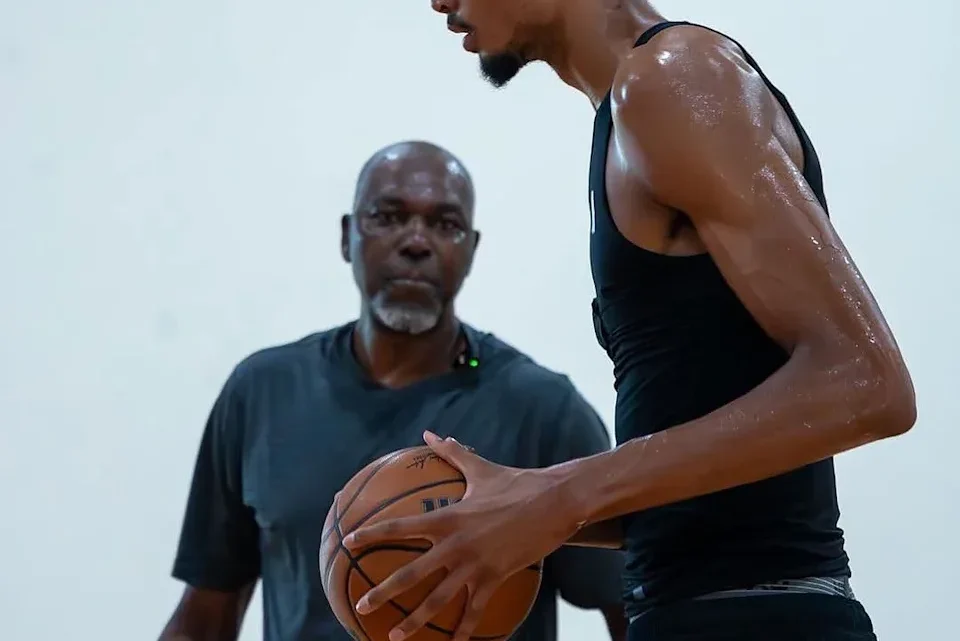
Hakeem Olajuwon collected a little over $110 million in salary across an 18-year NBA career, then spent the years after retirement assembling a property portfolio now estimated at around $300 million.
He bought it without borrowing. The salary was seed money. The fortune came from what he did with it in a city he had known since he arrived from Lagos as a teenager.
Trending Now!!:
African athletes build wealth abroad by turning a short, high-paying career into assets that keep paying after it ends: contracts structured around tax, equity instead of salary alone, property in markets they know, and businesses at home that employ people. The ones who last budget for family obligations before the first transfer fee clears.
The route is less glamorous than the contracts suggest. Most African players who move to Europe, North America or the Gulf face a short career, uneven pay and a long list of people who depend on the money. The few who come out wealthy treat the playing years as a funding window rather than a lifestyle.
The Arithmetic of a Short Career
A top-level football career typically lasts 10 to 15 years, and one serious injury can end it early. The Professional Footballers’ Association estimates that about 30 players a year in the United Kingdom finish early because of injury. No comparable African figure exists, and nothing suggests the gap favours African players.



Pay is also less uniform than the headlines imply. A study of 1,084 African professionals in European leagues found monthly salaries running from roughly €15,000 to €100,000 or more (about $16,000 to $108,000) in elite leagues, down to €2,000 to €10,000 (about $2,200 to $10,800) in the third tier. A global survey by FIFPRO found more than 45 percent of players earning under $1,000 a month.
The safety nets differ too. Players in England’s top two divisions are automatically enrolled in a pension scheme with separately held assets. At the same time, Nqobile Ndlovu, founder of Cash N Sport, says many African leagues have no equivalent. Agents are not required to give financial advice.
Hypothetical arithmetic shows the squeeze. A midfielder nets €25,000 a month (about $27,000) for ten seasons, which comes to €3 million (about $3.2 million). If 30 percent goes to relatives, €2.1 million (about $2.3 million) remains. Spread across 35 years of retirement, that is €60,000 a year (about $65,000) before inflation or investment returns, and it assumes nothing was spent on living during the playing years. The real figure is lower.
The lesson is a ratio: each playing year has to fund three to four years of life afterwards, and the support budget comes off the top.
Why Net Pay Matters More Than Gross
Mohamed Salah earns an estimated £400,000 a week (about $530,000) at Liverpool, and some estimates stretch toward £480,000 (about $635,000) once bonuses are counted.
Sadio Mané is estimated to draw about €40 million a year (about $43 million) at Al Nassr in the Saudi Pro League. Figures like these dominate coverage of African athletes abroad. They also hide the number that matters, which is what survives tax, fees and obligations.
Saudi Arabia charges no personal income tax. A player taxed in the United Kingdom on earnings above £125,140 (about $165,000) pays a combined income tax and National Insurance rate of at least 47 percent. The gap explains why a lower headline wage in Riyadh can beat a higher one in London.
The tax-free label has limits. A player who leaves Britain without breaking UK tax residency for the relevant tax year can still owe UK tax on Saudi earnings, unless the treaty between the two countries takes that income out of the UK net. Turkey runs a different model: it does not exempt footballers from income tax, but clubs commonly pay the tax on a player’s behalf and agree contracts net.
A practical rule follows. Compare any offer on net pay, then test it again against the country and date at which the athlete expects to become tax resident next. A saving that evaporates on return home is a deferral, not a gain.
Turning Salary Into Assets
Athletes who build lasting wealth tend to move money into three kinds of assets. Each pays differently and fails differently.
Equity Beats Wages
Francis Ngannou left the UFC as reigning heavyweight champion and signed with the Professional Fighters League. This deal gave him an equity stake, a seat on its global athlete advisory board and the chairmanship of PFL Africa.
The size of the stake was never disclosed. The league’s chief executive described the arrangement as a business partnership rather than an athlete contract, and Ngannou said his opponents would receive a $2 million base purse.
Giannis Antetokounmpo, the Milwaukee Bucks star of Nigerian heritage, took a minority stake in the Milwaukee Brewers after his Finals MVP season. He later joined Nashville SC in Major League Soccer alongside his brothers Thanasis Antetokounmpo, Kostas Antetokounmpo and Alex Antetokounmpo. The brothers also formed a holding company, Ante, Inc., to house their investments.
Equity carries its own traps. Minority stakes are illiquid, terms are rarely public, and a stake pays only if the underlying business grows or someone later buys the holding.
Offers of this kind also go to athletes with bargaining power and good counsel. For a typical professional, the transferable lesson is to ask for a share of what the athlete’s presence creates, such as image-rights income or an academy partnership, rather than only a higher fee.
Property in a Market You Can Walk
Hakeem Olajuwon set aside portions of a salary that peaked between $14 million and $16 million a year and bought property in Houston. In this city, he had played college basketball and spent nearly his whole professional career.
He preferred property because it was tangible, unlike stocks, and he held to a home-court principle: buy where the street can be inspected. Within a few years of retirement, he held about 25 properties worth more than $100 million, including a 41-acre estate near the NASA Johnson Space Center.
As a Muslim, Olajuwon does not borrow to buy, because Islamic law prohibits paying or charging interest. The result was a portfolio with no debt, which meant no lender could force a sale in a downturn. Leverage is the usual way property wealth is lost, and the discipline works for any athlete, whatever their faith: the asset should be able to survive a bad year without a bank’s permission.
Distance is where the model breaks. Property bought in an unfamiliar market on an intermediary’s recommendation carries title, valuation and management risks the buyer cannot check, so independent verification of ownership comes before any money moves.
Enterprise at Home
The study of 1,084 players found that they routinely put money back into home communities, through hospitals, schools, football academies and businesses including oil and gas. Players described this as giving back to the people who backed their careers. The investments did two jobs at once: they supported local development and gave the player a second career to retire into.
Dikembe Mutombo built a hospital in Kinshasa, named for his mother, at a cost of $29 million. He gave at least $15 million of his own money, and other contributions covered the rest.
The hospital has since treated more than half a million patients. It also exposed the limit of philanthropy as an asset: a hospital needs running money every year, and Mutombo launched a campaign for 100,000 donors giving $10 a month to cover operating costs.
Sadio Mané shows the next step. After funding a school, a hospital, a mosque and a petrol station in Bambali, his home village, he committed about 11.7 billion CFA francs (about $20 million) to SM10 Agro, a 500-hectare mango project there.
The plan covers about 78,000 trees, factories for mango pulp, dried mango and mango butter, an export preparation centre and agricultural training, with more than 1,000 direct jobs expected. Mané has said that 30 to 40 percent of the regional harvest is lost for want of storage and processing, so the business is built around the missing link, not just the crop.
The first harvest is roughly three years away. This wait is the lesson. Enterprise at home is patient capital, and a career that ends in the mid-thirties can fund it only if the playing income has already covered the family and the retirement floor.
The Family Obligation Line Item
John Mikel Obi, the former Chelsea and Nigeria midfielder, described the pressure in a podcast conversation. African players, he said, carry an extra levy because relatives and acquaintances expect support, and the money can drain away until the player has less than those who depend on him.
The term “black tax” began in apartheid-era South Africa and describes money that higher-earning Black professionals give parents, siblings and wider family out of obligation.
Critics of the framing exist. Columnist Olusegun Adeniyi argued that the support network that lifts one person deserves some credit, though each person has a breaking point.
Emmanuel Adebayor, who has said he owns more than 100 gold watches, took a harder line on sequencing: players should look after their own finances first, with proper advisers, because nobody may look after them once the playing days end.
Both positions point to the same fix: put the obligation in the budget. An unbudgeted obligation becomes a stream of ad hoc requests, and ad hoc requests have no ceiling. A fixed monthly allowance, paid from a separate account, gives the player a number to defend and the family a number to plan around. Paying school fees and hospital bills directly to the institution, instead of handing over cash, keeps support tied to its purpose.
Choosing Advisers and Spotting Bad Deals
Ndlovu points to the lack of a savings culture among both players and leagues as the common thread. With agents under no duty to advise, players are exposed to get-rich schemes and badly chosen investments. An adviser should be judged on structure, not charm.
- Registration in the country where the player lives, with a number that can be verified.
- A disclosed fee, flat or a percentage of assets, agreed in writing, not commission on products sold to the player.
- Independence from the agent and the club, so a transfer is never also a sales opportunity.
- Assets held in the player’s own name at a separate custodian, never pooled in the adviser’s account.
The trade-off is cost against visibility. A fee-only adviser charges in every year, including the years the portfolio falls, while a commission adviser can look free and cost more through product charges the player never sees.
Ask for the total annual cost in writing, including fund charges, and treat any refusal as an answer. The unglamorous alternatives to a scheme pitched in a dressing room, such as diversified funds, a paid-off home and cash reserves covering a year of obligations, do less for the ego and more for the retirement.
Cross-border tax is the point where a qualified adviser becomes necessary rather than optional, because residency, treaty and pension outcomes depend on individual facts that no general rule covers.
A Ledger Rule for the Playing Years
Three numbers should be written down before the first contract is signed: the support budget, the living budget and the build budget. The build budget is whatever remains, and it has to carry the ratio set out earlier, with every playing year funding three to four years of life afterwards.
Any proposed investment can then face three tests. Its value must be checkable by someone independent of the seller. It must be sellable within a year without a steep discount, or sized so that losing it changes nothing. Finally, the athlete’s own knowledge should give an edge, as Houston did for Olajuwon and the mango belt does for Mané.
A property in the home city passes all three. A minority sports stake passes the first and fails the second, so it belongs in the small part of the plan that can be lost. A processing plant in a home village fails the second test badly and passes the third, so it earns a place only after the family and retirement floors are secure.
Sequence decides the outcome: the family on a schedule first, a verifiable asset second, and patient money at home last.
What People Ask