How Copyright Works for Creators Who Publish Online
What every blogger, YouTuber, and online publisher needs to know about ownership, fair use, DMCA takedowns, and where AI-generated content fits in.
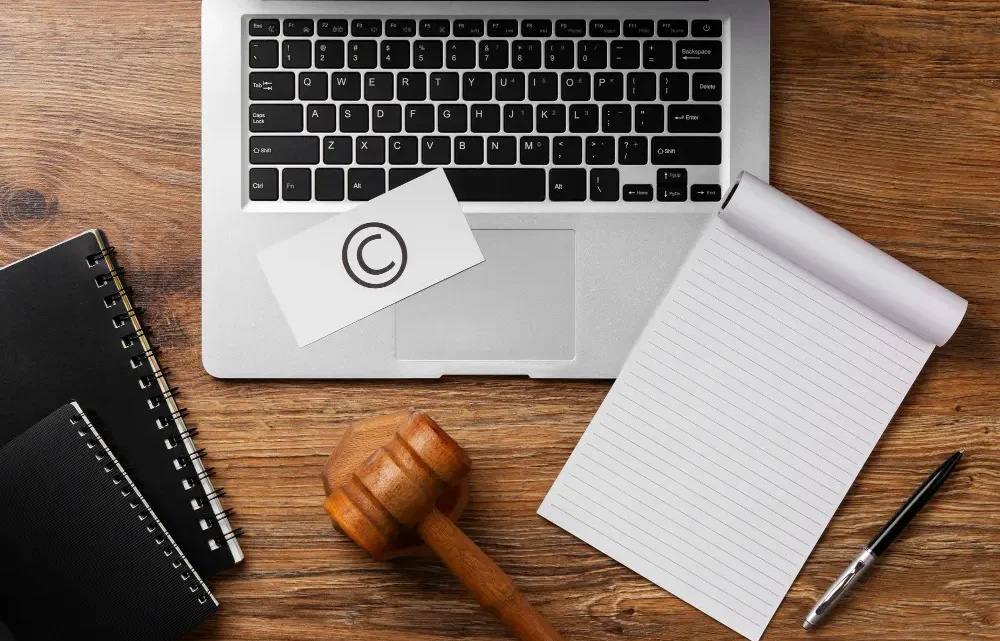
Copyright protects original work the moment it is fixed in a tangible form, whether that is a blog post, a photograph, or a video upload, and no registration is required for that protection to exist.
Registration with the U.S. Copyright Office does not create the right; it strengthens what a creator can do with it, particularly in court. Understanding that distinction is where most confusion for online publishers begins.
Trending Now!!:
For anyone building an audience through a blog, a YouTube channel, a newsletter, or a social platform, copyright is not an abstract legal category.
It determines who can reuse a piece of writing, who owes compensation when a photo gets lifted for a listicle, and what happens when a platform flags a video over a fifteen-second music clip. It also, increasingly, determines whether the AI-assisted content flooding search results and social feeds can be owned at all.
Protection Begins the Moment the Work Exists, Not When It Is Registered
A written article, an original photograph, a podcast episode, or a piece of software code is protected under U.S. copyright law from the instant it is created and fixed in a medium a person or machine can perceive.
This has been the rule under the Copyright Act of 1976 for decades, and it applies whether the work is published on a personal blog, buried in an unlisted YouTube upload, or sitting unpublished in a drafts folder.



The misconception that trips up new online creators is assuming copyright has to be applied for, the way a trademark or patent does. It does not. What creators actually need to think about is not whether they own the copyright but what they can prove and enforce if someone infringes it.
That is where registration enters the picture, and where a lot of otherwise careful creators leave value on the table.
What Registration With the Copyright Office Actually Adds
Filing a registration with the U.S. Copyright Office costs a modest fee and typically takes several months to process, though expedited options exist for a higher fee. Registration is not what makes a work copyrighted. It is what makes a copyright claim litigable and financially worthwhile to pursue.
Two practical benefits separate a registered work from an unregistered one:
A creator generally cannot file an infringement lawsuit in federal court over a U.S. work without a registration, or at least a registration application, on file. This has been settled since the Supreme Court’s 2019 decision in Fourth Estate Public Benefit Corp. v. Wall-Street.com, which held that registration must be completed, not merely applied for, before suit can proceed.
Registering within specific windows unlocks statutory damages and attorney’s fees. Register within three months of first publication, or before the infringement occurs, and a court can award statutory damages ranging from $750 to $30,000 per work, rising to as much as $150,000 for willful infringement, without the creator having to prove actual financial loss. Miss that window and a creator suing over unregistered or late-registered work is often limited to proving actual damages and the infringer’s profits, a far harder and more expensive case to build.
For a creator publishing dozens of articles or videos a month, individually registering everything is impractical. Many professional publishers instead register work in batches, a practice the Copyright Office permits for unpublished collections and, since a 2022 rule change, for groups of short online literary works published within a rolling period.
Photographers and video creators frequently register bodies of work quarterly rather than piece by piece, treating registration as a recurring administrative task rather than a one-time event.
Fair Use Is a Defense, Not a Right, and It Is Decided Case by Case
Few doctrines in copyright law are as widely cited and as widely misunderstood as fair use. Creators frequently treat it as a fixed allowance, something like “you can use up to thirty seconds of a song” or “crediting the source makes it legal.”
Neither is true. Fair use is an affirmative defense, meaning it only comes into play after someone has already alleged infringement, and it is evaluated against four factors a court weighs together rather than a checklist a creator can satisfy in advance:
The purpose and character of the use, including whether it is commercial and whether it transforms the original into something with new meaning or function. The nature of the copyrighted work, with factual works generally receiving thinner protection than highly creative ones.
The amount and substantiality of the portion used, evaluated both quantitatively and qualitatively, meaning even a short clip can fail this factor if it captures the heart of the original. The effect of the use on the market for the original work, which courts have increasingly treated as the most influential factor.
A common industry misconception is that commentary, criticism, or parody are automatically protected categories. They are not categories at all under the statute; they are examples Congress listed as the kinds of purposes that often favor fair use, not a guarantee. A film reviewer who reproduces long verbatim passages from a script under the banner of commentary can still lose a fair use argument if the market-harm factor cuts against them.
Platforms compound the confusion because their automated systems, particularly YouTube’s Content ID and similar tools on other platforms, do not apply the four-factor test at all.
They match audio and video fingerprints and act on contractual rules set by rights holders. A creator can have a legitimate fair use claim and still see a video demonetized or muted, because the platform’s system is not a court and was never designed to make a legal fair use determination.
The DMCA Takedown Process Is the Front Line for Most Creators
For the overwhelming majority of online publishers, copyright disputes never reach a courtroom. They play out through the notice-and-takedown system established by the Digital Millennium Copyright Act, and understanding this process matters just as much for creators worried about being infringed as for those accused of infringing.
The mechanism works in a defined sequence. A rights holder sends a takedown notice to the platform or host identifying the infringing material. The platform removes or disables access to it, which is what allows the platform to keep its DMCA safe harbour protection from liability.
The platform notifies the uploader, who can respond with a counter-notice if they believe the removal was made in error or that their use is lawful. If a valid counter-notice is filed, the rights holder generally has between ten and fourteen business days to file a lawsuit before the platform is required to restore the content.
Several practical realities matter here that generic explainers tend to skip.
Filing a takedown notice in bad faith carries real exposure. Under 17 U.S.C. § 512(f), a rights holder who knowingly misrepresents that material is infringing can be liable for damages, including the accused party’s legal costs.
This provision exists precisely because takedown abuse, including notices sent against clearly transformative commentary or against material the sender does not actually own, has become common enough to draw regulatory attention.
Speed favors precision over volume. Platforms process takedown requests faster and more reliably when a notice includes exact URLs, timestamps, and a clear description of the original work, rather than a broad claim covering an entire channel or domain.
A counter-notice is a serious legal document, not a casual appeal button. It requires the filer’s contact information and a statement made under penalty of perjury that the material was removed by mistake or misidentification, along with consent to federal court jurisdiction. Creators who file counter-notices without understanding that they are inviting the possibility of a lawsuit sometimes regret doing so once a rights holder actually follows through.
AI-Generated Content Has Created a New Category of Uncertainty
No development has reshaped copyright practice for online creators faster than generative AI, and the rules here are still actively being written by courts and regulators.
The foundational principle, reaffirmed repeatedly by the U.S. Copyright Office and now by the courts, is that copyright requires human authorship. Purely AI-generated output, meaning content where a human did nothing more than type a prompt and accept the result, is not eligible for copyright protection.
The Copyright Office made this explicit in its February 2023 guidance and reinforced it in the second part of its Copyright and Artificial Intelligence report, published in January 2025, which concluded that prompts alone do not provide sufficient human control to make users of an AI system the authors of the output.
The U.S. Supreme Court left that framework fully intact when it declined to review the human authorship requirement in Thaler v. Perlmutter, denying certiorari in March 2026.
That does not mean AI-assisted work is automatically unprotectable. The distinguishing question the Copyright Office applies is whether a human exercised meaningful creative control over the expressive elements of the final piece, selecting, arranging, and substantially editing AI output, rather than simply accepting a generated draft wholesale.
A blog post where a human writer used AI to generate a rough outline, then substantially rewrote, restructured, and added original analysis, sits in a materially different position than a post published straight from a generative tool with no human editorial input.
For creators who rely on AI tools as part of a production workflow, three practices reduce risk and support a stronger copyright claim if it is ever challenged. Documenting the human contribution, including drafts, edits, and creative decisions, as the work develops.
Avoiding registration applications that fail to disclose AI-generated portions, since the Copyright Office has denied protection specifically where applicants tried to claim fully AI-generated material, as happened in the widely cited Zarya of the Dawn and Théâtre D’opéra Spatial decisions. Treating AI output as raw material for substantial human transformation rather than as a finished product.
The other side of the AI question, whether training large language models on copyrighted material without permission constitutes infringement, remains unresolved and directly affects online publishers whose work has likely been scraped for training data. Litigation here has produced mixed early signals.
Anthropic reached a $1.5 billion settlement in September 2025 covering roughly 500,000 books downloaded from pirated sources, a deal that requires the company to destroy the pirated files and pay approximately $3,000 per covered work, without granting a license for future training.
Meanwhile, The New York Times’s lawsuit against OpenAI and Microsoft, filed in December 2023, remains in active discovery in 2026, with the Times recently accusing OpenAI of withholding evidence about its ability to search training data and chat logs for infringing use of its journalism.
No appellate court has yet issued a definitive ruling on whether AI training on copyrighted text is fair use, and the outcome will likely shape licensing norms for publishers and independent creators for years.
Publishing on Multiple Platforms Does Not Simplify Ownership
A recurring blind spot among creators who syndicate content across a blog, YouTube, newsletters, and social platforms is assuming a single copyright automatically covers every version everywhere in the same way.
Ownership of the underlying work does not change, but platform terms of service routinely grant the platform a broad license to host, display, and in some cases sublicense the content, which is a separate question from who owns the copyright itself. Reading that license grant matters more than most creators realize, particularly on platforms that reserve rights to use content for AI training or promotional purposes.
International reach compounds this. The United States is a signatory to the Berne Convention, which means U.S. copyright is automatically recognized in the roughly 180 other member countries without any additional filing, and foreign works are similarly protected in the United States.
This automatic international recognition is precisely why unauthorized reuse of online content across borders is common, since infringers often assume, incorrectly, that jurisdictional distance limits enforcement.
Licensing Work Out Deliberately, Rather Than by Default
Creators who want to permit reuse under specific terms, rather than relying on all-rights-reserved default protection, generally turn to Creative Commons licenses, which range from permissive attribution-only terms to restrictions barring commercial use or derivative works.
A common mistake is applying a Creative Commons license to work that already carries embedded material the creator does not fully own, such as licensed stock photography or a sampled audio clip, which creates a license the creator was never entitled to grant in the first place.
For creators monetizing through licensing deals directly, such as syndication agreements or stock content marketplaces, the more consequential error is granting broad or perpetual licenses without a defined scope, term, or reversion clause.
A license that never specifies an end date or a defined field of use can functionally hand over control of a work indefinitely, even though the copyright technically remains with the original creator.
A Practical Framework for Creators Publishing Online
The following sequence reflects how experienced digital publishers actually manage copyright risk in practice, rather than treating it as an occasional emergency response.
Confirm original ownership before publishing anything sourced from stock libraries, contractors, or collaborators, and keep a signed agreement establishing who holds the copyright when work is commissioned.
Register high-value or frequently reused content promptly, ideally within three months of publication, to preserve access to statutory damages. Document AI involvement in any piece where generative tools were used, distinguishing human creative contribution from machine output.
Monitor for unauthorized reuse using reverse image search or content-matching tools rather than relying solely on audience reports. Send precise, well-documented DMCA notices rather than broad ones, and understand the legal weight of filing or responding to a counter-notice before doing either. Read platform terms of service for licensing language before syndicating the same content across multiple channels.
Copyright law has not fundamentally changed to accommodate online publishing, but its application has grown considerably more complicated as AI tools, cross-platform syndication, and automated enforcement systems reshape how creative work moves, gets reused, and gets disputed.
Creators who treat copyright as an ongoing operational practice, not a one-time legal formality, are the ones best positioned to protect what they make and to avoid the increasingly common traps that come with publishing at scale.
What People Ask