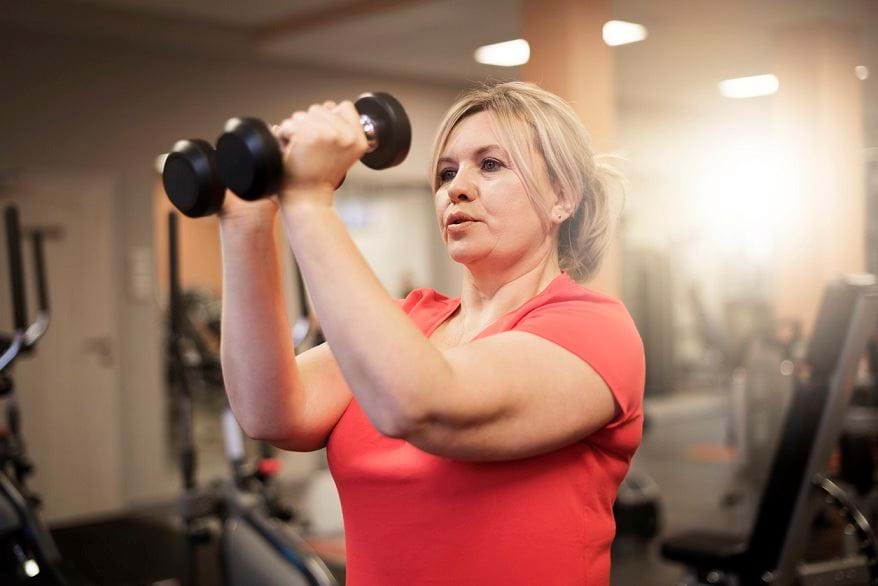
How Strength Training in Your 40s Pays Dividends in Your 70s
Most people slow down in their 40s and call it wisdom. What they don't realize is that every skipped workout is a debt their 70-year-old self will have to pay, with interest.
Most people walk into their 40s and feel something shift. The weight that used to melt off after two weeks of cutting carbs now lingers.
The knees protest on stairs they once took two at a time. Recovery after a hard weekend hike stretches into Monday. The instinct, for most, is to rest more, push less, and quietly accept that this is what getting older feels like.
Trending Now!!:
That instinct is wrong. And it costs people dearly, not now, but 30 years from now.
What happens in your 40s with a barbell, a set of resistance bands, or even a consistent bodyweight routine is not about aesthetics or some midlife awakening. It is an investment with a long maturity horizon.
The returns show up when you are 72 and can still carry your own grocery bags up a flight of stairs without bracing yourself on the railing. They show up when your doctor tells you your bone density is surprisingly solid. They show up in the quiet confidence of a body that still answers when called upon.
This article is for the person who is 43, 46, 48, wondering if it is too late to start, or wondering whether the effort is worth it. It is. Here is why.




The Slow Emergency Nobody Sees Coming
Skeletal muscle loss runs at roughly 3 to 8 percent every decade after 40, with deterioration accelerating sharply after 65. The clinical term for it is sarcopenia, and it is one of the most underappreciated threats to long-term independence in the developed world.
Here is what makes sarcopenia insidious: it is painless. You do not feel your muscle fibers quietly disappearing. You feel it later, when standing up from a low chair takes effort, when carrying a suitcase through an airport becomes a negotiation, when your balance starts to feel unreliable on uneven ground. By the time those symptoms appear, the process has been running for decades.
Sarcopenia affects up to 50 percent of adults over 80, and its impact is not cosmetic. It directly determines whether people can perform the basic activities of daily life, maintain balance, and live independently.
The tragedy is that most of this is preventable. Not completely, because ageing is real and biology is not optional. But the rate of decline, the severity of it, and the functional consequences of it are all modifiable.
The tool for modifying them is resistance training. Strength training is the only activity proven to slow the progression of sarcopenia and reduce its effects.
What Your 40s Actually Are, Physiologically
Your 40s are not a health crisis. They are a transition window, and the choices made in this window determine the floor from which you will age.
Clinically, adults begin losing muscle mass and experiencing bone degradation at a steady rate from around age 32, with strength declining even faster. By your 40s, this process is already underway, but the body is still highly responsive to training stimulus.
Recovery is slower than it was at 25, yes. But adaptation is very much alive. The ability to build muscle, strengthen connective tissue, increase bone mineral density, and improve neuromuscular coordination remains intact in your 40s in a way it simply will not in your 70s.
This is the window. Miss it, and catching up later becomes exponentially harder.
The Hormonal Reality Nobody Explains Clearly
Testosterone and growth hormone, the two primary anabolic drivers of muscle repair and development, begin their long decline in your late 30s and 40s. This is not catastrophic. It is natural. But it does mean the hormonal environment that once allowed you to get strong by simply showing up and trying hard is starting to require more deliberate effort.
Regular strength training helps maintain healthy testosterone levels as we age, counteracting the natural decline in testosterone production. Beyond that, it improves insulin sensitivity, allowing the body to use glucose more efficiently and store less energy as fat.
A 2024 study confirmed that a sedentary lifestyle is directly linked to lower testosterone, creating a negative cycle involving fatigue, depression, and weakened muscle and bone, particularly in older men. The cycle works in reverse too.
People who train consistently in their 40s maintain a hormonal environment that supports better body composition, energy, and mood, which makes them more likely to keep training.
What Strength Training Actually Builds (Beyond Muscle)
Bone Density: The Asset You Cannot See
Most people think about strength training in terms of muscle. Bone density rarely enters the conversation until someone’s mother fractures a hip at 74 and suddenly the conversation changes.
As hormones shift in the 40s, bone loss accelerates. Progressive strength training that loads the hips, legs, and spine is one of the most reliable methods for maintaining and rebuilding bone density.
The mechanism is straightforward: when muscles contract against resistance, they generate mechanical forces on the bones they are attached to. Bone tissue responds by remodelling, laying down new calcium matrix, and becoming denser.
The LIFTMOR trial, one of the most frequently cited studies in bone density research, showed that participants using very heavy loads at around 80 to 85 percent of their one-rep maximum demonstrated significant, safe gains in both spine and hip bone density.
More recent work from 2023 and 2025 expanded on these findings, showing that women can build strong bones using moderate-to-high loads at 65 to 80 percent of their maximum, roughly 6 to 12 challenging reps performed three times per week.
The woman who squats and deadlifts in her late 40s is not just building legs. She is building the structural insurance that keeps her standing when she trips on an uneven pavement at 71.
Connective Tissue and Joint Resilience
There is a common misconception that lifting heavy weights in your 40s will destroy your joints. It is, in most cases, the opposite that is true.
Research shows that strength training can produce a complete reversal of muscle architecture changes that occur with ageing, including improvements in connective tissue properties such as tendon stiffness and muscle fiber structure.
The ligaments and tendons that support your knees, hips, and shoulders respond to progressive loading by becoming stronger and more resilient.
The muscles that surround your joints, when properly strengthened, reduce the compressive stress on the joint surfaces themselves. A stronger glute doesn’t just look better. It protects the knee on every step you take for the next 30 years.
Neuromuscular Function and Fall Prevention
Falls are a leading cause of injury and loss of independence in older adults, and the neuromuscular foundation for preventing them is built over decades, not overnight.
This is one of the most underappreciated reasons to start lifting in your 40s. Strength training does not just build muscle. It trains the nervous system. It improves the speed at which your brain signals muscles to fire, the coordination between muscle groups, and your body’s ability to correct its balance mid-movement. These are the reflexes that catch you when you stumble on a curb at 73. They do not appear from nowhere. They are built, slowly, over years of deliberate physical challenge.
Despite convincing evidence spanning over three decades that strength training can substantially improve maximal strength, rate of force development, and power, contributing to improved physical performance and fall prevention, it has not fully reached the older adult population as a standard intervention. The gap between what science knows and what most middle-aged adults practice is wide.
The Metabolic Compounding Effect
Body Composition and Resting Metabolism
Muscle is metabolically expensive tissue. It burns calories at rest in a way that fat tissue does not. Every kilogram of lean muscle you carry increases your resting metabolic rate, which means your body processes food more efficiently, manages blood sugar better, and stores less energy as visceral fat.
When someone in their 40s does not train, they lose muscle and replace it with fat. By their late 60s and 70s, they are carrying more body fat and less metabolic tissue than their counterparts who trained consistently. The metabolic consequences compound: insulin resistance increases, cardiovascular risk rises, energy levels drop, and inflammation creeps up.
Strength training can significantly improve insulin sensitivity, allowing the body to use glucose more efficiently and store less energy as fat.
When muscles are challenged under load, they use glucose for fuel, depleting stored glycogen. Afterwards, the body becomes more efficient at replenishing those glycogen stores, requiring less insulin to manage blood sugar. This reduces the risk of insulin resistance and improves metabolic health long-term.
For the person in their 40s who has noticed their waistline expanding despite not eating significantly more than they used to, this is the mechanism at work. And lifting weights is one of the few interventions that directly addresses it at the cellular level.
The Type 2 Diabetes Connection
Insulin resistance in middle age is not destiny. It is a lifestyle-responsive condition. Resistance training is one of the most consistently effective interventions for improving glucose metabolism in people over 40. The implications stretch decades forward.
The person who gets metabolically fitter in their 40s is far less likely to be managing type 2 diabetes and its cascade of complications, including neuropathy, kidney disease, and cardiovascular disease, in their 70s.
The Cognitive Dividend
A Brain That Lifts Lives Longer and Thinks Clearly
The research on resistance training and brain health has accelerated significantly in recent years, and it points in a direction that should be remarkable enough to get anyone off the couch.
Mechanistic studies have found that the cognitive benefits of resistance training are mediated by improved neurometabolic profiles and increased secretion of neuroprotective growth factors, such as insulin-like growth factor 1 (IGF-1).
In practical terms, lifting weights causes the brain to produce chemicals that protect neurons, support the growth of new neural connections, and reduce the biological processes associated with cognitive decline.
Resistance training preserves not only muscle but also brain function. Much of what we attribute to ageing is neurological, and strength training is one of the few interventions that addresses this dimension directly.
A 2025 randomized controlled trial found cognitive gains and measurable changes in cortical thickness after just 12 weeks of resistance training in older adults at risk of mild cognitive impairment. The implication for someone in their 40s is significant: the brain you protect now with a consistent training habit is the brain that serves you in your 70s.
Common Mistakes People Make When Starting in Their 40s
Trying to Train Like They Did at 25
This is the single most common and costly error. A person in their 40s who picks up training again after a long break tends to reference the training they did in their 20s, the volume, the intensity, the recovery expectations, and gets injured within eight weeks.
The body at 42 is not the body at 22. Recovery takes longer. Connective tissue is less forgiving. The nervous system needs more rest between hard sessions. This is not a limitation to be fought. It is a parameter to be respected.
Training twice or three times per week with adequate recovery between sessions produces better long-term results in this decade than training five days a week with insufficient rest.
Skipping the Compound Movements
The pull toward machines and isolation exercises in your 40s is understandable. They feel safer. But the real value in resistance training for long-term ageing is in the compound movements: squats, deadlifts, rows, overhead pressing, hip hinges.
These movements challenge multiple muscle groups simultaneously, build functional strength, improve coordination across joints, and produce the greatest stimulus for bone density adaptation. Learning to do them safely with proper form is worth the investment in a qualified coach.
Neglecting Protein
You cannot build or maintain muscle on insufficient protein. Protein requirements actually increase in your 40s and beyond, not decrease, because anabolic resistance, a diminished ability of ageing muscle to respond to anabolic stimuli like exercise and protein intake, is a key contributor to age-related decline in muscle mass.
The body becomes less efficient at synthesizing muscle protein from dietary intake with age, which means you need more protein per kilogram of bodyweight, not less, to achieve the same adaptive response.
Most people in their 40s are significantly under-eating protein. Targeting 1.6 to 2.2 grams of protein per kilogram of bodyweight per day, prioritizing high-quality sources like eggs, fish, lean meat, and legumes, is not excessive. It is necessary.
What a Sustainable Program Looks Like at 40
H3: Frequency and Structure
Two to three strength sessions per week is the evidence-based sweet spot for most people in their 40s. This provides sufficient training stimulus for muscle maintenance and growth while allowing the recovery time the body increasingly requires.
Sessions need not be long. Forty-five minutes to an hour of focused compound work, progressed consistently over months, produces meaningful adaptation.
H4: Progressive Overload Is Non-Negotiable
The principle that drives all long-term adaptation is progressive overload: the gradual, consistent increase in the demands placed on the body over time. This does not mean adding weight every single session.
It means, over weeks and months, the training becomes incrementally more challenging through heavier loads, more reps, shorter rest periods, or greater movement complexity. Without this principle, training becomes maintenance at best. With it, it becomes the foundation of lifelong physical capability.
H4: Balance, Mobility, and Recovery as Non-Optional
Strength without mobility is an incomplete investment. People in their 40s who train hard but neglect flexibility and movement quality often find themselves strong but rigid, a combination that becomes a liability as they age. Incorporating hip mobility work, thoracic rotation, single-leg balance exercises, and regular stretching into a weekly routine builds the movement quality that strength training alone does not provide.
The natural decline in strength and power that accompanies ageing can be substantially slowed by maintaining an active lifestyle. While it is not possible to stop the clock entirely, it is possible for many older adults to actually increase muscle strength through exercise, supporting mobility and independence well into later life.
The Long View: What 70 Looks Like When You Started at 44
There are two versions of being 70. In one version, you manage a list of medications, depend on handrails for confidence, find international travel exhausting, and watch younger family members carry things you used to carry without thinking.
In the other, you hike in your 70s, play with your grandchildren on the floor, travel without anxiety about physical demands, and carry your own luggage.
The difference between those two versions is not luck or genetics, though those matter at the margins. The difference is primarily built in the decade between 40 and 50, in gyms, parks, and living rooms, through consistent, progressive resistance training.
The conventional belief that strength training was dangerous for older people was directly challenged by landmark studies in the 1990s, which found that even people in their 80s and 90s, including those in long-term care settings with frailty, responded to resistance training with meaningful improvements in strength and physical function. If the body can still adapt at 90, the window in your 40s is not just open, it is wide.
The investment required is modest: three hours a week, a commitment to progressive challenge, enough protein, and enough sleep for recovery.
The return on that investment, measured over three decades, is autonomy. It is the freedom to move through old age on your own terms, with a body that has been trained and maintained rather than one that has been neglected and then treated.
Muscle is increasingly recognized as the organ of longevity, a living reservoir that supports the body through illness, reduces fall risk, boosts metabolism, and sustains the ability to do what you love. Building it is not vanity. It is one of the most consequential health decisions a person in their 40s can make.
Start now. The compound interest is real.
What People Ask