
Meet Top 10 Richest Chefs in the World
From billion-dollar tech fortunes to television empires, the world's wealthiest chefs prove that culinary fame and culinary wealth rarely come from the same kitchen.
The world’s richest chef is not a Michelin-starred purist plating foie gras in a twelve-seat dining room.
It is Kimbal Musk, a South African-born restaurateur and entrepreneur whose fortune, estimated at $1.7 billion according to Celebrity Net Worth, dwarfs every other name on this list combined.
Trending Now!!:
Behind him sit television-first names like Gordon Ramsay, Jamie Oliver, and Nobu Matsuhisa, whose fortunes were built less on the stove and more on the studio, the licensing deal, and the global restaurant group.
Why Culinary Skill and Culinary Wealth Rarely Match
Anyone who has spent time inside a professional kitchen understands a truth the general public rarely absorbs: the chefs with the deepest technical mastery are almost never the ones with the fattest bank accounts.
A three-Michelin-star chef working eighty-hour weeks over a six-burner range in Lyon or Kyoto may never appear on a rich list, while a chef who spent a decade building a media brand can retire on royalties alone. Wealth in this profession tracks distribution, not palate. It tracks how many households a name reaches through a screen, a supermarket shelf, or a licensing agreement, not how many covers a kitchen turns on a Saturday night.
That distinction matters for anyone researching this topic, because most competing lists conflate culinary reputation with net worth and end up recommending names that critics respect but banks do not particularly reward.



The list below separates the two, drawing on the most consistently sourced net worth figures available and explaining the specific business mechanics, television deals, product lines, and restaurant groups behind each fortune.
1. Kimbal Musk, Net Worth: $1.7 Billion

Kimbal Musk tops every credible ranking of the world’s richest chefs, and by a margin so wide it changes the entire framing of the category. He trained at the French Culinary Institute in New York and went on to found The Kitchen Restaurant Group, a chain of farm-to-table restaurants across Colorado, Chicago, Indianapolis, and Memphis built around local sourcing and community accountability.
His food-industry credentials are genuine: he is also co-founder and chairman of Big Green, a nonprofit that has installed hundreds of outdoor “Learning Gardens” in American schoolyards, and co-founder of Square Roots, a vertical farming company using hydroponic shipping containers.
None of that fully accounts for a $1.7 billion fortune. The overwhelming majority of Musk’s wealth traces back to early-stage investment positions in Elon Musk’s Tesla and SpaceX, companies where he has held board seats.
His inclusion at the top of every chef rich list is a useful reminder that “richest chef” rankings often measure adjacent business success rather than culinary enterprise value. Readers researching this category specifically for restaurant-industry insight should treat Musk’s position as a statistical outlier rather than a benchmark for what a food business alone can generate.
2. Gordon Ramsay, Net Worth: $220 Million

Gordon Ramsay is the wealthiest chef whose fortune was actually built primarily inside the food industry. His restaurant group now spans more than eighty locations across London, Las Vegas, Dubai, and beyond, but the real engine behind his net worth is television.
Hell’s Kitchen, Kitchen Nightmares, and MasterChef turned a temperamental, Michelin-decorated chef into a globally recognized character, and that character sells cookbooks, kitchenware lines, and restaurant footfall at a scale no dining room alone could produce.
Ramsay holds multiple Michelin stars across his restaurant portfolio, which gives him something rarer among television chefs: credibility with working professionals as well as mainstream audiences. Industry observers frequently cite him as proof that a chef can maintain genuine technical standing while running what is functionally a media and hospitality conglomerate.
3. Jamie Oliver, Net Worth: $200 Million

Jamie Oliver built his fortune on a premise almost the opposite of Ramsay’s: approachability over spectacle. His “Naked Chef” persona, launched in the late 1990s, sold home cooks on the idea that restaurant-quality food did not require restaurant-level technique.
That premise scaled into a publishing empire (Oliver remains one of the best-selling cookbook authors in UK history), a product licensing business covering cookware and pantry staples, and school-food advocacy work that expanded his public profile well beyond the culinary press.
His restaurant ventures have had a rockier history, including the high-profile 2019 collapse of his UK restaurant group, which is itself an instructive case study: it demonstrates that even a nine-figure personal fortune built on media and licensing can coexist with restaurant-side financial failure, because the two revenue streams are far less connected than consumers assume.
4. Nobu Matsuhisa, Net Worth: $200 Million
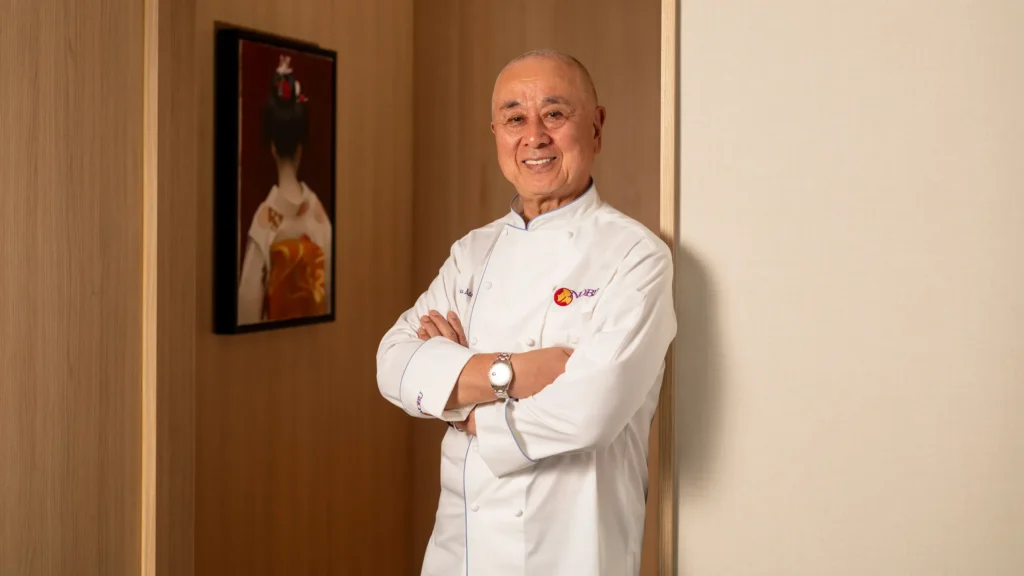
Nobu Matsuhisa occupies a different category entirely: he is the rare entrant on this list whose fortune is grounded almost entirely in restaurant operations and hospitality partnerships rather than television.
His Peruvian-influenced Japanese cuisine, developed during years working in Peru and later Los Angeles, became the foundation for the global Nobu restaurant group, now operating in dozens of countries in partnership with actor Robert De Niro and film producer Meir Teper.
The Nobu brand has since expanded into hotels, a structure that mirrors how many high-end chefs are now building wealth: not by opening more restaurants under their own name, but by licensing that name into hospitality real estate where margins and scale dwarf what any single dining room can produce.
For readers researching how a chef can build serious wealth without a television deal, Matsuhisa’s trajectory is the clearest working model.
5. Guy Fieri, Net Worth: $130 Million
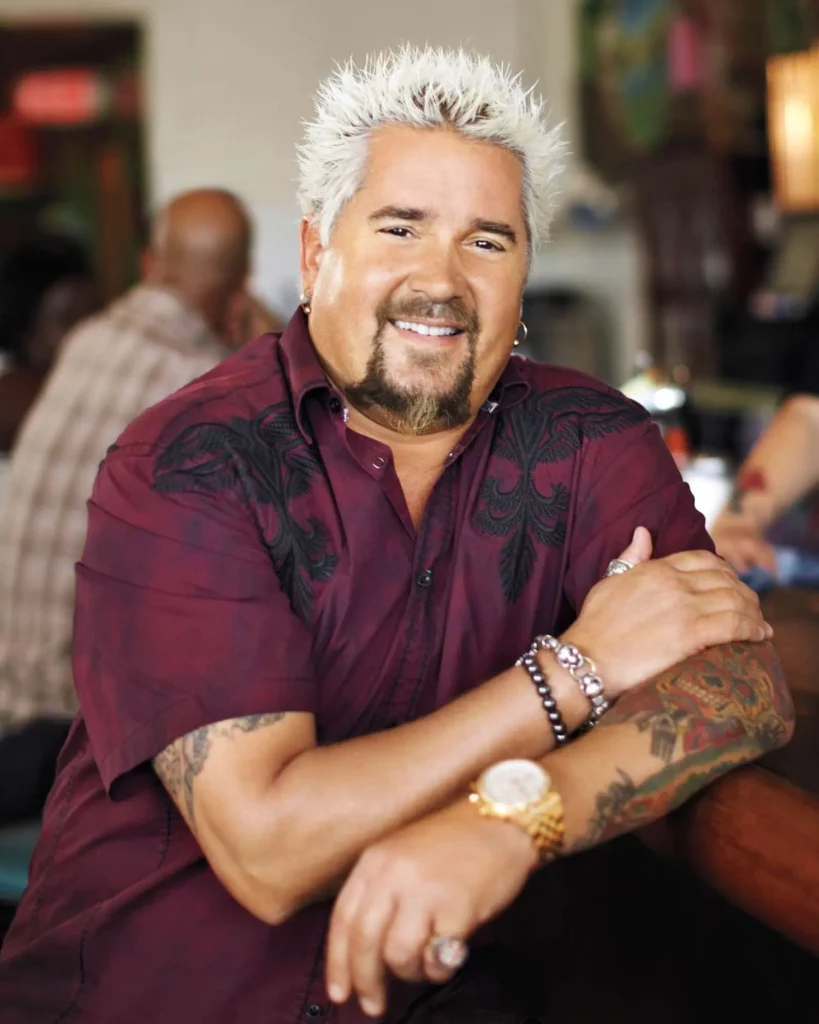
Guy Fieri is frequently underestimated by industry outsiders who associate him primarily with Food Network’s Diners, Drive-Ins and Dives.
That show, however, functions as one of the most effective long-running marketing vehicles in food television history, and Fieri has converted its reach into restaurant licensing deals across California, New York, and Las Vegas, alongside multiple New York Times bestselling cookbooks.
His business model, franchising the Guy Fieri name onto restaurants he does not personally operate day to day, is closer to how brand-driven consumer goods companies scale than how traditional chef-owner restaurants operate. It is a useful counterexample for anyone assuming flamboyant television personas cannot coexist with disciplined licensing economics.
6. Wolfgang Puck, Net Worth: $120 Million
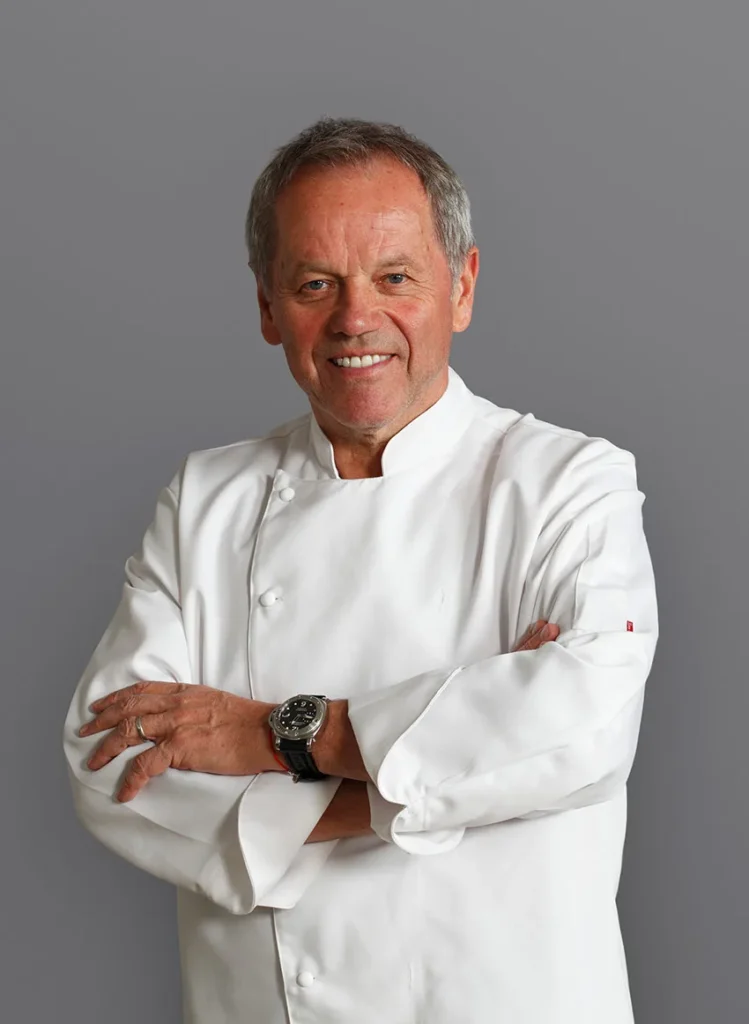
Wolfgang Puck is arguably the architect of the modern celebrity chef business model, and his $120 million fortune, consistently reported across financial trackers, reflects decades of compounding brand equity rather than any single windfall.
Puck opened Spago in Los Angeles in 1982 and used it to pioneer California cuisine, blending French technique with local, Asian-influenced ingredients at a time when that combination was genuinely novel.
What separates Puck from many peers is the deliberate way he separated his brand into distinct tiers: fine dining restaurants that preserve prestige, a licensing arm (Wolfgang Puck Express) that generates passive income from locations he rarely visits, and a catering business anchored by more than three decades as the official caterer of the Academy Awards’ Governors Ball.
That tiering is a structural lesson often missed in coverage of celebrity chefs: prestige and scale are usually kept in separate business units, not blended into one, because blending them tends to erode both.
7. Rachael Ray, Net Worth: $100 Million

Rachael Ray holds the distinction of being the wealthiest female chef in the industry and one of the clearest examples of a media-first culinary career.
She has no formal culinary school training, a fact she has never hidden, and her rise came instead through 30 Minute Meals, a Food Network format built around speed and accessibility rather than technique. That format became a syndicated talk show, a magazine, a line of cookware and pantry products, and a series of bestselling cookbooks.
Ray’s trajectory challenges a common misconception in this space: that a nine-figure culinary fortune requires classical training or restaurant ownership. Her wealth is built almost entirely on media distribution and consumer products, a model increasingly common among newer entrants to the food-content economy.
8. Emeril Lagasse, Net Worth: $70 Million
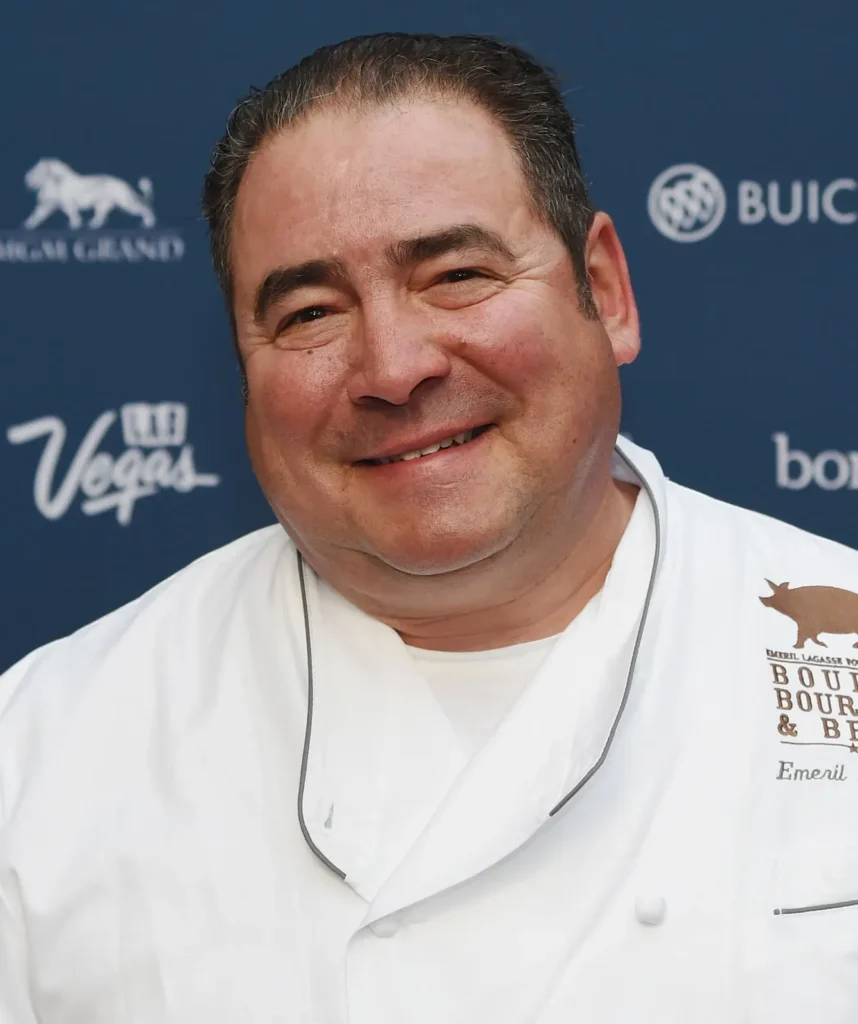
Emeril Lagasse built his reputation the traditional way, training in France and running the kitchen at Commander’s Palace in New Orleans, before Food Network turned his catchphrases and Louisiana-inflected cooking into one of the network’s defining early franchises.
His restaurant group, now numbering more than a dozen locations concentrated in New Orleans, Las Vegas, and Orlando, has stayed closer to his original culinary identity than many of his television-era peers, and his cookware and spice lines remain steady revenue generators.
Lagasse is a useful case study in longevity: his television peak predates most of the names above him on this list, yet his fortune has held up because the underlying restaurant and product businesses were built to outlast any single show’s ratings cycle.
9. Ina Garten, Net Worth: $60 Million
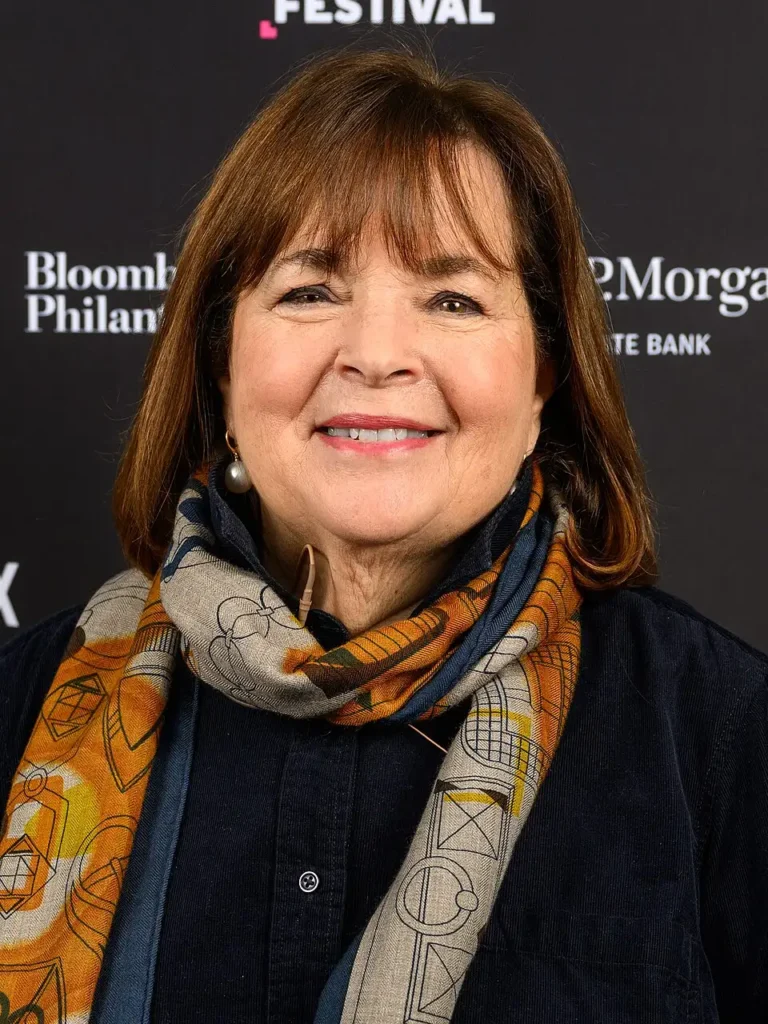
Ina Garten, known globally through her Barefoot Contessa brand, built her fortune on a specialty food store she purchased in the Hamptons in 1978 and later transformed into one of the most trusted cookbook and television franchises in American food media.
Her reported net worth is a combined figure with her husband, investment banker Jeffrey Garten, which is a detail worth flagging because it illustrates a pattern common among long-married celebrity chefs: publicly cited “chef net worth” figures sometimes represent household wealth rather than earnings from the culinary business alone.
Garten’s brand strength rests on consistency and trust built over four decades, a slower-compounding model than the rapid licensing expansions seen elsewhere on this list.
10. Bobby Flay, Net Worth: $60 Million

Bobby Flay rounds out the top ten with a career built on live competition television, most notably Iron Chef America and Beat Bobby Flay, alongside a steady restaurant portfolio anchored by his Mesa Grill and Bar Americain brands.
Flay’s business trajectory reflects a hybrid strategy: unlike pure media personalities, he has maintained an active restaurant ownership stake for most of his career, while also leaning heavily into radio hosting, product licensing, and format-driven competition shows that scale more efficiently than any single dining room.
What the Rankings Reveal About Culinary Wealth
A pattern emerges once these ten fortunes are placed side by side: television reach, not kitchen skill, is the single strongest predictor of a chef’s net worth.
Eight of the ten names built the bulk of their fortune through a media platform, whether a long-running Food Network series, a competition format, or a syndicated talk show. Restaurant ownership alone, even at scale, tends to produce solid six-figure or low seven-figure personal income rather than the tens or hundreds of millions seen here, because restaurant margins are notoriously thin and heavily reinvested.
The two clearest exceptions on this list, Kimbal Musk and Nobu Matsuhisa, arrived at their fortunes through mechanisms outside conventional celebrity chef branding: outside tech investment in Musk’s case, and global hospitality real estate licensing in Matsuhisa’s.
A second pattern worth noting for anyone drawing career or business lessons from this list: net worth figures for public chefs are estimates, often compiled from public records, licensing disclosures, and industry reporting rather than audited financial statements, and different trackers can vary by tens of millions of dollars for the same individual.
Readers should treat every figure above as a well-sourced estimate rather than a verified balance sheet, a caveat that applies to virtually every celebrity net worth ranking published anywhere.
What People Ask