Meet Top 10 Richest Musicians in South Korea
From K-pop architects and idol-turned-investors to the man who built an entertainment empire worth hundreds of millions, meet the South Korean musicians who turned talent into serious, lasting wealth.
South Korea did not stumble into global musical dominance by accident. It was engineered, piece by piece, over three decades, by artists who treated their careers less like callings and more like corporations.
The result is one of the most commercially sophisticated music industries on the planet, one where the wealthiest musicians are not just performers; they are brand architects, real estate investors, company founders, and entertainment conglomerates unto themselves.
Trending Now!!:
The numbers tell a fascinating story. The combined net worth of South Korea’s 50 richest figures has climbed to a record $175 billion, reflecting a 77 percent increase from $99 billion just a year earlier.
While that figure includes industrialists and tech founders, the musicians on this list have carved out fortunes that rival those of boardroom executives, powered by a global K-pop economy that is fast approaching a $100 billion annual threshold.
Tracking this wealth is not as simple as reading a bank statement. Net worth estimates for South Korean artists come from a patchwork of stock valuations, album sales data, brand endorsement disclosures, and real estate filings.
The figures below represent the most credible consensus from industry trackers, financial publications, and entertainment analysts as of 2026, though the artists themselves have never publicly confirmed exact numbers. What the numbers do confirm, unmistakably, is that South Korean music has produced some of the wealthiest entertainers alive.




1. Park Jin-young (JYP), Approximately $200 Million

No musician in South Korean history has translated artistic instinct into corporate empire as cleanly as Park Jin-young. Known universally as JYP, he sits at the top of this list not because of a single viral song, but because of a business philosophy that outlasted every trend cycle from the 1990s to the present.
As of 2026, the richest musician in South Korea is Jin Young Park, also known as JYP, with an estimated net worth of $200 million.
Most of his revenue comes from his company, JYP Entertainment. Born on January 13, 1972, in Seoul, Park started as a pop idol in the early 1990s, scoring hits under the trio Park Jin Young and the New Generation. But he understood early that performing was the least scalable part of the music business.
JYP founded JYP Entertainment in 1997, initially naming it Tae-Hong Planning Corporation, and has since grown it into one of the Big Four entertainment agencies in South Korea, home to TWICE, Stray Kids, ITZY, and others.
The company reported revenue of approximately 821.9 billion Korean won (around $718 million USD) in 2025, with a net income of 160.6 billion won (roughly $140 million USD). Park holds a 15.37 percent stake in the publicly listed company, meaning his shares alone represent a nine-figure fortune even before factoring in royalties, publishing rights, and personal investments.
JYP also invested in real estate, including a luxurious mansion located east of Seoul in a town named Achiul. He has produced music for international artists and authored a bestselling essay book, Live For What?, which sold out in the Korean market almost immediately after its August 2020 release.
At 54, JYP remains the most irreplaceable figure in the South Korean music economy, a performer turned patriarch who built an industry pipeline that keeps generating wealth long after he stepped away from the microphone.
2. Kim Jaejoong, Approximately $100 Million
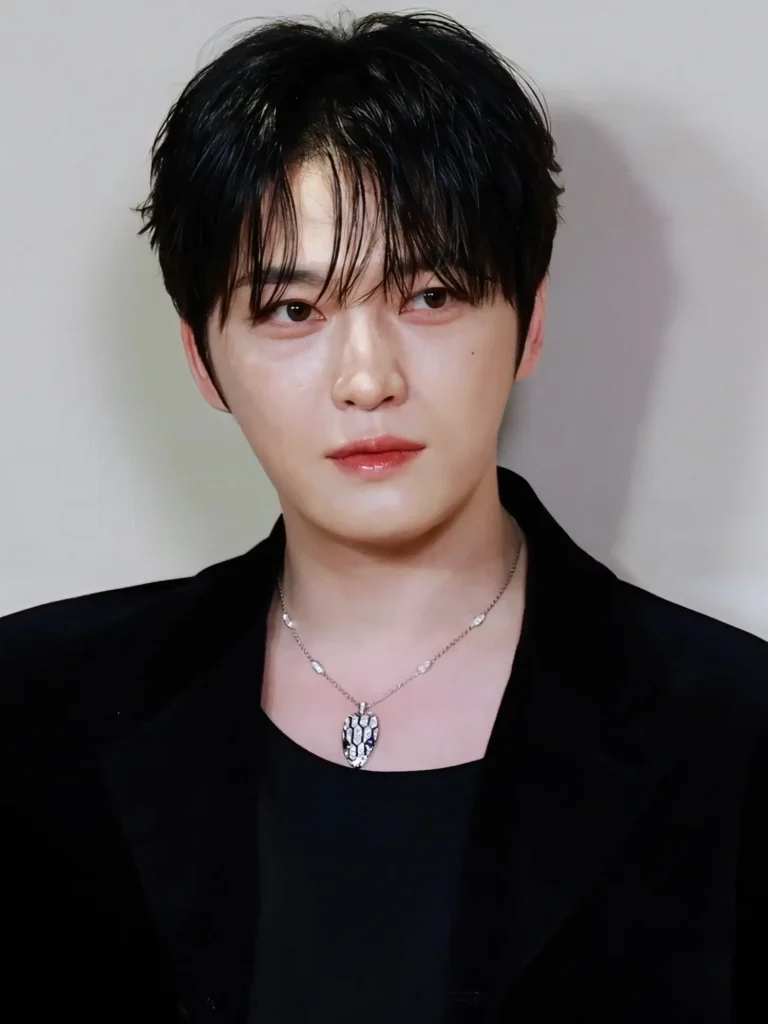
Kim Jaejoong is a study in what happens when genuine talent meets relentless reinvention. A former member of both TVXQ and JYJ, he is now among the richest entertainers to emerge from the idol system, with a fortune built across music, acting, business, and real estate over two decades.
Kim Jaejoong has a net worth estimated at $100 million. He purchased a 300-square-meter flat for $2.5 million in 2012 in Samsung-dong and rented it out, generating a monthly rental income of approximately $4,900 USD. That investment strategy, executed when he was still in his twenties, reflected a financial maturity uncommon among K-pop idols who typically spend their peak earning years on luxury consumption rather than asset acquisition.
Jaejoong moved to Seoul at age 15 to audition at SM Entertainment, working part-time jobs before he was cast as the lead vocalist of TVXQ in 2003. The road from part-time jobs to a nine-figure net worth did not follow a straight line.
His split from SM Entertainment alongside fellow members led to years of legal battles that threatened to derail his career entirely. He not only survived that crisis but also used the fallout to build a solo discography, a credible acting portfolio in dramas like Spy and Dr. Jin, and a fashion and business portfolio that has kept his income diversified across multiple revenue channels.
Kim Jaejoong’s wealth is a reminder that in K-pop, the artists who endure contract disputes and industry turbulence and come out building their own infrastructure tend to finish richer than those who play it safe inside a single label structure for their entire careers.
3. PSY (Park Jae-sang), Approximately $60 Million
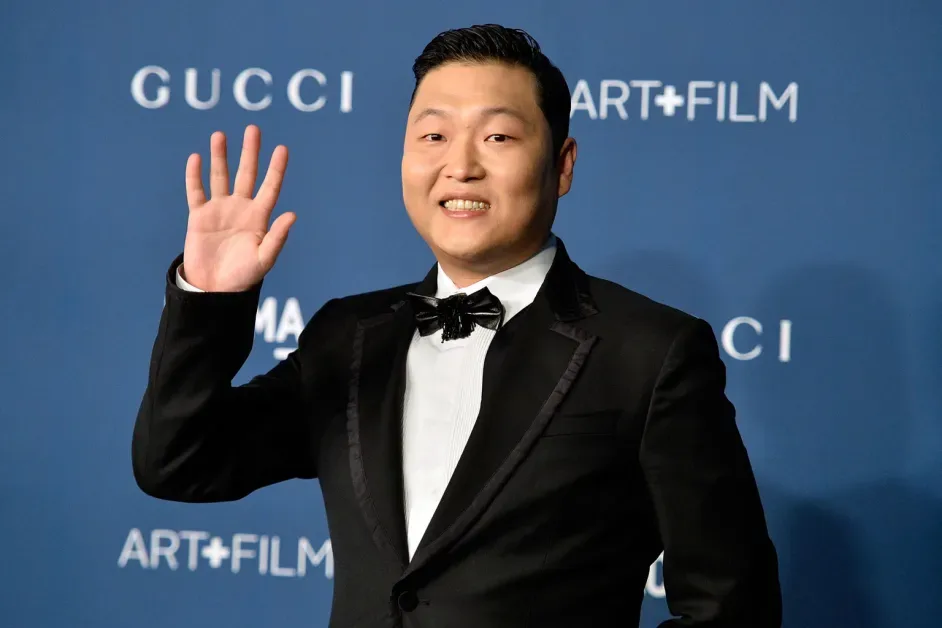
It would be lazy to reduce PSY to Gangnam Style. Yes, the 2012 single broke YouTube, becoming so popular that it physically broke YouTube’s view counter, ultimately generating over 2 billion views and forcing the platform to upgrade its counting infrastructure.
But what the internet meme version of the PSY story obscures is how methodically this man built his wealth before, during, and after the Gangnam Style moment.
PSY is the wealthiest male K-pop idol in this ranking, with an estimated net worth of $60 million. Born Park Jae-sang in 1977 in Gangnam, Seoul, he debuted in 2001 and spent over a decade building a reputation as one of the most commercially savvy performers in the South Korean market before Western audiences had any idea who he was.
His deal structures, publishing rights management, and endorsement portfolio were already elite-tier long before Gangnam Style became a global joke and then, quietly, a global gold mine.
PSY is also involved with non-profit organizations, including World Vision and Rotary International. He later launched his own label, P Nation, which debuted as an industry force by signing artists who went on to significant commercial careers.
PSY understood something that many K-pop idols miss: the goal is not to be popular, it is to own the infrastructure that popularity runs on. His label bet was a direct application of that lesson.
4. IU (Lee Ji-eun), Approximately $45 Million

IU, born Lee Ji-eun on May 16, 1993, occupies a position in South Korean culture that goes beyond celebrity. She is, by most measures, the country’s most beloved solo artist, and she has monetized that trust with a precision that would impress a Wall Street portfolio manager.
IU has an estimated net worth of $45 million, earned through her career as a singer-songwriter and actress. Those earnings did not arrive by accident.
Her songwriting catalogue generates royalties on a scale that few K-pop artists can match, because unlike many idols who perform material written by label producers, IU writes and co-writes most of her own songs, meaning she captures both the performance income and the publishing backend.
Her real estate strategy has been equally decisive. IU purchased a property in Cheongdam-dong, Seoul, for 13 billion won in cash, without a loan. She has also disclosed owning a 4.6 billion won studio in Gwacheon, Gyeonggi-do, valued at approximately $3.6 million USD, as well as a second house in Yangpyeong-gun, Gyeonggi-do, purchased for 2.2 billion won ($1.7 million USD).
Buying premium Seoul real estate in cash while simultaneously booking out stadium tours and headlining major K-dramas like Hotel Del Luna is not a celebrity financial strategy; it is a corporate one executed by someone who happens to also be a generational vocalist.
5. BTS Members (Collective and Individual), Approximately $25 Million to $50 Million Each
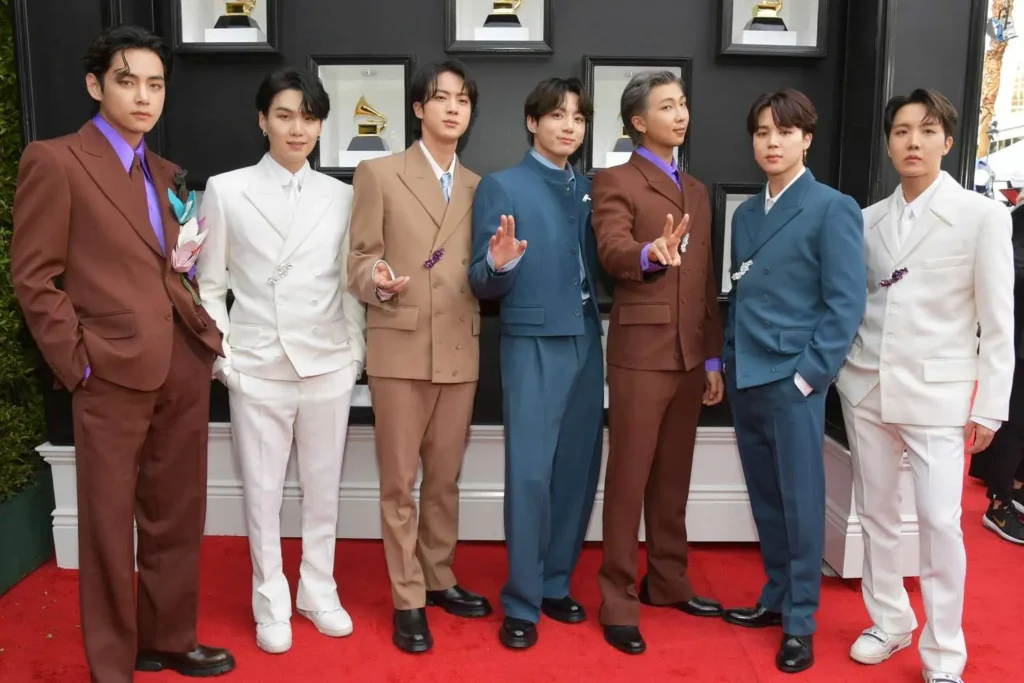
Any honest accounting of South Korea’s richest musicians must address BTS not as seven individuals but as a financial phenomenon that restructured the way the global music industry understood Asian artists.
Their collective wealth is staggering. BTS’s collective net worth is estimated to be between $150 million and $350 million as of 2026, with members like V and Jungkook leading the pack individually.
Within the group, wealth is distributed unevenly based on solo projects, producing credits, equity positions, and brand endorsement rates. J-Hope earns from producing music in addition to performing and touring, with his HYBE ownership stake growing as the company expands. His multiple income sources, including producing, performing, touring, and equity appreciation, contribute to his estimated $50 million net worth.
Suga’s net worth is estimated between $25 million and $30 million. He is widely regarded as a legendary producer for both BTS and artists like Halsey and PSY, with his alter-ego Agust D and his solo D-Day world tour generating consistent royalty and concert revenue. He is also the global face of luxury fashion house Valentino and the NBA.
The group’s 2019 Love Yourself world tour generated between $170 million and $250 million across 62 performances, with each member reportedly earning between $3 million and $5 million per show.
That single tour data point illustrates why K-pop wealth cannot be understood through album sales alone. The live economy, the merchandise ecosystem, the brand partnership architecture built around a single group, these are the engines that generated individual fortunes that rival those of A-list Hollywood actors.
6. Rain (Jung Ji-hoon), Approximately $40 Million

Before BTS made Seoul the centre of the pop music universe, there was Rain. Born Jung Ji-hoon on June 25, 1982, Rain was the first Korean artist to crack Western entertainment in a meaningful way, appearing on Time magazine’s list of the world’s most influential people twice and landing a role in the Hollywood film Speed Racer.
Rain’s net worth is estimated to be between $20 million and $49 million, accumulated through his successful music and acting careers as well as various business ventures. His real estate portfolio with his wife and actress Kim Tae-hee, is one of the most valuable in the South Korean entertainment industry.
The couple owns real estate in Cheongdam valued at over $35 million, and their home is valued at $5 million. Rain achieved breakthrough success with his third Korean album, It’s Raining (2004), which sold a million copies across Asia and established him as an international star.
He later founded his own company, R.A.I.N Company, managing his personal projects and launching the idol group Ciipher.
Rain represents a generation of South Korean artists who had no blueprint for global expansion, built their careers anyway through sheer hustle and talent, and accumulated the kind of diversified wealth that sustains itself long after the touring years slow down.
7. G-Dragon (Kwon Ji-yong), Approximately $30 Million

G-Dragon occupies a singular position in Korean popular culture. His influence on K-pop aesthetics, fashion, and musical direction is so pervasive that attempting to calculate his cultural impact is more complicated than calculating his net worth.
G-Dragon holds an estimated net worth of approximately $30 million. As a legendary figure in K-pop and a massive influence in fashion and songwriting, his wealth reflects decades of consistent chart-topping success with Big Bang and his own lucrative solo ventures.
Born Kwon Ji-yong on August 18, 1988, in Seoul, G-Dragon began his career under YG Entertainment as the leader and primary creative force of Big Bang, one of the most commercially successful K-pop groups ever assembled.
His business ventures extend well beyond music. He has operated his own fashion apparel company, opened a distinctive cafe, and cultivated a personal brand so powerful that luxury houses like Chanel and Adidas have sought him out for high-profile collaborations.
The brands essentially pay for the cultural conversation that surrounds him, which means G-Dragon earns whether he releases new music or not. That is the hallmark of a musician who has transcended the idol framework and become something closer to a living luxury brand.
8. Siwon Choi (Choi Si-won), Approximately $18 Million

Choi Si-won, born April 7, 1986, in Seoul, built his career through Super Junior, one of the most commercially dominant K-pop groups of the late 2000s and 2010s. What distinguishes him on a wealth list is not any single hit but his early and consistent understanding that a sustainable career in K-pop required multiple income streams working simultaneously.
Siwon is a South Korean singer, songwriter, model, and actor worth approximately $18 million. As a member of Super Junior and the subgroup Super Junior-M, he has achieved multiple number one albums in South Korea, including Don’t Don (2007), Sorry, Sorry (2009), Bonamana (2010), and Mr. Simple (2011).
His acting career, running parallel to his music commitments, has included roles in Korean dramas that command premium advertising rates and syndication fees across Asia. His modelling profile, combined with an active social media presence that spans markets in China, Japan, and Southeast Asia, has kept his endorsement income elevated even in years when Super Junior was on hiatus or when members were completing military service.
Longevity in K-pop is earned, not given, and Siwon’s net worth reflects a two-decade commitment to staying commercially relevant across multiple platforms simultaneously.
9. Jimin (Park Ji-min), Approximately $20 Million-$25 Million

Jimin, born Park Ji-min on October 13, 1995, in Busan, South Korea, was always considered one of BTS’s most emotionally compelling performers. But it was his solo career that confirmed him as one of the most commercially potent individual artists in South Korean music history.
His 2023 solo debut, FACE, produced the lead single Flowers, which became the first solo song by a Korean male artist to top the Billboard Hot 100.
That chart milestone did not just add a trophy to the shelf; it unlocked a tier of brand partnership and endorsement rates previously unavailable to solo K-pop acts. His deal as a Dior House Ambassador placed him at the intersection of music wealth and luxury fashion economy, where the brand value multiplier is significantly higher than standard celebrity endorsement mathematics.
All seven BTS members maintain an estimated individual net worth in the range of $20 million to $50 million, built on the group’s collective commercial infrastructure alongside individual projects, brand deals, and equity positions in HYBE.
For Jimin, the trajectory is clearly pointed upward, as his solo output, global ambassadorship roles, and post-military return to full-scale touring suggest his wealth position will strengthen considerably over the next five years.
10. Jung Yong-hwa, Approximately $20 Million
Jung Yong-hwa rounds out this list as perhaps the most artistically traditional musician on it. While his colleagues built K-pop empires and viral internet moments, Jung built something rarer in the Korean entertainment industry: a credible rock career that crossed into acting, songwriting, and mainstream commercial success without losing its musical integrity.
Jung Yong-hwa is a multi-talented South Korean artist who works as an actor, guitarist, singer, songwriter, model, rapper, musician, music arranger, and master of ceremonies, with a net worth of $20 million. He is best known as the lead vocalist and rhythm guitarist of the rock band CNBLUE, formed in 2009.
As an actor, he has appeared in dramas including Heartstrings, A Gentleman’s Dignity, and The Three Musketeers, each of which expanded his audience beyond CNBLUE’s core rock fanbase and into the drama-watching demographic that drives enormous secondary revenue through CF deals and endorsements.
Jung’s longevity reflects a principle that runs quietly through every name on this list: South Korea’s wealthiest musicians are not one-trick performers. They are entrepreneurs who use music as the launchpad for a much wider wealth architecture.
Jung Yong-hwa achieved that through craft, consistency, and an ability to move fluidly between rock performance, drama stardom, and commercial endorsement without diluting the artistic credibility that made fans trust him in the first place.
What Makes South Korea’s Richest Musicians Different
The list above is not just a collection of famous people who happened to get paid. It is a portrait of an industry that evolved faster than almost any other entertainment ecosystem in modern history, producing artists who were trained not only to perform but to think structurally about their careers from their early twenties onward.
Several patterns emerge clearly. First, real estate is a serious wealth vehicle for South Korean artists, particularly in Seoul’s premium districts like Cheongdam-dong and Gangnam, where property values have appreciated dramatically over the past two decades.
Second, equity ownership in entertainment companies, whether through founder stakes like JYP’s or through idol-system IPO shares like the HYBE distributions to BTS members, has created generational wealth for artists who might otherwise have burned through touring income.
Third, brand ambassadorship in South Korea is a genuinely high-value income stream, not a secondary consideration, because Korean artists maintain unusually loyal consumer relationships that luxury brands in Europe and North America have learned to pay premium rates to access.
The K-pop wealth model is also a warning. The system produces enormous riches for those who navigate it with strategic clarity, and it has also produced cautionary tales of artists who earned millions and retained very little of it because they did not build the business infrastructure to hold what the talent generated. The ten names on this list understood the difference between earning and wealth-building, and they acted on that understanding early enough to matter.
South Korean music will keep producing global stars. The next generation of wealthy artists is likely already in a practice room somewhere in Seoul, learning not just choreography and vocal technique but also, increasingly, how to own a piece of the machine that will one day make them famous. That is the lesson this list teaches, and it is not a small one.
What People Ask