My Brother Used My Savings to Impress a Rich Girl’s Father, and My Family Called Him a Real Man
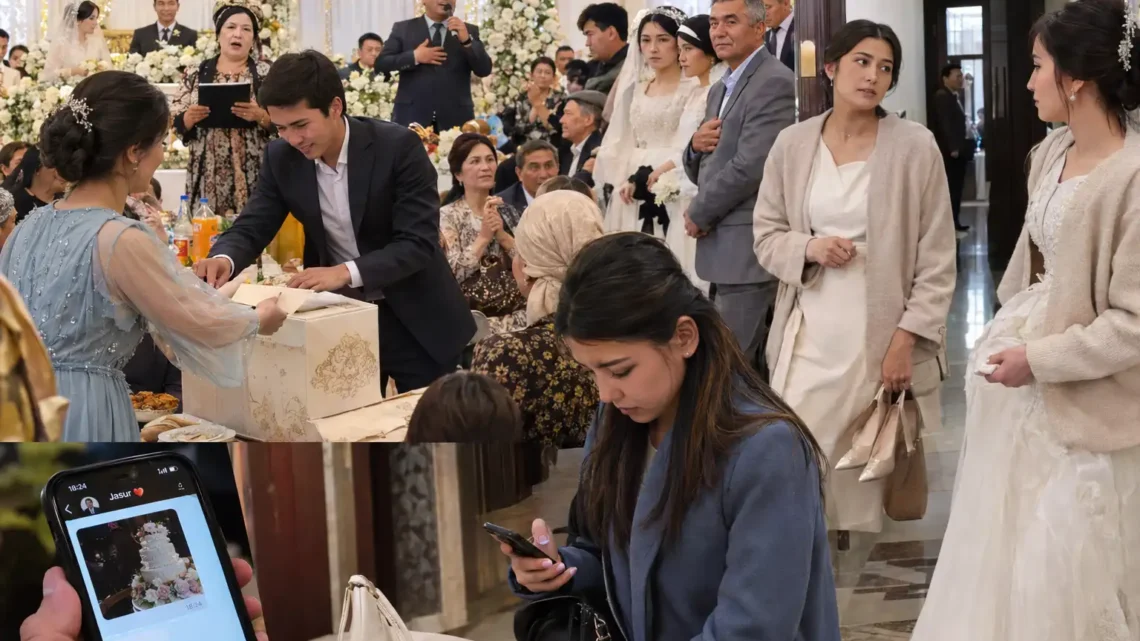
Dilnoza stood in the hallway of a wedding hall in Tashkent with 600,000 som folded inside a cream envelope that was not hers. Her brother had asked for the money at eleven the night before, in a Telegram voice note that opened with Opa, don’t shout.
She had not shouted. She had sat on the edge of her bed in her flat near Chilonzor metro, listening to Jasur breathe between sentences, and she had typed the transfer through Click before he finished explaining. Her salary at the bank branch on Amir Temur Street was not large. Rent had gone up again in September, and the price of a kilo of beef at the market kept climbing like it had somewhere to be.
Trending Now!!:
Everyone will see what I give, Jasur had said. Her father will see it. You know how it is.
She knew how it was. At a Tashkent wedding, someone sits near the entrance with a notebook, and every envelope is counted and written down. The amounts are not secret. They are remembered for years, and repaid at other weddings in other halls.
Jasur was twenty-six and between jobs for the fourth month. He was also, for reasons that surprised the whole family, being introduced to a girl named Madina, whose father owned two pharmacies in Yunusabad. Madina was at the wedding. So was her father, in a grey suit that fit him too well.
The morning had started the way these mornings do. Dilnoza had been up at five because her aunt Gulnora insisted the women arrive early for the oshi nahor, the morning plov that is served before the real celebration begins. She stood in a steaming courtyard with a plastic plate in her hands, eating rice she did not want, because her aunt was watching and a refusal would have been discussed for a week.



The carrots were sweet and the lamb was falling apart. She ate all of it, standing up, while an uncle she had met twice told her she looked thin and a cousin asked whether she had a man yet.
By noon the hall had filled. The bride, her cousin Shahlo, came in under a heavy veil with her eyes lowered, and the older women made the sounds they make. Dilnoza was handed a small flag to wave, and she waved it, and felt like a person pretending to be a person.
Jasur arrived late, in a borrowed jacket that was slightly too big in the shoulders. He kissed his mother and shook hands with the men. Then he looked at Dilnoza across the room, and she pulled the cream envelope out of her handbag and passed it to him without a word.
He went to the table by the door. She watched him bend and write his name on the front. Her stomach tightened in a way she could not explain, because it was only money, and it was already gone from her account.
Her own envelope held 200,000 som. She had thought about it for a long time at the cash machine, doing the sums in her head. That was the amount she could give without feeling it in the last week of the month.
She dropped it in the box and moved on. Nobody looked.
The speeches began after the first round of salads. A man with a microphone and a voice made for stadiums welcomed the guests and thanked the families. Then Gulnora, who had taken charge of the notebook with the seriousness of a judge, stood up with it open in both hands.
I want to say something about generosity, Gulnora announced. In this family, we have always looked after each other.
Dilnoza felt something cold travel from her neck to her knees.
Today, my nephew Jasur has shown us what it means to be a man, Gulnora said. Six hundred thousand som. At his age, without a steady job. That is respect. That is a good heart.
The hall applauded. Somebody whistled. Her father, two tables away, put a hand on his chest and looked toward his son with wet eyes. Jasur stood halfway out of his chair, trying to look humble, and failing, and being forgiven for it.
Dilnoza kept clapping because her hands had already started. She was aware of how her face looked, and she arranged it into something proud.
Her own 200,000 was not mentioned. It sat in the notebook between a neighbour’s and a colleague’s, three lines of ink among hundreds, and nobody would ever ask about it.
Did you know? the woman beside her whispered, a distant relative in a gold headscarf. Your brother is doing so well. My daughter says he has a business now.
He is working hard, Dilnoza said.
It was not a lie. It was not the truth either. She had learned in her thirties that most of life happens in the space between those two.
Across the hall, Madina’s father leaned over and said something to his wife. His wife looked at Jasur the way you look at a shop window. Madina herself was staring at her phone under the table, scrolling something, her face blue in the light.
Later, in the hallway by the cloakroom, Dilnoza stood alone and read her messages. There was one from her landlord about the rent, sent at 6:40 that morning, short and polite. There was one from Jasur, a single heart emoji, and below it a photo of the wedding cake with no caption.
She did not reply. She stood there turning her phone over and over, thinking about the 600,000 and about the six weeks it would take to rebuild what was left of her savings. She thought about her father’s wet eyes. She thought that maybe this was what family was, a debt nobody wrote in a notebook.
Madina came out of the hall holding her heels in one hand. She was about twenty-four, with a tired kind of beauty and a cardigan over her wedding dress, the kind of cardigan girls bring for the cold when the hall’s heating fails. She stopped when she saw Dilnoza.
Your brother is very generous, Madina said.
Yes, Dilnoza said. He is.
Madina looked at her for a moment longer than was polite. Her eyes moved from Dilnoza’s face to the phone, to the cheap handbag, to the rent message still glowing on the screen. Then she reached into her cardigan pocket and pulled out a packet of tissues, the small kind sold near the metro for a thousand som.
She held it out. Dilnoza had not realised her eyes were wet.
Thank you, Dilnoza whispered.
I did not see anything, Madina said, in a voice so quiet it could have meant two things.
Then she walked back into the hall, barefoot on the cold marble, and the doors closed behind her.
Dilnoza stayed in the hallway a long time. The music was starting up again inside, a song everybody’s grandmother knew, and she could hear Jasur laughing over it, loud and easy, the laugh of a man who had never once checked his balance before buying a round.
She wondered what Madina had really seen. She wondered what she would do with it, and whether she should have said something, and whether saying something would have been kinder or crueler than letting a girl walk into a family on borrowed money.
Her phone buzzed. It was Jasur again, a new voice note, forty seconds long.
She looked at it for a while. She did not press play.
Some debts are paid in silence, and the interest never stops.