

Anton Rupert Biography: Net Worth, Age, Wife, Parents, Height, Children, Religion, Books, Companies
Anton Rupert was a South African billionaire businessman, philanthropist and conservationist who founded the Rembrandt Group, the business behind today’s Remgro and Richemont.
Born Anthony Edward Rupert on October 4, 1916, he grew up in Graaff-Reinet in the Eastern Cape as the eldest son of his father, John Peter Rupert, an attorney, and his mother, Hester Adriana Rupert.
Trending Now!!:
He left medical studies for lack of funds, earned a chemistry degree at the University of Pretoria and briefly lectured there.
Rupert ran a dry-cleaning business before moving into tobacco, investing just £10 (about $40 at the time) in a venture established in 1941 as Voorbrand, which later became Rembrandt.
He built it into an international group with interests in tobacco, mining, finance, wine and liquor, and healthcare. Richemont, the Swiss luxury company formed in 1988, became home to brands such as Cartier and Montblanc. Rupert also served as chancellor of the University of Pretoria from 1987 to 1992.



Conservation and culture were central to his life. He was a founding member of the World Wildlife Fund, led its South African branch and co-founded the Peace Parks Foundation in 1997, with Nelson Mandela and Prince Bernhard of the Netherlands serving as patrons. His companies also supported art, music, education and the restoration of historic buildings.
Rupert married Huberte Rupert, born Huberte Goote, in 1941, and they had three children: Johann Rupert, Hanneli Rupert-Koegelenberg and Antonij Rupert, who died in a car crash in 2001. Huberte died in October 2005.
Anton Rupert died in his sleep at his Stellenbosch home on January 18, 2006, aged 89, leaving a fortune of about $1.7 billion.
| Anton Rupert | |
|---|---|
|
|
| Wiki Facts & About Data | |
| Real Name: | Anthony Edward Rupert |
| Stage Name: | Anton Rupert |
| Born: | October 4, 1916 |
| Died: | 18 January 2006 (age 89 years old) |
| Place of Birth: | Graaff-Reinet, Eastern Cape, South Africa |
| Nationality: | South African |
| Ethnicity: | Afrikaner |
| Education: | Hoër Volkskool, University of Pretoria |
| Religion: | Christianity |
| Parents: | John Peter Rupert, Hester Adriana Rupert |
| Siblings: | Jan Rupert, Koos Rupert |
| Spouse: | Huberte Rupert (m. 1941-2005) |
| Children: | Johann Rupert, Hanneli Rupert-Koegelenberg, Antonij Rupert |
| Occupation: | Businessman, Entrepreneur, Philanthropist, Conservationist |
| Net Worth: | $1.7 billion |
Early Life & Education
Anton Rupert, whose full name was Anthony Edward Rupert, was born on October 4, 1916, in the historic Eastern Cape town of Graaff-Reinet, South Africa, making his zodiac sign Libra. He was an Afrikaner and a Christian with roots in the Dutch Reformed Church.
His father, John Peter Rupert, was a practising attorney and respected leader of the predominantly Afrikaner community. His mother, Hester Adriana Rupert (née van Eeden), was one of 10 children.
The couple married in December 1915, and Anton arrived the following year at the family’s stone house on Cradock Street.
He was the eldest of three sons. His younger brothers, Jan Rupert, also named John Peter, and Koos Rupert, whose given names were Jacobus Albertus, were born in 1922 and 1929, respectively.
Rupert attended the Hoër Volkskool in Graaff-Reinet, the first Afrikaans-medium high school in the Cape Province, where he matriculated. He wanted to study medicine and qualified for a medical bursary, but the cost remained too high.
He enrolled at the University of Pretoria instead, majored in chemistry and earned a BSc in 1936, followed by an MSc in applied chemistry in 1939.
He also lectured at the university and began doctoral studies, which he left in 1940 to head the small business section of the Reddingsdaadbond, an Afrikaner economic upliftment organisation.
Career
Anton Rupert began his working life as a lecturer in chemistry at the Pretoria Technical College and later at the University of Pretoria. He also ran a dry-cleaning business before joining the small business division of the Reddingsdaadbond.
His experience of the Great Depression had shown him that people never stopped buying tobacco and alcohol, an observation that shaped his major investments.
In 1941, with an initial £10 and the help of two co-investors, he moved into tobacco through Voorbrand. He added an investment company, Technical and Industrial Investments, two years later. The 1940s also took him into the liquor trade, where he and D. W. R. Hertzog founded Distillers Corporation.
Rembrandt grew out of the Voorbrand venture and entered the South African cigarette and tobacco industry in 1948. Rupert protected his business early, registering his trademarks in 70 countries before his first cigarettes reached the South African market.
His partnership with Rothmans became central to the company’s overseas growth, and by 1954 Rembrandt was in effective control of the British tobacco maker. Rembrandt was listed on the Johannesburg Stock Exchange in 1956 and acquired Carreras in 1958. Carreras later took a 51% stake in Alfred Dunhill in 1967.
His rise also drew political opposition. Between 1958 and 1959, the Congress Alliance and the South African Congress of Trade Unions called for a boycott of his companies’ cigarettes after he refused them financial support, labelling him “a capitalist architect of business apartheid”. Rupert criticised apartheid but avoided direct confrontation with the government and did not support the liberation struggle.
In 1972, Rembrandt’s overseas tobacco interests were brought together under Rothmans International, which was listed in London. The wider group expanded into mining, finance, industry and luxury goods, including an investment in Cartier.
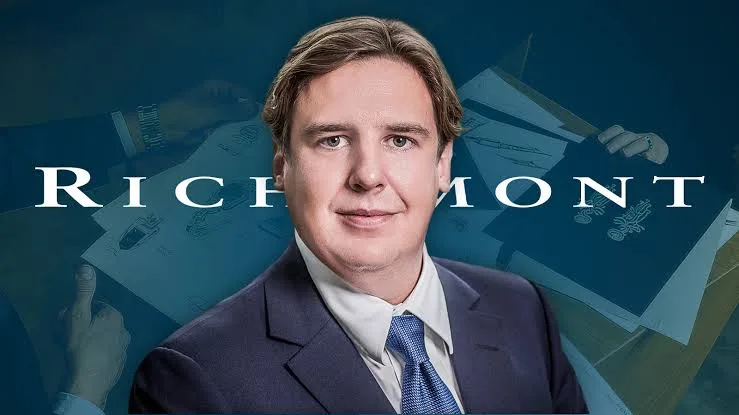
Its international assets were spun off in 1988 to form Richemont, a Swiss company established under the leadership of his son, Johann Rupert. The South African interests later became the foundation of Remgro.
Rupert also championed small enterprises and played an important role in the Small Business Development Corporation, a non-profit organisation that supported job creation. He served as chancellor of the University of Pretoria from 1987 to 1992.
The family’s tobacco operations changed again in the 1990s, when Rembrandt and Richemont combined their interests under Rothmans International, then the world’s fourth-largest cigarette maker. The business merged with British American Tobacco in 1999, leaving Remgro and Richemont with shares in the enlarged company.
Conservation became another major part of Rupert’s work. He was a founding member of the World Wildlife Fund, served as president of its South African branch and established The 1001: A Nature Trust in 1970.
In 1997, he co-founded the Peace Parks Foundation to support conservation areas that cross national borders, with Nelson Mandela and Prince Bernhard of the Netherlands serving as patrons.
Personal Life
Anton Rupert was 89 years old when he died on January 18, 2006. He had celebrated his last birthday on October 4, 2005.
His wife, Huberte Rupert, born Huberte Goote on December 3, 1919, was his university sweetheart. She studied for a BA degree and a diploma in librarianship.
The couple married in 1941 in a Dutch Reformed church ceremony in Krugersdorp, about a week after he established Voorbrand. It was his only marriage, and it lasted until her death on October 28, 2005.
Anton died less than three months later. Huberte is the one woman prominently linked to him romantically.
They later made their home on Thibault Street in Stellenbosch and raised three children: Johann Rupert, Hanneli Rupert-Koegelenberg and Antonij Rupert.
Johann, their elder son, was born on June 1, 1950, and is 76 years old. He followed his father into business, established Richemont and became a leading figure at both the Swiss company and Remgro.
Hanneli, the couple’s daughter, was with him when he passed away. Antonij, the younger son, headed the wine business Rupert & Rothschild Vignerons until he died in a car crash in 2001.
Net Worth
Anton Rupert had a net worth of around $1.7 billion when he died in 2006. He built his fortune from a tobacco venture he entered in 1941 with just £10 (about $40 at the time), turning it into the Rembrandt Group.
His wealth grew through interests in tobacco, wine and spirits, mining, finance, industry and luxury goods.
The business empire he created later gave rise to Remgro, a South African investment company, and Richemont, the Swiss group associated with brands such as Cartier and Montblanc.
What People Ask
NOTICE!! NOTICE!! NOTICE!!
At TheCityCeleb, we strive to provide accurate and up-to-date biographies and entertainment news, focusing on celebrities. Our editorial team researches information from reputable sources, including interviews, official statements, and verified media.If you spot an error or have additional details, please contact us at editor@thecityceleb.com. We value your feedback and are committed to maintaining trustworthy content.