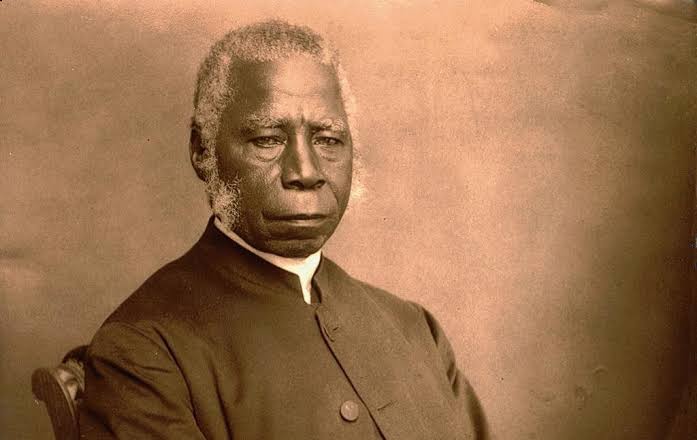
Samuel Ajayi Crowther Bio: Wife, Age, Children, Net Worth, University, Parents, History, Death
Samuel Ajayi Crowther was a Nigerian-born Anglican bishop, linguist, and missionary who became the first African to be consecrated bishop in the Anglican Church, renowned for his pioneering translation of the Bible into the Yoruba language.
Samuel Ajayi Crowther was born around 1809 in Osogun, in the present-day Iseyin Local Government Area of Oyo State, Nigeria, and was of the Yoruba ethnic group. He was originally named Ajayi at birth, then renamed after his rescue from slavery.
Trending Now!!:
Around the age of twelve, he was captured during a raid by Fulani and Oyo Muslim slave raiders, sold into slavery, and placed aboard a Portuguese slave ship bound for the Americas. The ship was intercepted by a British anti-slavery naval squadron, and Crowther was freed and taken to Freetown, Sierra Leone, where he came under the care of the Church Missionary Society. He was baptized in 1825 and took the name Samuel Crowther after a vicar in England who supported the missionary cause, the Reverend Samuel Crowther.
Crowther distinguished himself academically at Fourah Bay College in Freetown, where he trained as a teacher and later studied theology. He was ordained as a priest in the Church of England in 1843 and went on to play a central role in translating the Bible into Yoruba, a contribution that remains foundational to Yoruba Christian literature today. He was also instrumental in developing a written form of the Yoruba language, including grammar and dictionary works that shaped its orthography.
In 1864, Crowther was consecrated as the first African bishop of the Anglican Communion, overseeing the Niger Mission. His appointment marked a significant milestone in African church leadership during an era dominated by European missionaries. He worked extensively along the Niger River, establishing missions and training local clergy, though his later years were marked by tensions with younger European missionaries who sought to limit African leadership within the church, a conflict that led to the reorganization of the Niger Mission shortly before his death.
Samuel Ajayi Crowther died on December 31, 1891, in Lagos, Nigeria. He is remembered as a pioneering figure in African Christianity and Yoruba linguistic scholarship, with his legacy continuing to influence religious and educational institutions across Nigeria.

| Samuel Ajayi Crowther | |
|---|---|
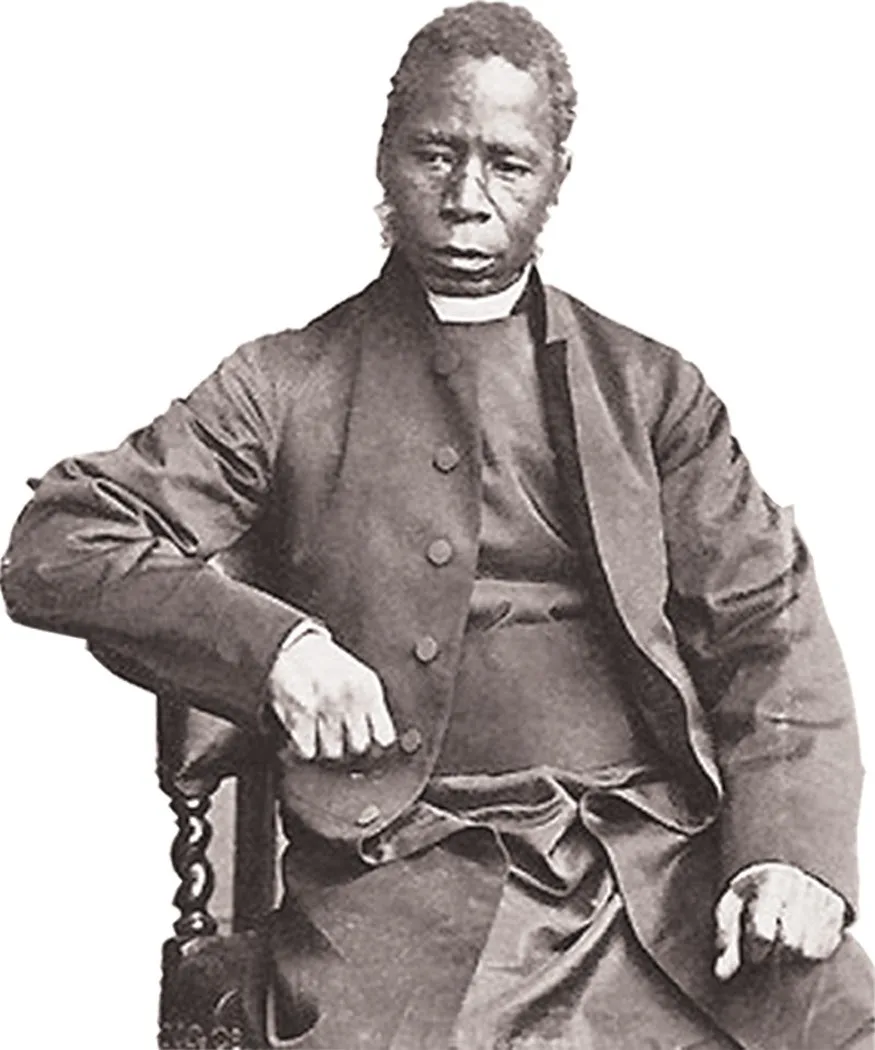
|
|
| Wiki Facts & About Data | |
| Name: | Samuel Ajayi Crowther |
| Born: | 1809 |
| Died: | 31 December 1891 (age 82 years old) |
| Place of Birth: | Osogun, Iseyin local government area, Oyo State, Nigeria |
| Nationality: | Nigerian |
| Ethnicity: | Yoruba |
| Education: | St Mary's Church, Fourah Bay College, Oxford University |
| Religion: | Christianity |
| Parents: | Aiyemi Ajayi, Afala Ajayi |
| Siblings: | 3 |
| Spouse: | Susan Crowther (m. 1829) |
| Children: | Samuel Crowther Jr., Abigail Crowther, Susan Crowther, Josiah Crowther, Julianah Crowther, Dandeson Coates Crowther |
| Occupation: | Clergyman, Linguist, Missionary, Bible Translator, Bishop |
Early Life & Education
Samuel Ajayi Crowther was born Ajayi around 1809 in Osogun, a town in the present-day Iseyin Local Government Area of Oyo State, Nigeria. His exact date of birth was never recorded, a common reality for many born in Yorubaland during that era, so no zodiac sign can be assigned to him.
He was of Yoruba ethnicity and was raised within the traditional Yoruba religious belief system before his later conversion to Christianity following his rescue from slavery. His father was a Yoruba man named Aiyemi Ajayi, a farmer and skilled weaver.
His mother, Afala Ajayi, was a descendant of the former Oyo monarch, King Abiodun, and had served as a priestess of Obatala. Crowther was the second of four children born to the couple, though his siblings’ names were not consistently documented in historical records.
Among the Yoruba, the name Ajayi is traditionally given to a child born facedown, and upon his birth, the Oracle Ifa was consulted regarding the boy’s destiny. His parents were reportedly told that the child would grow to become one celebrated and distinguished, a servant of the highest God, Olorun.
His early life was disrupted by the Yoruba civil wars of the period. At about twelve years old, he and his family were captured by Fulani slave raiders during the Owu wars of 1821 to 1829, when his village of Osogun was attacked and ransacked.
He was sold into slavery and traded several times before being placed aboard a Portuguese slave ship bound for the Americas, a journey that was cut short when the ship was intercepted by a British naval patrol enforcing the abolition of the slave trade.
Following his rescue, he was resettled in Freetown, Sierra Leone, where he came under the care of the Church Missionary Society. He was baptized on December 11, 1825, by John Raban, taking the name Samuel Crowther after Samuel Crowther, vicar of Christ Church, Newgate, in London, and one of the early supporters of the missionary society.
His education began in earnest in Freetown, where he developed a strong interest in languages. He attended St Mary’s Church and later trained at Fourah Bay College, the institution that would shape much of his theological and linguistic foundation. He went on to further his studies at Oxford University in England, an opportunity that was exceptionally rare for an African of his generation.
Career
Samuel Ajayi Crowther began his professional life as a schoolteacher in Freetown, Sierra Leone, working under the Church Missionary Society after completing his training at Fourah Bay College.
His fluency in multiple languages and his firsthand understanding of Yoruba culture made him a valuable asset to the missionary society’s broader ambitions in West Africa, and he was soon drawn into more significant linguistic and evangelistic work.
In 1841, Crowther joined the Niger Expedition, a British-led mission to explore trade routes and establish missionary outposts along the Niger River. His participation marked the beginning of his deep involvement in the exploration and Christianization of the Niger region, and his contributions during this expedition impressed his European counterparts, who recognized his linguistic skill and diplomatic temperament in dealing with local communities.
Following the expedition, Crowther travelled to England, where he undertook formal theological training and was ordained as a priest in the Church of England in 1843. He returned to West Africa shortly afterward and was posted to Abeokuta, a major Yoruba city, where he established a mission station and worked extensively in evangelism, education, and translation among the local Yoruba-speaking population.
His most enduring contribution during this period was his work on the Yoruba language itself. Crowther played the central role in developing a written form of Yoruba, producing grammar books, a dictionary, and ultimately a full translation of the Bible into the language. This body of work gave the Yoruba people one of the earliest standardized written forms of their language and remains foundational to Yoruba literacy and Christian worship to this day.
Crowther also took part in the 1854 and 1857 Niger Expeditions, further expanding the reach of Christian missions along the river and strengthening ties between the Church Missionary Society and communities in the Niger Delta and beyond. His growing reputation as a capable, articulate, and deeply committed African clergyman placed him at the center of the missionary society’s ambitions to establish a self-sustaining African church led by African clergy.
This vision culminated in 1864, when Crowther was consecrated as the Bishop of the Niger Territories, making him the first African to be ordained a bishop in the Anglican Communion. As bishop, he oversaw the expansion of mission stations along the Niger River, trained and ordained local clergy, and worked to build an indigenous church structure capable of functioning independently of European missionary oversight.
Despite his pioneering achievements, Crowther’s later years in office were marked by growing friction with a new generation of European missionaries who arrived in the Niger Mission with more rigid, racially exclusionary attitudes toward African leadership within the church. These tensions led to a series of internal disputes, accusations of mismanagement, and ultimately a reorganization of the Niger Mission that diminished his authority shortly before his death.
Even so, Crowther’s career remains one of the most significant in the history of Christianity in Africa. His translation work preserved and elevated the Yoruba language, his missionary expeditions opened new frontiers for the church along the Niger, and his consecration as bishop broke a racial barrier within the Anglican Communion that had stood since its founding.
Personal Life
Samuel Ajayi Crowther died on December 31, 1891, in Lagos, Nigeria, at the age of 82.
He had married only once in his lifetime, having met a fellow former slave named Asano Crowther, also known as Hassana Crowther, who had been liberated from the same Portuguese slave ship that had carried him to Sierra Leone.
Asano had been a Muslim before her rescue and subsequently converted to Christianity, taking the baptismal name Susan Thompson. The two became engaged shortly after Crowther’s own conversion and baptism, and they married in 1829.
Crowther and his wife, Susan, remained married for approximately fifty years until his death, a union widely described in historical accounts as a happy and enduring one. Together, they had six children: Samuel Crowther Jr., Abigail Crowther, Susan Crowther, Josiah Crowther, Julianah Crowther, and Dandeson Coates Crowther.
Their son Dandeson Coates Crowther followed his father into ministry and became Archdeacon of the Niger Delta in 1891. Their daughter Abigail Crowther married Thomas Babington Macaulay, a junior associate of Crowther’s, and the couple’s son, Herbert Macaulay, would go on to become one of the earliest Nigerian nationalists, making him Crowther’s grandson.
In his final years, Crowther continued his ministry despite advancing age and the political strain placed on him by younger European missionaries within the Niger Mission.
He suffered a stroke and died in Lagos on December 31, 1891, at 82 years old. He was buried at Ajele Cemetery in Lagos, where his remains stayed until a redevelopment dispute in the 1970s led to a delayed exhumation and reburial, finally completed in 1976.
Net Worth
Given that Samuel Ajayi Crowther lived and worked in the nineteenth century as a clergyman and missionary rather than as a businessman or commercial figure, no documented net worth or financial fortune exists in historical records.
His life’s work centred on missionary service, linguistic scholarship, and church leadership, fields that did not generate the kind of personal wealth or financial documentation typically associated with modern net worth estimates.
His enduring legacy lies instead in his contributions to Yoruba language preservation and his historic role as the first African bishop of the Anglican Church, rather than in any accumulated material fortune.
What People Ask
NOTICE!! NOTICE!! NOTICE!!
At TheCityCeleb, we strive to provide accurate and up-to-date biographies and entertainment news, focusing on celebrities. Our editorial team researches information from reputable sources, including interviews, official statements, and verified media.If you spot an error or have additional details, please contact us at editor@thecityceleb.com. We value your feedback and are committed to maintaining trustworthy content.