Meet Top 10 Richest Crypto Billionaires in the World
Changpeng Zhao, founder of Binance, leads the world’s richest crypto billionaires with $114.6 billion, followed by Tether co-founder Giancarlo Devasini at $89.3 billion.
Tether’s current and former chief executives, Paolo Ardoino and Jean-Louis van der Velde, each hold $38 billion; Brian Armstrong, Justin Sun, and Chris Larsen follow near $8.5 billion.
Trending Now!!:
Two businesses explain most of the money. Binance and Tether account for the top four names, which together hold close to 90 percent of the combined wealth of everyone ranked here. This pattern runs counter to the popular image of the crypto billionaire as a lucky early Bitcoin buyer.
The biggest fortunes belong to people who built companies between traditional money and digital assets: exchanges that collect fees on every trade, and a stablecoin issuer that earns interest on the dollars behind its tokens.
These fortunes are also harder to pin down than a share price suggests. Forbes updates its rankings in real time, yet the two largest stakes sit in private companies with no market price to check them against.
The Ten Richest Crypto Billionaires, Ranked
1. Changpeng Zhao — $114.6 billion
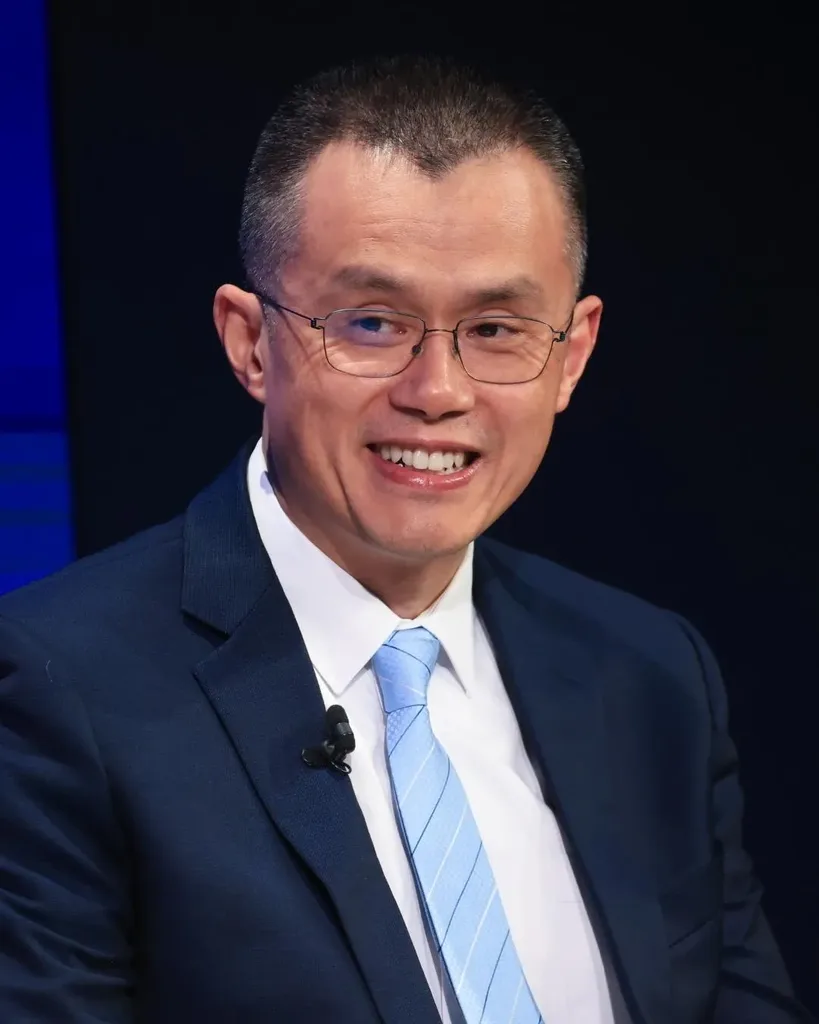
Changpeng Zhao, known as CZ, is the richest person in crypto and ranks 18th among all billionaires in the Forbes real-time tally. He owns an estimated 90 percent of Binance, the exchange he founded in 2017, along with a stash of its BNB token.



The legal history sits inside the valuation. CZ stepped down as chief executive in November 2023 under a settlement with U.S. authorities, pleaded guilty to failing to maintain an effective anti-money laundering program, paid a $50 million fine, and served four months in prison.
Donald Trump pardoned him in October 2025, and Forbes notes that Trump’s crypto businesses have had extensive dealings with Binance.
CZ now lives in Dubai and has published a memoir, Freedom of Money, which Forbes called a whitewashed account of how he built the exchange. His own advice on markets is short: “We need to respect the market, with a level of caution too.”
2. Giancarlo Devasini — $89.3 billion

Giancarlo Devasini, a former physician from Italy, chairs Tether, the company behind the USDT stablecoin, and is likely its largest shareholder. Forbes credits him with about 45 percent of the business.
More than 180 billion Tether tokens exist, and the company reported profit above $10 billion in 2025, mostly from interest on the U.S. Treasurys that make up most of its reserves.
The valuation method matters. Forbes values the stake by applying the average price-to-earnings multiples of publicly traded mid-tier banks and asset managers to the company’s earnings. Several trackers placed Devasini near $22 billion at the start of the year; the spread between that figure and $89.3 billion shows how much room private-company valuation leaves for disagreement.
A Reuters Breakingviews column in February called the stablecoin giant crypto’s fragile foundation, a reminder that one issuer’s health now matters to the whole market.
3. Paolo Ardoino — $38 billion
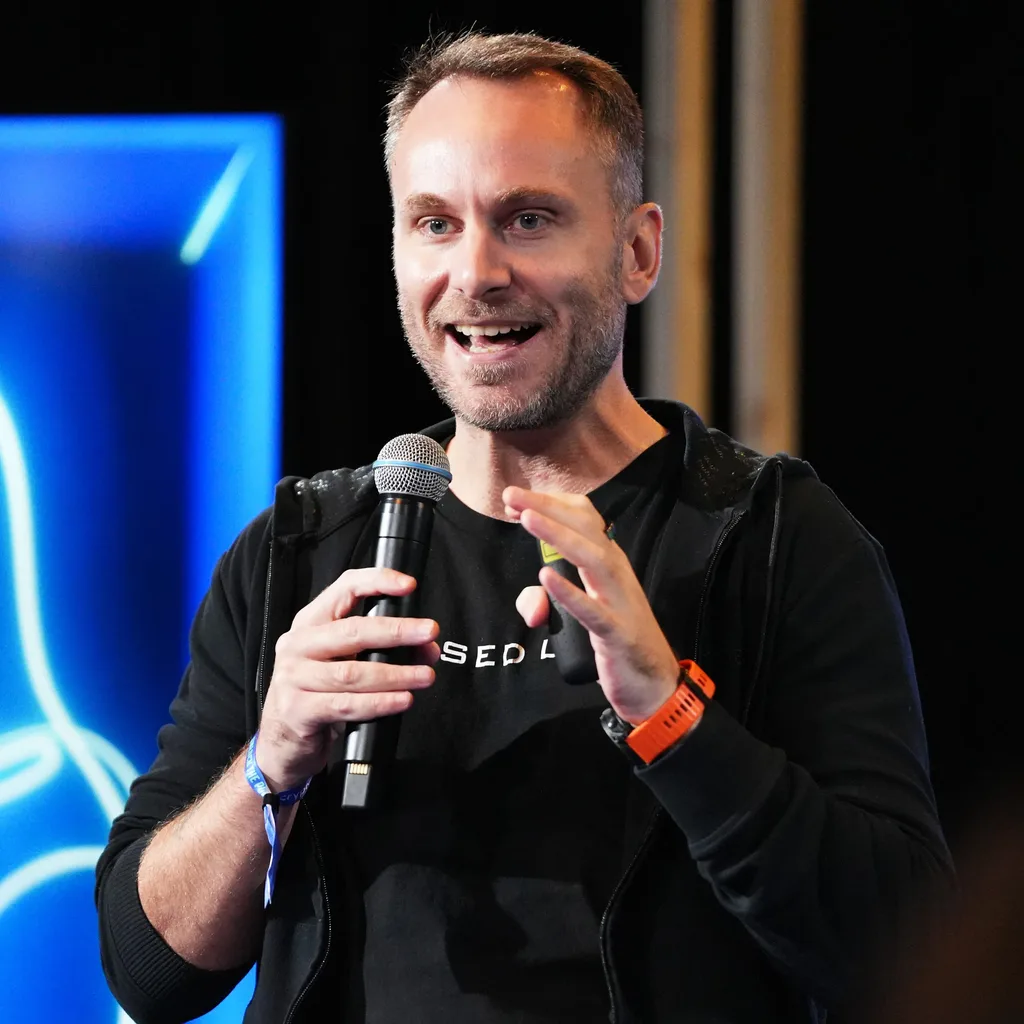
Paolo Ardoino joined Bitfinex, Tether’s sister company, in 2014 as a senior software developer and now runs Tether as chief executive. Forbes estimates his stake at 20 percent.
The company earned $6.2 billion in 2023, and more than $10 billion in 2025, and a 20 percent claim on that earnings stream is what separates a developer’s salary from a place among the 60 richest people in the world.
4. Jean-Louis van der Velde — $38 billion
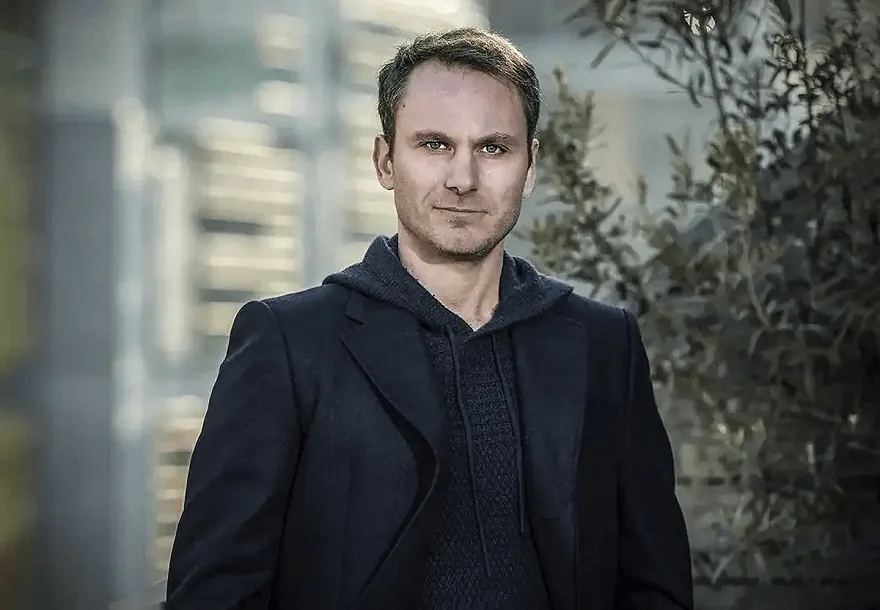
Jean-Louis van der Velde led Tether before Ardoino and remains chief executive of Bitfinex. A Dutch citizen based in Hong Kong, he left the Netherlands in 1985 to attend university in Taiwan and co-founded several technology start-ups in Asia before joining Tether.
Forbes credits him with the same estimated 20 percent as Ardoino, which puts both men at an identical net worth. The tie illustrates a rule that holds across private crypto companies: equity splits, not job titles, decide who becomes rich.
5. Brian Armstrong — $8.8 billion
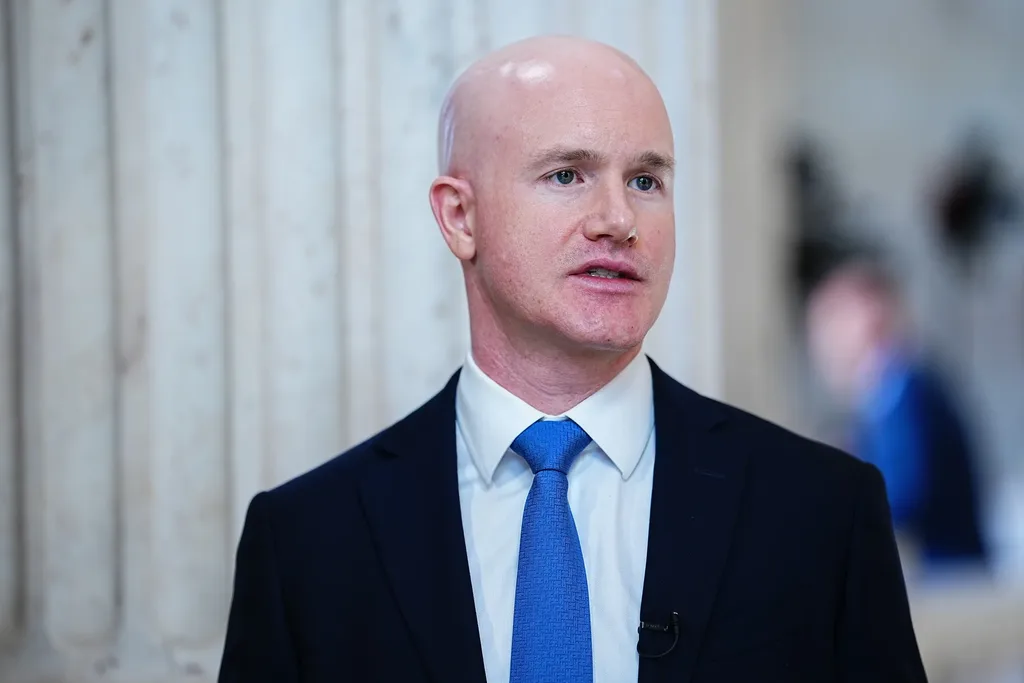
Brian Armstrong, a former software engineer at Airbnb, co-founded Coinbase in San Francisco in 2012 with Fred Ehrsam. The company listed directly on Nasdaq in April 2021 and briefly reached a $100 billion market value.
Armstrong owns about 17 percent, while Ehrsam, who left in 2017, keeps roughly 2 percent, sits on the board, and is a billionaire himself.
Armstrong’s fortune is the clearest proxy for the public-market side of crypto, because it tracks a listed share price and moves with trading volume and sentiment.
Policy touches the business directly. In January, he withdrew Coinbase’s support for the CLARITY Act, a market structure bill, and drew a public rebuke from the administration. Outside crypto, he co-founded the longevity start-up NewLimit, which raised a $435 million round at a $3.1 billion valuation in June.
6. Justin Sun — $8.5 billion

Justin Sun built his fortune around Tron, the blockchain he launched in 2017, and a group of businesses that includes the exchanges Poloniex and HTX and the file-sharing service BitTorrent.
He read about Bitcoin in a 2012 article while studying at the University of Pennsylvania and worked at Ripple before starting Tron.
Publicity is part of his brand. He paid $6.2 million at Sotheby’s in 2024 for a banana duct-taped to a wall, then ate it, and he put $75 million into World Liberty Financial, Donald Trump’s crypto venture.
The regulatory picture has been unsettled: the Securities and Exchange Commission paused a market manipulation investigation into Sun and his companies in February, and in April he sued World Liberty Financial.
7. Chris Larsen — $8.4 billion
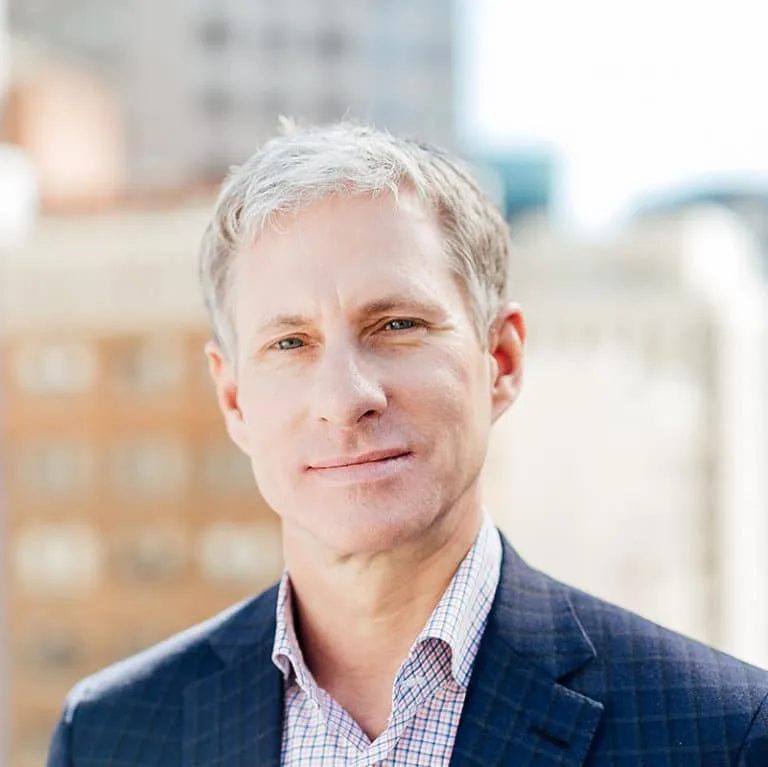
Chris Larsen co-founded Ripple in 2012 to facilitate international payments for banks using blockchain technology.
He stepped down as chief executive in December 2016 and remains executive chairman. Ripple has spent roughly $3 billion on acquisitions, turning itself from a cross-border payments provider into a full-stack crypto infrastructure company.
His earlier record in lending gives the story continuity: he co-founded the online lender E-Loan in 1996 and the peer-to-peer lender Prosper in 2005.
His philanthropy is unusually large for the sector. With Doug Galen, he launched Rippleworks in 2015 as one of the first crypto-endowed foundations, and it reported $2.5 billion in assets in 2025. His lifetime giving stands at $409 million. In 2018, Forbes called him the richest person in cryptocurrency; the title has since passed to CZ, a sign of how quickly crypto leadership changes hands.
8. Michael Saylor — $4.7 billion
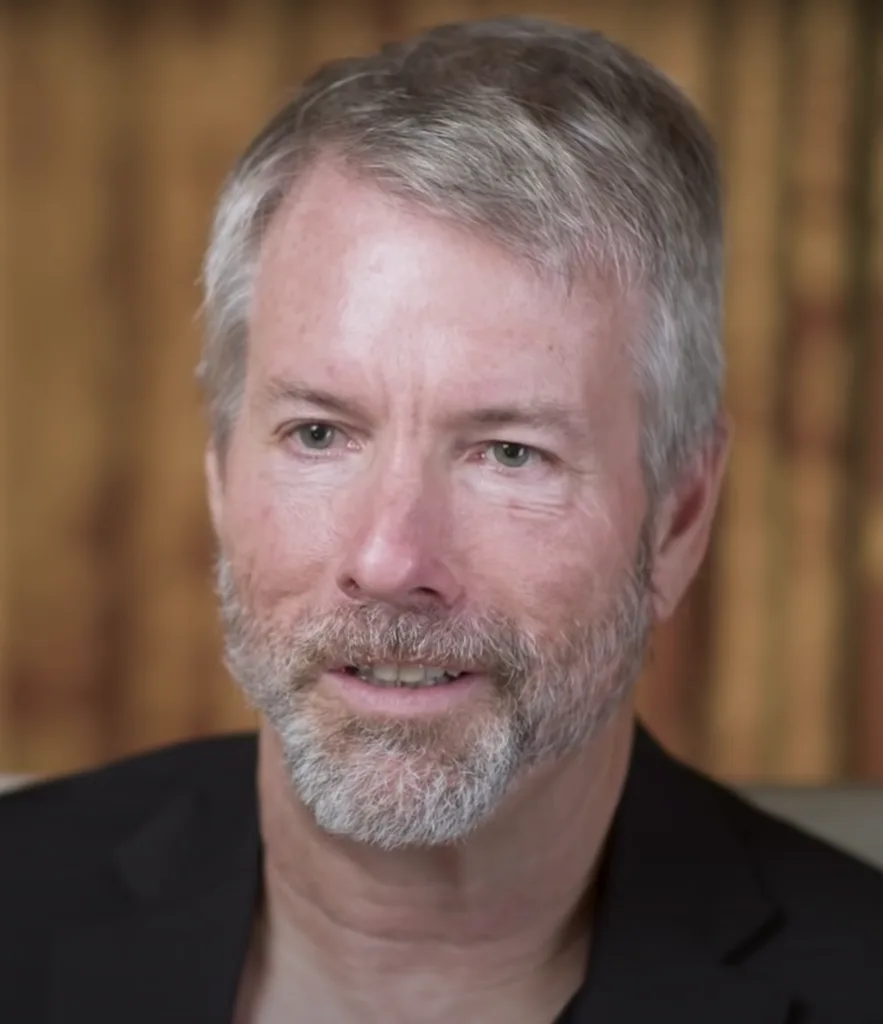
Michael Saylor founded the business analytics firm Strategy, formerly MicroStrategy, in 1989 after studying aeronautics and astronautics at MIT on a military scholarship.
He lost his first fortune when a restatement of financial results and the dot-com bust crashed the stock, then rebuilt it by steering the company’s treasury into bitcoin. Strategy now holds more than 800,000 bitcoin, and Saylor personally bought 17,732 bitcoin for $175 million in 2020.
The model carries a cost. Strategy funds purchases partly through preferred stock that pays an 11.5 percent dividend, and in August it sold 1,638 bitcoin at $63,957, below its $75,419 average cost, to pay preferred dividends and buy back its STRC stock.
Saylor says he has sold none. The episode exposes the weakness of a balance-sheet fortune: dividends are due in cash whatever Bitcoin does.
9. Jed McCaleb — $3.9 billion
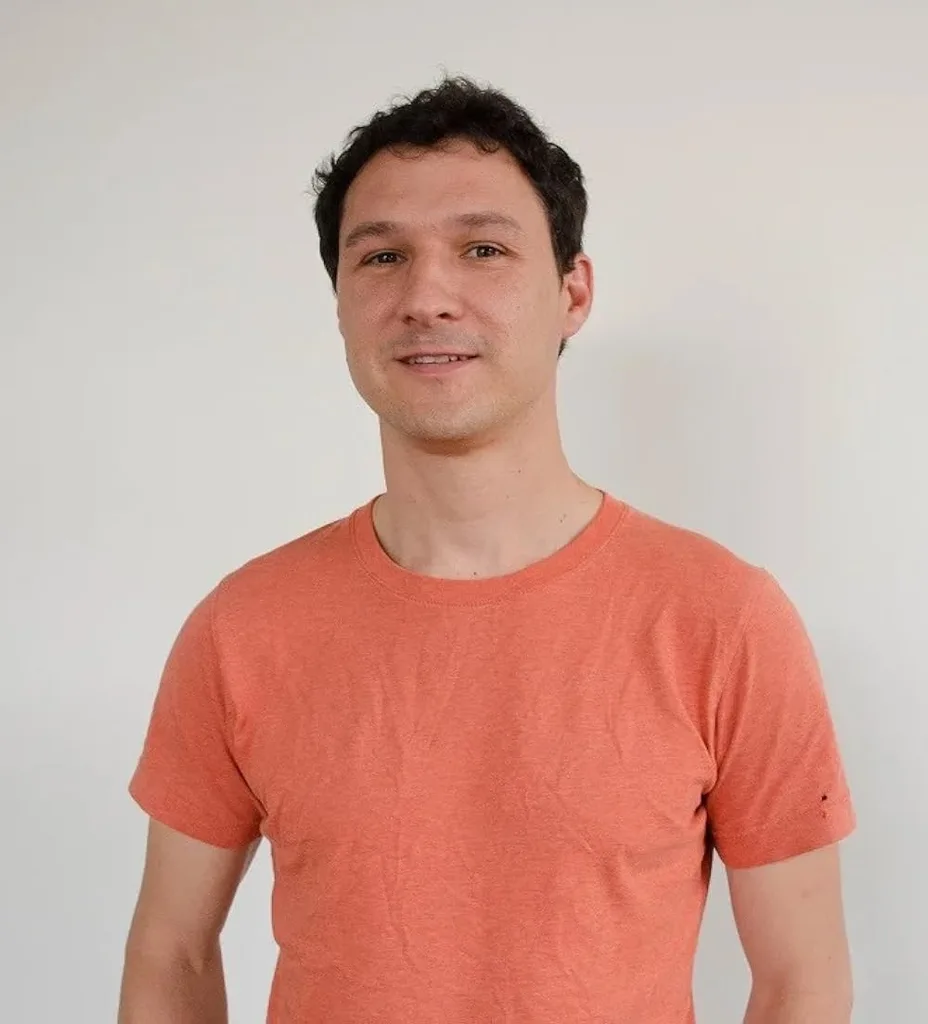
Jed McCaleb helped launch three of crypto’s best-known firms. He created Mt. Gox, the first major Bitcoin exchange, in 2010 and sold it a year later, before it was hacked.
He co-founded Ripple in 2012, left after disagreements with his partners, and co-founded Stellar in 2014. Most of his wealth comes from selling much of the 9 billion XRP he received as a Ripple co-founder; he sold his last coins in 2022.
He now spends on very different projects: the space station start-up Vast, which he founded in 2021 and has largely funded, and a $1 billion effort to build artificial intelligence modeled on how the human brain learns.
With his wife, Seemay Chou, he has committed most of his wealth to scientific research and other philanthropy. He is the clearest example on the list of a founder who turned token wealth into cash before moving on.
10. Cameron Winklevoss and Tyler Winklevoss — $2.9 billion
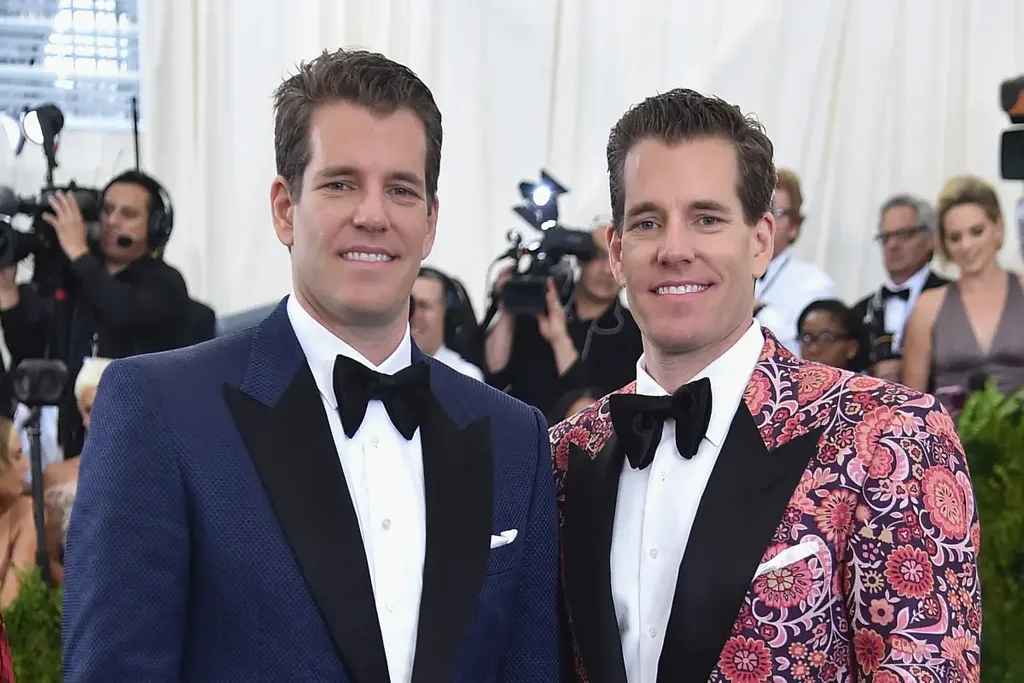
Cameron Winklevoss and his twin brother, Tyler Winklevoss, co-founded the exchange Gemini in 2014; Cameron serves as president and Tyler as chief executive.
Tyler Winklevoss is valued in the same range as his brother. Both are former Olympic rowers, best known for accusing Mark Zuckerberg of stealing their idea for a social network. They used part of a $65 million settlement to start buying Bitcoin, and the pair still own an estimated 70,000 bitcoin.
Gemini processes about $30 million a day in trades, so the brothers’ wealth rests more on their bitcoin than on the exchange. Theirs is the closest thing on the list to a classic holder’s fortune.
Just Outside the Ranking
Song Chi-hyung, co-founder of Dunamu, operator of Upbit, South Korea’s largest crypto exchange by daily trading volume, holds about $2.5 billion. In November 2025, the payment arm of Naver said it would acquire Dunamu in a stock swap valuing the combined company at $13.6 billion.
Vitalik Buterin, the co-founder of Ethereum, holds roughly 240,000 ETH in known wallets, which keeps his visible wealth well under $1 billion. His case shows that holding a major token is a weaker route to a fortune than owning the business that trades or issues it.
Satoshi Nakamoto, the pseudonymous creator of Bitcoin, appears in no serious ranking because the identity behind the wallets is unknown. Commonly cited estimates credit the creator with roughly 1 million bitcoin that has never moved, an implied value in the tens of billions of dollars.
How Crypto Billionaires Actually Make Their Money
A useful way to read the list is to ask where the cash comes from. Three models appear, and they behave very differently when prices fall.
Fee income funds the exchange founders. CZ, Armstrong, Sun, Cameron Winklevoss, and Tyler Winklevoss earn revenue when people trade, so volume matters more than direction, although volume still shrinks in a quiet market.
Float income funds the stablecoin issuers. Devasini, Ardoino, and van der Velde earn interest on the reserves behind tokens that users treat as dollars. This explains how Tether reported profit above $10 billion in 2025, a year that included a sharp October sell-off.
Balance-sheet exposure funds the rest. Saylor’s bitcoin treasury and the Winklevoss twins’ coins rise and fall with the asset itself. Larsen and McCaleb belong partly in this group, since their wealth traces to tokens received as founders, though McCaleb sold his.
Ranked by durability, float and fees outlast balance sheets. Float has its own catch, because Forbes credits high rates on U.S. Treasurys for Tether’s profit. A sustained fall in short-term rates would pressure the second-largest fortune without any change in crypto prices.
Mistakes to Avoid When Reading Crypto Rich Lists
Comparing numbers from different indexes or dates is the most common error. Estimates for CZ alone have ranged from $45.1 billion in a February snapshot of the Bloomberg Billionaires Index to $114.6 billion on Forbes today, a gap that reflects method and timing as much as wealth.
Treating wallet balances as net worth is the second. On-chain data captures token holders such as Buterin and Nakamoto but cannot see equity in private companies, which is where the largest fortunes sit.
Assuming a high rank means a clean regulatory record is the third. CZ pleaded guilty, Sun faced an investigation that has since been paused, and Armstrong is arguing publicly over the shape of market structure law. Regulation is a recurring variable on this list, not a footnote.
What Could Reorder the List
Three variables will decide the next version. The first is interest rates, which drive Tether’s profit. The second is U.S. market structure legislation, which Armstrong has already shown he will fight over in public.
The third is Bitcoin itself, because Strategy’s dividend bill is fixed while the asset behind it is not.
What People Ask