I Was Already Late for Work When I Found Out Who Had Parked My Car
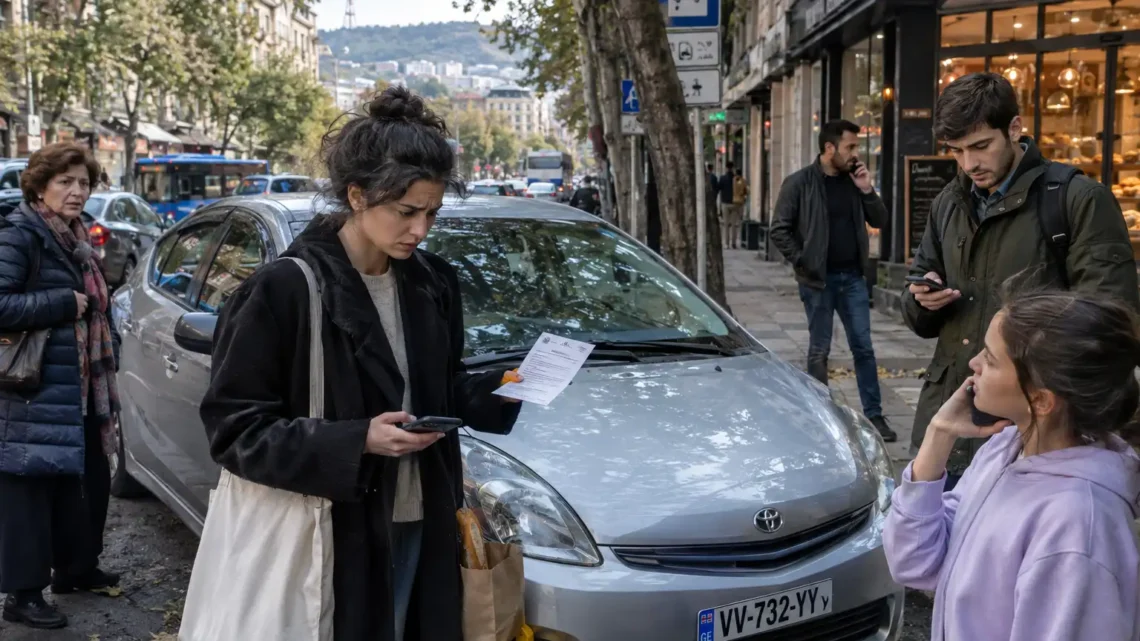
The wheel clamp was already on Maia Beridze’s car when she came downstairs with a paper bag of warm bread in one hand and her phone in the other.
She stopped so suddenly that the woman behind her nearly walked into her.
Trending Now!!:
What happened? the woman asked.
Maia looked at the yellow metal clamp around the front wheel of her silver Toyota Prius, then at the paper stuck beneath the windscreen wiper.
I honestly do not know.
It was 7:18 in the morning on a narrow street not far from Tbilisi’s Marjanishvili area, and Maia had exactly thirty-six minutes to get to the bakery where she worked. The bread was getting cold. Her coffee was still sitting on the kitchen counter. Her manager hated excuses.



The notice said she had violated a municipal parking restriction.
The fine was 100 Georgian lari.
Maia read it twice.
Then a third time.
One hundred? she said.
The woman looked at the notice.
At least they did not tow it.
That was supposed to make Maia feel better.
It did not.
One hundred lari was not the end of the world, but it was not nothing either. It was groceries. It was part of the electricity bill. It was the money Maia had been trying to keep aside for her daughter Nino’s school expenses.
She opened her phone and took a picture of the clamp.
Then another.
Then she sent both to the family group chat.
Her younger brother Giorgi replied almost immediately.
Wow.
That was all.
Maia stared at the message.
Wow?
Three dots appeared.
Then disappeared.
Then appeared again.
Maybe there is a mistake.
Maia called him.
He did not answer.
She called again.
Nothing.
By 7:31, she had sent a voice note to her manager explaining that her car had been clamped and she might be late. The manager responded with a thumbs-up emoji.
That somehow felt worse than being shouted at.
Tbilisi traffic was already thickening around Marjanishvili and the roads toward Rustaveli Avenue. Buses rolled past while people hurried toward work, carrying takeaway coffee and looking at their phones.
Maia stood beside her car and tried to remember where she had parked the night before.
She had come home around 9:40 p.m.
She remembered stopping beside the building.
She remembered carrying two grocery bags upstairs.
She remembered watching half an episode of a crime series while Nino did homework at the dining table.
After that, nothing.
She had not noticed any new parking sign.
That was the part making her angry.
Not even the fine.
The uncertainty.
She took another photograph of the road.
There was a sign farther down the street, partly hidden behind a tree. She walked toward it.
The restriction applied to the entire stretch.
Apparently.
She returned to the car and called the municipal parking service.
The automated voice gave her several options in Georgian and English. She chose English because she was too annoyed to trust herself with anything else.
After seven minutes of music, someone answered.
Maia explained what had happened.
The woman on the phone asked for the plate number.
Then her identification number.
Then the location.
Then the date.
Then the exact time she believed she had parked.
I do not know the exact time, Maia said. It was sometime after nine.
The woman paused.
The system shows the vehicle was recorded at 21:53.
Maia frowned.
Recorded by who?
The parking enforcement system.
So there was a camera?
Yes.
That annoyed her even more.
Then why did nobody warn me?
The woman explained that enforcement notices were not always issued immediately.
Maia looked at the clamp.
Well, it has certainly arrived now.
There was silence.
Then the woman said something that made Maia laugh despite herself.
Madam, I can only see the information in the system.
I know, Maia said. That is exactly the problem.
She eventually learned that the appeal had to be made through the municipal service system.
The online form required several details, including a photograph of the vehicle and evidence supporting the appeal.
Maia took screenshots.
She uploaded them.
The website rejected one.
She tried again.
It rejected another.
At 8:06, she was still standing beside the car.
At 8:11, Nino called.
Mama, are you at work?
No. My car is wearing jewellery.
There was a pause.
What?
Never mind. I will explain later.
Nino laughed.
It was the first good thing that had happened that morning.
Then Maia remembered something.
Did your uncle borrow the car yesterday?
Silence.
Not a normal silence.
A suspicious silence.
I do not know.
That means yes.
Maybe.
Why did he borrow it?
Nino hesitated.
He said he needed to pick something up.
Maia closed her eyes.
Okay. Thank you.
She hung up.
Then she called Giorgi again.
This time he answered.
Hello?
Why did you take my car yesterday?
I did not take it.
Your niece said you did.
I borrowed it.
That is taking it.
Fine. I borrowed it.
Where did you park?
He took too long to answer.
Near you.
Where?
On your street.
Maia looked at the clamp.
You parked here?
For maybe twenty minutes.
At 9:53?
Another silence.
Possibly.
Maia felt her forehead getting hot.
You knew about the restriction?
I saw the sign.
Then why did you park there?
I was carrying a washing machine part.
That answer was so ridiculous that Maia almost laughed.
Almost.
You were carrying a washing machine part for twenty minutes?
It was heavy.
And then you left my car there?
I thought you would move it.
Maia stared at the street.
When?
I do not know.
You did not tell me.
I was going to.
When? After they took the wheels?
They did not take the wheels.
That was when Maia hung up.
At 8:27, she called her manager again.
I know this sounds stupid, she said.
Her manager answered before she finished.
It does.
Maia laughed.
Thank you.
Just come when you can.
She ordered a Bolt to the bakery, knowing the fare would make the morning even more expensive.
The bakery was near Rustaveli Avenue, where the smell of fresh bread mixed with exhaust fumes and cigarette smoke. By the time Maia arrived, customers were already lined up.
She worked behind the counter until noon, but her mind kept returning to the car.
During her break, she opened the municipal website again.
The appeal status had changed.
Under review.
That was all.
She showed it to her coworker Salome.
You have entered the government waiting room, Salome said.
What does that mean?
Nothing. That is why it is a government waiting room.
Maia laughed so hard that she nearly dropped her phone.
After work, she took a bus back toward Marjanishvili and walked to the municipal service office.
The waiting area was full.
People sat with folders on their laps. A man was arguing quietly about a property document. An elderly woman kept asking her daughter whether they had taken the right number.
Maia pulled a ticket from the machine.
Number 184.
The screen showed 161.
She sat down.
She waited.
Twenty minutes.
Then forty.
Then an hour.
She bought a small bottle of water from a vending machine for three lari and immediately regretted it.
This was how small expenses became big ones, she thought.
People talked about budgeting for beginners as if the problem was simply learning not to buy coffee. Sometimes the problem was that a single bad morning could eat an entire week of careful spending.
At 4:12, her number appeared.
The clerk was a young man named Levan.
He listened while Maia explained everything.
He checked the system.
Then he checked the camera record.
Then he looked at her.
The car was parked in the restricted area.
I know.
The violation is valid.
Maia felt the anger return.
Even though I did not park it?
Levan shrugged slightly.
The system records the vehicle, not the person.
There it was.
The sentence that explained the whole morning.
The city did not care who had made the decision. The car was hers.
The fine was hers.
The problem was hers.
Levan printed a document and slid it across the desk.
You can appeal if you want.
Will it work?
He gave a small smile.
Sometimes.
That is not very encouraging.
It is honest.
That answer changed something in her.
She signed the form.
She paid the reduced administrative fee needed to process the appeal, then took the receipt.
Outside, the sky over Tbilisi had turned grey.
She called Giorgi.
He answered.
I have paid everything.
I will give you the money.
No.
Maia.
No.
It was my fault.
Yes.
He went quiet.
She expected him to argue.
He did not.
Instead he said something softer.
I am sorry.
That should have ended it.
It almost did.
Then Maia asked the question that had been bothering her since morning.
Why did you not tell me you saw the sign?
Giorgi breathed out slowly.
Because I knew you would be angry.
She laughed once.
Not because it was funny.
You were right.
The clamp was removed the next morning.
The appeal was eventually rejected because the vehicle had been correctly recorded in a restricted zone. Maia paid the remaining amount and stopped talking about it.
At least publicly.
A month later, she was standing outside the bakery when Giorgi arrived carrying a small box.
He handed it to her.
Inside was a new phone holder for the car.
Maia looked at it.
What is this?
For your next parking disaster.
She stared at him.
Then she laughed.
She hated that she laughed.
She hated even more that she forgave him.
They stood on Rustaveli Avenue watching buses move through the evening traffic while people hurried past them, each carrying some private problem that probably looked ridiculous to everybody else.
Maia put the phone holder in her bag.
She still had not decided whether Giorgi had paid enough for what he had done.
She suspected he had not.
She also suspected that family arguments rarely ended when people said sorry. Sometimes they simply became smaller and quieter, waiting for the next ordinary morning to remind everyone that nobody really gets to choose which mistakes belong to whom.
By the time Maia got home, the parking fine was still sitting inside her kitchen drawer, right beside the grocery receipts.
She kept both.
Some bills are too expensive to forget.