The Day My Salary Didn’t Come and I Found Out What I Was Really Worth
My phone buzzed at six in the morning and my stomach dropped before I even read it.
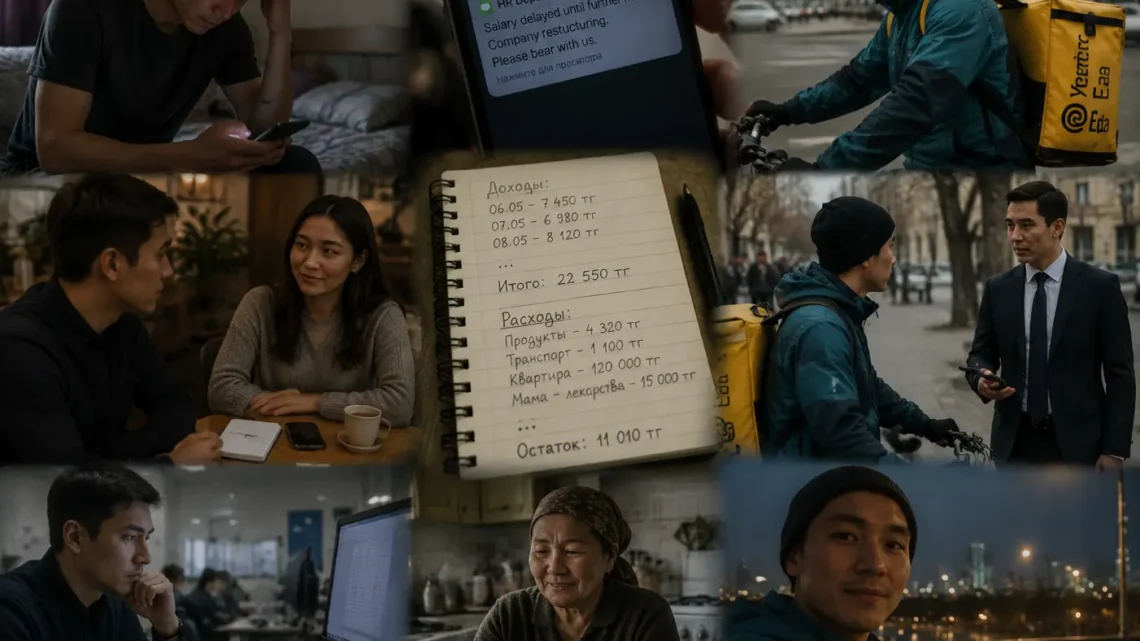
Salary delayed until further notice, the message said. Company restructuring. Please bear with us.
Trending Now!!:
I sat on the edge of my bed in my flat near Zhibek Zholy, staring at the ceiling, doing the kind of math you do when you already know the answer is bad. Rent was due in four days.
My mother in Taraz was expecting the usual transfer for her medication. And I had exactly eleven thousand tenge left in my account, which is barely enough for two weeks of groceries in Almaty these days, let alone a life.
My name is Dias. I am twenty-six. For two years I worked as a junior analyst at a logistics company that had, until that message, seemed stable enough. Boring, but stable. That is what you want at twenty-six. Boring and stable.
I called my best friend, Aigerim, because she always answers even at six in the morning.




They didn’t pay us, I said. Again.
Again meaning this happened before? she said, her voice still thick with sleep.
Twice this year. First time they said it was a bank error. This time it’s “restructuring.”
Dias, she said, and I could hear her sitting up now, you need to stop waiting for that company to fix itself.
I laughed, but it wasn’t really a laugh. It was the sound you make when someone says something true and you are not ready to hear it.
By that afternoon I had downloaded the Yandex delivery app and signed up as a courier. I told myself it was temporary, just until the salary situation sorted itself out, the way people tell themselves a lot of things that turn out to be permanent.
The first week was humiliating in a way I did not expect. Not the job itself, riding around Almaty with a thermal bag on my back was fine, even a little freeing after months behind a desk. What humiliated me was running into Serik, a guy I went to university with, outside a restaurant on Dostyk Avenue. He was in a suit. I was in a cheap raincoat with someone else’s dinner strapped to my back.
Dias? he said, squinting like he wasn’t sure it was really me.
Hey man, I said, already backing toward my bike.
Wait, is this like a side hustle or something?
Something like that, I said, and drove off before he could ask anything else.
That night I told Aigerim about it over voice notes, the way we always talk now, and she said something I have not been able to shake since.
You’re not less of a person because you’re delivering food, Dias. You’re less of a person if you let a company that doesn’t respect you decide what you’re worth.
I didn’t have a comeback for that.
Here is the part nobody tells you about financial stress. It doesn’t stay in one part of your life. It leaks into everything. I stopped answering calls from numbers I didn’t recognize because I was scared it was a debt collector.
I started doing the thing where you check your bank balance four times a day like it might have changed on its own. I read an article at two in the morning about budgeting for beginners and felt both comforted and pathetic, like I was twelve years old learning to save allowance money instead of a grown man trying to keep his life from falling apart.
The delivery money helped, though. Slowly, in a way that felt almost embarrassing to admit. Some nights I made more from four hours on the bike than I would have made in a full day at the office, before taxes and before the company decided paying its employees was optional.
I started keeping a small notebook, actual paper, where I wrote down every som I earned and every som I spent. My mother would have laughed at me. She used to keep a notebook exactly like that in the nineties, when things were hard for everyone and nobody trusted banks.
Three weeks in, the company sent another message. Salaries would resume next month, they said, at seventy percent of the original amount, “as a temporary measure.”
I read it standing in line at a Magnum supermarket, a basket of instant noodles and eggs in my hand, and something in me just went quiet.
I didn’t quit that day. I want to be honest about that, because the version of this story where I storm into the office and throw my badge on someone’s desk would be more satisfying, but it isn’t what happened. What happened is I kept doing both things for another month. Office by day when there was office work to do, deliveries by evening, notebook getting fuller, sleep getting thinner.
Then one Tuesday, Aigerim sent me a listing for a position at a company she worked with, something in the same field, slightly less prestigious on paper but three weeks of not knowing whether you’ll be paid teaches you that prestige is not a currency you can use to buy bread.
Apply, she said. Just apply. What do you have to lose that you haven’t already lost.
I got the job two weeks later. Full salary, paid on the same day of the month, every month, like it was supposed to work all along.
I kept the delivery app on my phone anyway. I still use it some weekends, not because I need to anymore, not really, but because it taught me something my university degree never did, that the difference between surviving and being comfortable is thinner than anyone with a stable job wants to admit, and that dignity is not about what job you’re doing, it’s about who’s making the decision.
I still think about Serik sometimes, standing outside that restaurant in his suit, looking at me like I had fallen. I wonder what he’d say if he knew that four months later I make almost the same as him, and I have a notebook full of numbers that taught me more about money than anyone in a suit ever did.
My mother still gets her transfer every month, on time now, and she has no idea any of this happened. Some things you protect people from, even the people who taught you how to survive in the first place.
I never found out if the company ever paid the rest of what they owed the people who stayed.
Some of them are probably still waiting.