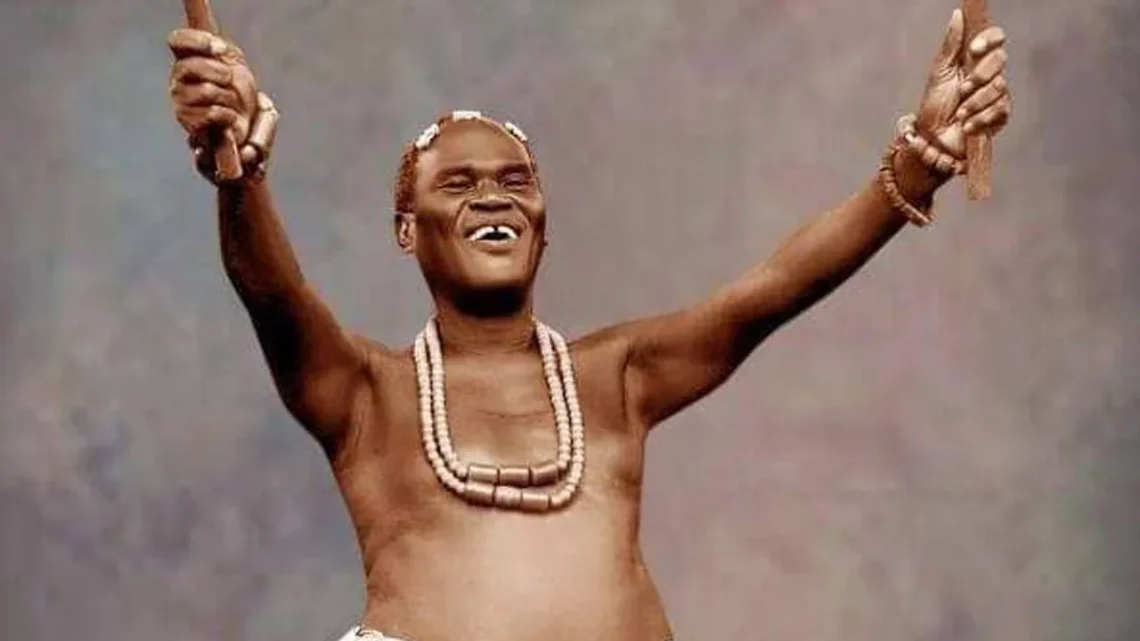
Hubert Ogunde Biography: Movies, Age, Wife, Children, Net Worth, Songs, State of Origin
Hubert Ogunde was a Nigerian playwright, actor, theatre manager and musician, widely honoured as the “father of Nigerian theatre” for founding the country’s first contemporary professional theatre company.
Born Hubert Adedeji Ogunde on 10 July 1916 in Ososa, Ogun State, he was the son of Jeremiah Dehinbo Ogunde and Eunice Owotunsan Ogunde.
Trending Now!!:
He attended St John School in Ososa, St Peter’s School in Faji, Lagos, and Wasimi African School, then worked as a teacher before joining the Nigeria Police Force in Ibadan in 1941. In 1944, while still serving as a constable, he composed and staged his first folk opera.
After leaving the force, Ogunde founded the Ogunde Theatre Party, a troupe that blended drama, music and dance and toured widely across Nigeria. He wrote more than 50 plays, many of them politically charged, and his sharp commentary on colonial rule and later governments repeatedly drew the attention of the authorities. He also moved into cinema, with films such as Aiye and Ayanmo.
Hubert Ogunde died on 4 April 1990 at the Cromwell Hospital in London, at the age of 73. His hometown of Ososa now hosts the Ogunde Museum, which preserves his artistic legacy.




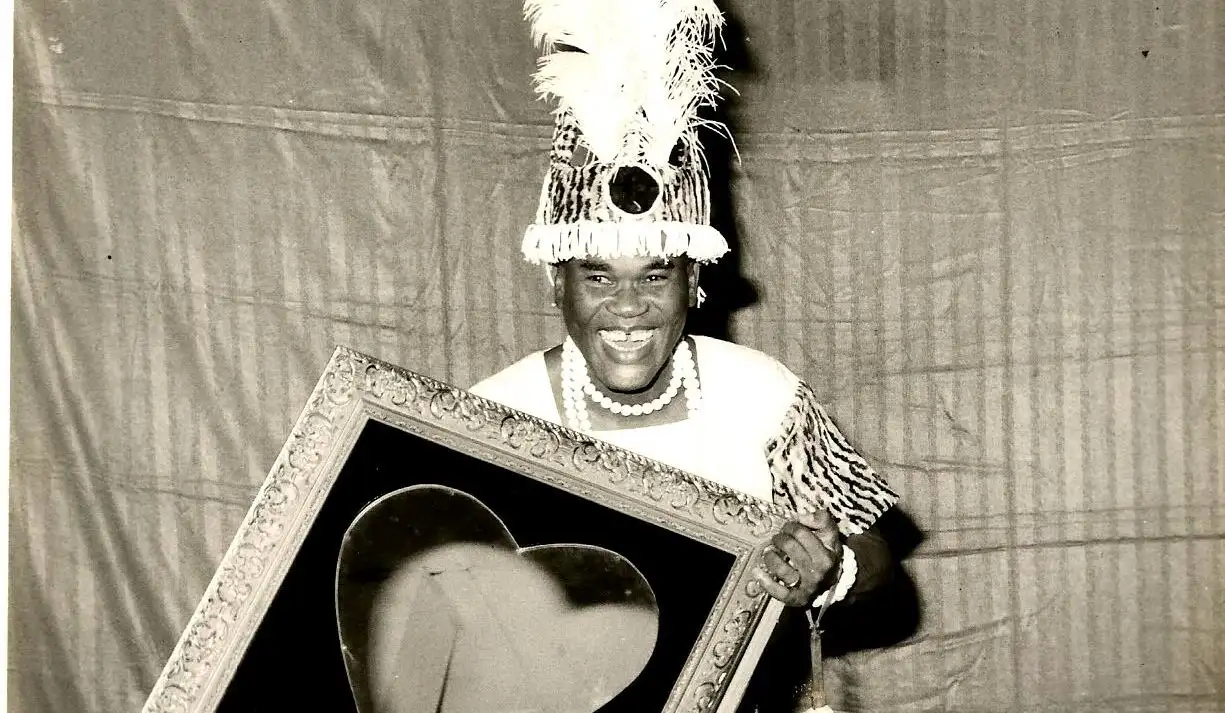
| Hubert Ogunde | |
|---|---|
|
|
| Wiki Facts & About Data | |
| Real Name: | Hubert Adedeji Ogunde |
| Stage Name: | Hubert Ogunde |
| Born: | 10 July 1916 |
| Died: | 4 April 1990 (age 73 years old) |
| Place of Birth: | Ososa, Ogun State |
| State Of Origin: | Ogun State |
| Nationality: | Nigerian |
| Ethnicity: | Yoruba |
| Education: | St John's Primary School, Ososa; St Peter's School, Faji, Lagos; Wasimi African School, Ijebu-Ode |
| Religion: | Christianity |
| Parents: | Jeremiah Dehinbo Ogunde, Eunice Owotunsan Ogunde |
| Siblings: | Ebun Oluwo |
| Spouse: | Adesewa Ogunde, Ibisomi Ogunde, Risikat Ogunde, Idowu Philips, Ibidun Ogunde, Iyabo Ogunde |
| Children: | Richard Ogunde, Victoria Ogunde-Olorunjegbe, Sumbo Ogunde-Bademosi, Folabi Kikilowo, Dayo Akinboye, Oluwemimo Ogunde, Tokunbo Ogunde, Tope Ogunde |
| Occupation: | Playwright, Actor, Theatre Manager, Musician |
| Net Worth: | $1 million-$5 million |
Early Life and Education
Born on Monday, 10 July 1916, in Ososa, Odogbolu Local Government Area of Ogun State near Ijebu-Ode, Hubert Adedeji Ogunde was born under Cancer.
He was a Yoruba of Ijebu stock, and his upbringing mixed two faiths: both Christianity and traditional African religion influenced his childhood. He grew up a Christian.
His father, Jeremiah Dehinbo Ogunde, served as a Baptist pastor, and the family’s forebears were Ifa worshippers who founded Ososa. The elder Ogunde also worked as a village headmaster and church organist.
His mother, Eunice Owotunsan Ogunde, was a trader from a family devoted to the Ifa deity, and she converted to Christianity after her son’s birth. His maternal grandfather was an Ifa priest.
His father’s frequent teaching transfers often left the boy with his mother and grandfather, and he was exposed to Ifa and Sango celebrations in his grandfather’s compound. His younger sister is Ebun Oluwo.
Ogunde attended St John’s Primary School in Ososa from 1925 to 1928, then St Peter’s School in Faji, Lagos, from 1928 to 1930.
He completed his schooling at Wasimi African School in Ijebu-Ode between 1931 and 1932, which ended his formal education after roughly seven years. From 1933 to 1941, he taught at St John’s Primary School.
Career
Hubert Ogunde joined the Nigerian police force in Ibadan in March 1941, and in 1943 he was posted to Denton Police Station in Ebute Metta, Lagos, where he joined the Church of the Lord (Aladura).
In 1944, his first opera, The Garden of Eden and The Throne of God, co-produced with G. B. Kuyinu, premiered at Glover Memorial Hall in Lagos. The church commissioned it to raise funds for a church building, and Nnamdi Azikiwe chaired the ceremony.
The Alake later requested a performance at Ake Centenary Hall in Abeokuta. Follow-up productions included Africa and God, Israel in Egypt and Nebuchadnezzar’s Reign and Belshazzar’s Feast.
After leaving the police force, he founded the African Music Research Party in Lagos in 1945, the first contemporary professional theatre company in Yorubaland. The troupe became the Ogunde Theatre Party in the mid-1940s, the Ogunde Concert Party in 1950 and the Ogunde Theater in 1960, a name it kept until his death.
His writing turned political early. Strike and Hunger, a pro-labour play written in November 1945, drew on the general strike led by Michael Imoudu. Tiger’s Empire, premiered on 4 March 1946, attacked colonial rule and became the first Yoruba play to bill women as professional artists.
He also wrote the opera Herbert Macaulay after the nationalist died in 1946, then Towards Liberty in 1947. In 1947, he travelled to London with his wife, Adesuwa, to seek theatre agents for shows in England. The talks were not fruitful, though they took waltz and tap dance classes there.
His sharp stagecraft repeatedly put him at odds with the authorities. On a northern tour in 1948, the group had two major encounters with police over Worse than Crime and Tiger’s Empire. Bread and Bullet in 1950 dramatised the Enugu coal miners’ strike, in which twenty-two people were shot, and its performance was restricted in Northern Nigeria over dialogue judged seditious.
In 1964, his satire Yoruba Ronu targeted the political strife in Yorubaland, and Premier Samuel Akintola and others walked out, reading it as an attack on them. The Ogunde Theater was banned in the Western Region for two years, until the military government of Lt. Col. Francis Adekunle Fajuyi lifted the ban on 4 February 1966.
His reach widened in the decades that followed. In 1967, he represented Nigeria at Expo 67 in Montreal, then performed at the Apollo Theater in Harlem. His first film, Aiye, premiered in 1979, co-produced by Ogunde and directed by Ola Balogun.
He sold some properties to fund it, and it recouped its costs within a year. Jaiyesinmi, a sequel, was co-directed with Freddie Goode, while Aropin N’Tenia and Ayanmo, his fourth film, were shot at the film village he established at Ososa in 1982. He funded all his films himself.
The BBC produced Ogunde: Man of the Theatre in 1983, and in 1986 the government invited him to form a national drama troupe, with which he represented Nigeria at the Commonwealth Festival of Arts with Destiny.
His final screen role came in 1990 in Mister Johnson, in which he played Brimah, shot in Toro near Bauchi. He fell ill during the shoot.
He held honorary Doctor of Letters degrees from the University of Ife and the University of Lagos, a chieftaincy title as an Oloye of the Yoruba people, and a portrait in the National Gallery of Modern Art in Lagos.
Personal Life
Hubert Ogunde was 73 when he died on 4 April 1990, and he would be 110 today.
Relatives remember him as a very handsome, tall, light-complexioned and gap-toothed man. His exact stature in centimetres and feet is unconfirmed.
Marriage was part of how Ogunde built his theatre. He held that he had to marry many wives to keep the company going. The Ogunde Theater ran largely as a family business, and all the wives and children took part in its productions at one time or another.
His son Oluwemimo Ogunde, a Senior Advocate of Nigeria and former Attorney General of Ogun State, puts the number at more than 10 wives and more than 20 children.
His best-known partner was Adesewa Ogunde, born Clementina Oguntimirin, who became famous as Mama Eko after acting the lead role in a popular 1960s play of that name.
She also managed the company. In September 1946, Ogunde applied for a passport and UK visa alongside Clementina, then his companion, who later became Mrs. Ogunde. The authorities first refused, then granted both in March 1947 after the press took up their cause.
She lived from 1928 to 1970 and gave him five children, among them the two senior daughters Tokunbo Ogunde and Tope Ogunde, now leading members of the troupe. His film Ayanmo was adapted from a play dedicated to her.
His other wives included Ibisomi Ogunde, Risikat Ogunde and Idowu Philips. Ibidun Ogunde and Iyabo Ogunde were among the wives who outlived him.
Among his children are Chief Richard Ogunde, Victoria Ogunde-Olorunjegbe, Sumbo Ogunde-Bademosi, Folabi Kikilowo and Dayo Akinboye. Every year from 26 to 30 December, the surviving wives, children and grandchildren gather at his home in Ososa, now the Hubert Ogunde Living Memory Museum.
Net Worth
Hubert Ogunde had a net worth of between $1 million and $5 million, built on touring theatre and, later, film. He sold some properties to fund Aiye, which recouped its costs within a year.
He financed all his films himself and set up a film village at Ososa in 1982. His troupe also sustained a household of more than ten wives and over 20 children, many of whom worked in the Ogunde Theater. Today, his expansive home in Ososa stands as the Hubert Ogunde Living Memory Museum.
Filmography
Movies
- Aiye (1979)
- Jaiyesimi (1980)
- Aropin N’tenia (1982)
- Ayanmo (1989)
- Mister Johnson (1990), as Brimah
Stage Plays
- The Garden of Eden and The Throne of God (1944)
- Africa and God (1944)
- Israel in Egypt (1944)
- Nebuchadnezzar’s Reign and Belshazzar’s Feast (1945)
- Worse than Crime (1945)
- Strike and Hunger (1945)
- Tiger’s Empire (1946)
- Herbert Macaulay (1946)
- Human Parasites (1946)
- Towards Liberty (1947)
- Half and Half (1949)
- Bread and Bullet (1950)
- My Darling Fatima (1951)
- Delicate Millionaire (1958)
- Yoruba Ronu (1964)
- Aropin N’tenia (1964)
- Otito Koro (1964)
- Awo Mimo (1965)
- Oh Ogunde (1969)
- Ayanmo (1970)
- Onimoto (1970)
- Iwa Gbemi (1970)
- K’ehin Sokun (1971)
- Aiye (1972)
- Igba T’o De (1977)
- Orisa N’la (1977)
What People Ask
NOTICE!! NOTICE!! NOTICE!!
At TheCityCeleb, we strive to provide accurate and up-to-date biographies and entertainment news, focusing on celebrities. Our editorial team researches information from reputable sources, including interviews, official statements, and verified media.If you spot an error or have additional details, please contact us at editor@thecityceleb.com. We value your feedback and are committed to maintaining trustworthy content.