Inside the Stock Exchanges of Nigeria and Ghana: A Beginner’s Window Into African Markets
Lagos and Accra offer a way into two very different African markets, but fees, thin trading, currency swings and a few giant companies can shape returns as much as share prices do.
On Nigeria’s main stock exchange, shares can change hands without moving the quoted price. The rules set a minimum trading quantity before a published price can adjust, so a small investor’s order may be filled and leave no mark on the price screen.
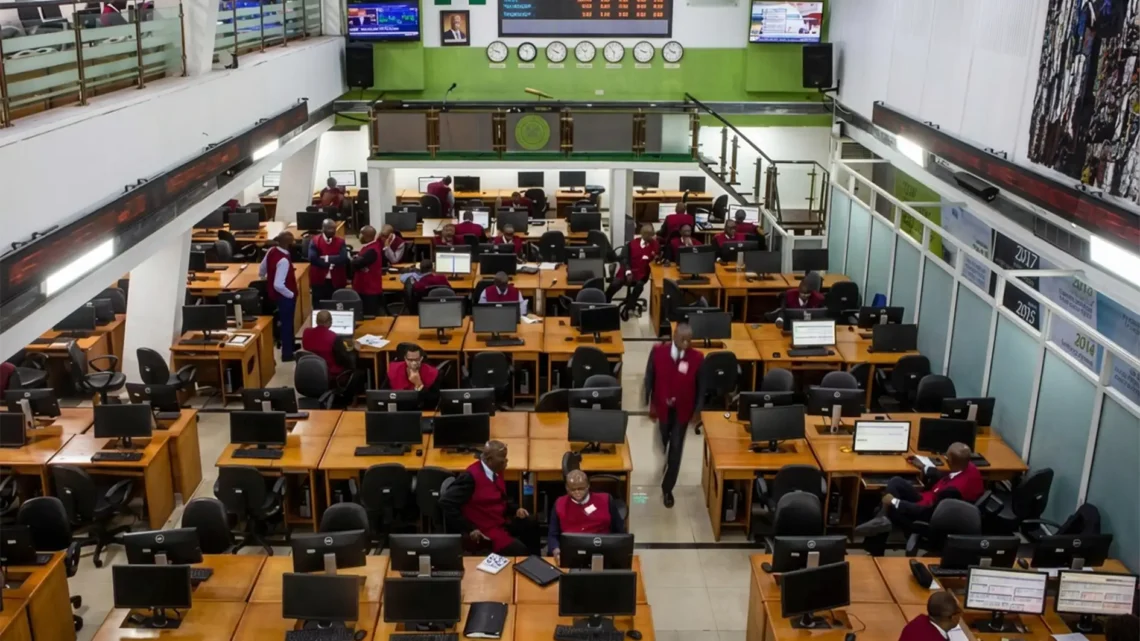
The Nigerian Exchange in Lagos and the Ghana Stock Exchange in Accra sell shares through licensed brokers and record ownership electronically.
Trending Now!!:
Nigeria’s equity market is roughly five times larger by value. Both admit foreign investors, and both carry concentration, currency and liquidity risks that strong index gains can hide.
Two Markets, Two Very Different Scales
The Nigerian Exchange, usually shortened to NGX, has the longer history. It began as the Lagos Stock Exchange, incorporated just weeks before Nigerian independence. The old Nigerian Stock Exchange later demutualised, moving from a member-owned body to a company structure.
The change produced NGX Group as parent, with separate subsidiaries for running the exchange, regulating it and managing property. The Ghana Stock Exchange, or GSE, is about three decades younger. It began trading in November, shortly after receiving official recognition as an exchange.




Scale separates them. In late November, Nigerian equities were worth about ₦159.5 trillion (about $114 billion). Ghana’s market stood near GH¢258.8 billion (about $22 billion). Dollar equivalents here use roughly ₦1,394 and GH¢11.75 to the dollar. Prices, values and exchange rates move daily.
Recent returns have been large. By late November, the NGX All-Share Index, the broad gauge of Nigerian shares, had risen about 59% since January. The GSE Composite Index was up about 58% over a similar stretch, following a gain of more than 79% in the previous calendar year.
A beginner should read the second half of that story too. Ghana’s index closed at 13,824.50 on November 20, about 13% below its 52-week high of 15,908.77. A buyer near the peak had a very different experience from one who bought in January. A year-to-date figure describes one starting date, not the result every investor earned.
Nigeria has also regained a place on an important global map. FTSE Russell, whose indices guide many international funds, moved the country from Unclassified back to Frontier Market status from September 21. The upgrade makes Nigeria eligible for the relevant frontier benchmarks. It does not guarantee foreign inflows or higher share prices.
Who Runs the Market and Who Protects the Investor
An exchange provides the marketplace. A securities regulator licenses and polices the firms using it. A depository keeps the electronic record of ownership, and a broker connects the investor to all three.
In Nigeria, the regulator is the Securities and Exchange Commission, or SEC, while the Central Securities Clearing System, known as CSCS, handles depository, clearing and settlement work. The Investments and Securities Act expressly bans Ponzi schemes, treats virtual assets as securities and expands the regulator’s powers. Before sending money to a broker or app, check its registration on the SEC portal at sec.gov.ng/cmos.
Ghana has its own Securities and Exchange Commission, and holdings sit with the Central Securities Depository, or CSD. The regulator advises checking an operator’s licence before investing and treating unusually high or guaranteed returns as warning signs. It has also cautioned that fraudsters use the images and names of public figures, officials among them, in investment adverts.
A familiar face in a social media video proves nothing. Neither does an app with a polished dashboard. The test is whether the legal entity receiving the money holds the right licence. Match its exact name and payment details against official records, because cloned businesses can borrow a genuine firm’s identity.
Regulation also has limits. A licence reduces the risk of dealing with an impostor, but it offers no protection against an ordinary fall in share prices.
What Trades in Lagos and Accra
Both exchanges offer more than company shares, although equities are where most beginners start. A share is a slice of ownership. Its return can come from a higher selling price, from dividends or from both, and neither is promised.
NGX organises listed companies into segments that include the Premium Board, Main Board and Growth Board. Its market also covers bonds and exchange-traded products. Familiar equity names include MTN Nigeria, Dangote Cement, BUA Foods, Zenith Bank and Seplat Energy. A board label helps describe a company’s listing category, but it is no verdict on whether the shares are cheap.
Ghana’s shelf is much smaller. The GSE has a main board and the Ghana Alternative Market, or GAX, which targets smaller businesses with growth potential. Widely followed names include MTN Ghana, GCB Bank and TotalEnergies Marketing Ghana. Fixed income securities trade through the Ghana Fixed Income Market.
Smaller companies deserve extra care in either country. A low share price does not make a stock inexpensive. A ₦2 share (less than one cent) in a weak business with billions of shares outstanding can be dearer, relative to earnings, than a ₦500 share (about 36 cents) in a strong one. Compare total company value, profits, debt, cash flow and dividend history before looking at the price of a single unit.
An Index Can Mislead Through Concentration
Most indices weighted by market value give the largest companies the loudest voice. Both West African markets show why this matters.
In early November, ten companies made up about 73% of NGX market value, and Dangote Cement alone held about 15%. A rally in a handful of giants can lift the headline index while many smaller shares stay flat or fall. Daily market breadth, meaning the number of gainers compared with decliners, offers a quick second opinion.
Ghana is concentrated in a different way. MTN Ghana was recently valued at about GH¢86.7 billion, or 33.3% of the whole market (about $7.4 billion). By simple arithmetic, a 10% fall in that one company, with every other price unchanged, would cut total market value by about 3.3%.
The effect on the Composite Index can differ from that figure. The benchmark leaves out listed companies whose shares also trade on other markets. Total market value and index performance therefore measure different groups of stocks, a detail casual comparisons often miss.
Nigeria’s balance of power could soon shift again. Dangote Petroleum Refinery and Petrochemicals has announced a December 1 start for trading on NGX after an oversubscribed public offer.
The expected debut value of ₦65.2 trillion (about $47 billion) equals roughly 40% of the late-November equity market. Added to that base, it would represent close to 29% of the enlarged total. Aliko Dangote is expected to keep about 83.5% of the company, so headline value will far exceed the stake held by other investors.
A bigger market value after a large listing is not the same as a gain for existing shareholders. Part of the increase simply reflects a new company joining the count.
Owning five Nigerian banks also falls short of full diversification. Their share prices can respond to the same interest rate decisions, capital rules and loan losses. Count separate risks, not just ticker symbols.
How Trading Hours, Price Rules and Settlement Work
NGX trades Monday to Friday, excluding public holidays. Its equity session starts with pre-opening at 9:00 a.m. West Africa Time, followed by continuous trading from 9:30 a.m. The day now runs to 4:00 p.m.
The GSE gives its equity hours as 10:00 a.m. to about 3:00 p.m. on working days. Accra runs one hour behind Lagos. Some guides show a 9:30 start, so check the current session schedule with a broker.
Nigeria’s Price Bands and Volume Thresholds
A listed Nigerian share can move no more than 10% above or below its reference price in one day, and orders outside the band are rejected. The limit slows a collapse without preventing one. Three consecutive 10% falls leave a share about 27% lower. Sellers may also find no buyers at the lower limit.
The volume rule works separately. The minimum quantity needed to change a published price depends on the share’s price group:
- At ₦1,000 (about 72 cents) or higher, the threshold is 10,000 shares.
- From ₦500 (about 36 cents) to just below ₦1,000 (about 72 cents), it is 50,000 shares.
- Below ₦500 (about 36 cents), it is 100,000 shares.
An unchanged quote therefore does not prove that nobody traded. A displayed price also offers no assurance that a seller can unload a large position at that level. Check traded volume, outstanding bids and offers, and the number of recent deals.
A limit order is often the more disciplined choice in a thin market. It sets the highest price a buyer will pay or the lowest a seller will accept. The trade-off is that the order may be only partly filled, or not filled at all.
Settlement
Settlement is the point at which cash and securities formally change hands. Nigeria moved eligible equity trades to T+1 on June 1, meaning one business day after the trade. A Monday purchase normally settles on Tuesday when both are business days.
For Ghana, published descriptions conflict: some give a two-business-day cycle, while others give three. Ask the broker to confirm the date before relying on sale proceeds for rent, school fees or another deadline. Settlement and withdrawal are also separate steps, and a broker or bank may need extra time to pay cash out.
How to Buy a First Share
Neither exchange sells shares straight to the public. The route runs through a licensed intermediary.
- Choose a broker. Verify its licence, then compare commissions, minimum charges, research, app reliability, withdrawal times and complaint handling. The best broker for a frequent trader may not suit a person making two purchases a year.
- Open the investment account. In Nigeria, the broker links the client to a CSCS account. In Ghana, a securities account with a brokerage house must be open before any trade.
- Complete identity checks. The GSE says its application seeks personal details, a passport photograph, national identification and a contact address. Nigerian brokers run their own identity checks, so request the current document list.
- Fund the account safely. Pay only into the verified channel of the licensed firm. A representative’s personal bank or mobile money account is a serious warning sign.
- Research and place the order. Read recent financial statements and company disclosures, then state the share, quantity and price limit.
- Check the records. Review the contract note for price, quantity and every charge. Confirm the holding through the depository, and ask how dividends will reach a bank account.
In Ghana, the official minimum for shares is the price of one share plus charges. A broker or app can still impose its own funding minimum or a minimum commission. Being allowed to buy one share does not make a one-share order economical.
New public offers follow a different path from ordinary market purchases. An applicant in an initial public offering applies under a prospectus and may receive fewer shares than requested when demand is heavy. Read the use of proceeds, debt, risks, ownership structure and refund terms before applying. A famous issuer can still sell shares at a demanding valuation.
What Buying and Selling Really Cost
The commission in a broker’s advert is only part of the bill. The most useful figure is the break-even move: how far a share must rise before an investor can sell without a loss.
Nigerian Charges
A standard Nigerian broker schedule can include commission capped at 1.35%. Published schedules commonly show a 0.3% SEC fee on purchases and separate 0.3% NGX and CSCS fees on sales, plus 7.5% value-added tax on applicable charges.
Many schedules also list stamp duty. The Nigeria Tax Act, however, exempts documents transferring stocks and shares from stamp duty. Any such line on a quote or contract note deserves a direct question to the broker.
Consider a hypothetical ₦100,000 purchase (about $72) at the maximum commission above. With the listed regulatory and exchange fees and tax on them, but no stamp duty, alert fees or app surcharge, buying costs about 1.77%. Selling costs about 2.10% of the sale value.
The shares need to rise nearly 4% just to break even. A stamp duty charge of 0.08% on each side would push the hurdle just above 4%.
Ghanaian Charges
Ghana’s regulator sets a 0.7% transaction levy on equities, paid by both buyer and seller. The sum is divided among the exchange, depository, regulator and market development. Brokerage arrangements affect the final bill, and published guides differ on the all-in total. Ask whether a quoted commission includes the levy, which taxes apply and what minimum charge exists.
As an illustration, an all-in cost of 2% to 2.5% on each side requires a share price gain of about 4.1% to 5.1% to break even. A flat minimum hurts small orders more. A hypothetical GH¢10 minimum charge (about 85 cents) on a GH¢200 order (about $17) takes 5% before any other separate cost.
Neither calculation includes the bid-ask spread, the gap between the best available buying and selling prices. In a thin stock, the spread can cost more than the stated fees. Frequent trading multiplies both.
How Dividends and Gains Are Taxed
Tax treatment depends on the country, the investor and the transaction. A foreign resident may also owe tax at home.
Nigeria
Nigerian dividends generally carry a 10% withholding tax, although a tax treaty can lower the rate. A hypothetical ₦10,000 dividend (about $7.17) taxed at 10% leaves ₦9,000 (about $6.46).
Gains on Nigerian shares have a generous small-investor exemption with two conditions. Within a 12-month period, total sale proceeds must not exceed ₦150 million (about $108,000), and total gains must not exceed ₦10 million (about $7,200). The exact statutory boundary and any reinvestment relief need checking for transactions close to the limits.
Many people mistake this for an either-or test. Meeting just one condition is not enough for this exemption. Outside the available reliefs, an individual’s chargeable gains join other income and fall under personal income tax bands reaching 25%. Older references to a flat 10% capital gains tax are outdated.
Ghana
Ghana applies an 8% withholding tax on dividends, which is final for residents and nonresidents. A hypothetical GH¢1,000 dividend (about $85) leaves GH¢920 (about $78).
Capital gains require more caution. Some guides still describe gains on GSE shares as tax-free. The earlier waiver, however, ran only to a fixed December expiry, and current analysis finds no broad permanent exemption for listed share sales. Get written, current guidance before assuming a profit is exempt.
A qualified tax adviser is warranted for large disposals, gains near an exemption limit or tax duties in more than one country.
The Currency Return Behind the Share Return
A share can rise strongly in naira or cedis and deliver much less in dollars, pounds or euros. The reverse happens when the local currency strengthens.
For a dollar-based investor, use this rule, with both exchange rates expressed as local currency per dollar:
Dollar return = (1 + local return) × (starting exchange rate ÷ ending exchange rate) − 1
Suppose, hypothetically, that Nigerian shares gain 30% while the rate moves from ₦1,400 to ₦1,650 per dollar. The calculation is 1.30 × (1,400 ÷ 1,650) − 1, a dollar return of about 10.3%. Fees and taxes would reduce it further.
The rate actually available matters too. On one late-November day, Nigeria’s official market rate was about ₦1,394 per dollar, while street quotes were ₦1,450 to ₦1,460. Calculate returns using the rates at which money can legally enter and leave, including conversion charges.
Local investors face a related test: purchasing power. A 20% return during 25% inflation still leaves the investor poorer in real terms. Compare returns with inflation and with the income available from lower-risk alternatives over the same period. Emergency savings and money needed soon do not belong in volatile shares.
Foreign and Diaspora Investors: Plan the Exit First
Buying is only half of a cross-border investment. Dividends and sale proceeds also need a lawful route home.
For foreign capital entering Nigeria, the key record is the electronic Certificate of Capital Importation, or eCCI. The foreign exchange manual requires one for capital transfers into the country. It supports access to official channels when money is repatriated.
Arrange it through an authorised dealer bank as the funds arrive and keep it with contract notes, dividend records and bank statements. An investor who skips this step may discover the problem only at exit.
Diaspora status alone does not settle which account or documents apply. Money arriving from abroad and naira already held in Nigeria can follow different paths, so ask the bank and broker before funding the account.
Ghana’s exchange states that original capital, gains and related earnings can be remitted freely in foreign exchange. Investors should still keep proof of inward transfers and ask their bank what it requires. Permission to remit does not fix the exchange rate, guarantee a buyer for the shares or remove bank checks and charges.
International apps and funds can make access easier, but their structures differ. Establish whether the investor owns the underlying shares, a fund unit or a contractual claim. Find out who holds the assets, what happens if the provider fails and whether the holding can move to another firm.
Five Tests Before Placing Any Order
The better beginner question is not which market posted the larger gain. It is whether a particular investment can survive these five tests:
- Licence: The broker, adviser or fund manager appears in official records under the exact name receiving instructions or money.
- Liquidity: Recent volume and available bids suggest that the position can be sold without relying on one unusually busy day. A useful personal safeguard is to keep an order small compared with typical daily volume.
- Concentration: One company, sector or currency cannot do unacceptable damage to the investor’s wider finances. Check funds too, since several may own the same large stocks.
- Hurdle: The expected return remains worthwhile after both sets of fees, the spread, taxes, inflation and currency conversion.
- Exit: The settlement date, withdrawal process and any repatriation documents are clear before the purchase.
Failing one test is a reason to pause. A rising index cannot repair an unverified broker, an illiquid holding or missing transfer records. The investor who can explain the company, price the round trip and describe the way out has a far stronger starting point than one chasing the latest percentage gain.
What People Ask