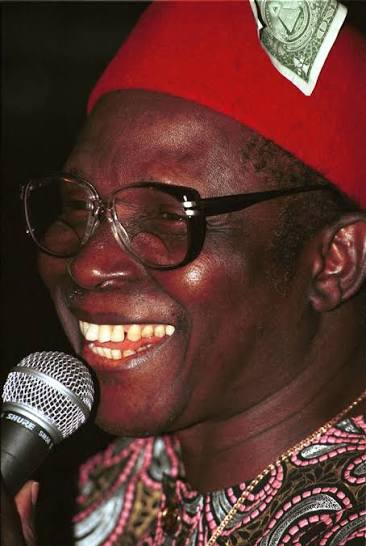
Chief Stephen Osita Osadebe Bio: Net Worth, Age, Wife, Children, Parents, Albums
Chief Stephen Osita Osadebe was a Nigerian highlife musician, songwriter, and record producer widely regarded as one of the greatest voices in Igbo highlife music. He remains an enduring icon of the genre.
Osadebe was born on March 17, 1936, in Atani, a riverine town on the eastern bank of the Niger River in present-day Ogbaru Local Government Area, Anambra State, Nigeria.
Trending Now!!:
He hailed from a family with a long tradition of singers and dancers in Igboland, a heritage that shaped his musical calling from an early age.
He began his professional music career at 23, performing with the Stephen Amechi Band before joining the Central Dance Band. In 1958, he stepped fully into the highlife scene, and in 1964 he formed his own outfit, the Nigeria Sound Makers International Band, which became the vehicle for his decades-long dominance of the genre.
Over a career spanning more than four decades, Osadebe built a catalog of highlife classics that blended Igbo traditional rhythms with elements of calypso, samba, bolero, rumba, jazz, and waltz. His most celebrated hit, “Osondi Owendi,” released in 1984, became one of Nigeria’s best-selling and most enduring records, cementing his status as the “Doctor of Hypertension” and a permanent fixture in Igbo highlife heritage.
Osadebe was honored with a chieftaincy title in recognition of his contributions to Nigerian music and culture, a distinction reflected in the “Chief” that preceded his name for much of his later career.


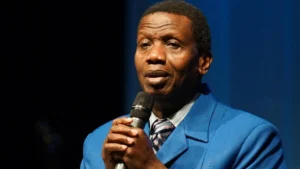

He died on May 11, 2007, at St. Mary’s Hospital in Waterbury, Connecticut, United States, at age 71. His music continues to influence generations of highlife and Afro-pop artists, with “Osondi Owendi” still sampled and remixed by contemporary Nigerian musicians today.
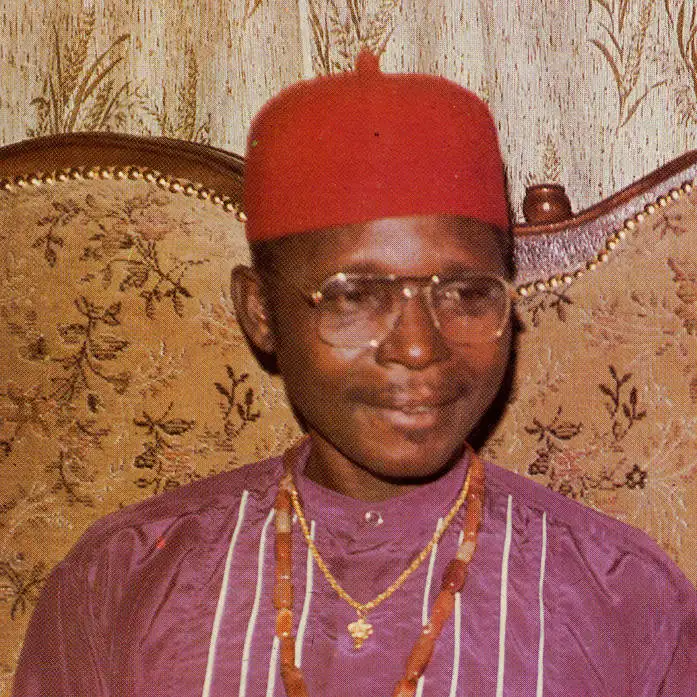
| Chief Stephen Osita Osadebe | |
|---|---|
|
|
| Wiki Facts & About Data | |
| Real Name: | Stephen Osita Osadebe |
| Stage Name: | Chief Stephen Osita Osadebe |
| Born: | March 17, 1936 |
| Died: | May 11, 2007 (age 71 years old) |
| Place of Birth: | Atani, Ogbaru, Anambra State, Nigeria |
| State Of Origin: | Anambra State |
| Nationality: | Nigerian |
| Ethnicity: | Igbo |
| Education: | St. Joseph's Primary School, Atani; St. John Catholic School, Onitsha; Our Lady's High School, Onitsha |
| Religion: | Catholicism |
| Parents: | Dennis Obi Osadebe, Iyom Nwanjiego |
| Siblings: | Emmanuel Osadebe |
| Spouse: | Madam Ngozi Osadebe (m. 1970), Eunice Adaku Osadebe (m. 1980) |
| Children: | Onyinye Osita Osadebe, Obiajulu Osadebe, Patrick Okwy Osadebe, Obiora Osadebe, Stephen Osita Osadebe Jr. |
| Occupation: | Singer, Songwriter, Record Producer |
| Net Worth: | $1 million-$5 million |
Early Life & Education
Chief Stephen Osita Osadebe was born on March 17, 1936, in Atani, an Igbo town on the eastern bank of the Niger River in what is now Ogbaru Local Government Area, Anambra State, Southeastern Nigeria.
Born under the zodiac sign Pisces, Osadebe came from a family with a long lineage of singers and dancers in Igboland. This heritage shaped his musical calling from an early age.
Osadebe was of Igbo ethnicity and practiced Catholicism, reflected in the Catholic institutions where he received his early education.
His parents were Dennis Obi Osadebe and Iyom Nwanjiego. He was the eldest of six siblings, and his known younger brother is Emmanuel Osadebe.
Osadebe began his education at St. Joseph’s Primary School in Atani before continuing at St. John Catholic School in Onitsha. He proceeded to Our Lady’s High School, also in Onitsha, Anambra State, where his fascination with Western musical genres like jazz first took root alongside his exposure to traditional Igbo sounds.
After completing secondary school, Osadebe worked as a clerk for SCOA in Lagos before fully committing to music. In 1960, he briefly stepped away from performance to study Trade Unionism in the Soviet Union, earning a diploma in 1962 before returning to Nigeria to resume his music career.
Career
Chief Stephen Osita Osadebe’s professional music career began at age 23, following his brief stint in Lagos as a clerk with SCOA. He got his start singing in nightclubs across Lagos State, where trumpeter Zeal Onyia became his early mentor.
He honed his craft further as a member of The Empire Rhythm Orchestra, led by E. C. Arinze, an experience that shaped much of his musical foundation. He released his first album in 1958 and went on to become one of Nigeria’s most prolific composers, writing over 500 songs across his lifetime, roughly half of which were released commercially.
After stints with the Stephen Amechi Band and the Central Dance Band, Osadebe struck out on his own around 1964, forming his group Sound Makers, later expanded into Nigeria Sound Makers International. This band would carry him through the rest of his career.
As his sound matured, Osadebe developed a style rooted in social commentary, addressing personal trials and everyday struggles in a manner reminiscent of, though less confrontational than, Fela Kuti’s approach. He sang fluidly across English, Nigerian Pidgin, and Igbo, and became known for extending his tracks generously to give dancers room to indulge in the rhythm. This trademark, paired with the perceived healing quality of his music, earned him the nickname “the Doctor of Hypertension.”
Osadebe is credited with breaking away from the rigid, hymnal-influenced big band format that defined earlier highlife pioneers, transforming the genre instead around the call-and-response pattern rooted in traditional African music.
Following the Nigerian Civil War in the late 1960s, the mass exodus of Igbo and other eastern Nigerians from western Nigeria weakened highlife’s dominance in Lagos, as Jùjú music and later Afrobeat rose in prominence through the 1970s. Despite the shifting musical landscape, Osadebe maintained a steady schedule of live performances throughout and after the war, and by the mid-1970s, his career had reached its commercial peak.
His most iconic work, the 1984 single “Osondi Owendi,” became one of Nigeria’s best-selling records of all time and cemented his standing as a leading figure in Igbo highlife. Across his catalog, he released dozens of albums under Polygram Records Nigeria, including Highlife Parade (1970), Osadebe ’75, Osadebe In London (1975), Arum Achoro Nsogbu (1979), Ogbahu Akwulugo (1982), Unubi Top Special (1984), Peoples Club Of Nigeria Special (1987), and Kedu America (1996), among many others spanning the 1970s through the 2000s.
After turning 50 in 1986, Osadebe began prioritizing fatherhood, dedicating more time to his son Obiora and his other children. He continued releasing music into the 2000s, with Kedu America standing as one of his last major albums.
Social Media
- Wikipedia: Chief Stephen Osita Osadebe
- YouTube: Chief Osita Steven Osadebe
Personal Life
Chief Stephen Osita Osadebe died on May 11, 2007, at age 71, having been born on March 17, 1936.
Osadebe married multiple times, in keeping with Igbo cultural practice, and fathered several children who reside in Nigeria and abroad, including Onyinye Osita Osadebe, Obiajulu Osadebe, Patrick Okwy Osadebe, Obiora Osadebe, and Stephen Osita Osadebe Jr.
His first wife, Madam Ngozi Osadebe, was an early and strong supporter of his music career, though the marriage broke down and the couple separated in the early 1970s. He later married Eunice Adaku Osadebe in 1980, a union that remained harmonious until his death. Among his family’s lasting contributions to Igbo music culture is the establishment of the Osadebe Music Academy, created to preserve and pass on highlife traditions.
In the 1990s, rumors circulated that Osadebe was facing financial difficulties as highlife’s popularity waned nationally. He addressed the speculation directly in a 1995 interview, attributing the rumors to rivals uneasy with his continued relevance in the industry.
Osadebe’s exit from E.C. Arinze’s band in 1964 to form his own outfit also stirred controversy. Arinze considered the departure a betrayal of the group, telling West African Melody Magazine in 1965 that the split was regrettable, while Osadebe maintained that every artist deserved the chance to grow on their own terms.
A separate rivalry was rumored between Osadebe and fellow highlife legend Oliver De Coque in the late 1980s, after De Coque’s hit “Biri Ka Mbiri” was widely interpreted as a response to Osadebe’s dominance of the genre. Both men publicly denied any feud, though tension was reportedly noticeable during joint performances in Enugu.
Beyond music, Osadebe held cultural influence in political circles. In 1982, he was appointed Cultural Adviser to the Anambra State Government, a role in which he pushed for greater funding for the arts and earned the respect of prominent Igbo figures, including Chukwuemeka Odumegwu Ojukwu and Nnamdi Azikiwe.
He also collaborated with other leading Igbo musicians, including Sir Warrior of the Oriental Brothers and Celestine Ukwu, in promoting highlife music, and mentored younger artists such as Prince Nico Mbarga, whose hit “Sweet Mother” drew influence from Osadebe’s lyrical approach.
In the early 2000s, his health declined due to complications from diabetes, and he died on May 11, 2007, at St. Charles Borromeo Hospital in Onitsha, at age 71.
Net Worth
Chief Stephen Osita Osadebe had an estimated net worth of $1 million to $5 million, built over a recording career spanning more than four decades as one of Nigeria’s most commercially successful highlife musicians.
His wealth came primarily from record sales, live performances, and royalties from his extensive catalog of over 500 songs, more than half of which were released commercially through PolyGram Records Nigeria.
Discography
Albums
- Highlife Parade — Commander-in-Chief Stephen Osita Osadebe & His Nigerian Sound Makers, 1970
- Stephen Osita Osadebe & His Nigeria Sound Makers — 1972
- Commander In Chief Stephen Osadebe & His Nigeria Sound Makers — 1972
- Osadebe ’75 — 1975
- Osadebe In London — 1975
- Osadebe ’76 — 1975
- Osadebe ’76 Vol. 2 — 1976
- Chief Osadebe ’77 Vol. 1 — 1977
- Osadebe ’78 — 1977
- Osadebe ’78 Vol. 2 — 1978
- Arum Achoro Nsogbu — 1979
- Osadebe In 80’s – Oyolima Vol. 1 — 1980
- Ofe Di Ufo — 1981
- Agbalu Aka Azo Ani — 1980
- Onu Kwulunjo, Okwue Nma — 1981
- Onye Bili – Ibeya Ebili — 1981
- Nke Onye Diliya — 1981
- Onye Ije Anatago — 1982
- Ogbahu Akwulugo — 1982
- Ndi Dum Tufu Dum Cho ’83 — 1982
- Igakam Ogonogo — 1982
- Onye Achonam — 1982
- Ok’puzo Enweilo — 1982
- Onye Kwusia Olieonuya — 1982
- Onyiewe Ewerato — 1983
- Osondi Owendi — 1984
- Unubi Top Special — 1984
- Makojo — 1985
- Akwa-Etiti Social Club — 1985
- Nwanneka Special — 1986
- Ndi Ochongonoko — 1986
- Peoples Club Of Nigeria Special — 1987
- Ife Onye Metalu — 1987
- Ozonkemadu — 1987
- Ana Masi Ife Uwa — 1988
- Nigeria Go Better — 1988
- Late Sam Okwaraji — 1990
- Ezi Oyi Amaka — 1990
- Onye Atumuna — 1991
- Ife Chukwu Kanma — 1991
- Eji – Keme Uwa — 1992
- Onye Amamife — 1994
- Kedu America — 1996
- Ndia na Ndia — 2004
Singles
- “United Nigeria” / “Okpaku Elieli” — 1962-63
- “Sylvanu Olympio” / “Ifeayi Gretthukwu” — 1962-63
- “Monkey De Work Baboon De Chop” / “Nwezigbo Omume” — 1971
What People Ask
NOTICE!! NOTICE!! NOTICE!!
At TheCityCeleb, we strive to provide accurate and up-to-date biographies and entertainment news, focusing on celebrities. Our editorial team researches information from reputable sources, including interviews, official statements, and verified media.If you spot an error or have additional details, please contact us at editor@thecityceleb.com. We value your feedback and are committed to maintaining trustworthy content.